Philips Sonicare AirFloss October 2011
Can air and water replace dental floss?
The AirFloss shoots a jet of air and water between your teeth at high speed to remove plaque and, according to its manufacturer Philips, 'cleaning between your teeth has never been this quick, or this easy'. But does the AirFloss work? And is it worth splashing out on? We gave the Philips AirFloss a try.
Flossing regularly after you’ve brushed your teeth can help in the battle against tooth decay and gum disease. But many of us don't bother – complaining that using normal dental floss is time-consuming and fiddly.
Dental floss sticks (which hold a small piece of floss in place on a plastic stick) can make the process easier, but now there is another option available – the Philips Sonicare AirFloss.
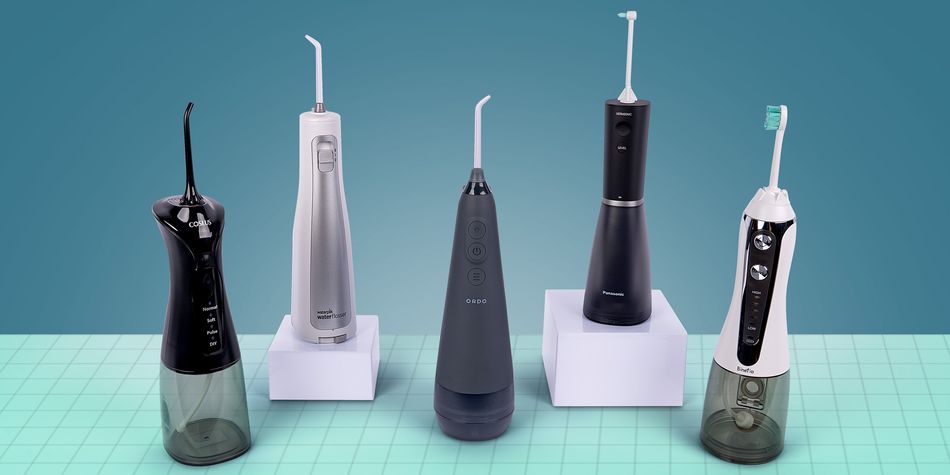
The AirFloss is about the same size as a standard electric toothbrush and uses ‘microburst technology’ to clean between teeth using water and air. Philips says it is designed to encourage more people to floss regularly by making the process quicker and easier. So what will our tester make of it?
Philips' AirFloss flosser uses air and water to clean in between your teeth
Very easy to use
When our tester tried out the AirFloss she found it very easy to set-up and use. The instructions are easy to follow and the product is very simple to operate with just two buttons – one to turn it on and one to squirt the jet of water and air.
The water reservoir is easy to fill (with water or mouthwash) and can hold enough to floss twice if you just do the outside of your teeth and once if you do the inside as well.
Our tester noted that AirFloss is supplied with a two-pin plug – so if you don’t have a shaving socket to plug it into you will need to buy an adaptor plug.
Messy at first
To use the AirFloss, you simply place the nozzle in between your teeth and press the trigger button.
However, if you use the AirFloss as shown in Philips' advert – with your mouth open - it can get quite messy. Our tester found it sprayed water over her face and on the mirror she was looking into.
This problem can be significantly reduced by keeping your mouth closed – although in both cases you'll need to make sure you are over a sink so you can spit when your mouth fills with water.
Fast flossing
Our tester found that the AirFloss did appear to remove most of the plaque from her teeth – when she checked by using dental floss after the AirFloss, she found that there appeared to be very little plaque left.
She commented ‘It seemed to do the job just fine. I don't think using the AirFloss is necessarily better than manual flossing, but it does speed up the process and it’s definitely better than not flossing at all.’
Our tester found that keeping your mouth open when using the AirFloss can be messy
She was particularly impressed that ‘flossing’ her whole mouth with the AirFloss only took around a minute and she said it made it easier to get at hard-to-reach places at the back of her mouth.
Quite an investment
This nifty gadget doesn't come cheap. While a pack of dental floss or dental floss sticks will cost you a few pounds, the Philips Sonicare AirFloss has an RRP of £90.
When we revealed the price to our tester, she commented: ‘Wow, that’s quite a hefty price tag. I don't think I'd be prepared to spend that much on it. Although I can see how the novelty might attract people who don't normally floss or who really find manual flossing a chore.’
The AirFloss is available at a variety of retailers including Boots, John Lewis and Amazon – and if you keep an eye out for special offers you might be able to pick up the AirFloss at a reduced price.
Pros: Quicker than manual flossing, easy to use, helps you get to hard-to-reach places
Cons: Expensive, can be messy, you need adapter plug if you don't have a shaver socket
- Oral care tips- advice on how to brush your teeth and keep your gums healthy
- How to buy the best electric toothbrush - shopping tips and features to look out for
- 7 ways to cut your dental costs- take care of your teeth for less