By clicking a retailer link you consent to third-party cookies that track your onward journey. This enables W? to receive an affiliate commission if you make a purchase, which supports our mission to be the UK's consumer champion.
Common boiler problems and repair costs

A veteran consumer advocate with over two decades of rigorous product-testing experience, Lisa has led our mattress category since 2020 and joined our home energy team in 2024. Her mission is to bring transparency to the mattress deals market while delivering clear, actionable advice on home energy solutions.

Boiler not working as it should? Check for one of these common faults.
The first port of call for diagnosing the problem should be your boiler's manual. It will explain fault codes and let you know if you can fix the problem yourself.
If you can't find your manual, most manufacturers will have an online copy available to download on their websites.
To help with diagnosis and prepare you for the likely cost of putting problems right, we've outlined the most common faults your boiler may develop, and how much you should expect to pay for common repairs.
Need a heating engineer to fix your boiler? Make sure you use a Which? Trusted Trader. All our traders have passed our rigorous vetting procedure carried out by our trading standards professionals.
You can use our Trusted Traders search tool below to find a local trader in your area.
Common boiler faults
If you're not a trained heating professional, you should never attempt any repairs that involve removing the boiler casing. It's dangerous to do so and also invalidates any warranty you may have remaining on the boiler.
However, two of the three most common boiler faults can be handled by a competent DIYer and don't always require the attention of a costly heating engineer.
1. Boiler losing pressure
If your boiler loses pressure it could be one of a few things. It happens when you've recently bled your radiators and need to reset the pressure. It can also happen when your heating has been off for a very long time as this causes it to lose pressure gradually. It could also be due to a leak.
You can repressurise your system yourself by opening the filling loop taps on your boiler until you achieve the desired pressure (usually around one bar). Once this is done, remember to close both taps, at which point your boiler should start to work again.
What should your boiler pressure be? Find out how to set the right boiler pressure.
2. Frozen boiler condensate pipe

When there's a cold snap, it's common for a frozen condensate pipe (a condensate pipe is a feature of condensing boilers) to put your boiler out of action. It's not technically a fault with the boiler but if the condensate pipe freezes, the boiler will shut itself down for safety reasons.
Before you incur a costly call-out charge from an engineer during a busy cold snap, always make sure you've checked that the condensate pipe isn't the problem.
If you've got an external condensate pipe, make sure it is properly insulated with foam, as in the image above, as this should prevent it from freezing in the first place.
You can see how to defrost the pipe safely in our guide on how to thaw a frozen boiler condensate pipe.
3. Water leaking from the boiler

You can visit Which? Trusted Traders to find a vetted trader near you.
If it's time for a new boiler, read our best gas and oil boiler brands guide to find the most reliable brand
Dangerous boiler faults
Faulty boilers can leak carbon monoxide (CO), a colourless, odourless gas that is produced by incomplete burning of carbon-based fuels. It stops the blood carrying oxygen around the body and can be lethal. According to the NHS, carbon monoxide poisoning kills around 60 people a year in England and Wales.
Owners of old-fashioned non-room sealed boilers and systems with hidden flues are at a higher risk from the dangers of carbon monoxide. Signs of a boiler CO leak can include dark, sooty staining around it, or a sudden increase in the amount of condensation on the inside of your windows.
As you won't be able to smell or see it yourself, you should get a CO detector to keep track of any potential leaks. If you live in Scotland you legally need one in your home.
However, don't just buy any old CO detector. Which? testing has uncovered several dangerous CO detectors. Often unbranded and from online marketplaces, our tests have found they fail to alarm even in the presence of large amounts of CO.
Our guide to the best carbon monoxide detectors show which are most dependable. An annual boiler service is also essential to make sure that your boiler remains safe - so don't skip it.
Symptoms of carbon monoxide poisoning
Symptoms of CO poisoning can include the following. If you experience these and are concerned they could be linked to CO poisoning, leave the property that has a suspected leak and seek medical help (either from your GP or by going to A&E, depending on the severity).
- Headaches
- Breathlessness
- Nausea and/or vomiting
- Dizziness and/or drowsiness
- Chest and/or stomach pains
- Visual problems
- Loss of consciousness.
How much do common boiler repairs cost?
While frozen condensate pipes, leaking water and dropping boiler pressure are relatively common, there are lots of specific technical faults that can occur with your boiler.
When a part breaks and needs repairing, you'll need a heating engineer to buy and carry out the repair for you.
In May and June 2025, we asked 225 Which? Trusted Trader heating engineers how much they would charge for parts and labour to fix the 10 most common boiler faults.
Members have exclusive access to the average price our engineers quoted.
Join Which?, or log in to see how much these typical parts should cost on average.
| Boiler part | Boiler part name | Cost to replace part (including installation) | What this boiler part does |
|---|---|---|---|
 | Diverter/zone valves | Directs flow of heated water from the boiler for heating or hot water | |
 | Printed circuit board | The ‘brain’ – it makes things run together | |
 | Water Pump | Moves heated water from the boiler, for either heating or hot water | |
 | Fan for combustion | Moves air through the boiler for combustion | |
 | Gas valve | Regulates gas flow to the burner | |
 | Overheat thermostat | Prevents boiler overheating | |
 | Automatic air vent | Lets air out of the boiler | |
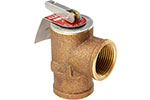 | Pressure relief valve | Safety component that ensures pressure does not become dangerous | |
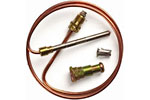 | Thermocouple (only found in older boilers) | Essential component in preventing gas leaks if your pilot light goes out | |
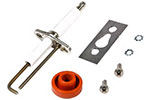 | Ignition | Ignites the pilot/main flame |
If you need a new boiler, our expert guide on buying the best boiler will help you get the best installation
How much is a boiler service?
A boiler service, you tell us*, can cost between £70 and £110 (not including any resulting repairs).
An annual boiler service is the best way to keep your boiler in good working order, to diagnose problems early and limit costly repairs. Worryingly, our latest survey figures show that around half of people don't get their boilers serviced annually.
Failure to get your boiler serviced annually will also, in most cases, invalidate its warranty. And could mean that your boiler is working less efficiently than it should be, costing you more in energy bills.
You might want to consider taking out boiler cover to give you greater peace of mind in case your boiler breaks, but our research found you might be better off without it. See more of our advice on choosing boiler cover, and when you're better to pay as you go for repairs.
Head to our guide on getting the best boiler service to make sure all the important checks happen, or call a Which? Trusted Trader to book a boiler service.
* Based on an online survey in June 2025 of 10,064 UK adults aged over 18 who are responsible for the maintenance and repair of their boilers installed since 2019.
Reduce energy bills
Use our free Home Energy Planning Service to build a personalised plan to make your home more energy efficient!
Start your plan