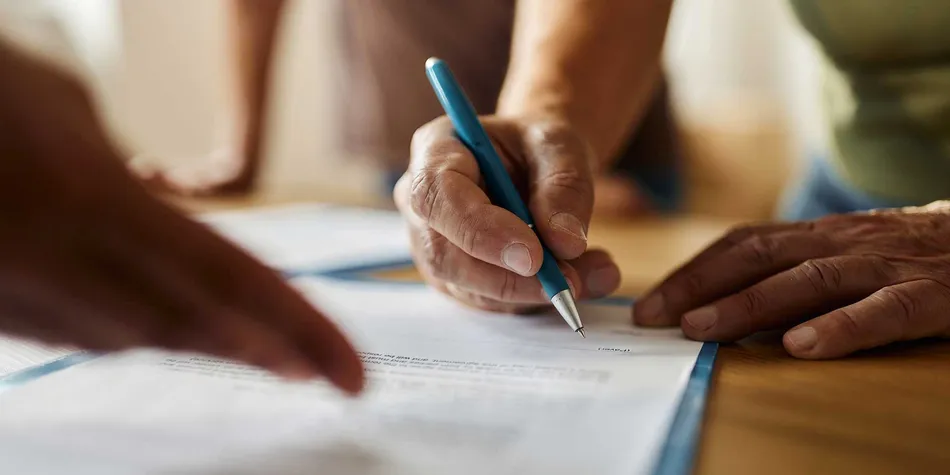
The best time to make a power of attorney is yesterday

James brings experience from the BBC and commercial radio to our award-winning video and audio team, where he produces our always-on podcasts and presents Which? Money, our weekly personal finance podcast.

Too many of us put off a task that should be done sooner rather than later: making a power of attorney (POA).
This legal document lets you give at least one other person the right to make decisions on your behalf about your health and/or finances. Having a power of attorney in place is useful if you become unable to make decisions yourself – for example, due to illness.
In this episode presented by James Rowe, Which? senior researcher Megan Thomas shares some new Which? data showing that just 1% of those surveyed created their POA before the age of 50.
Megan is joined by James Buchan from the Which? legal team, who explains what can go wrong if you don’t have a POA set up, including how costs can spiral due to ongoing court fees and how it can lead to fractured relationships between family members and loved ones.
James Rowe: Far too many of us are leaving it too late in life to create a power of attorney. Here is why you need to set one up sooner rather than later. Welcome to Which? Money.
Hello, it's James in the Which? studio alongside Which? senior researcher Megan Thomas. Megan, hello.
Megan Thomas: Hiya.
James Rowe: And joining us down the line from the Which? legal team, James Buchan. James, hello.
James Buchan: Hi, James. How are you doing?
James Rowe: Very good, thanks. Nice to have you back. Becoming a bit of a regular – two times in three weeks, I think.
James Buchan: I know.
James Rowe: Megan, I'm going to come to you first. As I said, you are indeed a researcher. You've done some new research into powers of attorney. But first, do you want to just get us all on the same page – remind us what they actually are?
Megan Thomas: So, a power of attorney allows you to make decisions on behalf of someone else, whether that's financial or health, generally if they're not able to make it themselves because of ill health or something.
James Rowe: And it's a legal document. It's legally binding, and it means the donor – I guess is the correct term here – it means the donor forfeits control of their own finances – think bills, pension, things like that – to someone else.
Megan Thomas: Yeah, so someone can manage those accounts for you and pay your bills, things like that, yeah.
James Rowe: And an important clarification here. In England and Wales, there are two types. We've just mentioned bills and that kind of thing, but there's also stuff around health and welfare as well. Do you want to just clarify the difference between the two?
Megan Thomas: Yes, so the financial and property affairs is, as it sounds, managing money, whereas health and welfare will be decisions around your care. It could be something around your wishes, like sort of do-not-resuscitate orders, things like that.
James Rowe: And James, just to come to you, we mentioned the differences there. Those are primarily for England and Wales, but it is different in the other home nations, isn't it?
James Buchan: Just to qualify, I'm not a Northern Irish or a Scottish lawyer, so I'm not 100% familiar with all those areas. But Ireland still uses the old-style powers of attorney, the enduring powers of attorney that we used to have in England and Wales before 2007, and they deal purely with financial elements. In Scotland, they have something called continuing powers of attorney, which they also have both sorts of powers of attorney, but they generally roll them into one document.
So it's slightly different in the different home nations' jurisdictions, but there are their own versions.
James Rowe: And James, sticking with you then, without necessarily getting into all the details because I'm sure we'll probably cover that off in the next half an hour or so, just how important is it for everybody to have a power of attorney?
James Buchan: It's really, really important. For example, if you had an accident and you weren't able to manage your finances, if you don't have a power of attorney, then there's nothing set which says somebody has an automatic right to manage those affairs – so not even your spouse or anything on those lines.
If you don't have a document in place, then potentially your family, relatives will end up in something called the Court of Protection, which is an application to the court to make an application to be able to manage your finances, which costs significantly more than a power of attorney would do. The court fees are very, very high, and it takes a long time.
You're talking a very, very bare minimum six to nine months from making your application to a point where the order is given.
So if you think nine months nobody's able to manage your gas account, nobody's able to sort out your bank account, nobody's able to deal with your – if your property need to be sold in a rush, or something on those lines, there wouldn't be anybody that would be able to do that. You would be very much waiting until that order is put in place.
James Rowe: So, Megan, James says it's really important to have one, but coming to your research, not a lot of people you spoke to actually have one, do they? What did you find out?
Megan Thomas: Yes, so we did a survey of 1,096 Which? members in August, and we found half of the people we surveyed did not have a power of attorney set up. Even among those who did, the average age at which they set it up was 68, and 11% hadn't made one until their 80s.
James Rowe: Which is just absolutely astonishing. I don't know what you were expecting when these survey results were going to come back, but were you as astonished as I was? Because 11%, did you say, of people didn't make it until they were in their 80s?
Megan Thomas: I can't believe it. There's always so much to do, and you can see how these things get at the bottom of the to-do list, like, "Oh, I'll get round to it when I get round to it," but what we're reminded here is that it can make such a big difference to get ahead of that and do it sooner.
James Buchan: Was that to Which? members, your –?
Megan Thomas: Yes.
James Buchan: I think probably Which? members are probably not representative of the wider statistics. I would say that 50% is probably a lot higher than what the general public would be.
Megan Thomas: Definitely, yeah.
James Rowe: Which I think paints an even more stark picture, doesn't it? For those Which? members then, did they tell us why they'd either put it off or why they didn't actually have one in the first place?
Megan Thomas: So, they were different reasons. The biggest one is around a quarter hadn't because they said they're in full health and they've got mental capacity, but actually, you can't register your power of attorney if you don't have mental capacity, so that's not a good reason to put it off.
James Rowe: James, what are your thoughts on that?
James Buchan: I think that Megan probably from her research saw that people don't really understand powers of attorney. If you compare wills to powers of attorney, I think most people understand what a will is, what it does, and they understand the different elements to it. Whereas I think when you start talking about powers of attorney, there's all these different names and titles, and how does it work, and what do I need to do, and where do I need to register it, that I think people don't really understand.
With the powers of attorney, they have to be registered at the Office of the Public Guardian before they can be used, but you can only make a power of attorney when you have capacity. We hear a lot, "I'll make it when I don't have capacity." It was like, well no, you won't, because you make it yourself; it's not people doing it for you. And then it has to be registered, and it takes about 12 to 16 weeks to register a power of attorney, so it can't be used until you get a stamp on the document saying it's ready.
With the finance power of attorney and the health power of attorney, there are slight differences. The finance one, as soon as it's registered, can be used straight away if you've chosen that option, whereas the health power of attorney can only be used when you've lost mental capacity. If you can make your own decisions about where you live and how you cared for, then that's really easy – you can do that. But if you can't, it's only at that point the health power of attorney can then be used by your attorneys who you've given the power to make those decisions.
James Rowe: Megan, something that jumped out at me in your research: a lot of the people who said they didn't have one because they still had mental capacity, they also said that they had a trusted person in their life to rely on. That's no excuse either. That doesn't sort of give you a free pass on these types of things, does it?
Megan Thomas: Well, yeah, you can rely on them emotionally, but that's not going to get you anywhere with the banks. They're not going to let them in. They need confirmation that they have the legal power to look after things for you.
James Rowe: James, how far would somebody actually get? Let's say you didn't have power of attorney, but you were in this situation where you had somebody you think you can rely on. How far would that person you think you can rely on actually be able to get?
James Buchan: Not far, I think. As we've become more – with data protection and GDPR and all those sorts of things, if my wife had an accident, she was in hospital, she was mentally fine, but she wasn't able to go into the bank, and I went in and just said, "My wife's had an accident, I've just come in because I need to withdraw some money for her account," I would be shown the door quite quickly, and rightly so, because you could be anybody walking in trying to do that.
Without a power of attorney, there's no legal authority for you to be able to deal with something. A lot of people think, "I'm married, so therefore my spouse is able to do whatever I can do." That's just not the case. You might be fine if you phoned up the gas company or an electric company; they might let you deal with things, but ultimately, they shouldn't be doing.
Without a power of attorney, it's very, very, very difficult to be able to manage somebody else's finances or deal with their property if you don't have that in place.
James Rowe: Should we stick with this point around if you don't actually have one, and what could happen, what can go wrong? What realistically is going to happen if you do actually have to deal with somebody else's finances and you don't have this power of attorney in place at all?
James Buchan: It's a very, very difficult situation for somebody to be put in. If you go into the bank and they turn you away, your only option is, like I said earlier, to go down the Court of Protection application, and you're applying to the court for something called a deputyship application. It's similar to a power of attorney, but it doesn't have the same freedom, because you are restricted to what the court says you can do.
Every year, you would have to make a report to the court to say what you've done with the funds and how you've used them, and there's some decisions that you would also need to go back to the court for. If you wanted to sell a property, for example, you wouldn't be able to do that with the order. You'd have to go back to the court and say, "Can I have permission to sell a property?" It's unlikely they give you the ability to make gifts, so for example, you wanted to gift some money for tax-planning purposes, those sorts of things, the court is probably quite unlikely to give you permission to do that.
It's just more restrictive, and you're in a different world to what you are in with power of attorney, which has far more – the way I always look at power of attorney is you can do anything that the donor is able to do. If I had made a power of attorney appointed you, James, you'd be able to buy a house in my name, mortgage it – anything I can do, as an attorney you would be able to do. The Court of Protection is a very, very different beast in that respect.
James Rowe: And I can only imagine the fees are going to absolutely skyrocket as well, right?
James Buchan: Skyrocket. It's very difficult for somebody to do it by themselves, so you would always generally need a solicitor to help you do a Court of Protection application because it is a complex journey and a complex application.
You have to pay an annual bond fee so that if, as a deputy, you did run off with all the money, for example, that bond in effect covers what's there. There's an annual fee. You have to do accounts every year. I can't remember what the fee is – you might know, Megan, off the top of my head, because it's a while since I've done it, but it used to be at least £400, and we're going back about ten years, so I'm not quite sure what the fee for a Court of Protection application is, and that's each time you need to make an application.
So you did have to go back and say, "I need to sell a property," that's another application fee you would need to make on top of the original ones. It's far more restrictive, it's a lot more stressful, it's more litigious in that respect as well, because you may have somebody called the Official Solicitor that gets involved. They don't normally, but sometimes if it looks like there's a problem or an issue, the Official Solicitor, who acts on behalf of the government, may get involved and start asking questions.
If you can avoid it, try and avoid it.
James Rowe: Megan, I think you spoke to one Which? member who did have to go through this, didn't you?
Megan Thomas: Yeah, I spoke to a couple, actually. Just on the costs, one person I spoke to who had to set up a deputyship for his uncle, the process of registering alone took a year and cost £3,500 in total, which is completely massive, especially compared to how much it would cost to do a power of attorney.
One extra thing that he mentioned was that when he was going into bank branches, no one knew what he was talking about with deputyship. He kept running into issues.
James Buchan: Yeah, that doesn't surprise me.
Megan Thomas: Where even with power of attorney, if you're unlucky, the bank branch might not know what you're talking about, but because it's even more obscure, he just really struggled, always having to escalate issues and things like that.
And then another person I spoke to, their mother had had a stroke and they hadn't registered their power of attorney –
James Rowe: But she knew who she wanted the attorneys to be and everything, didn't she?
Megan Thomas: Yes, because there were some sort of conflicts in the family, and they had a sister who had previously taken money, actually, from their mother, and they knew that they didn't want her to be attorney. But when it came to signing up for deputyship, which they had to do in the end, she ended up kind of getting involved, and it was this elaborate sort of court battle, and they ended up just appointing a solicitor. But I think it was a lot more difficult than it would have been if they'd been able to just set that power of attorney up initially.
James Rowe: James, do these sorts of stories ring true from your days in private practice? With families, it can naturally cause conflict, can't it?
James Buchan: Yeah. Everybody loves each other until a point that they don't, I suppose. Most families are absolutely fine – that's me being slightly pessimistic, but most families are absolutely fine.
You do get, unfortunately, some families who have siblings that don't get on, and it always – not amuses me, that's very much the wrong way to say it, but you get people that will say, "Well, I've appointed both my children, but they hate each other." That's kind of like, it's not probably the best thing to do, because even if they hate each other now, they're not going to like each other more just because you've appointed them as attorneys, and trying to get themselves regulate their own behaviour to reach a decision which they both agree on is just not going to happen.
It's really important to think about who you are appointing as attorney, and if you think people are not going to be able to work together, then sometimes you may have to potentially leave somebody out or leave both people out and appoint people that are neutral. You can appoint solicitors or you can appoint friends or other relatives.
It's really important to remember as well, if you do have some family members that are going to cause problems, do you want to put that stress onto friends? Because it could become something that's very hard for them to deal with. It's really important to think about your family situation and how you can kind of best manage that with a power of attorney.
James Rowe: And hopefully, for people hearing this right now, maybe this works as motivation for those who don't have a power of attorney to actually set one up. Us here at Which? is possibly a very good place to start because we do offer that service. We'll pop a link in the show notes for you to find out more.
Just coming back to you, Megan, on the length of time it can take to set up a power of attorney. I think you mentioned it briefly before, but do you want to just remind us of some of the stats you've got around how long it can take?
Megan Thomas: Yeah, so we put Freedom of Information requests into each of the public guardians for each of the nations, and it paints a very different picture in each of the nations. In England and Wales, it takes 44 days, Northern Ireland only 23, but in Scotland, it takes 276 days on average, which obviously, if you really need it, is far from ideal.
James Rowe: James, do you know why it might be taking so long in Scotland?
James Buchan: I don't know. I can only really talk of England and Wales in that they have – at one point it was taking about 20, 24 weeks in England and Wales, but they have dramatically reduced that, I think by improving their processes and digitalisation and all those sorts of things. As Megan said, around 44, 45 days is – what, about six weeks, seven weeks, something on those lines, if I'm trying to work out my maths correctly. That is as quick as it's ever been. It's never been quicker than that.
I think the difference in Scotland as well is it's not a prescribed form. In England and Wales, the form is the form. The power of attorney form is the form that is completed. It doesn't matter whether you use our service, solicitor service, or you're doing it yourself, it's the same form that's filled in. Whereas in Scotland, you don't have that. It's a bit like a will. You can look at a thousand wills, which all say the same things, but they can all look completely different. It's similar in Scotland as well.
I don't know if that is some element of it as well, that they have to scrutinise the forms to make sure there's things in there that shouldn't be in there, but I can't think of any other reasons why that might be the case.
James Rowe: But that is definitely some more motivation to get moving and get one set up. I guess the best possible day to set one up is probably yesterday, isn't it, in that regard?
James mentioned before about trying to choose who should be your attorney. Is that the most important question to ask? Is that the first place you should start really if you don't have one already?
Megan Thomas: Yeah, I think the whole thing doesn't really work if you don't really trust the person or the people that you pick. Exactly as James said about the sort of conflict that can arise, we did hear from some members who were in these really difficult situations because either they already had sort of negative relationships with the family or that they've come about because of that.
One member we spoke to was joint attorney with his brother, but that relationship had just completely collapsed. His brother had reported him twice, actually, to the Office of the Public Guardian, and even though we're on okay terms before, but they just could not work together and they just completely mistrusted each other, and it made it kind of impossible to get anything done.
James Rowe: James, Megan mentioned there a joint attorney. I guess that suggests you can have more than one person down as attorney, is that right?
James Buchan: Yes, so you can have up to – I think it's up to six attorneys in the form, which is a lot, I would say.
Choosing your attorneys is important, but I think it's really important to then look at how you are appointing them. There's different options in the form: you can appoint them jointly, which means they need to do everything together; you can appoint jointly and severally, which means that they can act together or they can act individually with each other, which is usually the most flexible way; and then there's a hybrid way where you say that they have to act jointly for some things, but they can act jointly and severally for others.
Joint appointments can seem like the securest thing, but they can be quite problematic, because if, for example, one of your attorneys is unable to act, or they don't want to act, or they've died, it means no decisions could be made. It's almost like your power of attorney has become ineffective, because if they can't make decisions, then they can't use the power of attorney.
Once you've chosen your attorneys, chosen how you want them to act, providing them with flexibility is generally the best way forwards. Some people do like to put what are called instructions to their attorneys, which sometimes can seem quite innocent to the person making the power of attorney, but actually can become quite problematic. If you said something like, "I don't want my attorneys to make investments." Okay, well buying a pint of milk is an investment, so going in and doing the weekly shopping is an investment if you want to read it in a strict legal sense. That can seem like a really innocent thing, but actually, if you put it in that term, it can become very problematic.
What the Office of the Public Guardian are quite good at is they'll strike out instructions like that because they will say that they fetter the power that you're giving your attorneys. If you make them too restrictive, the OPG will say, "No, you can't have that because you're trying to restrict the power that you're giving people." You have to be quite careful not to try and really reduce the power that you're giving your attorneys so much that it means they can't do what they're meant to be doing.
James Rowe: And what's a replacement attorney?
James Buchan: A replacement attorney is somebody that you appoint who will step in if one of the attorneys or all of the attorneys can't act. If I've got a power of attorney, I appoint you, James – let's go back to that example – and I say, "I want James to be my attorney, but if James can't act for any reason, then Megan will step in as the replacement attorney." That's the simplest way of explaining it. They're not your attorneys, but if they need to step in later on down the line for whatever reason that might be, they are able to then do that, and you have somebody as a backup.
James Rowe: And Megan, all throughout this, I think it maybe gets a bit lost sometimes that this is such a personal thing to be dealing with and to be setting up. Maybe we've touched on this already, but if you do live in a situation where you don't have somebody you can trust – let's say you don't have a spouse, or you don't have children, or maybe they're estranged, and you maybe don't even have any close friends – what do you do then?
Megan Thomas: It is tricky. We had quite a few people writing in saying, "I mean to, but I just don't know who to appoint." But you can appoint a professional, so usually a solicitor, and that will cost you – it will be expensive – but I think that is kind of your best option, really, yeah.
James Rowe: James, naturally, all of this I guess for a lot of people is going to sound really, really daunting. Is Which? a pretty good place to get started? I'm not trying to toot our own horn, but I guess it is, isn't it?
James Buchan: Other services are available, which is what we say anyway. You can complete your own power of attorney; there's nothing to stop you from doing that. The Office of the Public Guardian, you can complete using their service, but there's no check on that document.
What we find our service is a bit like a hybrid between a do-it-yourself and a solicitor service in that we will check your document for errors, make sure it's being filled in correctly, that you haven't put anything in there which is going to be problematic, and provide guidance in relation to that. We find our members really value the service.
The example I will give is, let's say, for example, a husband and wife are doing financial powers of attorney each. They've got their own documents. That's another thing: spouses don't have joint documents; everybody has to have their own individual documents. Let's say you've appointed an attorney who's called Carol, and in one power of attorney, you've called her Carol without an E, and in the other power of attorney, you've called her Carole with an E. When you send that into the Office of the Public Guardian, they don't cross-check documents, so they won't pick up that there's a misspelling; they would register that document and it would be fine.
When Carole with the E went to the bank and showed her ID, and there's no E on her ID, the bank would say, "Well, I'm sorry, that doesn't match your ID, you can't use this power of attorney here." Our service will pick up the fact – because we do cross-check documents – we will pick up that you've made that error, and we'll flag that to you so that you can then correct it.
There's lots of people that say, "Do I need a will, do I need a power of attorney?" The answer is you need both. A power of attorney covers you whilst you're alive, and it ends when you die, and then your will takes over. Power of attorney is very important to make sure that you're going to be looked after financially and physically later on in life, and for somebody to be able to make those decisions for you.
James Rowe: James mentions about filling in forms and getting them wrong. There was a stat – I don't know if you've got this stat with you, Megan, as well, and I wonder if it jumped out to you as well – about the amount of power of attorney applications that were rejected because there were mistakes in them.
Megan Thomas: Yes, so investment platform Hargreaves Lansdown put Freedom of Information requests into the OPG – so that's England and Wales – and found that 48,945 power of attorney applications were rejected in 2024–25. Now, that's only 4% of all applications, but it's still a lot.
James Rowe: It's still a big number.
Megan Thomas: It's still a big number, even though it's a small percentage.
James Buchan: The majority of those would probably be because they haven't actually been completed correctly. When they're signed and executed, they have to be done in quite a strict order, and some people get them wrong in the way who signs when and who signs at what point. That probably won't include those which have then turned out to have errors in them after registration where people have then gone to use them and they can't.
Those sort of date of birth errors, the OPG won't know those dates of birth; they will just see it and it looks right, so they will approve it. Whereas I think the majority of the ones that are rejected at source, by the OPG, will be where they haven't been filled out correctly or they haven't been filled in at all, or it will be errors that people make like the donor will appoint themselves as their own attorney. It's those sort of things where they haven't quite filled in a part of the form right.
The forms themselves look quite benign, but they are quite tricky to make sure you fill them in and that you fill them in correctly and make sure that they're dealt with in the right way.
James Rowe: James, I'm only going to point the finger at you here because out of the three, you're the only one with the relevant qualifications and the relevant experience, but surely this process needs to be made easier. It sounds like it can get quite difficult when it could be, and possibly should be for a lot of people, maybe a bit more straightforward. What do you think?
James Buchan: I always look at the form and think there's ways that this could really be simplified to make the form itself and the process itself easier. The OPG about five, six years ago was looking at turning to a purely digitalised service, and I was part of the working group with the OPG that were looking at how they would do this. They got to a point where it was better, but there were still issues potentially with it being totally digitalised.
It's not going to work for a lot of people; they don't have access to be able to do it digitally, and the way it was going to be done just didn't quite work, and so that's been put on the back burner and hasn't been brought forward. One of the major reasons for it is, like I said, there's about 6,000, 7,000 applications a day get into the OPG. If you think an LPA is about 20 pages, you think the amount of paper – at one point, the OPG had something like 1.5 km of paper in there, and that's powers of attorney that are all waiting to be registered or going off or there's problems with.
You would think there would be a much simpler way of doing it, but we haven't quite got to that point. What I would say as well is, and Megan touched on it earlier, when you go into the banks or wherever you're going, they all then have their own individual ways of dealing with powers of attorney. It could be you speak to somebody in the bank that doesn't know what a power of attorney is, or you speak to somebody that's been on their internal courses and they do have quite good knowledge about it and that's really helpful. But it almost feels as though it's a bit of a mystery to most people, this power of attorney business, and that's why I think what makes it all a bit harder for most people.
And then when people look at it, they just think, "Oh, I'll do it later because it's just a lot of effort," when in theory they're really important documents and we should by now have a much simpler process and a simpler way of dealing with them, I would have thought.
James Rowe: Yeah, this reminds me of sitting here maybe about half a year ago and I was doing a podcast about pension transfers, which are, as everyone may know, notoriously difficult as well. I seem to remember that the terminology we used was that you had to provide a wet signature – you had to physically sign the document.
James Buchan: Physically sign.
James Rowe: Exactly, yeah, which I guess maybe this is a bit similar in that regard. Maybe both need brought up to modern-day standards at some point. But thanks for working on that working group, James. It sounds like you were at least invested in trying to make it better.
James Buchan: It almost felt like it was there, and then I think we had an election and it just kind of went put on the back burner and it hasn't ever quite been picked up again. The last I heard is that there was no intention to pick it up, really.
It was a shame, but I think the digitalisation – particularly when you look at the age demographic of people that are more likely to undertake a power of attorney, it just wasn't hitting the same traction in terms of people. It was making people more reluctant rather than encouraging them, and that just wasn't really helping. And then they did admit that they would always need a paper process, so you'd never be able to go purely digital anyway, so I think that's probably why it was there.
There's no reason why the forms themselves and the acts that are part of the forms need to be there. The attorneys, do their signatures need witnessing? No, probably not, so why not remove that element of it? There's elements of the form that could be removed just to simplify it that don't remove from the layers of protection that are given to the donor.
James Rowe: I think we should try and end on some sort of positive. Megan, do you want to wrap up with some final thoughts, maybe just to motivate people to think, "Oh, yes, actually, I should get it done."?
Megan Thomas: One thing I actually heard from a lot of people – some people wrote in specifically just to say they were really daunted and it was this sort of menacing task they needed to get done. But there's a really in-depth help guide from the Office of the Public Guardian if you do decide to do it yourself, so it's 66 pages, but it tells you absolutely everything you need to know.
You can just set aside an afternoon. It's not going to be the most exciting afternoon you've ever had, but to really just get to grips. And if at that point as well, you can take extra help as well if it's too scary.
James Rowe: James, what about you?
James Buchan: I completely echo that that Megan has said. They are such important documents and so necessary that they're something you really shouldn't put off doing, and don't wait until you're in your 60s, 70s, and your 80s. We all have a financial footprint, and so it's something that we should all have in place.
It's one of those things: if you've got it, you'll be so glad you've got it, and your family will be so glad you have it as well. It's a positive action and a positive decision that you're making: you're choosing who's going to deal with things. Whereas if you do end up in the Court of Protection, anyone could apply to be your deputy in the Court of Protection.
There's no strict order of people that can apply. Joe Bloggs down the road could apply to be your deputy; there's nothing stopping anybody from doing it.
Take a positive action and just do it as part of your life admin, I think is what I would say. If you don't want to register the documents straight away, you don't have to; you can just stick them in a drawer and leave them, and register them later on down the line, but my advice would always be get them made, get them registered, and they're there if anything does happen, and they're there as a safety net.
James Rowe: And I think we always say this about wills as well: it's good advice to keep an eye on them periodically just to make sure they're as watertight as they can be.
James Buchan: It is, yeah. The thing with powers of attorney is you can't amend them, so if you do want to change your attorneys after they've been registered, you would have to create new documents and deregister the existing documents, which you can do. It's not a big faff to do it, it can be done, but it's just being mindful that things change.
You may appoint, for example, friends as your attorneys, and then later on in your life, you might have children that you want to appoint as your attorneys; you would have to make new documents, but it's just factoring that into your life admin, I suppose, and then making sure that you have yourself covered in that respect.
James Rowe: Sound advice. Hopefully, if you don't already have one, this last half an hour or so gives you the motivation you need to go out and get one set up. As I mentioned before, Which? does offer that service. We'll pop a link in the show notes for you to find out more.
For now, Megan, thanks very much for your time.
Megan Thomas: Thank you.
James Rowe: And James, thank you.
James Buchan: Thanks, James.
James Rowe: That brings to an end another podcast from Which? There's loads more for you to read about everything we discussed today. Just head to the episode description for more useful everyday advice.
There you'll also find an exclusive offer for podcast listeners like you to become a Which? member for 50% off the usual price, giving you access to our product reviews, our app, one-to-one personalised buying advice, and every issue of Which? magazine across the year. Plus, your membership helps us to make life simpler, fairer, and safer for everyone.
If you'd like to know when we release a new episode, then make sure you press subscribe wherever you're listening. That way, you can be one of the first to listen.
And for any questions, comments, or anything in between, follow us on social media @WhichUK or email us, podcasts@which.co.uk.
Goodbye.
Be more money savvy
free newsletter
Get a firmer grip on your finances with the expert tips in our Money newsletter – it's free weekly.
This newsletter delivers free money-related content, along with other information about Which? Group products and services. Unsubscribe whenever you want. Your data will be processed in accordance with our privacy notice.
More podcasts from Which?
The Which? podcast showcases the best content from across our website and magazine.
In our Which? Money episodes, released on Fridays, we give advice to help you get on top of your bills and tackle the issues hitting your pocket, whether that's spiralling energy costs or your weekly food shop.
The Which? Shorts podcasts offer you a free insight into some of our favourite articles from our suite of magazines.
Plus, keep an eye out for bonus episodes that tackle important issues, from motoring and tech to health and wellbeing and travel.
How to listen to the Which? podcast
We release new episodes regularly, and the podcast is available wherever you usually get your podcasts.
Subscribe using one of the links below, or click this link on your mobile to find us in your favourite podcast app.
As part of your subscription, Which? members also get access to exclusive podcasts.
- Listen to member-exclusive podcasts on our website
- Listen on the go by downloading our app on Google Play
- Listen on the go by downloading our app from the App Store.
If you're not already a member, podcast listeners can get 50% off the first year of an annual membership.