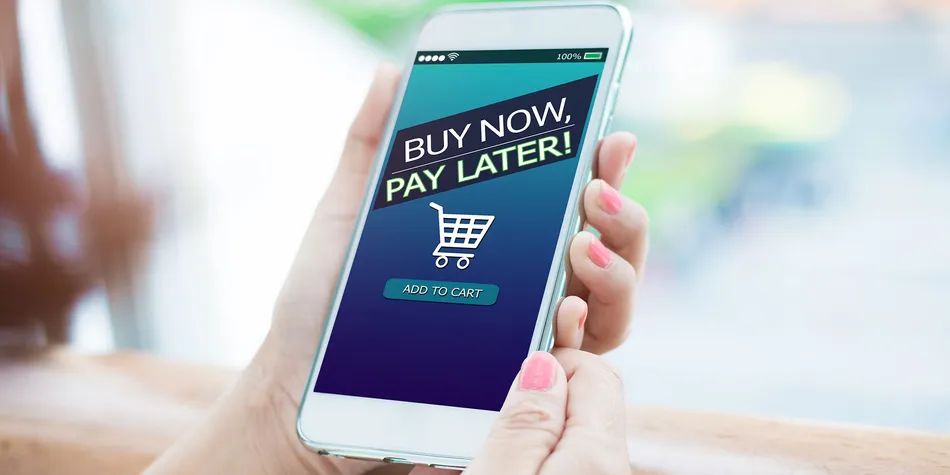
Will new ‘buy now, pay later’ protections help everyone?

Having worked at the BBC and in commercial radio before joining Which?, James produces our always-on podcasts, and oversaw the launch of our member-exclusive podcasts in 2025.

One in five UK adults uses ‘buy now, pay later’ services such as Klarna and Clearpay to spread the cost of online purchases. Earlier this month, new government regulations came into force, giving consumers stronger protections when using these services.
In this episode of Which? Money, our money editor Grace Witherden tells us what the new regulations mean for you.
Grace also shares examples from previous Which? investigations that show why we have been campaigning for stronger protections, and why these changes were long overdue.
Plus, Kate Pender, CEO of Fair4All Finance, explains how these changes could come with major trade-offs that will directly impact the borrowers who need flexible credit the most.
James Rowe: After years of waiting and several Which? investigations, shoppers like you and me have stronger protections when using buy-now-pay-later schemes. Here is what you need to know. Welcome to Which? Money.
James Rowe: Hello. It is James at home this week. But joining me down the line from our studio is our Money Editor, Grace Witherden. Grace, a big welcome back to the podcast. It has been a long time.
Grace Witherden: Hi, it is great to be back.
James Rowe: Nice to have you here. Later on as well, we will be joined by Kate Pender, who is the CEO of Fair4All Finance. That is a not-for-profit organisation set up through the government back in 2019 that works to boost financial inclusion. So, we will be chatting to her a little bit later on.
But first, Grace, buy-now-pay-later, now these are schemes run by providers like Klarna and Clearpay. These allow shoppers to pay for purchases in instalments, interest-free is one of the key points of it. But the regulations have changed over the last week or so. We will get to that later, but do you want to just add some flesh to the bone about how these schemes actually work? What are they? Who are they for?
Grace Witherden: Well, usually if you are shopping online, typically online, you could see them as an option at the checkout. There might even be three or four options, and you will be able to split the cost of what you are purchasing over a couple of months. You can set up this payment, and then you do not really have to think about it. You pay that monthly, and it is a really easy way to split the cost of a purchase, like if you were going to buy not just clothes, but bigger items like white goods that typically cost a bit more.
You can even use them for things like holidays. I think we have seen them in the past on delivery takeaway apps. It is really amazing what you can use it for. It is everywhere, I would say. It has become one of those really common ways to pay.
James Rowe: And it has become more popular. £60 million was spent using buy-now-pay-later back in 2017, and by 2024 it was £13 billion. One in five adults now use it. But as of this month, as I just mentioned, there are new protections for shoppers. Do you want to just take us through the headline changes?
Grace Witherden: Yeah. So, previously, these types of products were not regulated, so they did not work in the same way like a credit card, which is regulated. You could say that there has been a bit of a buy-now-pay-later boom, especially 2020, 2021, it has become such a more common way to pay. But we did not quite have the regulation for those products, and it has taken the government maybe five years to put this regulation into place.
But now they are on par with credit cards, meaning they are regulated, and you have, ultimately, you have more protection if something were to go wrong, and your rights to complain about the provider.
James Rowe: Yeah. So, there is going to be extra protections. There is going to be affordability checks upfront as well. We will get into all of this in a bit more detail shortly.
But these are big changes for consumers, bigger protections, which makes it easier and I guess fairer for us when we want to use them. And we have been calling for changes to buy-now-pay-later for a little while now, haven't we? We have been doing some investigations into how they work and what we have seen.
Grace Witherden: Yeah, we have done quite a bit of research in the last few years. So, one of our surveys, we surveyed 30 users, and many people described buy-now-pay-later as a way to pay, a budgeting tool, really good for money management. But someone even said to us, one participant said, "It doesn't feel like you're committing to a credit agreement." So, even though it is great for budgeting, maybe there was not that sense that actually you are borrowing money here – and things can spiral if you take on too much. So, maybe there was not quite that recognition there.
And we also uncovered real consumer harm. We found that some of the shoppers using buy-now-pay-later, sometimes they were left waiting weeks or months for refunds. They had to continue to make repayments even after returning items, so that was a bit unclear. They were charged for cancelled orders, and they were sometimes passed between the retailers and the buy-now-pay-later providers if something went wrong, and neither took responsibility. So, it was really difficult for people to get refunds when something had gone wrong.
And customers were worried about damage to their credit records when these disputes were ongoing. And these cases did demonstrate a clear lack of consumer protection before regulation. So, we were always pushing for stronger safeguards. We wanted affordability checks, we wanted clear information at the checkout, we wanted stronger warnings that buy-now-pay-later is credit, an easier complaints process, faster regulation, and we wanted better protections when things did go wrong. And many of those recommendations are now in the new rules, which is great.
James Rowe: Which is great. It is a great Which? win, but also a win for consumers, which is the most important part. But it is brilliant that we have been able to play our part in this to make it safer for consumers.
And just going back to something you mentioned about some of our research that we had done into it, it seemed like buy-now-pay-later was almost in this bit of a grey area, because it did not have the full protections of, let us say, a credit card. And many people simply just saw it literally as a different way to pay for goods, right?
Grace Witherden: Yeah. Bearing in mind the Consumer Credit Act, that legislation is 50 years old – and we have got new ways to pay now. Even the way we have paid has changed, like a lot of the time now you buy things on your phone with one click, Apple Pay, all these things that are around now that actually were not around when this legislation was originally designed. So, I think that is why it took a bit of time to make it so that it could also include these products. Because this is a really convenient way to pay, and it is actually great being able to split the cost across a couple of months, providing you can afford the item.
But yeah, it definitely was a grey area, like a really useful tool, but you always had to be aware that it is credit. And it was not just us calling for regulation. Many other consumer champions were also calling for regulation, and some of the providers themselves were. I think Klarna was calling for regulation as a regulated Swedish bank, and they were ready for it. So, everyone agrees that this is good for consumers.
James Rowe: And just going back to a little bit about consumers perhaps not fully understanding how buy-now-pay-later works, do you reckon a lot of this misunderstanding perhaps came from just the ease of using it? It is not like a credit card where you have to apply for the card and then they will give you a credit limit, for example. Whereas with buy-now-pay-later, it is almost just as quick as clicking a button and you are off and running, aren't you?
Grace Witherden: Yeah, it was really quick, and it was really accessible. But there was definitely some investigations that my colleague Hannah did, and sometimes there would be six or seven different options at the checkout with different providers for buy-now-pay-later. And I have seen in the past retailers even offering discounts if you used it. So, it was just everywhere, really. It is hard to escape.
And I also do think now, perhaps with younger shoppers that might not be used to using a credit card, that it has become a more easy, accessible way to pay. When I went to university, I was able to get a student credit card. But you do not really get student credit cards now. That is just not really something you get. So, I do not know, but I am sure lots of university students probably use Klarna or Clearpay to pay for what they want. So, I do think it is just you hear about it more now, and maybe if you are younger, in my opinion, if you are younger, maybe that is a more common way to pay now than it would be to apply for a credit card and then use that instead.
James Rowe: Yeah. I guess modern technology, it is more convenient, and just a pace of life nowadays for younger people especially, I imagine it is kind of the go-to rather than, as you say, applying for a credit card and waiting for it to arrive in the post as many of us had to do beforehand.
Should we get into these changes then about what these protections are going to look like? Should we start at the top with affordability checks? So, I guess this is one of the first things you would come across. Does this mean – I mean, you tell us what it means – does it mean that it is going to be a hard check on your credit score, for example? How are these affordability checks going to work?
Grace Witherden: Yeah. So, now providers must assess if you can afford the repayment before lending. So, this is typically what would happen actually if you applied for a credit card, you would have this check. But you would not have to keep having this check when you purchase something on your credit card. You would obviously be checked at the point of application, and then you would maybe have a credit limit that you could use. But with the buy-now-pay-later, you will be checked every time you purchase something. So, in some ways, you could argue it is different to a credit card, because with a credit card you have a rolling credit limit.
But with this, every time you make a purchase, you will be assessed at each point. So, you are not going to have that sort of open "oh, you can spend up to this amount before being checked". You are being checked every time you make a new purchase with buy-now-pay-later. And yeah, the aim is to reduce unaffordable borrowing before it happens.
James Rowe: How do we envisage this taking shape? Is it going to slow purchases down? Is it almost going to dissuade people from using buy-now-pay-later because it slows it down?
Grace Witherden: It won't slow it down, but it might be that some people could be rejected that might not have been before, perhaps, if it is seen as unaffordable for them.
James Rowe: And that is something we will be chatting to Kate about very shortly. Let us get to the clearer information upfront, because again, this was something that was lacking before these regulation changes. There is going to be a lot more information that is made clear to the consumer before they enter into a buy-now-pay-later scheme. What sort of thing are they going to see?
Grace Witherden: Yeah. So, now, before entering into the agreement, you will have to see the repayment schedule, the payment amount, the consequences of missing a payment, your cancellation rights, and your complaint rights. Because obviously, when we did our research a couple of years ago, one of our key findings was that many consumers did not recognise buy-now-pay-later as a form of borrowing. So, hopefully, with this clear information at the checkout, it will really make consumers think, "Yes, I am taking out this credit agreement."
James Rowe: It is crazy to think – and you work day in, day out with money and finances – but it is crazy to think that this sort of information was not mandated. It didn't have to be there before these regulation changes. That is wild to think that it was not there to begin with.
Grace Witherden: Yeah. I think some definitely did include it, but obviously, as you said, it was not mandated. So, it is great to see that now it is. And yeah, if you did take out a credit card, for example, all that information would be there, including all the terms and conditions, etc. So, it is good to see it aligned.
James Rowe: And then what about Section 75? This seems like one of the biggest ones to me. You are now going to get Section 75 protection if you use buy-now-pay-later. Perhaps it is wise for you to just give us a bit of a background about what Section 75 is and what protections it offers.
Grace Witherden: Yeah. So, Section 75 is something that we always shout about when we speak about credit cards – that basically, it means for eligible purchases between £100 and £30,000, you can benefit from this Section 75 protection. And it basically means that the retailer and the provider are jointly liable if something goes wrong, for example, if the goods do not arrive, if the items are faulty, or if the retailer goes bust.
So, we always say to people, "If you are going to book a holiday or make a new purchase," I am always like, "Make sure you put it on your credit card, because you need that Section 75 protection." You do get some other protections with using your debit card called chargeback, but Section 75 is a much stronger protection. And that, to be honest, would have stopped me from – not having that protection with buy-now-pay-later would certainly have put me off before booking something like a holiday. There is no way that I would not be using my credit card for that. So, it is good to see that same protection now with buy-now-pay-later providers, especially given more people are using them to book things like holidays and those really expensive purchases, like things that you might buy for your home, which are typically expensive. So, that is really good to see.
James Rowe: And this is going to help people where things go wrong. You mentioned at the top of the conversation we were having about how we have done research before about where something goes wrong, something does not get delivered, or something goes wrong with the refund or something, that you were sort of stuck between a rock and a hard place. You did not know where to turn. But now, you have got a much better protection to be able to get the money back that is rightfully yours, for example, if something has gone wrong.
Grace Witherden: Yeah, and I think it will just give that reassurance that you can use your Section 75 right and get that money back. Hopefully, it will stop that stuff we have seen in the past when people have been pit between the retailer and the provider. And I think lots of people know about Section 75. Well, I hope they would anyway, but I do feel like it is one of those consumer rights that we talk about it a lot, Martin Lewis speaks about it a lot. There are plenty of other consumer champions that are always mentioning it. So, I think it is really good awareness that now we have this with the buy-now-pay-later providers.
James Rowe: What about the Financial Ombudsman Service? So, if something has gone wrong and you are not happy, you can now go to the Financial Ombudsman Service to complain. Talk us through that for buy-now-pay-later.
Grace Witherden: So, previously, there was no independent route for resolving these disputes. But now, if you have tried to escalate the complaint and you have done everything you can with the provider itself, you will be able to take your complaint to the Financial Ombudsman Service and get a decision from them. And the Financial Ombudsman Service has said it expects going forward now with this regulation that they will get about 2,000 complaints a year.
I do not think that is a lot, actually, considering how many people we know use buy-now-pay-later. So, perhaps they think there is not a lot to – it will be interesting to see. Obviously, they do have to publish data, they do publish complaints data, so it will be good to know how many complaints they have had once this regulation has been going for a year or so to see if their estimates are about right, and it will be interesting to see what kind of complaints are being made.
James Rowe: I think maybe this is the last big one that I wanted to mention: there is now going to be more support if you miss a payment. Now, with buy-now-pay-later, there are no – it is interest-free, so there are no interest payments, but there are late payment fees. What are they going to be obliged to do if you miss a payment or if you require support?
Grace Witherden: So, now providers must contact customers after missed payments, they must explain the consequences, provide reasonable notice before further action, and signpost free debt advice where appropriate. And actually, StepChange, which is a debt charity, obviously welcomed the new regulation, but they have urged people still to take care even with the new regulation.
And they actually provided some advice for people using buy-now-pay-later to prevent the risk of debt, which is actually really interesting, which is really useful for people. They said:
Pause and take stock before you buy. Consider whether you would buy it if it was not available on credit. That is a really good tip. And also, sometimes when I am about to purchase something, I will make myself – I will give myself a day or two before I make the purchase, and if I still want it after those two days, then I will go buy it. But I think it is always good to pause.
Keep a record. Buy-now-pay-later can be available for small purchases, but obviously, it is possible to have multiple loans across different retailers. Keep a note of all your payments and the terms of each one to make sure they fit in your budget.
Be confident about the repayments, because StepChange clients struggle with credit because of unexpected events, so always be certain your income will cover the repayment.
And get support. So, if you are struggling to repay a buy-now-pay-later loan or other advice, then get free and impartial debt advice from charities like StepChange, but there are other charities that you can go to, like Citizens Advice as well.
James Rowe: Sound advice, absolutely. Grace, before you go, there is a couple of things that people should be aware of with the new regulations, one about existing purchases and one about all of the providers, because not all providers are going to be authorised, are they?
Grace Witherden: Some have, yes, a couple of providers have been given a little longer by the FCA, which is the Financial Conduct Authority, the regulator, to get ready. So, there is going to be – customers will still receive the new protections, but there are just some – some are just waiting for authorization to go through. You can go on the FCA firm checker to see the status.
And existing agreements are not covered, so this only came into effect from the 15th of July. So, if you have a buy-now-pay-later agreement at the minute, maybe that you took out in May or June and something goes wrong with that, unfortunately, you are not covered by the regulation. It only impacts agreements after that date. So, yeah, older agreements remain under the previous rules. So, you cannot use Section 75 or complain to the Financial Ombudsman Service.
Remember, with Section 75, not everything falls into that anyway – because it is only purchases over £100, and there are some purchases that it is not included, which you can find on our website.
James Rowe: Yeah. And it has to be specific products as well. The full amount cannot be between £100 and £30,000, it has to be specific products that are above the £100 and below. So, it cannot be a full total of £300 and you bought 10 things for £30.
Grace Witherden: Yeah, yeah. And there is others, sometimes – oh, we could do a whole episode on this! But sometimes, if the link was broken between you and the retailer, like for example, if you bought it on a marketplace or something, or if you purchased it via – used your credit card, but then it went via PayPal, that can break the link.
James Rowe: We are definitely getting into the weeds here, aren't we?
Grace Witherden: Yeah. You would be surprised. Yeah, we are actually doing an investigation at the minute into Section 75 that my colleague Ruby is on, so hopefully she can come back in a couple of months and maybe go through all of the bad cases she has uncovered.
James Rowe: Lovely stuff. We will hold you to that. We will chat to Ruby in a few months once it is in the magazine online, and we will chat to her on the podcast as well. But Grace, thanks very much for your time. Love to have you back.
Grace Witherden: Thank you so much.
James Rowe: And now let us welcome the CEO of Fair4All Finance, Kate Pender. Kate, welcome to the podcast.
Kate Pender: Thanks so much, James.
James Rowe: Lovely to have you with us. Now, we have just been hearing on the podcast already about what the changes are, and I think it is fair to say while you agree that these changes are essential, you do have some concerns around them.
Kate Pender: That is exactly right. So, we really welcome the regulation. I think it has been a long time coming, and it is really important that buy-now-pay-later is regulated. The concerns that we have are part of the wider challenges that we see in the credit market.
So, analysis that L.E.K. did a couple of years ago showed that there is a £2 billion supply gap where people want credit and simply cannot get it. And that £2 billion figure is credit that could be provided on a commercially viable and compliant way. So, even before buy-now-pay-later was being regulated, there was this gap between supply and demand.
And what the research that we published earlier this year showed is that in that context, as buy-now-pay-later becomes regulated, there is a real risk that potentially up to 30% of current buy-now-pay-later users will stop being able to access it. And that might be the right answer for some of those people, because more credit isn't something that they should be signing up for. But for some of them, our work shows that they have never missed a payment, and actually the regulatory interpretation may mean that providers are being overly conservative about who and who cannot access credit. That could mean that some of those people who could be lent to responsibly and within the regulation lose out.
And my concern is, where do they go next? And lots of the work we have previously done suggested that those options are really suboptimal, including very high-cost credit, illegal lending and loan sharks, and friends and family borrowing, which is not always benign.
James Rowe: I will get to that in just a second, but just to take you a step backwards, I was reading plenty of the research that you have already published, and one thing I would love to pick out is buy-now-pay-later, you say, is more of a symptom of a low financial resilience than a cause of it. Can you try and break that down a little bit? What do you mean by that?
Kate Pender: Yeah. So, lots of the consumers that we are talking about simply do not have the whole suite of financial products and services that they need to help them thrive, to contribute to society, to be much more resilient. So, the kind of situations that we often come across are people who have little to no savings, and in that context will be turning to credit because something small will happen in their lives, and there isn't a savings pot to turn to in that context.
When we look at buy-now-pay-later, the average value is £88. And for many people, that is an entirely affordable problem to solve, right? That might be something as simple as a piece of equipment in your household has broken, or there is an unexpected school trip that you need to fund for your kids. If you have got some savings to call on, that is brilliant. If you have an insurance product that covers your household, that might be another alternative. But for lots of people, buy-now-pay-later and other small credit products are the thing that they turn to in that situation.
The work that we looked at last year basically showed us that one in five adults couldn't afford an unexpected £500 expense without borrowing. So, if they do not have that really ethical, responsible, reliable source of credit in that situation, I am kind of back to what is the option that is open to them? And to your point, why their use of buy-now-pay-later isn't necessarily symptomatic of a problem, it is part of the wider problem around low financial resilience altogether.
James Rowe: Going back to that point then, if some of these people are likely to be rejected for buy-now-pay-later because of the new changes, where are those people going to go now? You mentioned them before, but what is going to be the reality of that for people who are unable to get buy-now-pay-later?
Kate Pender: Well, this is the stuff I personally find really troubling. So, Fair4All Finance has published a series of reports looking at what is happening in the unlicensed lending market, and the interplay between people who are borrowing from family and friends, illegal lenders and loan sharks, and buy-now-pay-later is quite stark.
People who are already using buy-now-pay-later are much more likely to also be borrowing from those illegal lenders, loan sharks, and family and friends where there is interest attached. So, I guess the crux of the problem is, just because you have been declined for credit does not mean that your need for credit – the problem that you have got does not go away just because you have been declined. And we do not see that there has been an appropriate uptick in alternative supply to be able to be confident that when someone is being denied a line of credit with buy-now-pay-later that they have got a good alternative.
I guess the concept that I would love to have seen more of is an elegant off-ramp. So, I am never going to say that the people who are turning up to the debt advice sector with 60 lines of buy-now-pay-later credit products, that that was ever the right situation for them. That is definitely why we need the regulation. But at the point that they are declined that next buy-now-pay-later transaction, if they are sitting on too many buy-now-pay-later products, maybe they have got some high-cost credit in a credit card, perhaps they have overused an overdraft, if those things are just all turned off overnight, they are still left with that debt, and potentially not brilliant options about how it is solved.
We know there is a big backlog in terms of people seeking debt advice, that they are going to it too late. We also know that for some people, if you like, not yet ready for a formal or informal debt advice intervention, but something like a consolidation loan, which could take those outstanding debts and give them a much more graceful off-ramp to pay them off over a longer period of time at a reasonable rate of interest, those are the sorts of interventions that I would love to see more of.
We funded technology that makes that kind of lending much more effective. So, we funded both ClearScore and Experian to develop consolidation lending technology that essentially takes the hassle away from the lender and the borrower by settling those outstanding debts in the back office. But at the moment, that tech is still emerging in the market, and we are not seeing that uptick in supply being the sort of thing that would give the 30% of people who are potentially losing access to buy-now-pay-later a graceful off-ramp into an alternative product.
James Rowe: It is a tricky balance here, isn't it? There almost seems to – there needs to be maybe more of a middle ground, because for a lot of people buy-now-pay-later would have been for people who couldn't get or may not want, for example, a credit card. And going back to the point you made before about this £2 billion supply gap in the market, this is something you are sort of working to try and fill. Do you want to tell us a bit more?
Kate Pender: Yeah. So, we really think that there needs to be a whole-of-market change in terms of tackling that scale of problem. And to that end, Fair4All Finance is working across the credit market.
So, we have launched this year a small sum lending pilot, which is focused on the banking sector. It comes out of a concept that has worked very successfully in the United States, where six of the eight largest banks are now offering very small loans to consumers, and that is making a material difference to those consumers' lives, in particular avoiding their need to go into high-cost credit alternatives. So, we have launched that scheme here, thrilled that Monzo is our first partner for that scheme. So, absolutely delighted to have got that one underway, and I really want more banks to be part of that pilot. So, we are open for business to scale up more of that lending with the banking sector.
We have also set up a fund to help catalyse the transformation of the credit union sector. Credit unions are really unsung heroes in the UK, huge potential in terms of the communities that they can have an impact on, and they are a bit hamstrung at the moment in terms of the technology that they have access to and also the kind of back-office arrangements in terms of collaboration and consolidation. So, we have another fund set up to support their growth and development. We think they are really important in terms of the future of the lending market.
And lastly, we are very thoughtful about the role that guarantees can play in persuading lenders to try to do things slightly different, perhaps test out some new innovation. So, we have a guarantees pilot that is set up to work with non-bank, commercial lenders, community development finance institutions, and so forth. And the case in point for that comes out of some work that we did, which was co-funded with Treasury, which was a no-interest loan scheme. And it basically came down to the function of a guarantee changing lenders' behaviour.
And one of those lenders said to us at the end of the pilot, "We didn't know we could lend to these people, and we did. And we didn't think they'd pay us back, and they did. And now they've gone on to be commercial customers of ours with interest attached to the loans and no guarantee provided." And that was the proof point for us that it is possible to help to solve this £2 billion supply gap by providing the right kind of funding and guarantees to enable people to test and prove things differently. So, those are the sort of initiatives that we are running across the market, because we really think there needs to be a big change, and that providers need to step up and step into parts of the market that they are currently not serving.
James Rowe: So, we have heard what you are doing and clearly it is making a difference. We have new regulations for buy-now-pay-later. Presumably you want to see maybe more action from the government side of things rather than just necessarily from your side and the banking side. Do you think you will see any more changes soon? I guess with a new Prime Minister, it might just throw things up into the air further.
Kate Pender: Perhaps it will. I mean, I think we were really thrilled to see government publish its Financial Inclusion Strategy. We were heavily involved in how that was put together, and I think it does recognise that if we deliver on financial inclusion, there is an economic win for us all, at least £6.4 billion of economic growth every year. So, I think the expectation of more to come in terms of financial inclusion support is absolutely set out in that strategy, and it also recognises that there has to be a really collaborative effort across government, regulators, organisations like ourselves, and then the entire kind of lending community. This isn't something that a single organisation can solve for itself.
So, we are really thoughtful about how making sure that that kind of rapid and proportionate regulation is working to solve those kind of problems, but also really thoughtful about things like how the cost of credit is explained to consumers. We know that APR is not a particularly helpful way to explain things to either consumers or to give confidence to the investors who are funding lending.
And I think equally, we have learnt that funding things like guarantees can really enable innovation. It would be great to see those kind of proof points being scaled so that some of what has been demonstrated can then become a much more mass-market solution.
James Rowe: Plenty has changed, but more to come. It is fair to say let us watch this space. Kate, thanks very much for your time. I appreciate it.
Kate Pender: Thank you so much, James.
James Rowe: Thanks for listening to this podcast from Which?, the UK's consumer champion. You can find plenty more advice about what we discussed today in the show notes. There, you will also find a link to become a Which? member for 50% off the usual price, an offer exclusively available to you, our podcast listeners.
Joining Which? will not only give you access to all of our product reviews, our app, one-to-one personalised buying advice, and every issue of Which? magazine across the year, but you will also be helping us to make life simpler, fairer, and safer for everyone.
Don't forget to hit subscribe wherever you are listening. That way, you will be notified whenever we release a new episode of Which? Money, Which? Shorts, or another podcast that we make for you. And if you want to get in touch with us, then follow us on social media where we are @WhichUK, or you can drop us an email to podcasts@which.co.uk. See you next time.
Be more money savvy
free newsletter
Get a firmer grip on your finances with the expert tips in our Money newsletter – it's free weekly.
This newsletter delivers free money-related content, along with other information about Which? Group products and services. Unsubscribe whenever you want. Your data will be processed in accordance with our privacy notice.
More podcasts from Which?
The Which? podcast showcases the best content from across our website and magazine.
In our Which? Money episodes, released on Fridays, we give advice to help you get on top of your bills and tackle the issues hitting your pocket, whether that's spiralling energy costs or your weekly food shop.
The Which? Shorts podcasts offer you a free insight into some of our favourite articles from our suite of magazines.
Plus, keep an eye out for bonus episodes that tackle important issues, from motoring and tech to health and wellbeing and travel.
How to listen to the Which? podcast
We're always releasing new episodes, and the podcast is available from wherever you usually get your podcasts.
Subscribe using one of the links below, or click this link on your mobile to find us in your favourite podcast app.
As part of your subscription, Which? members also get access to exclusive podcasts.
- Listen to member-exclusive podcasts on our website
- Listen on the go by downloading our app on Google Play
- Listen on the go by downloading our app from the App Store
If you're not already a member, podcast listeners can get 50% off the first year of an annual membership.