Beware the suspicious social media influencers and their 'artisan' wares

Tali writes about scams and consumer rights for Which? delving into fraud, technology and consumer rights topics to keep readers safe and empowered.

Which? has found a series of suspicious accounts on social media flogging dodgy products, with some appearing to use AI-generated influencers.
We’ve previously warned about the rise of online shopping scams using AI-generated people with heartwarming stories to flog fake products. Fraudsters have stepped it up a notch with convincing videos peddling similar cons and using various personalities that appear to be created using AI.
The seven accounts Which? found feature videos with different stories, different characters and different 'handmade' items for sale.
Concerningly, the videos had amassed hundreds of thousands of views. Which? alerted the social media platforms hosting these videos to our findings and only some of these videos were removed.
Reporting on data collected by banks, UK Finance warned that purchase scams, where you buy something online and receive nothing in return or receive something that is very different to expectations, reached record levels in 2025 with total losses of £118.1 million.
With demand for online shopping not waning, yet with limited action from tech platforms to prevent the harmful content, Which? is warning shoppers to act with caution when shopping online.
Fake influencers and dodgy websites
The seven accounts Which? found appeared across Facebook, Instagram, YouTube and TikTok and featured what appeared to be fake influencers selling suspicious products.
The videos all centered around made-up sob stories about an artisan creator not being able to sell their apparent handmade products before asking if the public would be so kind as to support them.
The accounts promoted links to websites that showed typical signs of being scams, hosting what appear to be fake reviews and all but one website had been recently created this year.
At first glance, the videos seem like regular social media content and could easily con people. However, in some of the videos, we found the person appeared too perfect, almost cartoonish, which is a good giveaway that the content could be AI-generated.
Some of the accounts used different personalities in their videos, suggesting dishonesty about who is behind the accounts. For example, an account featuring a young boy selling cardigans also had other videos posted by the same user where the apparent artisan had transformed into a man selling inflatables, both with different but similar sad stories.
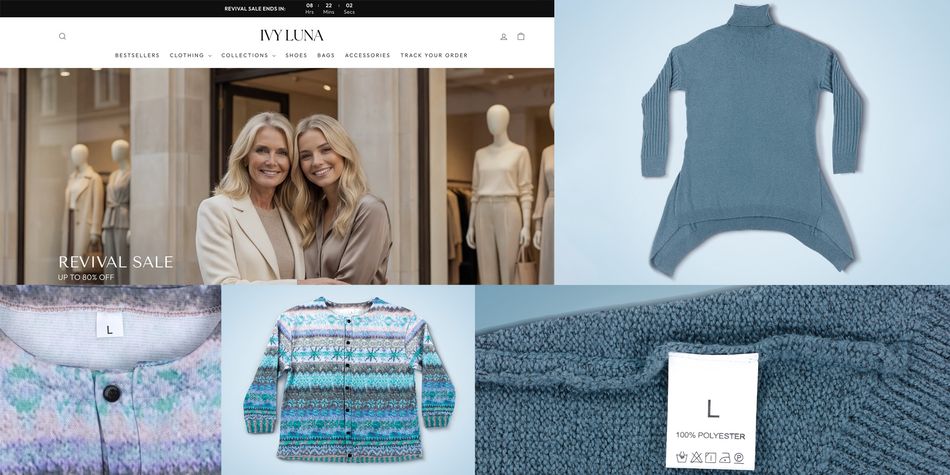
Which? also found that the website linked to from the inflatables video also sold the cardigans made by the previous younger influencer.
On the same website, we found images of so-called reviewers that we searched for and found the same images used in several other places on the internet under different names, indicating that the reviews are most likely fake and the website couldn't be trusted.


Another account featuring an influencer selling cardigans led to a website promoting a ‘sale that ends tonight,’ yet the sale was still advertised as being on and ending tonight when we checked the next day. Using pressure selling tactics like this are a common sign of a shopping scam.
On Trustpilot, Which? found a review of this website that complained of the item actually being a cheap version of the advertised product.
Which? also found another fake influencer with accounts on Facebook, Instagram and YouTube told the story of a young boy handmaking and selling mugs, yet another account on YouTube linked to the same website depicted a young girl hand-knitting soft toys.


In another example, a Facebook and TikTok page depicts an influencer hand-making and selling vases in the style of books. On Facebook, this later transforms into a different influencer selling chopping boards and then coasters. The link on the TikTok account leads to a website selling ornaments under a different name.
What to do if you buy from a dodgy online shop
We shared the suspicious accounts with Meta, YouTube and TikTok. TikTok removed the flagged accounts for violating its Community Guidelines. YouTube told us that it applied labels stating that the content was AI-generated to a number of flagged videos and Meta confirmed that it was investigating the accounts we shared with it at the time of writing.
These posts likely lead to websites where you’re sent an item that doesn’t match the product images and videos. For our investigation into bogus online boutiques, we ordered items from similar boutiques that used AI to promote dodgy shops and found all of the items were shipped from China and none matched the imagery or description.
What is most concerning, though, is that these dodgy companies have your contact details, payment information and shopping habits that could be used to curate a more targeted scam against you.
If you have purchased something from a dodgy seller, you should be cautious around unexpected contact from someone asking you to move money or give over further information, especially if they claim to be from your bank. Always verify a request for payment information or account details by logging into your account independently.
Even though you’re technically entitled to a refund in these cases, it can prove difficult if a retailer doesn't cooperate. You can try to get a refund by making a chargeback claim if you paid by debit card or a Section 75 claim if you paid by credit card and the cost was more than £100.
If you've lost money to a scam or spotted an unauthorised transaction on your account, contact your bank immediately using the phone number on the back of your card.
On social media, you can report posts by selecting the three dots in the top-right corner and pressing ‘Report.’
Scams should also be reported to Report Fraud, or by calling the police on 101 if you live in Scotland.