Are EPC ratings accurate? Uncovering the flaws in energy assessments

Having worked at the BBC and in commercial radio before joining Which?, James produces our always-on podcasts, and oversaw the launch of our member-exclusive podcasts in 2025.

Improving the energy efficiency of your home is always top of mind when it's cold outside or you can feel a draught inside. But the process for getting somebody to assess your home's efficiency isn't as thorough as it should be.
In this podcast we're joined by our sustainability specialist, Karen Lawrence, who explains how she was met with inaccurate reports, incompetent assessors and a system in need of improvement when she tried to compare the options for homeowners seeking energy advice.
Plus, we explain how to make the most of the Which? home energy planning tool to get an idea of what you can do to improve your own home's efficiency.
Erica McKoy: The depths of winter and the height of summer is typically the time you might notice your house isn’t as efficient as it could be. If you’re a homeowner, it might be time to get an energy assessment on your home. But can you trust it? Renters, don’t go anywhere, we haven’t forgotten about you. We’ve got some renter–friendly tips for you too. Welcome to this podcast from Which?.
Hello, it’s Erica recording from home today, and I’ve got sustainability expert Karen Lawrence here to talk all things home energy. Hi, Karen.
Karen Lawrence: Hi, Erica. How are you?
Erica McKoy: I’m good. I’m looking forward to this conversation. I feel like it’s a really important one to have, and you made some big statements about whether we can trust our EPC ratings, which I think is going to shock a lot of people. So, you were the case study here, and you found that there were some inaccurate reports and, not only that, incompetent assessors – which are your words, not mine. So, tell me why you started to explore this topic in the first place?
Karen Lawrence: Sure. Well, we carried out some research about a year and a half ago where we asked a dozen people to have Home Energy Performance Certificates. We found that a lot of them were unhappy with what those assessments said, how the assessors presented their findings, and we felt that Energy Performance Certificates were not really doing the job that they should be doing for people. We found a lot of inaccuracies when we did that piece of research.
I wanted to repeat that on my own home, which was part of a wider investigation looking at the different sorts of assessments that you can get. So, I had an Energy Performance Certificate carried out alongside some other assessments – a retrofit assessment and various other things – to compare them, to look at what they cost, what they go into, the kind of information you get, and how useful that might be. So, that was the reason for doing it really, to see what’s out there for people and see if we could help them find the best option for them.
Erica McKoy: Yes. Karen, can you tell us a little bit about the EPC rating? What does it all mean? What does it mean?
Karen Lawrence: Okay, so EPCs these days, when you get an EPC for your home, it will appear online. You don’t get a piece of paper anymore; there used to be two or three pieces of paper with all the details on, but it’s all online these days. And you will get a rating which is letters from A to G, with A being the best and that means your home is more energy efficient, and G is the least efficient. And that goes from green, which is good, to red, which is bad.
You’ll also get a number alongside that, so there’s a range of numbers alongside each letter, but it tends to be the letter that is normally quoted when we’re talking about EPC ratings. An EPC of A is quite rare; there’s not that many of them. It will normally either only be a brand new home or one that has been retrofitted to an extremely high level. C and D are the most common ones these days. An average would be C or D. So, a lot of homes will find they’re a C or D rating, and that’s a typical property that’s had double glazing, it’s had a reasonably modern gas boiler, for example, but may not have been fully insulated with cavity wall insulation or anything like that. So, it’s a sort of average kind of grade.
The other parts of the EPC include some recommendations for what you should do to improve your EPC rating. Now, they look as if they should be useful. In theory they are, but part of the issue with them is they’re quite generic. They don’t look at your specific situation and they base the prices on a very broad spectrum. So, the typical price will be a price range and it might be something ridiculous – like from £5,000 to £15,000 – for wall insulation, for example. So, it’s not terribly precise. And the savings will be calculated on the basis of a typical occupant for your home, so it’s not based on you and how you live and your family; it’s based on typical occupancy levels. So, they might give you a useful guideline as to what might be done, but treat them with a pinch of salt because they’re not really very tailored specifically to you.
Erica McKoy: Just a guideline. Just an idea, just to give you an idea. And like me, you also love a Victorian terrace house, which they’re known for being very cold in the winter, especially – I mean, my house definitely still has its old windows, so it gets very cold in the winter, and it can get really hot in the summer, especially upstairs. Can you tell us a bit about – because you had an EPC rating, it was out of date. You had some improvements made on your home, so you wanted to make sure that new EPC rating was up to date and correct, right?
Karen Lawrence: Yeah, like a lot of people, I think most people only encounter EPCs when they’re buying and selling a property or renting, because that’s the only time there’s really a legal requirement for them. So, we see them, we see the EPC rating, we think, yeah, okay, that’s what the rating is, and don’t necessarily think about it too much more. But, of course, we all live somewhere, and homes have different types of construction, different levels of insulation, and different issues and problems. Every home is absolutely unique.
So, those EPCs, in theory, could tell us quite a lot about why our homes get too hot or why they get too cold and what we can actually do to improve the situation. But, as I say, most of us don’t really encounter EPCs except for when we’re buying and selling, when we’re moving into or out of a property. So, I, like lots of people, my EPC had expired because it was from when I first bought this house. So, yeah, I needed to get an updated one and see whether the changes we’d made – which were fairly minimal; the only major things we’d done really was to insulate the loft and we’d had a new boiler installed as well, and done a little bit of draught proofing, but that doesn’t really make much difference to your EPC. So, getting an updated assessment was a first step.
Erica McKoy: How long do they take to run out?
Karen Lawrence: An EPC is valid for 10 years from the date that it’s issued. So, you can check that online. There is an EPC register online at gov.uk, and you can put in your address, look for your EPC, and that will tell you – and it will also have any previous EPCs on there as well, so that you can look at previous ones, you can look at the current one, you can see whether it’s expired or not or how long it lasts.
Erica McKoy: And so I’m going to ask the big question: Can EPC ratings be trusted?
Karen Lawrence: Well, certainly as far as our previous research goes and then my own experiences in having an EPC this time, I would say treat them with a lot of caution. Take them with a pinch of salt, because the energy assessors aren’t necessarily being as thorough as they need to be, and the outcomes and the recommendations that are then made are based on potentially incorrect information on your EPC. So, if you’re looking for an EPC to actually help guide you as to what you should do to your home to improve its energy efficiency, make it more comfortable, potentially reduce your bills, it’s probably not the best starting point.
I would add a caveat here. Obviously, you do need an EPC, a valid EPC, if you’re renting out your home or if you’re going to put it on the market to sell it, and there’s no option about that. You have to have a valid EPC. So, if you need one, you have to get one. But in terms of using it to guide your retrofit journey – by which I mean, if you’re going to use it to decide what to do to improve your energy efficiency, to hopefully make your home warmer and make your bills cheaper – then there are probably some things you need to be aware of and there might be better options.
Erica McKoy: And you had someone come over and you were told that they were going to be one person, and another person appeared. Can you tell us a bit about that story? Because I think actually it’s really important that – it kind of, when I was reading your story, it kind of was a bit of a red flag to me. I would feel a bit unsure about whether I can trust whatever’s coming next if the person that’s appearing at the door isn’t even the person I expected.
Karen Lawrence: You’re absolutely right. The first thing you should do when you’re inviting anyone to come and carry out an assessment or give you a quote or anything like that is make sure that you know who they are and that they’re suitably qualified. So, in the case of an EPC, you should be looking for a domestic energy assessor, and they will be qualified and accredited, and there are places you can look online to check that they are actually qualified. So, there’s the TrustMark website and there’s also the accreditation schemes.
Every energy assessor will be signed up with a scheme that they lodge their reports through, and you can go to that scheme and you can ask them for the accreditation of that person. So, you can check who they are. And then make sure when they come to the door, ask to see their accreditation, ask to see something that just lets you know that they are who they say they are.
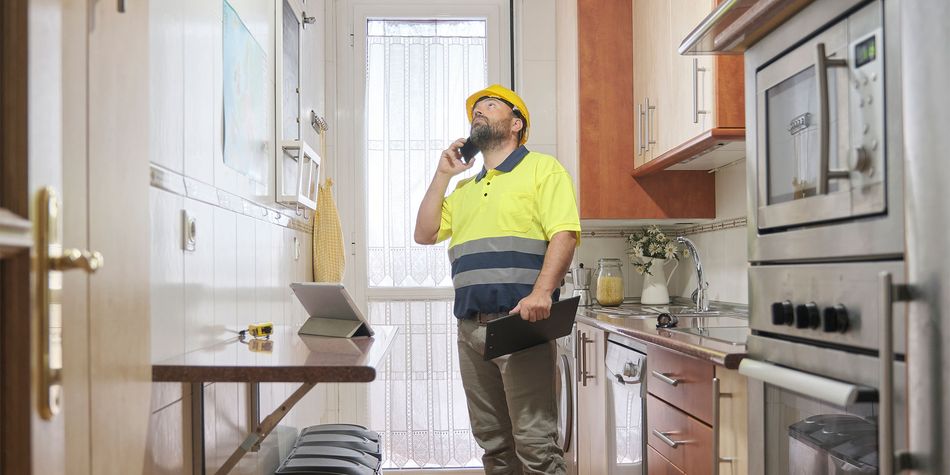
In my case, the person that came to my door was not the person I’d booked with, because I’d booked a female assessor to come and carry out my assessment – this was for a retrofit assessment – and a man turned up. I asked to see his accreditation, but he fobbed me off by saying, “Oh, you’ll need to contact the people in the office for that.” Because of what I was doing, because I was doing this as part of a piece of research for Which?, I let him in to do the work anyway. But I would probably advise homeowners in a similar situation just simply not let them in if they can’t show you any accreditation.
Erica McKoy: You might not know the answer to this, but what is the reason for someone being swapped over? If you’ve selected someone specifically, you might prefer a woman because you’re a woman and you would feel safer. What is the reason that they gave you? Did they give you any reason for why they swapped them over?
Karen Lawrence: Ah, well, no. In this particular instance, it turned out that this person was operating contrary to a number of the rules that are set out in legislation for how an accredited assessor should be working, and that person has actually been struck off and can no longer work in the industry as a result of our investigation. So, this shouldn’t happen. The person who is carrying out your assessment and report should be the same person that comes to carry out the on–site survey. It should be one and the same person; you’re not allowed to delegate it. So, if you’ve booked with a specific person, that is who should turn up. Obviously, if you’re using a large company, they might have a number of assessors or surveyors, but as long as the same person who comes to do the on–site survey is the same person who then produces the report for you and their name is on that report, then that’s fine. Yes.
Erica McKoy: And this is a report that needs to be done in person, it can’t be done online. Am I right in thinking that?
Karen Lawrence: That’s right. If you’re getting an EPC, an Energy Performance Certificate, someone actually has to come to your home and carry out a survey on–site. And the same for a retrofit assessment; it can’t be done remotely.
Erica McKoy: And can you tell us a bit about this retrofit assessment? It’s something that was introduced in 2019. Why did it come about? Why was this assessment deemed as important for homes?
Karen Lawrence: So, it was introduced as part of a standard which is known as PAS 2035, which is all a bit technical and I won’t go into too much detail about that. But it’s in support of our net zero targets. Obviously, the government recognises that homes need a lot of upgrading to be more energy efficient if we’re going to reduce the amount of energy we use and keep our carbon emissions down. So, it was all part of that general desire to make homes more efficient.
In support of this standard, retrofit assessments were introduced so that homes are evaluated not just on their energy efficiency – so part of the report is an EPC – but the other parts also look at the condition of your home, so whether there’s anything like damp or mould or anything like that that might affect the type of work that you can do to it or might mean that that work will be less effective in the future. But it also looks at what’s known as the occupancy assessment, which is how you actually use your home. So, things like how many hours a day you spend at home with the heating on, for example, or how many baths and showers you take as a family each week – so that affects how much hot water you use, for example. So, all of that is combined together to help people produce a retrofit plan for what is the best way to improve your home in the future.
Erica McKoy: And what are the repercussions of incorrect findings? Other than overpaying for a home improvement, are there any other repercussions for the homeowner?
Karen Lawrence: Well, if you’re looking for an assessment to help you make decisions about what you spend your money on, then obviously yes, as you say, that has a knock–on effect. If you’re choosing to do less effective work, that’s not good for you and your bank balance, and it might not help you save money on your bills in the way that you thought it would.
But there are things like eligibility for green mortgages and things like that that could mean that you’re not able to get a beneficial rate from your bank when you look for a mortgage. So, typically, the way that that works is green mortgages are awarded if you’ve got an A or B rating usually, sometimes a C, but usually the higher ratings will get you a better mortgage rate. So, if you got an EPC and it was incorrect and it gave you a C or D and you were thinking you’d get an A or B, that obviously would affect the mortgage rate you’d get.
In the opposite direction, potentially if you were looking for some grants or support from government or your local council, for example, if your home seems quite cold, you might be expecting it to get say a D or E rating and it’s wrong in the other direction and you get a C rating, then you might not be eligible for that grant funding. So, there are various different ways in which you can be financially affected.
Erica McKoy: And I did want to talk about the grants and the funding that is available, because there are grants and funding out there for you if you need to improve your home. So, if someone was thinking about getting their home tested, which is the best test to get?
Karen Lawrence: Yes, absolutely. It can be hard to know where to start, which is kind of why we did this piece of research. First of all, I would say if you’re serious about retrofit, the EPC and the retrofit assessment are not really that user–friendly for the homeowner and, as we’ve covered, they’re not necessarily all that reliable. So, I wouldn’t go there in the first instance. If you already have an EPC, it doesn’t hurt to take a look at it, but make sure that you’re confident that it is accurate before you start using it for anything serious.
There are two other categories. So, a couple of the things that we did: the solar feasibility survey and a heat pump survey. Really, you would only do if you already have an idea that those are things that you’re keen on and are going to be a possibility for your home. So, if you’ve got a suitable–looking piece of roof that you could put solar panels on, but you want to get an idea of is it worth it, do they face the right way, can I fit the right number of panels on, what’s the general sort of cost that it might be – that’s worth getting. Likewise with a heat pump, if you sort of think it might be suitable, then absolutely go ahead with a heat pump survey.
But those are things that you might do further down the line. So, if you’re at more of a starting point of thinking about what might be suitable, actually, free online services are a really good place to start. So, Which? has its own home energy planning service, which is a really good place to start because it’s all online. It will take data from an existing EPC if you have one, or if you don’t, you can just input the information that you know about your home and your heating system and just answer a bunch of questions online. And what it will do then, it will ask you for various pieces of information including your budget, your preferences, that sort of thing, and it will come up with a plan that helps you start to think about what might be possible. It will tell you the likely costs, how much it might save you, and how it might affect your EPC rating. So, you can do that. That’s free. There’s other free services as well. There’s a government one that we looked at which does a similar sort of thing. So, there’s different options for that and that’s all completely free of charge.
The other end of the scale is probably, I would say, if you are serious about spending some money on your home and really upgrading it, then I would go for a whole–house plan. We spent about £750 on the plan.
Erica McKoy: Karen, I was going to jump in exactly, I was about to say: How much does all of this cost? Because there’ll be people listening going, “Oh my gosh, another bill, another thing that I’ll have to pay for.” How much does all of this cost?
Karen Lawrence: Yeah, absolutely. Well, so just to go back to some of the other things that we’ve mentioned. As I say, the online stuff you can do is free, so that’s a great place to start. EPCs are sort of £60 to £100 typically.
Erica McKoy: Which, to me, that sounded way more affordable than I thought it would be. I thought it’d be a bit more.
Karen Lawrence: Well, to be honest, EPCs can be as cheap as around £40 to £50. But this is part of the problem with them, that they’re actually too cheap and this is why they’re not great quality. Because if you think someone’s got to be qualified to do this, so they’ve got to have put the time and effort in and done a training course and be accredited to do this, and then when they come out to do an EPC for you, they’ve got to take time getting to you, to your house. They’ve got to spend time coming round the house, doing all the measurements and the calculations and lodging the report online. And all of that takes a considerable amount of time, and if you think, well, would you be willing to do that for £50? It’s quite cheap really. And so perhaps it’s not surprising that some people are not putting quite the amount of thought and effort into it that they need to. So, there’s an argument to say that they should be more expensive really, but along with that should go a huge increase in quality.
Let’s go through some of the others as well. So, the retrofit assessments are typically around £200 or so, so they’re a bit more expensive. But as I say, I wouldn’t really recommend them to an individual household; they’re not really targeted towards individuals. They’re more for estate owners, so council properties or housing association properties, for example, that are doing large retrofit schemes en masse. So, they’re more targeted towards that kind of work.
The whole–house plan, as I say, was the most expensive of the services that we looked at. However, if you’re going to spend a considerable sum of money on completely retrofitting your home, then it’s quite a small percentage of what you’re going to spend. So, if you’re spending £750 or so on a whole–house plan, that’s going to be probably less than 5% of what you’re going to spend on the whole retrofit. So, it’s worth getting something like that. My report was more than 20 pages of report that gave me a lot of information, a lot of different options, lots of costings in terms of costs and benefits, likely savings for the future, and it took into account my preferences, my budget, it did a lot of the heavy lifting. It saved me a lot of thinking and research. So, it’s a really useful, helpful report. But as I say, it’s only really worth doing if you are serious about carrying out the work and you’ve got the budget to do so. It’s not just a, “Oh, I think I’ll just get one of these and then put it on a shelf and forget about it.”
Erica McKoy: That’s good to know. Okay, so we’ve spoken lots about homeowners and the things that they can do and the improvements that they can make, but the reality is, I think lots of people are renters around the country. So, what can they do to make their home a bit more sustainable, a bit more efficient, a bit more comfortable during winter and summer when you really start to feel the temperature in your house?
Karen Lawrence: Obviously it’s much more limited when you’re renting because there’s often lots of restrictions on what you can do and you can’t touch the actual fabric of the building. One of the things you can look at is draughts. A lot of homes you get draughts through the doors, through the windows, through various places, through the floorboards, all sorts. So, it’s worth looking at where the draughts are in your home and doing something about that. We’ve had information on our website in the past about making your own draught excluder or just simply using a rolled–up towel, for example. So, if you’ve got draughts coming under your front door or just through the door to your living room, put something in place to stop that draught.
Likewise for windows, a heavy curtain, thermal curtains if you can afford them, or blinds will really help just keep those draughts at bay and stop the heat from just escaping straight through your windows. Especially, like you say, if you’ve got the old original windows in a Victorian house, that can really help. If you’ve got hard floors, and especially if you’ve got bare floorboards, then thick heavy rugs can really help with that as well to stop those draughts coming up through the floor. So, draughts is a good place to start.
You can certainly do something about overheating in the summer too with heavy curtains. So, for example, if you’ve got windows that get the direct sunlight, you’ll get a lot of solar gain through that, by which I mean the sunlight coming through the window is amplified by the glass and it makes your room extremely hot.
Erica McKoy: Feels like a greenhouse.
Karen Lawrence: Exactly, the greenhouse effect. So, again, if you can, if you can keep blinds and curtains closed during the daytime, during the sunniest parts of the day, and then once the sun’s gone down, open the windows, let that heat out during the night, that’s a really good way to prevent overheating.
In terms of things you can do with your heating system during the winter, you can turn down, if you’ve got control over the boiler in your home, you can turn down the flow temperature. So, again, we’ve got instructions on the website for how to do that because often the water’s flowing around through your pipes and your radiators at a very high temperature, up to 80°C, and that’s too high. Your boiler will actually be more effective if you turn it down to around 60. So, as I say, we’ve got instructions on the website for how you can do that. That will help save some money on your bills.
And turning off radiators in the rooms that you’re not in is a really good one as well. People tend to just put the heating on and it’s heating the whole house. They’re just throwing away money, letting it flow round the house, all the heat, and it’s not necessary. I mean, if you’ve got a family and there’s somebody in every room, then of course keep the heating on. But if you come home from work at say 6:00 and you put the heating on, do you really need it to be heating the bedroom for four hours while you’re not in there? Put it on just before you go to bed so it just heats the room up for when you need it. And you don’t need to be going in and out of your rooms all the time turning radiators off these days; you can get programmable thermostatic radiator valves or even smart ones that you can operate through your smartphone. So, the tech’s there these days; you don’t have to make it difficult for yourself.
Erica McKoy: Look at that, all the tips from Karen who’s our sustainability expert. I love this. Is there anything else that you feel is really important for our listeners to know when it comes to home energy, keeping your home efficient?
Karen Lawrence: One thing I would say is that it’s helpful to think about what you want to achieve before you start going into looking at retrofit options. It’s obviously for a lot of people, it is key to save money and that’s important, but not every change that you make is necessarily going to save you money in either the short or the long term. Sometimes it’s just about making your home a bit cosier, a bit nicer to live in. So, like you say, not having cold rooms in the winter, not having hot rooms in the summer. And that doesn’t always translate into bill savings, but it just makes your home a nicer place to be.
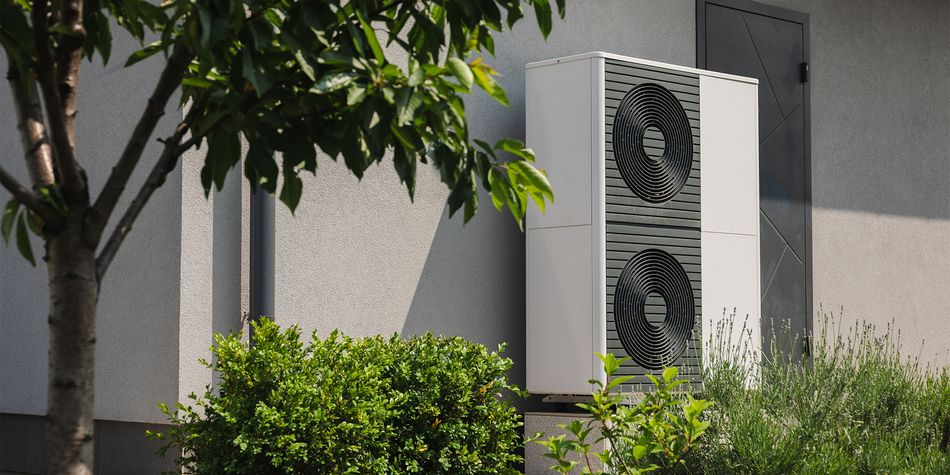
The other thing to think about is do you want to do it for environmental reasons? So, there are types of changes that we can make, so swapping to a heat pump or other electric heating system, for example, is great for the planet because if we stop using gas or oil for heating, that’s much lower carbon emissions and that’s great for the planet as I say, stops climate change from happening quite so quickly. But, again, it won’t necessarily save you money. Hopefully it won’t cost you money overall, but it won’t necessarily save you money. So, you have to kind of make a trade–off between what it is that you’re wanting to do. So, is it comfort, is it cost, or is it climate? And those are three different things that you can think about that might be your drivers for making those changes.
Erica McKoy: Comfort, cost, climate. Thank you so much for that, Karen. It’s been amazing talking to you and incredibly helpful. I think a lot of people will be listening thinking, yes, I need to do something, even if it’s small. And I’m really glad actually we spoke about the renters too because there’s so many of us out there who are renting and we just want a simple and affordable way to kind of make our home a bit more sustainable. So, thank you.
Karen Lawrence: No worries, I hope it’s been useful.
Live more sustainably
free newsletter
Our free monthly Greener Living newsletter can help you make everyday changes for you and the planet.
Unsubscribe whenever you want. Your data will be processed in accordance with our Privacy notice.
More podcasts from Which?
The Which? podcast showcases the best content from across our website and magazine.
Which? Money episodes, released on Fridays, give advice to help you get on top of your bills and tackle the issues hitting your pocket, from spiralling energy costs to your weekly food shop.
The Which? Shorts podcasts offer you a free insight into some of our favourite articles from our suite of magazines.
Plus, keep an eye out for bonus episodes that tackle important issues, from motoring to tech, and from health and wellbeing to travel.
How to listen to the Which? podcast
We're always releasing new episodes, and the podcast is available wherever you usually listen to podcasts.
Subscribe using one of the links below or click this link on your mobile to find us in your favourite podcast app.
As part of your subscription, Which? members also get access to exclusive podcasts.
- Listen to member-exclusive podcasts on our website
- Listen on the go by downloading our app on Google Play
- Listen on the go by downloading our app from the App Store
If you're not already a member, podcast listeners can get 50% off the first year of an annual membership.