Erica: Do you really know what you’re paying for when you buy meat and dairy products in store?
Hello, I’m Erica McKoy and welcome to Which? Shorts - your free weekly insight into Which? magazine, as well as our Money, Tech, Travel and Gardening titles too.
Today I’m bringing you a piece that our sustainability expert Olivia Howes wrote for the November issue of Which? magazine, all about animal products bought in supermarkets.
Many shoppers pay a premium for higher welfare meat and dairy products. But when you’re looking at labelling, do you know how to separate marketing spin from genuine signals of good practice?
Here, Olivia lifts the lid on some of these of the most common phrases and logos found on meat and dairy products to help you understand what you’re actually getting.
Here’s Olivia's piece, adapted for the podcast, this week read by myself, Erica McKoy.
—
Erica: The UK prides itself on its animal welfare standards. For many shoppers, seeing the Union Jack on food packaging makes them feel assured of the food’s safety and quality, and, when it comes to animal products, high welfare standards.
But does the reality of these welfare standards live up to expectation? While it’s true that our farm animal welfare standards are higher than much of the rest of the world, there are still practices on many UK farms that would probably surprise you. For example: modern intensive farming systems mean that more than 85% of UK farmed animals are kept indoors.
Six million hens are still kept in cages and around 90% of pigs are slaughtered using a method that Defra’s recent animal welfare strategy acknowledges causes ‘avoidable pain and distress’.
There are terms and logos you can use to make informed choices about the products you buy. But there are also terms, phrases and logos on packaging we think add confusion and reinforce a perception of high-level welfare when they don’t stand up to scrutiny. What is a ‘happy and healthy’ chicken? And who are all these ‘trusted farmers’?
To find out more, we looked at supermarket product packaging to identify some of the key welfare terms shoppers come across. We then found out which of these give true assurance of welfare, which ones are misunderstood by consumers and which ones are largely meaningless.
To help us, we surveyed over 2,000 UK adults this summer to find out more about consumer perception. We asked them to rank standard chicken breasts and premium sausages from all the big supermarkets based only on the front-of-pack information. The results show it’s not always so easy to work out the highest welfare from this information alone.
We think the mixing of undefined, unregulated terms with formal certification logos means it is hard to make meaningful comparisons between products. Animal welfare campaigners, such as Compassion in World Farming and Four Paws, want to see unregulated, industry-led and voluntary terms replaced with standardised labelling that clearly states the methods of production used, and would more clearly signpost what we buy. The government consulted on proposals for mandatory method-of-production labelling in 2024, but nothing has yet been introduced.
So what are the terms you should look for and those you should be wary of? We’ve looked into chicken and pig farming - you can also see information about dairy and eggs on our website.
When it comes to chicken, most of the chickens farmed for meat in the UK are raised in huge flocks in large indoor sheds. The number of chickens in any one square metre of shed space is strictly measured. The main industry-owned assurance scheme used for British chicken is Red Tractor. This requires a stocking density of 38kg of chicken per square metre, plus natural light and enrichment, such as straw bales and pecking objects.
But the biggest chicken welfare issue for campaigners is the use of fast-growing breeds, which reach full slaughter weight at around six weeks old. Rapid growth results in bodies that can be too heavy for their legs, leading to lameness, as well as heart and lung problems. The British Poultry Council says there’s a need to meet consumer demand and argues this low-impact production is affordable and upholds good welfare standards.
We asked our respondents about one standard chicken breast product from eleven retailers, to see if they could correctly identify higher-welfare ones using packaging information. Those retailers were: Aldi, Asda, Co-op, Iceland, Lidl M&S, Morrisons, Ocado, Sainsbury’s, Tesco and Waitrose.
M&S and Waitrose are leaders because all their fresh chicken comes from slower-reared breeds as standard. They’re signed up to the Better Chicken Commitment – a science-based set of higher welfare standards requiring auditing. The respondents correctly identified M&S as the highest welfare, but ranked Waitrose beneath Tesco and Lidl. Waitrose signposts the Better Chicken Commitment on its packaging and has also introduced a tiered welfare label for chicken - and pork.
Lidl and Tesco chicken packaging indicates either ‘Higher Welfare’ and ‘more space to roam’ or ‘more room’. These terms reflect the fact that, along with Aldi, Co-op, Morrisons, Ocado and Sainsbury’s, their standard fresh chicken is given 20% more space than required by Red Tractor standards and adheres to other Red Tractor standards. Chicken labelled this way is higher welfare compared with standard production, but not slower-grown.
A version of ‘Trusted Farmers’ or ‘Farms We Trust’ is used by Aldi, Asda, Co-op, Lidl, Sainsbury’s and Tesco on the chicken products we looked at. This usually refers to retailers using farmers that are part of a selected group of long-term suppliers, but it doesn’t have an industry-defined meaning. Lidl and Aldi told us it also meant that farmers met established third-party assurance schemes such as Red Tractor.
Tesco, Lidl and Sainsbury’s use versions of the words ‘healthier and happier’. This claim compares the chickens they currently sell with those sold before they improved space requirements. It doesn’t necessarily position them above other supermarkets.
Our respondents identified Asda and Iceland’s chicken breast fillets as having lower welfare than most other retailers based on what they could see on the packaging, which reflects the reality as neither of these offer more space for their flocks. Ocado gives little information on its packaging, but it confirmed to us that its fresh chicken is reared at the lower stocking density of 30kg per square metre.
Asda said it’s phasing in lower stocking density from 2027. The Iceland chicken we asked our respondents to look at wasn’t British, so not Red Tractor-certified. Meanwhile some of Iceland’s chicken is British Red Tractor-certified.
Next we asked people to tell us how they interpreted the labels and phrases on pork products.
We showed the people in our survey images of premium sausages, and they ranked M&S, Waitrose, Sainsbury’s, Lidl and Co-op higher for perceived welfare, largely due to the messages ‘outdoor bred’ and ‘RSPCA Assured’. Aldi, Tesco, Asda, Morrisons and Iceland were ranked lower. The premium sausages from these brands have the same level of welfare as their standard range of sausage products.
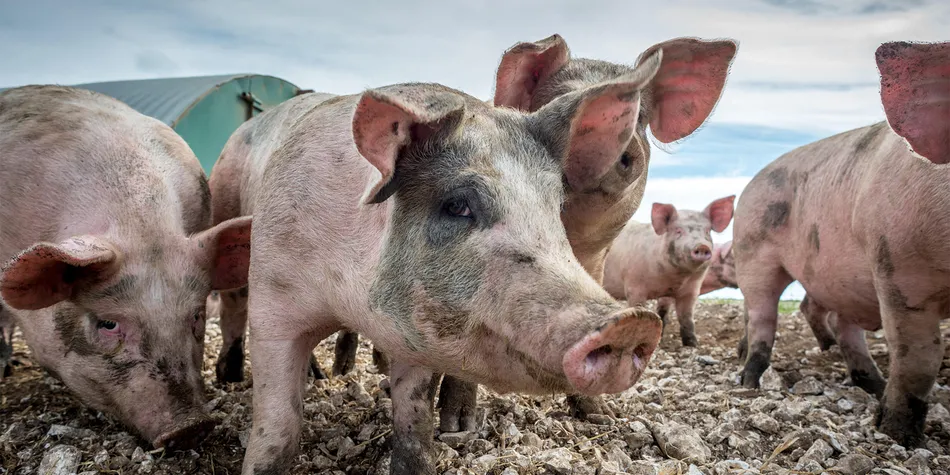
Some respondents thought ‘outdoor bred’ meant pigs ‘lived outside’ or ‘were raised outdoors’. In fact, an ‘outdoor-bred’ pig only lives outside for the first four to five weeks of its life. ‘Outdoor-reared’ pigs spend longer outside – approximately half of their lives. There’s no legal definition of ‘free range pork’, but a voluntary industry code in the UK requires that free range pigs have permanent access to pasture.
Outdoor bred means that the piglets can be born and weaned without their mother being confined in a farrowing crate – a metal enclosure used for most indoor breeding. These prevent a sow from accidentally crushing her piglets in such close quarters, but they also severely restrict her movement for several weeks. M&S and Waitrose have ended their use across their pork ranges. Waitrose has also committed to making all its pork free range by 2027. All Co-op fresh pork and continental meat is free from sow confinement systems.
Another pressing issue in pig welfare relates to slaughter. Around 90% of UK pigs are killed using CO2 gassing as part of the process, no matter the welfare label. CO2 gassing causes panic and a burning sensation in the airways. DEFRA is keen to stop this practice, and it looks likely it will be replaced with more humane argon gas or improved electrical stunning. But there’s currently almost no way to avoid this when buying pork.
Dr Steven McCulloch, chair of Pigs Protection and research fellow in veterinary policy at the London School of Economics, told us that this is a clear case of ‘market and policy failure’, in which British consumers pay a premium for certified products expecting humane slaughter that’s not being achieved.
You can read more of our research and advice on milk and eggs in the magazine, or on our website. But, in the meantime, if you want to make the best buying decisions for animal welfare, follow these tips.
First of all, buy the highest standard you can afford. Truly higher welfare products are more expensive, and there’s no getting around it. Don’t be disheartened if you can’t pay top tier, but try to buy as well as you can. Organic is usually the gold standard, but free-range is still a good option. RSPCA Assured is also a worthwhile logo to look for and covers key animal welfare issues in a variety of systems, both indoor and outdoor.
Next, don’t forget ingredients. Choosing good welfare practices doesn’t stop with fresh meat, egg and dairy products. Consider the ingredients in the ready meals you eat and also pre-made products such as soups, quiches and baked goods. Some supermarkets have welfare pledges that cover all their animal-derived products, as well as fresh meat and dairy.
And finally, reduce your intake. Replacing some of the meat you eat with cheaper, plant-based protein sources, such as lentils, chickpeas or tofu, can make eating higher welfare animal products more achievable.
—