Is the government doing enough to protect consumers?

Having worked at the BBC and in commercial radio before joining Which?, James produces our always-on podcasts, and oversaw the launch of our member-exclusive podcasts in 2025.

Whether it’s rip-off pricing, ticket touts or dangerous products being sold on online marketplaces, the government’s Department for Business & Trade is responsible for protecting consumers’ best interests. But is it doing enough?
In this episode of Which? Money, we sit down with Kate Dearden, the minister for employment rights and consumer protection to ask what work the government is doing to ensure consumers aren’t being ripped off or put at risk when buying products and services online or in-store.
We take the opportunity to highlight some Which? investigations that highlight why the government needs to do more to strengthen consumer protections, and ask why more wasn’t done in last month’s King’s Speech to stamp out ticket touts.
Plus, Sue Davies, Which?’s head of consumer rights analyses the minister’s answers and tells us what more we want the government to do.
James Rowe: Hello, it's James here. I'm currently at home but will soon be taking you with me to somewhere in London called the Old Admiralty Building for a special interview. We've been invited down to the home of the government's Department for Business and Trade to speak to the MP, Kate Dearden. She is the minister for employment rights as well as consumer protection, which will prove invaluable for the conversation. As you may well know, at Which? we are always campaigning for stronger consumer protections, whether it's trying to stamp out ticket touts and stopping tickets for live events being sold at ridiculously inflated prices, stopping retailers from using dodgy pricing strategies, or making sure we're not stuck paying for subscriptions we totally forgotten to cancel. So, it was brilliant to be invited down to speak to the minister to ask her all about this kind of thing. We don't have long, we've just got 20 minutes or so, but we've plenty to try and squeeze in and ask her about. After you hear that later on, we'll be joined by Sue Davies. She is Which?’s head of consumer rights. She'll be joining me to analyse the conversation and explain what it all means for you. But for now, let's hear my chat with the minister, Kate Dearden.
James Rowe: Kate Dearden, welcome to the podcast.
Kate Dearden MP: Thank you so much, James. Delighted to be here with you.
James Rowe: Talk to me about your job very quickly. You've been a minister here at the Department for Business and Trade for a few months now. How are you settling in? How do you feel like you're progressing?
Kate Dearden MP: Loving it. It's really flown by, to be honest with you. But we've got lots done, lots more to do. I'm so proud to be the minister for consumer protection, in particular. It's so important to me and to this government, and to be leading that charge with my colleagues in different departments and across government is really important because it matters to people. That's what I love most about my job, it's really people-facing that way and really tangible.
James Rowe: You say it's really important, and at Which? we are concerned in a small way about the balance that we have between deregulation to encourage growth in the country while also maintaining those consumer protections. How are you ensuring that consumers are still protected?
Kate Dearden MP: I see it going hand in hand. Pro-consumer and pro-growth absolutely is two parts of same puzzle. When people feel more confident in spending their hard-earned cash, they have that confidence to spend it. That supports living standards, it supports growth, it supports our brilliant local businesses in our high streets and communities, and that's why I see the two and two going hand in hand.
Where we can better deliver that for people and for consumers – consumer spending represents over 60% of GDP and that's significant. We want to build that confidence with people and where we need to deliver better protections, whether that's through legislation to enforcement so they can spend that money on their local communities and in businesses, that's a good thing. Absolutely, two key parts of our agenda and why it's a priority for us.
James Rowe: We've got plenty to try and squeeze in with the time that we've got with you. I'm going to start with online marketplaces if that's okay with you. We've been banging the drum about online marketplaces for a long time, warning consumers that dangerous and illegal products are on sale on these online marketplaces. Places like TikTok Shop, eBay, Amazon Marketplace. Why are they still being sold on there?
Kate Dearden MP: Products sold online must apply the same rules as those sold in shops. They have to be safe and we're really clear about the products that are illegal and shouldn't be sold. Where the brilliant colleagues in the department can work quite proactively with online marketplaces in saying, "These are your responsibilities and where you have absolute responsibility to not make sure that illegal products are sold online," making that really clear where they have to do so, recalling products when they are unsafe and illegal. We've taken loads of action and I'm really proud of that action we have taken.
But we do know that more needs to be done. Recently, we launched a consultation looking at the wider product safety framework, particularly on online products that are sold online – what are the roles and responsibilities for marketplaces and where do we need to go further? That consultation closes soon – 23rd of June – and we'll be reviewing all the responses and feedback into that consultation to exactly look at those problem areas on online marketplaces where we need to act more and further. We'll be doing that over the coming months and I'm really looking forward to progressing on that action too, to make products more safe when you buy them in your local shop or if you buy them online.
James Rowe: Do you think at this stage there's still too much reliance on these marketplaces to almost police themselves?
Kate Dearden MP: When you look at just how technology has changed to apps and marketplaces, they are constantly evolving and changing. We need to make sure that we, one, have legislation, the framework that can respond to that, can adapt to that, and that marketplaces then can sort of check themselves and understand their roles and responsibilities in line with those changes. So, I think that's the legislation we've taken and the action we've taken so far do speak to that.
We delivered a landmark bit of legislation coming into government called the Product Regulation and Metrology Act and that gives us loads of further remits and responsibilities to enact and to go further in different legislation when we are trying to make sure that we're keeping pace with how products are sold, whether it is on TikTok Shop or, you name it, the different marketplaces, that they are safe no matter where you do as a consumer buy and engage with them.
James Rowe: I'm going to give you an example, as you know at Which? we investigate these places time and time again. I'm just going to bring you an example of a consumer we spoke to who is called Jeffrey. He fell 4.5 metres onto concrete when he was using a ladder that he'd bought on an online marketplace. The fall left him with broken ribs, damage to his pelvis, wrist, ankle, and he still has continuing lung discomfort. He bought that on Amazon Marketplace and the seller had falsely claimed that the product had met relevant product safety standards. What would you say to Jeffrey in this instance?
Kate Dearden MP: I'm so sorry and I hope he's all right. What a horrible, horrible thing to go through and to have those injuries that will take a long time, I think, for, by the sounds of it, for him to recover from. So, my heart does go does go out to him and he shouldn't have been put in that position. There's a clear responsibility to remove unsafe items online and it's got to be really clear requirements and restrictions, and online marketplaces have responsibility in holding that.
We take things for granted, and rightly so, when we buy products in our high streets and online because we trust them. That is something that we can't take for granted and online marketplaces have a real responsibility in holding that trust so that he wouldn't have to go through that and he does have that full knowledge of safety of the products that he uses, and particularly that ladder.
James Rowe: In this instance, I should say Amazon said that all the products listed on Amazon Marketplace must comply with applicable laws, regulations, and Amazon policies. Based on what you've said, hopefully, we do have a sped-up process to ensure that there are tough fines imposed on these marketplaces to ensure that there's a bit of motivation for them to ensure that there's no more unsafe products being sold there.
Kate Dearden MP: And that's what we'll be sort of really looking into as part of the consultation I mentioned previously. Where we need to go further or action needs to be taken, we won't hesitate to do so.
James Rowe: Let's talk about subscription traps. This is a big success for the government and something for us at Which? we were delighted to see. There was an announcement recently on the crackdown on subscription traps. This will see subscriptions – so things like recipe boxes, streaming sites – become more transparent and easier to cancel. Tell us and all the consumers around the country what's going to change and what's going to make it easier for them.
Kate Dearden MP: Really, really glad that we are leading on this, exactly to your point. There are so many people out there who are on numerous subscriptions, might not even know how many they own, how much it's going to cost them, don't know when they've signed up or when their free trial ends, and can be stuck in sort of unwanted, quite lengthy and expensive subscriptions. I've heard some real horror stories from people that have been had their subscriptions renewed, they weren't sure about it, and that money, their hard-earned cash has gone out of the bank account and they don't have much power to do anything about it.
That's why this clear upfront information is going to be really, really key – so when your free trial comes to an end, that you do have that real understanding actually of what you've signed up for, if you want to make a decision to end to end it. Sort of the 14-day what we're calling cooling-off period, if you do sort of that contract renews, which is really good. It's putting that kind of power back onto consumers that they do have a bit of control over where their hard-earned cash is spent. Really simple ways to end a subscription – it should be as easy to exit one as it was to sign up and that's kind of the premise of all of this. That you don't get stuck in something you don't want, that you have control over subscriptions.
It will be really significant and can save consumers up to £400 million each year, so it's no small, small number when you look at just the impact it can have. If you signed up for a quirky one at one point, you don't want to continue it, then you have that option to end it if you want to. So, it will be, yeah, really, really glad we're bringing this in.
James Rowe: I think we've all been in that scenario before where we've had a subscription, didn't know we were still in it and it's ended up renewing, and we we try and cancel. We've clicked a button to sign up but then sometimes we have to pick up the phone to then cancel. Have you been in this situation before?
Kate Dearden MP: It's happened to me, didn't realise I was still I was still on a free trial, forgot when it was ending and got rolled onto a really expensive, year-long subscription. I've heard from people who have tried to end a subscription, had to try and find the number online, ring up, was on hold for about half an hour, had to go through loads of questions. It's like 45 minutes just trying to get out of subscription and even then it wasn't that simple.
These rules will make it much easier for people to stop that that nightmare of trying to exit one if you don't want to be in one, but make it really easy to to join subscriptions and to leave them if your circumstances change. I think every at the moment during a cost of living crisis when times are really tough for people, that extra couple of quid really makes a difference at the end of the month for people. So, having that power is really important.
James Rowe: Is that why this change is so important to you, because you can see how how big of a difference it has on the cost of living? It's not until spring 2027, I think, it's right to say that these will change. But is that why it's so important to you?
Kate Dearden MP: Yeah, I think it's absolutely cost of living measure. For my constituents in Halifax, when I'm speaking to them about their challenges and particularly with the cost of living crisis, they really do feel that every single day. That's why in this job, I'm so proud to be the consumer protection minister and the minister for employment rights because whether it's things like the minimum wage to making sure that every single pound that you work really hard for, that you have that power over and you know exactly where it's going to be spent.
If your circumstances change, if times are tough, as we've seen with energy bills at the moment for people, that extra subscription that you might not feel that you can afford anymore, with these rules coming in that you can have that power to end it if you want, get more money back in your pocket. It's all about cost of living for me and that's why this is so important.
We're currently working across government to develop quite an ambitious consumer action plan this summer. The Business Secretary is leading on that, so it's really a key thing for our department working across government on as much as we can do to help to help consumers. Where we're able to work at pace, obviously, I'm always pushing my colleagues to do so. I'm not saying it can be can't be challenging at times, but it makes me more determined to act. We've done so much in this space already on consumer protection, whether it is the sub traps to what we've done on fake reviews and drip pricing to the consultation I mentioned previously that's currently ongoing, looking at that wider framework. There's lots of really exciting stuff happening and it will mean that we can act quicker, which is what everyone wants to see the government.
James Rowe: You mentioned drip pricing. This is where the advertised price for a product or service suddenly becomes inflated once you reach the the checkout. We still see problems with that. It's confusing and unfair for consumers, isn't it, when you go through that kind of process?
Kate Dearden MP: And that's why I agree, and that's why we have taken that action. You'll have seen recently with the CMA, the work that they've done, particularly with the AA Driving School, in terms of fines of over £4 million for illegal drip pricing and making sure that money's gone back to thousands of those learner drivers who did experience that. So, I think it's really important that we make a real clear message about the bans on that. It's not fair, people shouldn't have to experience it, so the action that CMA is taking is really welcome and we'll continue to sort of review where more needs to be done and leave the CMA up to it as the independent brilliant body they are.
James Rowe: And what about online reviews for products and services? Consumers should be able to trust the reviews that are left underneath products and services, at Which? we've campaigned for tighter controls to prevent fake reviews online. They erode trust and can be costly for consumers. When will you be able to crack down on them?
Kate Dearden MP: And we are, because exactly to your point, it is really important. If you're looking to buy a product, you want to look at the reviews and know, "Okay, yeah, fine, I can trust that," or you take all the different perspectives into account and make your own decision based on those reviews. You want them to be independent and and in good faith so you can make that informed decision.
The CMA are also taking action on this too, launching investigations to numerous companies that they suspect have broken have broken that trust with consumers. So, that's really good to see, and where action is taken, I'm sure they'll continue to do that.
James Rowe: A quick note on what we would call rip-off pricing as well. I think it's fair to say that the UK generally has well-designed consumer protection laws at this stage. But when consumers are being let down by businesses' pricing structures and failures, with potentially misleading loyalty pricing or RRPs that weren't necessarily genuine, how can consumers shop in stores and trust the prices that they're seeing?
Kate Dearden MP: I think we do have those really strong protections in place across the country and I'm really, really glad that we do have that. We can't take for granted and always have to make sure that we, that legislation is there and fit for purpose so that consumers can continuously have that trust when, if it's they're in the local supermarkets or whatever they're buying.
We've made clear sort of quite tough fines, I would say, for those who don't abide by the law. It could be up to 10% of global turnover, so quite a significant bit of money on on businesses and companies that don't comply with the law. Of course, the CMA, where they need further powers to to do their brilliant work that they do, will make sure they are resourced and worked resourced and work really close with them to do that and take really, really seriously what they have to say in their investigations.
James Rowe: Fines are one step, but we at Which?, we would quite like the government to explicitly ban businesses from making false or misleading representations about prices. Will you be able to commit to doing that to protect consumers?
Kate Dearden MP: Really, really always happy to work with Which? and just thank you for all the amazing work that you do. Lots of things I've talked about in this interview has been on the back of the Which? your campaigns, from what you hear directly from consumers and where you see problems, and really keen for us to continue working together where you see where we can go further and push us further to do that. Where you think further action needs to be taken and we're working really closely on the current consultations. We'll review that and where we do need to go further, as you mentioned on your suggestion, we'll take that really seriously.
James Rowe: I look forward to that. We are always banging the drum, trying to protect consumers as as you are, I'm sure, as well.
Kate Dearden MP: I'm a big fan of the magazine.
James Rowe: Lovely stuff. Should we talk about tickets for live events? No doubt as soon as I've said that, you've probably thought about some live events you've been to. When did you last buy a ticket for a live event? What was the what was the process like for you?
Kate Dearden MP: I'm very, very fortunate I've got an amazing Piece Hall in my constituency, it's called the Piece Hall in my constituency, that has gigs and artists from all over the world – shameless plug to everyone, if you've if you've not been already, get yourself to Halifax and get to the Piece Hall. So, I went last year to see to see their gigs and it was a smooth experience for me, but I know it's not for everybody. That's why it's really important that we act on ticket touts, which is probably your next question.
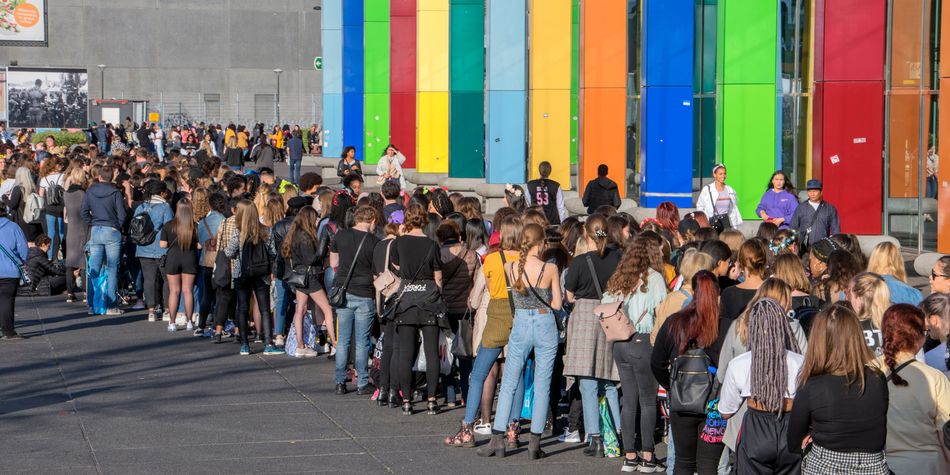
James Rowe: That is my next question. You don't need me to say anything about ticket touts necessarily because they're causing misery for millions of people who want to buy tickets.
Kate Dearden MP: Absolutely, and it's not fair. You don't want to be priced out of seeing your favourite gigs. When I got tickets to see Jungle at the Piece Hall, absolutely loved it and was looking forward to seeing them for ages. If I got priced out of that, I'd have been absolutely furious and hear from people across the country that they are too, and it's not fair and it's not right. That's why we were taking action to make sure that we can stop ticket touts and make sure people can see the gig when they want to.
James Rowe: It was incredibly disappointing to not see a full piece of legislation in the King's Speech a few weeks ago to crack down on ticket touts. Why wasn't there a full piece of legislation to protect consumers?
Kate Dearden MP: I hear you. I hear you. Look, when we have making policy decisions as a government, we want to make sure that they can be operationally successful. When we will be introducing the draft bill into legislation, we're ensuring it's got that really clear parliamentary scrutiny. That's really important when we're introducing new bits of legislation and thank everyone for feeding into this work so far to get to where we are and the action we're taking on secondary ticketing. All that evidence and information has got us to place we are and now it's about the implementation side of things. So, I'm really keen for us to to deliver on that at pace because I know just how important it is for people across the country and it's something that I want to see us do at speed.
James Rowe: Do you think the government let consumers down by not having a full piece of legislation in the King's Speech? The Prime Minister said only a week beforehand that it would be done as soon as possible.
Kate Dearden MP: No, we're really committed, we're really committed to this, and me too. I think it's such an important bit of legislation that I want to see us deliver on and act on. You'll know our commitments to wider consumer protections, everything we've done since we got into government – it's absolutely not something that that we want to shy away from, it's something we want to deliver for people because it matters right to the start where I said it's about that money in people's pockets. It's that, but with with your tickets to your gig, if you work hard for that money and you want to spend it on seeing your favourite artist, you absolutely should do and you shouldn't be priced out of doing so. That's why we will, we will act on it.
James Rowe: I've got loads more to ask you but I'm running out of time. I'll wrap up with one final question. If we were to sit down in a year's time – and maybe we will, maybe you'll invite us back – what would we be talking about? What new consumer protections would you be celebrating in a year's time?
Kate Dearden MP: How do I pick? How long have we got left, about a minute? This summer, I mentioned we have a consumer action plan that we're leading on the department, and really, really glad we're doing that – taking insights across government from all my colleagues in different departments about how we can really look at this across the piece and, what can we do, if it was the dream world we're living in, to take every single action possible to protect consumers across this country. I hope to come back to you at the end of summer with that plan and to give you and your listeners that update of how seriously we are taking this.
To lots of work we're doing on the enforcement side of things, and I want to give a shout out to trading standards because trading standards are absolutely brilliant in enforcing lots of our legislation and making sure that what we have is fit for purpose but matters when it comes to cracking down on anything that's happened as detriment to to consumers.
James Rowe: Do you agree that more needs to be done to improve trading standards as well?
Kate Dearden MP: Absolutely, absolutely. We're looking at that wider remit of trading standards. We're looking to see if we might need a single consumer ombudsman to to help trading standards and complement all that work. There's loads of things that we're thinking about and want to do, so hope to have loads to talk to you about in the future.
James Rowe: Lovely stuff. I'm going to try and pencil something in for 12 months' time in your in your diary if I'm allowed to do that. Kate, thank you so much for your time. Appreciate it.
Kate Dearden MP: Thank you. Really love to chat to you, thank you.
James Rowe: Thanks again to Kate for inviting us down to her office. I've now headed home. But joining us from our studio to help me analyse and dissect everything that the minister told us is Which?’s head of consumer rights, Sue Davies. Sue, how are you?
Sue Davies: I'm fine, thanks. How are you?
James Rowe: I'm very good, thanks. Very quickly, for people who are probably hearing you for the first time – I think it's the first time we've had you on a podcast here at Which? – what is your job, what's your job role, what do you get up to on a day-to-day basis? How are you going to be helpful to help us analyse everything Kate was saying?
Sue Davies: I work in the advocacy team. I'm head of consumer rights and food policy, and I work with a team where our responsibility covers a whole range of consumer rights and protections issues – everything from misleading pricing to ticketing to consumer redress and enforcement issues.
James Rowe: So, it sounds like you are indeed the ideal person to help us analyse everything that the minister was saying. Should we just start at the top? We'll start with some positives. I think it was the first question I asked her around consumer protection and growth. She said they almost go hand in hand, and I think that kind of set the tone for the conversation. Can you try and explain what she means by that and how that's helpful and beneficial to consumers?
Sue Davies: Yes, I think we've had concerns in recent months that the government's been putting a lot of emphasis on economic growth, which is obviously really, really fundamental to everybody's lives. But they talk about it a lot in terms of deregulation and simplification of things for businesses. Obviously, rules need to be simple and easy to follow, but we sometimes worry that that means that important consumer protections might be stripped away, whereas actually, it's really important for consumers that you've got confidence that when you go shopping – whether that's for particular products or for services – that you know that you're protected and that you can rely on what you're seeing and what you're buying and something can be done if if something goes wrong.
What she was saying was that she also sees those two things as going hand in hand, that it's really important that consumer protection supports economic growth so that you've got confident consumers, and she recognised that as consumers, our spending power is really important to economic growth. Obviously, if we're not confident and we don't trust businesses, then we might not spend that money. So, the two do very much go hand in hand.
James Rowe: The consumer action plan that she mentioned, it sounds like it's going to be pretty significant for the government and her department quite specifically. Do we know at this stage, or is it is it a bit too early to ask kind of what we might expect from this?
Sue Davies: Well, I think it was positive that she was saying that this is a priority for them and that we'll be seeing this later in the year. Which put a lot of effort into getting some updating of consumer law over the last couple of years, where we had a big Digital Markets, Competition and Consumers Act and we also had a Product Regulation and Metrology Act, which are means for the government to to strengthen protections.
But I think she was acknowledging that there's still gaps and there's still things that they can do. We'll be looking at some of the the areas where that we're currently working on, particularly around some of the enforcement of those laws and the rights that you have if you buy something, how you can make sure that your complaint with a company is successful and handled properly, as well as some areas we've been looking at where on the pricing side, we still think that the law can be tightened up with some of the misleading pricing practices that you see. It's difficult at this stage to know what will be in that, but I think it's positive that the government's thinking about it and as Which? we'll obviously be doing everything we can to make sure that that covers the issues where we think there's still a lot of consumer harm.
James Rowe: Let's talk about subscription traps very quickly because this is one of the one of the changes that we are going to see from the government next year. This is something that we fed into here at Which? that we were campaigning for and lobbying for. What work did we do to get these changes across the line?
Sue Davies: Well, we have done various investigations over the years which have highlighted how people can sometimes be caught up in subscription traps and it can often be very difficult to cancel them. I think as the minister acknowledged, you can sometimes take something out and think forget that you've had it and then suddenly find out further down the line that you've been paying for something that you no longer want.
This was all part of that big Digital Markets, Competition and Consumers Act, and one of the things within that that we pushed for, and other organisations did too, that it was much easier to be able to get out of these subscription traps. The government's then been consulting on further legislation around that. We've been feeding into that to make sure that it is used of as effectively as possible – so that people won't be wasting their money on things that they don't want or be misled into having subscriptions much longer than they want. It's part of a range of measures that that we fought for, along with things like tackling fake reviews, looking at pricing practices, particularly drip pricing, which the minister also talked about as well.
James Rowe: Let's get onto that on drip pricing and fake reviews. I think the words the minister used were, "Loads of exciting stuff is happening," around this. First of all, that must be music to your ears, right, when you know when somebody in government says something like that?
Sue Davies: Yes, I think so, and because the government obviously brought in the legislation, but then you've got the CMA, the Competition and Markets Authority, along with local authority trading standards that actually make sure that businesses are complying with that legislation. I think it was good that she was saying that we've already seen some action from the Competition and Markets Authority on drip pricing and on fake reviews and she's expecting them to continue to take action to enforce the legislation.
Drip pricing is one of those things that I think we've all got used to, but it just, I think it drives me crazy because you you'll often be going to buy tickets for an event, for example, and then you you get further in the buying process and there's additional booking fees or administrative fees or whatever that have been added on. But you see it in all sectors – you see it in areas like gym memberships, you see it when you get a builder to come and do work and they might not be quoting the VAT, for example. There's loads of examples of drip pricing where we have these hidden fees that aren't advertised upfront.
So, when the law was changed, and this was something that Which? really campaigned for when the legislation was going through because we thought all these little charges can all add up to something really significant and can have mean that you're often paying a lot more than than you think you should be. The legislation has come in that that makes it clear that any mandatory charges have to be upfront in the initial price, in the invitation to purchase, as it's worded in the legislation. Competition and Markets Authority has already taken some action against some driving schools for adding extra fees on. I think it was good that the minister recognises that that's an important area and where there needs to be more enforcement.
Similarly on fake reviews, I think this is one of the areas where she recognised that a lot of the things that have been updated recently originated from Which? investigations, and we've done a lot of investigations on fake reviews over the years where people can think that companies are much better than they are because they've incentivised particularly positive reviews or used different tactics. The legislation has really clamped down on that and now we're at that stage where we we really need to make sure that businesses know that if they don't get their act together, there will be consequences for that.
James Rowe: What about online marketplaces then? The minister said that she recognises that more work needs to be done and that there is a consultation happening right now. It's going to close by the end of June. She didn't – and probably understandably – didn't want to speculate on the outcome of that consultation. Can we speculate? Can we sort of preempt what we want to happen or what could happen off the back of that?
Sue Davies: Well, we think the outcome absolutely has to be that there is a duty on online marketplaces to take responsibility for the safety of the products that are offered for sale on their marketplaces, which sounds a really straightforward and obvious thing. But we've been working on this for, I think, about seven years – and that's not because we've been ineffectual, it's because it's been a lengthy process where we have done so many investigations highlighting how many unsafe products you can find on online marketplaces. When we highlight them, they'll often take them down. Not all of them take them down, but some do, and then they will often reappear.
We've just done a massive investigation where we actually looked at all the official safety alerts from the government, and we were able to identify hundreds of products that were on sale that had been subject to recalls that the online marketplaces hadn't themselves identified and taken down. Every day, people are exposed to risks from these products because online marketplaces don't have clear legal duties.
James Rowe: Do you ever get frustrated at the at the pace of change?
Sue Davies: Yes, and I think this is one example of this where you know that the consequences are really, really clear in terms of unsafe products that can cause real harm to people – or, you know, they can products, we've seen electrical products that present fire risks. We've seen toys that have chemicals in that, you know, are are available for children. We've recently done a an investigation highlighting products that contain a sand that has asbestos in, for example. The harm is really, really real and so it gets very frustrating when we go through calls for evidence, consultations on possible approaches, we get we put so much effort into getting the legislation, but then hopefully this is the final stage that will actually mean that we have a a much clearer framework so that online marketplaces, which have become a very important part of people's lives, you know, are held to account in the same way that high street retailers would be as well.
James Rowe: Let's move on to ticketing for live events. I said that it was disappointing not to see a full piece of legislation that would ban the the resale of tickets and to try and stamp out ticket touts. I think I was speaking on behalf of myself, probably a lot of other consumers in the country, but also on behalf of Which? because from a Which? perspective, we were disappointed not to see a full piece of new legislation, weren't we?
Sue Davies: Yes, we were. This is something, as you say, we know that people feel so strongly about – it's just ridiculous that people can be ripped off in this way. We've done lots of investigations highlighting just how quickly tickets go on sale, often even at the pre-sale stage, and then are available being offered at massively inflated prices by ticket touts because we don't have clear rules for the secondary ticketing market. We have been campaigning for there to be a price cap so that you can only resell tickets at the face value plus any any fees that were charged when you bought them.
The government had committed to that. It was a manifesto commitment, as well. We really hope that this would be in the King's Speech and we work with lots of artists and other organisations that are linked to events, really making the case for why this was so essential. I think the minister made the case that having a draft bill would mean that there is more scrutiny of it and that we it would be it would help with implementation, and she said that they wanted to act quickly – I can't remember her precise words, I think move at pace or something. But if they'd wanted to do this, they could have just introduced a bill. And so I think it is very disappointing, and it's really important that in this period, they don't water down their plans because they have said that they will introduce a price cap, and it's really, really crucial that we sort out this market where people get ripped off so regularly.
James Rowe: The minister said that the government was still really committed to changing things when when I challenged her on whether or not she feels like the government has let consumers down by not having a full piece of legislation in that King's Speech. But it does feel like one of these never-ending stories where it doesn't feel like we're actually going to get a resolution that benefits the rest of us here in the UK, doesn't it?
Sue Davies: Well, I think a draft bill will mean that there are proposals on the table, but we need to absolutely make sure that those are robust and that it moves as quickly as it can. But yeah, I think there's a there was a lot of there was a lot of legislation that was announced, but this is one that really affects people's day-to-day lives and we would have liked to have seen the government make it government make it more of a priority.
James Rowe: Trading standards, it's not something I could get into fully with the minister because we we simply did run out of time. She was singing its praises, wasn't she? I think I said to her that, you know, I asked her whether or not she thinks that more needs to be done to strengthen trading standards. But at Which? we think it really needs fundamental reform, don't we?
Sue Davies: Yes, we do. As she said, trading standards do amazing work and we all rely on them, when you go to fill up your put petrol in your car or or go to the supermarket. They deal with making sure you're getting the right quantity, they make sure that, you know, you're not being misled by pricing practices. They enforce a lot of the legislation that relates to issues like ticketing, but also food standards and huge long list of things that they cover – I think about 300 pieces of legislation.
But the problem is that there's hardly any of them left in some local authorities. We did a really big piece of research that was quite unique last year, where we sent Freedom of Information requests to all local authorities, and we got responses from all of them to see what resources they had and what areas of consumer law they were able to enforce, and it was a really, really depressing picture, which just showed that some local authorities have hardly any resources. At that time, Enfield was the one that the the worst, where it just had one trading standards officer to enforce all of that legislation. There's a bit of a pretence that they're able to do this enforcement. We think that just giving sort of short-term improvements, it might help a little bit, but we, as you say, we think it's got to be a a fundamental re-look at the system.
A lot of the areas of law that the the trading standards deal with are also shared responsibilities with some of the national regulators, but trading standards are often responsible for enforcing really, really big national businesses and often global businesses. We think this whole sort of David and Goliath approach needs looking at again. There are some things where you really need to have on the ground trading standards officers dealing with particular issues – we've seen a lot of high street crime recently, for example, where there's been a lot of challenges there. We did our own investigation recently showing just how easy it was to buy underage product products that were restricted for underage sales. But then, because trading standards are doing so many different things, there's some massive gaps where enforcement just isn't happening and the markets we all interact with are becoming ever more complicated, so we think that there needs to be a look at what's the best balance at local level, regional level, and national level to make sure we have a really effective system. So, she said that they were looking at the remit of trading standards, so I think I think that's positive that they recognise that this is an issue and they're looking at it. We obviously want to work with the government to make sure that they do bring about some really meaningful reforms.
James Rowe: That investigation that you mentioned into the sale of products to underage consumers, we did that investigation. It's a video on our YouTube channel so people can go there and and watch that to get a bit of an insight into why we think trading standards needs to be fundamentally reformed. Sue, just to to wrap up then, I think the last question I asked the minister was about what she would want to be celebrating for consumers in around a year's time. What would you want to be celebrating for consumers in a year's time if we were to get across the line some of the things we're calling on the government to change?
Sue Davies: Well, I think there's some real priority unfinished business like the price cap on secondary ticketing. There's also the absolutely fundamental improvement of product safety, so making sure that online marketplaces have to take responsibility for safety. Then I think the other area that we really hope we'll see some progress on is around the enforcement system, so making sure that we have got a much better balance and that the the challenges that are facing trading standards are proactively addressed by the government, and it's not just a sort of sticking plaster approach – that we really look properly at what a a modern, effective consumer enforcement system would would look like that will sort of future-proof the system going forward as well, given how complex some of the markets are that we have to deal with.
James Rowe: Fingers crossed for some change and some action over the next 12 months then, and keep up the good work, Sue, because we we know how how much work you and and your teams are doing to try and help consumers. Sue, thanks very much for your time.
Sue Davies: Thanks, James.
James Rowe: That brings to an end another podcast from Which?. There's loads more for you to read about everything we discussed today, just head to the episode description for more useful everyday advice. There you'll also find an exclusive offer for podcast listeners like you to become a Which? member for 50% off the usual price, giving you access to our product reviews, our app, one-to-one personalised buying advice, and every issue of Which? magazine across the year. Plus, your membership helps us to make life simpler, fairer, and safer for everyone. If you'd like to know when we release a new episode, then make sure you press subscribe wherever you're listening, that way you can be one of the first to listen. And for any questions, comments, or anything in between, follow us on social media @WhichUK or email us podcasts@which.co.uk. Goodbye!
Be more money savvy
free newsletter
Get a firmer grip on your finances with the expert tips in our Money newsletter – it's free weekly.
This newsletter delivers free money-related content, along with other information about Which? Group products and services. Unsubscribe whenever you want. Your data will be processed in accordance with our privacy notice.
More podcasts from Which?
The Which? podcast showcases the best content from across our website and magazine.
In our Which? Money episodes, released on Fridays, we give advice to help you get on top of your bills and tackle the issues hitting your pocket, whether that's spiralling energy costs or your weekly food shop.
The Which? Shorts podcasts offer you a free insight into some of our favourite articles from our suite of magazines.
Plus, keep an eye out for bonus episodes that tackle important issues, from motoring and tech to health and wellbeing and travel.
How to listen to the Which? podcast
We're always releasing new episodes, and the podcast is available from wherever you usually get your podcasts.
Subscribe using one of the links below, or click this link on your mobile to find us in your favourite podcast app.
As part of your subscription, Which? members also get access to exclusive podcasts.
- Listen to member-exclusive podcasts on our website
- Listen on the go by downloading our app on Google Play
- Listen on the go by downloading our app from the App Store
If you're not already a member, podcast listeners can get 50% off the first year of an annual membership.