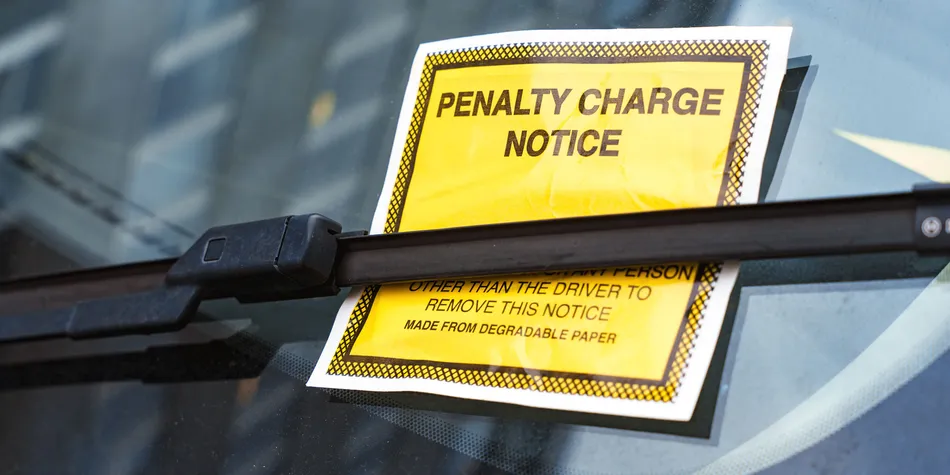
Unfair fines: drivers face steep charges and legal threats for honest mistakes

Faye was Headline Money Consumer Money Journalist of 2023 and a Wincott Award finalist in 2025. She's been investigating scams for nearly a decade.

A trip for a meal out should be a relaxing break from doing the dishes, not the catalyst for months of escalating fines, stress and threats.
But for Oliver Lee, a family meal back in June became an ongoing nightmare when he accidentally fell foul of a private parking firm.
His disabled son's valid Blue Badge wasn't visible from the windscreen – likely knocked out of place when his son became distressed. While the family dined together, a parking charge was issued, which later increased dramatically and led to legal threats, before Which? stepped in.
Last month, the government vowed tougher action against the private parking sector, but will it play fair? Latest Which? research revealed widespread public concern about parking fines, with over half of those who'd received one believing it was issued unjustly.
An innocent mistake
On 12 June, Oliver Lee and his wife, Rebecca, visited a shopping centre in Leeds for a meal out at a branch of Nando's with their two sons.
Both teenage boys are disabled, and as the family parked up in a disabled bay at a privately managed car park, one of them became increasingly upset and overwhelmed.
Oliver explained: 'We had a valid Blue Badge, but in the stress of managing our son, it appears the badge wasn't displayed correctly or became displaced.
'We weren't deliberately misusing the space. We were a family genuinely entitled to use disabled parking, dealing with our son's disability.'
The family weren't aware of their innocent mistake until some weeks later, when they received a £100 parking fine in the post from the car park operator Premier Park.
The letter offered to discount the fine to £60 if it was paid quickly. But Oliver – an advocate for parents of disabled and neurodivergent children, and the founder of advice platform AskEllie – was not prepared to let the matter drop.
He appealed promptly, explaining the circumstances and told Which? he attached a photo of the valid Blue Badge.
Fighting the fine
Premier Park later disputed that the evidence of the valid Blue Badge was included, but Oliver remains adamant that it was.
Though the original fine had come through the post, Premier Park then rejected Oliver's appeal by email.
In its response, it said the family's circumstances might fall within Annex F of the private parking sector's Appeals Charter. This guideline states that, in some mitigating circumstances, parking charges may be reduced or cancelled altogether.
It explicitly covers the Lee family's circumstances, stating that a charge should be reduced to £20 'where a Blue Badge has not been displayed but the holder of the Blue Badge supplies a copy of the Blue Badge they hold, that would have been valid at the time.'
The email went on to request evidence of a valid Blue Badge, giving 14 days to provide it – even though Oliver says he had already included it in his initial appeal.
Frustratingly, the email sent by Premier Park went into Oliver's spam folder, with no hard copy received through the post, meaning he didn't get the chance to send it in time.
He only discovered the email weeks later, when he received a postal letter entitled 'Final chance before action'.
The discounted amount had disappeared, and Premier Park was now demanding the full £100. The letter warned that failure to act would result in debt collection, loss of appeal rights and an increase to £170.
- Read more: how to appeal a parking ticket
Legal threats
Oliver responded to the original rejection email, explaining that the evidence had already been provided, attaching the Blue Badge photographs again, and requesting reconsideration under Annex F.
But he later realised it had come from a no-reply email address, suggesting nobody had seen the evidence.
He told Which?: 'From a consumer's perspective, this was incredibly confusing. I was trying to engage with the company and provide exactly what they were requesting.'
In September, Oliver began receiving letters from a debt recovery firm on behalf of Premier Park, with the charge having now increased to £170.
He was struck by what he thought was threatening wording, which stated: 'Previously our client treated this as an oversight [but] non-payment is now seen as a deliberate choice.'
The letter also featured prominent warnings about legal action, references to a Supreme Court ruling and statements about how most other motorists had already paid.
Oliver described the tone as 'unnecessarily intimidating, particularly given that this was an actively disputed charge involving a disabled family'.
Which? settles the case
More wrangling followed, with Premier Park and the debt collection firm each saying the other was responsible for resolving the issue.
Premier Park then refused to uphold a formal complaint Oliver made about the case.
It was only when Which? contacted Premier Park that it committed in writing to cancel the Lees' charge.
Premier Park said: 'We’re sorry for the frustration caused to Mr Lee and his family. Our records show that no Blue Badge evidence was attached to the original appeal on 2 July, so we requested the supporting evidence and provided a further 14 days for this to be submitted.
'Given the circumstances, we have now requested that the parking charge be cancelled and the case has been withdrawn from debt recovery. We are also reviewing the communications in this case to identify where the process could have been clearer.'
Who will stop unfair fines?
Which? surveyed 2,000 UK adults in September and found that parking fines are a significant worry for many people.
We also found that:
- Nearly one in five UK drivers (18%) have received a parking fine in the past 12 months.
- Nearly two-thirds (65%) of those fined felt the amount they had to pay was unreasonable.
- Over half (55%) believed their fine was issued unjustifiably, often due to incorrect issuance, poor signage, broken machines, or other circumstances beyond their control.
- Only half (51%) of those who felt their fine was unreasonable went on to appeal. The main reasons for not appealing were that they expected not to be listened to or they feared losing the early-payment discount.
- Of those who did appeal, seven in 10 rated at least one aspect of the appeals process as poor.
Prime Minister Andy Burnham said he aims to tackle the problems with the private parking industry and announced a long-awaited new code of practice in Parliament in October. Many measures mirror the existing code, including capping charges at £100 (or £60 if paid within a fortnight), and provisions to reduce fines to £20 in cases such as the Lees'.
The new code goes further by saying fines should be cancelled altogether (rather than reduced to £20) in certain circumstances involving overrunning medical appointments, delays caused by childcare arrangements, or drivers becoming ill.
The government also says it will enforce the removal of access to DVLA data for parking firms that break the rules, which would prevent them from issuing fines.
However, Which? feels this doesn't go far enough. We hear far too many complaints about private parking fines, and we are particularly concerned that the government has shied away from a £50 price cap to prevent disproportionate charges and an independent appeals body that could rein in the industry’s worst practices.
The government has also failed to address widely misused debt recovery fees, which are regularly added without motorists’ knowledge and push unfair charges even higher.
Which? also wants clear, independent standards that all parking operators must meet that are backed up by an impartial appeals process to help drivers get a fair chance when lodging an appeal.