What do England’s new recycling laws mean for you?

Erica is a senior presenter and producer who has spent more than fifteen years crafting stories across for major international broadcasters. At Which? she works across our award-winning audio and video content.

From 31 March 2026, a major change is being introduced across councils in England to standardise what is accepted in kerbside bin collections.
In this episode, we explain how the Simpler Recycling law is going to change the way you dispose of your household recycling waste in England.
Erica McKoy: The rules around recycling bins are set to change, but is England ready to clean up its act? Or will people say, we’ve been there, done that? Welcome to this podcast from Which?.
Hello, it’s Erica recording from the studio today and I’ve got our sustainability writer, Olivia Howes, here to talk about all things bin changes. Hi, Olivia.
Olivia Howes: Hello.
Erica McKoy: Okay, so I feel the moment when people really talk about bins is around Christmas time when the schedule gets thrown off and everyone’s oh my gosh, I don’t know when to take the bin out. But we’re talking about it in March, why?
Olivia Howes: Oh, because the end of March this year, there’s going to be new rules around recycling – something called simpler recycling that the English government – well, it applies in England – is bringing in that means that all local councils will be expected to collect the same materials.
They say that’s to end the postcode lottery that’s existed so far whereby some councils collect certain plastics and others don’t; some collect glass from your household but some make you take it to a bottle bank. Some don’t collect things aluminium foil and some do. So the idea is that every council in England will have to collect the same materials. And then one of the biggest changes of that as well is that all councils will have to collect food waste – which as things stand, well, prior to the end of March, it was only around half of councils that were collecting food waste.
Erica McKoy: I’ve noticed we’ve mentioned England a lot. Why are we only talking about England?
Olivia Howes: So the other nations have their own devolved strategies. I think there’s a similar consultation going on in Northern Ireland at the moment but I don’t actually know a huge amount of detail about it. In Scotland they’ve got plans to introduce a landfill ban – I think it was recently delayed so it’s now not coming till 2028 – but that will mean that councils will have to operate something that will standardise recycling more because they won’t be able to send things to landfill they can at the moment. Not that that’s ever a preferred option for rubbish. I mean councils do try and avoid landfill when they can.
Wales is actually, according to recent research, the second best recycler in the world.
Erica McKoy: Oh, ahead of the curve.
Olivia Howes: Yeah. So they already have something simpler recycling. I think it’s called beyond recycling and they’ve had that for a few years and they do all Welsh councils, local authorities, collect the same materials and have really, really high rates of recycling.
Erica McKoy: I guess one of the big fears that I think some people will have is that they’re going to end up with loads of different bins. Is that how it’ll look? Is that how it’ll come?
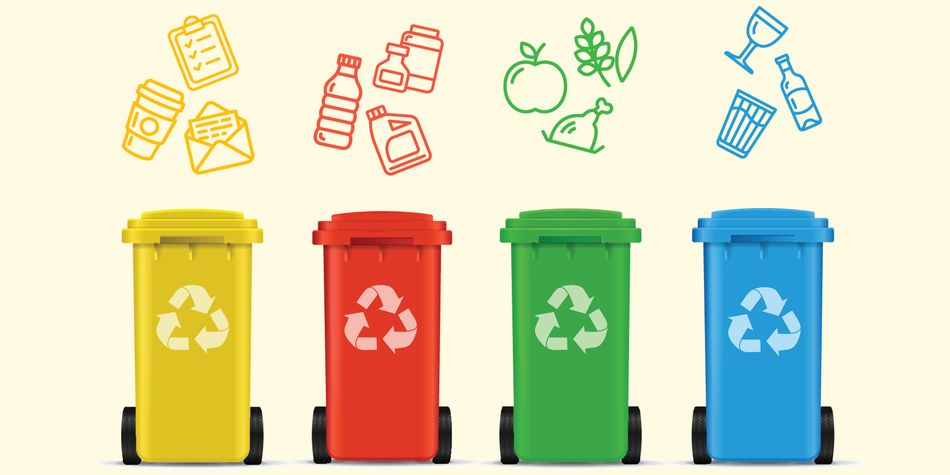
Olivia Howes: Yeah, I think that so the minimum number of bins you could expect if the council is providing the full provision is four. You’ll get one for your residual waste – your general rubbish. You’ll get one for mixed recycling aluminium, glass – although it’s possible you could have a separate container for glass because some councils have that as well. You have one for paper and card because if you keep paper and card separate to other recycling it stops it being contaminated and means recycling’s much better for it. However, some councils have said that they won’t have separate recycling for paper and card so that might still go in with your other recycling. And then you’ll have your food waste bin.
And then also just to add to that in March 2027 they’re planning to introduce soft plastics and film recycling – which is bread bags, plastic bags, crisp packets, that kind of thing.
Erica McKoy: Pet food pouches?
Olivia Howes: Not pet food pouches because they’re laminated – they’re really complicated to recycle – but some food sachets, yeah.
Erica McKoy: So soft plastics – what are you meant to do with them?
Olivia Howes: So you should take them to a front–of–store collection point which can be found at most supermarkets. Any decent–sized supermarket should have one. But of course that’s a real hassle for people. Some people obviously do it, some people don’t. And actually we did carry out some research and we found that 69% of people rarely or never did take their plastics to a front–of–store collection point, and of those people 40% of them said they didn’t even know such a service existed.
Erica McKoy: I think I’m in that category there. Yeah, Olivia, I didn’t know that it existed and then I went – I went down to my local Sainsbury’s and I was looking for it because I was making a video for Which?. I was thinking where is this bin? And I found it and it was full! So loads of people are doing it. I was really surprised about that.
Okay, so in the UK we produce lots of food waste. What can people expect? I know some people have already received caddies, but what can people expect?
Olivia Howes: You’ll normally get two caddies. You’ll get one for using in the house – which is just quite a small, little, neat, I think they’re normally green or brown plastic bin – that can sit on your counter top and you can put a – usually compostable – food caddy liner in it to help deal with some of the mess, though you don’t have to use one. And then you’ll also get a bigger bin to put outside. But when I say big bin it’s not big, it’s probably about a quarter or even smaller the size of your normal wheelie bin and you can just then empty what you’ve got from the inside one into the bigger one whenever you need to. And that food waste by law has to be collected weekly as well. So even though some of your other rubbish, other recycling, might be collected more infrequently and most of your residual waste won’t – now be – I mean most people have a collection every fortnight or even every three weeks – you’ll get your food waste collected weekly.
Erica McKoy: That’s good to know because I think lots of people would be stressed that the foxes will be out and tearing open bags and obviously we don’t want that. How can we reduce our food waste?
Olivia Howes: One of the interesting things that some research has found – not our research but WRAP did some research into people who do use food waste recycling and found that just using it in the first place helps people reduce how much they’re wasting because they see what’s going in there and realise, when it’s not mingled in with all your other rubbish, quite how much is being thrown away. So I think that’s a bit of an eye–opener for some people.
Some of the tips we’ve got on our website with regard to reducing your food waste are doing things using common sense when it comes to best–before dates. In the past a lot of packaged fruit and vegetables had best–before dates on them, but actually supermarkets have removed a lot of those now because research has found that people were much more likely to throw things away that were perfectly good because of it.
Erica McKoy: Just give it a smell.
Olivia Howes: Exactly. It’s also a good idea to keep most of your fruit and veg in the fridge because it will last longer. Exceptions are bananas and avocados unless they’re already ripe. They actually used to advise that you didn’t put potatoes in the fridge, but the FSA’s recently revised this advice and said it’s fine to do that. And another tip that WRAP gives is that make sure your fridge is cold enough because cutting the fridge temperature by a few degrees could actually really increase the shelf life of some of your products.
Erica McKoy: That’s good to know.
Olivia Howes: Otherwise, meal planning obviously and not buying more than you need.
Erica McKoy: Which is good for your bank balance anyway. So it’s all round good. You mentioned the FSA, which is the Food Standards Agency. There is a difference with best–before and use–by, right?
Olivia Howes: Yeah, there’s a definite difference. Use–by dates are about safety. It’s really important that you don’t eat food after use–by dates because even if it seems it’s okay it might not be. Whereas with best–before generally it’s just about quality and not safety. So as long as it looks okay, tastes okay...
Erica McKoy: Smells okay.
Olivia Howes: It’s probably fine.
Erica McKoy: We ran a survey of all the people that have food waste bins and just under a quarter of them said that they don’t use their food waste bin because it’s too smelly or too messy. I know lots of people also worry about foxes. Why are councils doing this? What are the positives for them collecting food waste?
Olivia Howes: There’s quite a lot of positives really. The UK’s targeting a much higher recycling rate than it has at the moment. I think they’re aiming for 65% of municipal waste to be recycled by 2035, which is quite a big jump from where we’re at now. So to get there there’s no question that you’ve got to recycle food waste because that figure is based on tonnage and food waste is really heavy. So being able to recycle food waste makes a big difference to recycling rates.
But added to that there’s other reasons as well. It’s actually cheaper for local councils to pay for food waste to be recycled at an anaerobic digestion facility or another type of composting facility than it is for them to send food waste to landfill because landfill fees are very high. So there’s actually a saving to be made by doing something with it that’s good.
And also you can create really useful stuff out of food waste – you can make really useful compost and fertiliser and also biogas. So there’s many reasons to do it and yeah, seems a win–win really.
Erica McKoy: Absolutely. Olivia, also it’s got me thinking for those that do have the space to maybe they have a garden or even a balcony space. Are there ways that people can take their food waste and compost it at home?
Olivia Howes: Oh yeah, of course. Home compost is a great idea. I think you’re just a lot more limited with what you can put in your home compost because you can put anything in the food waste bin – you can put meat, dairy, lots of items that you just can’t put in a home compost because then you get a really bad rodent problem. So yeah, it’s a great idea to use a home compost if you can, but food waste bins because they’re going to an industrial composting facility they’re much more versatile. And you can even put tea bags in them even if they’re plastic–containing tea bags – which is more unusual now because most of them contain a PLA, a plant–based plastic. But even if they don’t you can still put them in because the amount of plastic is taken out by the processing tools at the plants. So you can put everything in there.
Erica McKoy: Nice. So there’s options. It feels if you’ve got the space and you want to do some home composting, go for it, just be a bit careful about what you put in there. If you don’t have the space the council are going to provide food caddy bins, which is perfect for you to just still do your part and recycle. I think it sounds all round good.
Okay, so let’s talk about plastic because plastic is a bit of a complicated one I think. I remember in the 2000s, 2010s, it felt everyone was encouraging everyone to recycle plastic, but actually plastic’s really complicated to recycle, right?
Olivia Howes: Well, it depends on the plastic. There are a lot of different types of plastic and that’s one of the problems with it – there’s so many different materials and different types that it’s very hard for recycling plants to know what to do with them all. But there’s certain types of plastic that are really well recycled in this country and in Europe. Things milk bottles which are made of what’s called HDPE have a really good recycling rate. They’re a really valuable resource. It’s a really good system whereby they’re collected and then they’re turned into more milk bottles. And they can be recycled lots and lots of times before they break down and can’t be used anymore.
And that’s the same for soft drinks bottles or water bottles which are made of PET. They have a really good recycling rate as well. As long as they’re clear – so they used to get soft drinks bottles Sprite and Ribena and things that used to be a coloured plastic, but they’ve nearly all gone clear now because that means they’re much easier to recycle so you get the same product, quality product, coming out the other end.
Erica McKoy: Now that you’ve said that it’s yeah, it’s true.
Olivia Howes: So they are really well recycled, they’re really valuable, it’s a really easy market. It’s when it comes to some of the other products – things flexible plastics, plastic bags – because they haven’t traditionally been recycled there aren’t really so far the end markets for them that there should be. So there’s just not that many – I mean in the – there’s not many places in the UK, there’s not enough capacity in the UK to recycle them at the moment. There needs to be a lot of investment to make sure that can happen.
They also because of food safety law a lot of soft plastic packaging films on fruit punnets or ready–meal containers, things that, you can’t turn them back into more food packaging at the moment. You can only what actually amounts to downcycle them into something else – so they might become bin liners or some sort of plastic pellets that can be made into garden furniture or things that. So you’re not actually turning them back into the product that they were, you’re downcycling them.
But having said that the more material that’s collected – so the more that people engage with recycling these different types of plastic – the more demand is going to be stimulated to actually find a solution to do something about it and recycle them properly. And there’s lots of innovation going on. There’s some really brilliant people coming up with solutions. So there is positivity there. Obviously aside from all that, the less plastic you use still the better.
Erica McKoy: You mentioned downcycling. I’ve heard of upcycling. Are they linked or what’s the – what is it? What does it mean?
Olivia Howes: Upcycling’s just creating a new life for something isn’t it that turning into something new. Downcycling means the thing does get a new life but it’s not necessarily got the value of the thing that it had before and it’s on a route towards not being able to be used.
Erica McKoy: So avoid plastics where possible.
Olivia Howes: Yes, definitely.
Erica McKoy: You wrote a piece for the magazine and in the piece you mentioned a study which was done by Retail Economics – 78% of the UK’s fruit and veg is wrapped in plastic, which is quite a bit higher than the European average. Are shops motivated to do anything about this? That feels a massive stat.
Olivia Howes: Yeah, it’s quite surprising. I think you really notice it when you go to some European countries and you see the all the fruit and veg is just unpackaged and just out – it’s quite a stark difference.
But there are big differences in the UK as well as to who’s selling fruit and veg loose. We did look into this and did a little study into a snapshot research piece into the supermarkets that are selling the most unpackaged fruit and veg. And some are doing a lot better than others. They tend to offer both packaged and unpackaged as their options – it’s rare that you just find unpackaged – but at least people have the option to choose if they want to.
With online we looked at buying products online. Again some supermarket were doing pretty well but as a whole it didn’t tend to be as good a picture – there was a lot less available loose when you buy your shopping online. I guess there’s different reasons for that, but it does seem a shame.
I think supermarkets are in general trying. They’ve got plastic reduction targets, they’ve got packaging reduction targets, and they’ve got to hit those pretty soon. So I think there are efforts to do it. And WRAP, the Waste and Resources Action Programme, is doing a really good job in calling for supermarkets to do more and I think they do work with them.
Erica McKoy: I guess another option if you don’t want to go to the supermarket for everything is that you can go to those plastic–free shops to get your pulses or your rice if you’ve got one nearby.
Olivia Howes: That’s exactly it, isn’t it? It’s about accessibility and of course yeah, if you live in the right area with those things near your doorstep then yeah, great, use it, but I just think that’s not necessarily a reality for a lot of people and there aren’t that many of them around.
Erica McKoy: But it’s an option.
Olivia Howes: It’s an option, yeah.
Erica McKoy: Okay, so the UK is alright at recycling. I guess we could do better, but we’re pretty good. Just to wrap up the episode, what can people expect to see happen from April 2026 and beyond?
Olivia Howes: Hopefully we’ll see an increase in the amount of food waste that is recycled. Hopefully the fact that there’s going to be this consistency and streamlining across what else is collected means that it will just increase recycling rates generally and that people will know that they can recycle yoghurt pots, that they can recycle aluminium foil, that they can recycle certain types of plastic. And that everyone wherever you go – so maybe when you go on holiday to a different part of the country or you go see friends – you know that you can do the same thing there as you were doing at home. So hopefully that will encourage people to carry out better habits. It’s a good thing, definitely.
Erica McKoy: It does sound it’s going to get a whole lot easier to recycle. But there are some things that we really shouldn’t be recycling that should probably just go in the bin. Could you tell us some of the things that shouldn’t go in your recycling?
Olivia Howes: Yeah, some of these are kind of obvious and some of them seem quite surprising what people will try and recycle. But if anything’s really caked in food and you can’t wash it off then it’s probably got to go in your bin. Things compostable bags – I think sometimes people think that they can pop them in the recycling but you can’t – they get stuck in the machinery because they break down too quickly and then they can get stuck in machinery and really ruin it and damage things. So no they can’t.
Compostable products – if they’re home compostable and you have home compost they can go in your home compost. And compostable bags can go in your food caddy liner, but anything else that’s labelled as compostable has to go in your bin, your general bin, unless you could put it on your home compost. But you can only do that if it has the home compost logo and most stuff doesn’t.
Another thing you really should never ever put in your recycling or your black bin is batteries – lithium batteries, things containing lithium batteries or other batteries. Those should be properly recycled – again you can go to supermarkets and recycle those or go to your local authority recycling centre.
Other stuff that might be quite surprising to people is broken glass drinks glasses or Pyrex shouldn’t go in your recycling.
Erica McKoy: Why not with the Pyrex? Why can’t I? If it’s broken, it’s glass, why not?
Olivia Howes: Because it melts at a different temperature to the glass that you make bottles from, so it ruins the mix when they melt it down again. And this also includes things the plates that you find in a microwave, right? Because they won’t melt at the same rate.
Erica McKoy: What else do people put in their recycling?
Olivia Howes: People put things cat litter and nappies and things in there which yeah, I don’t know why they would do that but obviously that’s obviously a no–no. I’d say that’s kind of the main thing to think about – stuff that’s really food–soiled or obviously should just go in your bin and things kitchen towel and wet wipes as well.
Erica McKoy: I sometimes think maybe people are just trying to be overly optimistic about what they can recycle and they’re just going oh I’ll just put that in.
Olivia Howes: It’s called wishcycling.
Erica McKoy: Let’s not do that. No wishcycling in 2026. Thank you so much for joining me today, Olivia.
Olivia Howes: Thank you, thanks very much.
Live more sustainably
free newsletter
Our free monthly Greener Living newsletter can help you make everyday changes for you and the planet.
Unsubscribe whenever you want. Your data will be processed in accordance with our Privacy notice.
More podcasts from Which?
The Which? podcast showcases the best content from across our website and magazine.
Which? Money episodes, released on Fridays, give advice to help you get on top of your bills and tackle the issues hitting your pocket, from spiralling energy costs to your weekly food shop.
The Which? Shorts podcasts offer you a free insight into some of our favourite articles from our suite of magazines.
Plus, keep an eye out for bonus episodes that tackle important issues, from motoring to tech, and from health and wellbeing to travel.
How to listen to the Which? podcast
We're always releasing new episodes, and the podcast is available wherever you usually listen to podcasts.
Subscribe using one of the links below or click this link on your mobile to find us in your favourite podcast app.
As part of your subscription, Which? members also get access to exclusive podcasts.
- Listen to member-exclusive podcasts on our website
- Listen on the go by downloading our app on Google Play
- Listen on the go by downloading our app from the App Store
If you're not already a member, podcast listeners can get 50% off the first year of an annual membership.