Which tax rises could be announced in this month’s Budget?

Having worked at the BBC and in commercial radio before joining Which?, James produces our always-on podcasts, and oversaw the launch of our member-exclusive podcasts in 2025.

It’s less than two weeks until John Healey delivers his first Budget speech as Chancellor. So, what could he announce that would affect your finances?
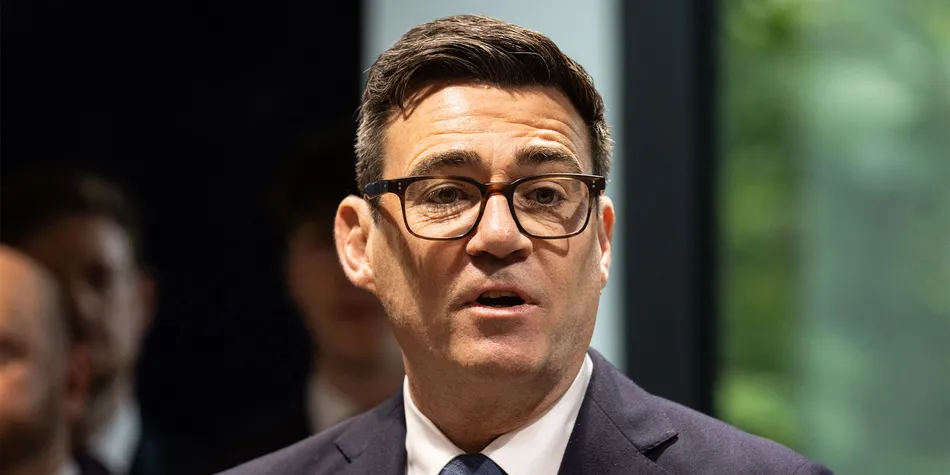
In this episode, Which? tax expert Ruby Flanagan joins us to discuss which taxes could be increased to help Andy Burnham’s government deliver its new policy announcements.
From inheritance tax to stamp duty, we analyse the likelihood of each of these taxes rising.
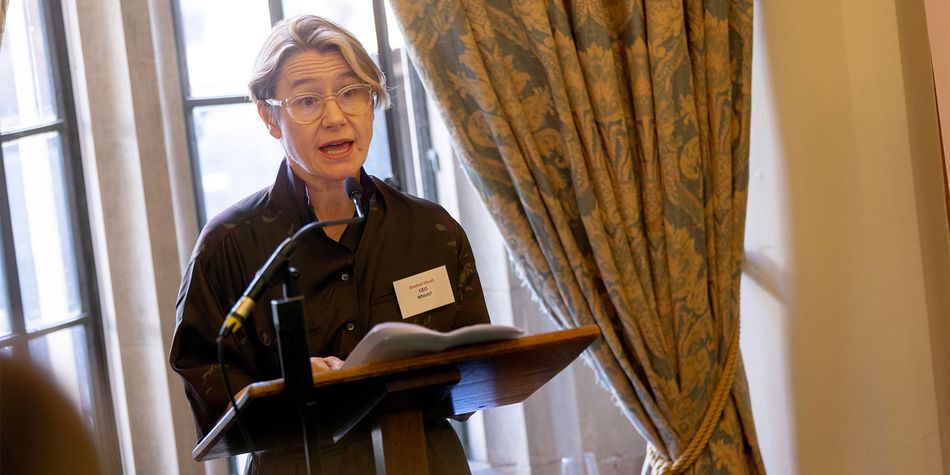
Plus, Faye Church, chartered financial planner at Rathbones explains why more affluent households are increasingly worried about the cumulative impact of possible changes affecting pensions, capital gains tax and other areas of personal taxation.
Kat Cereda: Well, it's two weeks to go until John Healey delivers his first budget speech as Chancellor. So, what could he announce that would affect your finances? Let's find out on this episode of Which? Money.
Hello, it's Kat in the Which? studio alongside Which? Money's Ruby Flanagan.
Ruby Flanagan: Hello.
Kat Cereda: And chartered financial planner at Rathbones, Faye Church.
Faye Church: Hello.
Kat Cereda: So, Faye, I'm going to come to you first. How big of a test is this for Burnham and Healey?
Faye Church: That's a really good question. It's a big credibility test, because the government needs to show that it can make people feel better off without allowing the public finances to look less secure. Markets will look at whether the numbers are credible. Households will look at whether disposable income improves. Businesses will look for a period of stability, and it will be really hard to satisfy all three of those areas.
Kat Cereda: And Ruby, do you think the personal allowance will be upped? Burnham said it would be reviewed, so what do you think?
Ruby Flanagan: I don't think so. But this has only come about because during the Makerfield by-election, Burnham was chatting to the public and mentioned a few times that the personal allowance was something that people were worried about and concerned about, because it's been frozen for a few years now. And he did say that the frustration about the personal allowance was lodged in his mind, which is why the rumour mill sort of started with it. I think speculation is that it would rise to potentially above 14,000, which, when you have to think about all the tax income that HMRC gets and the spending that the government have to do, you just don't know. It feels like a really big step to take, particularly as finances are a bit on the edge with the government at the moment.
Kat Cereda: Burnham has committed to the manifesto pledge of not raising tax on working people. How difficult does this make things for the government?
Faye Church: Very difficult, because they said that they can't increase income tax. They can't raise VAT. They can't raise National Insurance. But they can still raise revenue through frozen thresholds. They've still got CGT – that's not part of the manifesto – and inheritance tax is also a big one that's being looked at. And then property taxes and reduced reliefs. So, it's very hard, I think. And if only they hadn't put that in the manifesto, I think we wouldn't be in the position that we're in now.
Kat Cereda: Ruby, they've already announced a raft of new policies on things like energy bills and bus fares. And there was some big news from the Institute for Fiscal Studies this week. Can you talk about what this was and what it means, and whether taxes will have to rise?
Ruby Flanagan: Yeah, the Institute for Fiscal Studies put out a report this week that said Healey needs about an extra 35 billion to meet its current spending plans, which means that he doesn't have the wiggle room that we initially thought they had back at the beginning of the summer. So, finding that extra money will be difficult. And will that mean tax rises? We don't know. It means they are walking a tightrope. They've not got much to go off at the moment, which obviously will be a lot harder for him to do.
Kat Cereda: So, there's no signs of a singular wealth tax. Have you heard that many are concerned about a raft of tax rises?
Faye Church: So, yeah, I think our clients fear that there's a death by a thousand cuts. So, you've got income, you've got assets being mentioned, pensions, property, and inheritance tax. And so, yeah, there's all these little things that might affect our clients and how their longer-term plans are going to pan out. And I think that's key, is that there's not just one thing – there's lots of things that clients are unsure of. And I think when we're speaking to our clients and we're putting longer-term plans in place – so we're not talking five years, we're talking about 10, 20, 30 years – the changes that happen now can really affect how their financial futures look.
Kat Cereda: So, one of Burnham's key allies, Louise Haigh, has called for changes to Capital Gains Tax. Can you go back to basics for me? Explain what capital gains and Capital Gains Tax is, and then what we know about it.
Ruby Flanagan: So, yeah, Capital Gains Tax is the gain you make after selling a property or an asset. So, you are taxed on the profit. And at the moment, basic-rate taxpayers pay 18% Capital Gains Tax, while higher-rate taxpayers pay 24%. Now, it's not been on the cards. It's been a suggestion for a long time now that we equalise those taxes with income tax. So, that would mean that basic-rate taxpayers, instead of paying 18%, would pay 20% – the same rate as income tax – and then higher-rate taxpayers would pay 45%. Now, yeah, a key ally has said this, but I think that is one of the most – it's not the easiest tax to go for, but the most obvious one to go for if you are not going to touch income tax.
However, I do believe John Healey has come out and said that this won't happen. I believe a report has come out today by the FT that they've ruled this out. So, again, we're going into this budget really with no clarity at all. It truly is kind of in the mist here. There's nothing too obvious that they can do. Capital Gains Tax was the most, but now it feels like that's not even certain to be done.
Faye Church: No change there then. In pretty much every budget, we get the speculation and we really don't know what's going to happen until the day.
Ruby Flanagan: I know. To be fair, over the last few years – I've covered the budget for about five years – in the lead-up, there's always been leaks here and there. So, going into the day, you kind of knew what was coming. We've not really had any rabbit in the hat – which is a surprise thing that comes out of the budget – was in 2024 when Rachel Reeves said that she was going to unfreeze income tax thresholds, then to refreeze them the next year. So, usually we do have speculation and a lot of things do get leaked, but this year they're keeping that box locked. Not much is coming out.
Kat Cereda: Ruby, you were on the Which? Money podcast last week, weren't you, when you were talking about inheritance tax? So, obviously, this is quite a – it's a very big and it's a very emotive topic. Kemi Badenoch has actually since called for cuts to inheritance tax. Do you think that there are these big changes?
Ruby Flanagan: Truly, I truly don't think inheritance tax will be touched at this budget. We've got a huge change coming next year when pensions get brought into the scope for inheritance tax, and it just feels that too much change all at once might not be a good thing. So, again, I just don't know. But it doesn't feel like something that Burnham and Healey are going to zone in on and be like, 'We're going to adjust inheritance tax.' But then again, we never know. They might rabbit-in-the-hat it and pull out a change or an increase, which would then be kind of chaotic for anyone who has inheritance tax in their financial planning. Because any change that could happen would be likely to be either a lower of the thresholds, do you think? But then again, that's just being speculative.
Faye Church: So, lower thresholds, where would they go? They're already quite low, and especially for clients in the South East, it's almost as if they get a very bum deal compared to other areas of the UK. With the pensions coming into the estate, we've had time to plan for that. So, again, that's not so bad in the fact that we know that that's happening, and actually that's put a big spanner in the works for a lot of our clients and the planning work that we've done. But there are things that we can do – we have been able to make changes. It's the changes that come on budget day and say, 'Right, as of today, this is what will change,' or maybe in the new tax year, which gives you either no window at all or a very little window to be able to adapt.
Kat Cereda: So, Ruby, there are changes happening to inheritance tax next year. Can you remind us what those are?
Ruby Flanagan: It's just that pensions are now brought into the scope for inheritance tax. So, pensions will be included as part of a person's estate when they die. Currently, the threshold is £325,000 before you have to pay inheritance tax. Under the current rules, if your estate is worth above that, you pay inheritance tax on the portion above that threshold. There are other caveats, like the nil-rate band, but they're the big changes. And as you said before, with pensions coming in, there has been time. That was announced a good few years ago. Was it 2024? So, there has been time. Any changes that do get announced, if they do, there likely will be a little bit of time, you would think.
Kat Cereda: So, I want to talk about property taxes next. What do we know about the so-called mansion tax?
Ruby Flanagan: So, the mansion tax is the high-value council tax surcharge in England. And it's starting in 2028 – so April 2028 – and it's an annual charge of £2,500 for properties valued at more than £2 million, and this increases to £7,500 for properties worth more than £5 million. And The Times reported that Burnham and Healey are considering lowering this threshold to 1.5 million. And I think originally the data said it was about 165,000 homes would be pulled into it in April 2028, but if they do go ahead with this change, it would drag about another 100,000 homes into it. And as we mentioned about inheritance tax, this would mainly impact homes in London and the South East, which are a lot higher value than in other areas of the country.
Faye Church: Yeah, a 1.5-million house in those areas may represent considerable wealth on paper, but actually it doesn't mean that the owner has income or liquidity to meet a recurring annual charge comfortably. So, it's a strange one.
Ruby Flanagan: In discussing the mansion tax with colleagues and work, it would be a really tough one to sell, particularly if you were asset-rich, cash-poor. If you were that individual, you had a home based in, let's say, East London, which is worth 1.5 million, but it is just a three-bedroom townhouse in Stratford or something–
Kat Cereda: Or perhaps you've had it in your family for generations, but you haven't got much money to your name. You'd be hit in that situation, wouldn't you?
Ruby Flanagan: Yeah, so it would be an odd one to go forward with, I think. Particularly because it's not yet been introduced, so we still don't know how it's going to work properly. The legislation's not been put forward or been solidified of how it will work. So, changing it now might be a bit of an odd thing to do. Or it might be a good thing, because they've got more time to make those changes before it's implemented. But I think that's the only thing that is coming out of that, because I know that Burnham and Healey, they've already rejected touching Stamp Duty Land Tax and council tax. They're two things that pretty much won't be mentioned in this budget, but mansion tax is something that could be.
Kat Cereda: Yeah, I was actually going to touch on that. Burnham in the past has shown support for scrapping council tax, but has since walked back on that. So, you don't think we're going to be seeing any changes on that, or stamp duty changes? Is that fair?
Ruby Flanagan: I think, yeah. Council tax is such a big one to look at. We know there's so many problems with council tax and the issues, particularly with the bands people are in. Obviously, it's instructionally known that a lot of property council tax bands are in the wrong council tax band. It feels like that is a huge issue to tackle, particularly as they've only got two years until the next general election. So, they don't really have a whole term to make any big changes. They've only got these two years to properly implement them. And, yes, a council tax change would be good, but I don't think it's a priority as of right now.
Kat Cereda: How difficult is this budget for the government, because they are restricted by the 2024 manifesto? How difficult do you think this is for Burnham to think and get right?
Faye Church: Yeah, it's very difficult for those three reasons mentioned earlier, which is they've got to support households, they've got to invest in public services, and they've got to keep markets on side. And there's very little wiggle room just in terms of what they can change. So, it's going to be interesting. It's also going to show their credibility as a government and also as a Treasury, and where they can raise monies without affecting too many people adversely.
Kat Cereda: What do you think a good budget would look like? What kind of reaction do you think the government will be looking for?
Ruby Flanagan: I think, as you mentioned before, there's so many balls to keep in the air while juggling that it's just a very tough budget to do. And I think with Healey and Burnham, already a lot of cost-of-living measures have been announced. Inflation is still hitting households' budgets, and this budget, if households don't really see an immediate effect to their take-home pay, they might not see it as a successful budget. So, I think it's a fine line between keeping the markets happy, keeping consumers happy. It's a hard one. I think that's all you can say. I'm glad I'm not the Chancellor.
Kat Cereda: I think a lot of the people who'll be listening to this will be listening to all you're saying, obviously, but nothing's confirmed until it is officially announced. But they'll probably be wondering if there's anything they can do to protect themselves and prepare themselves for whatever does get announced on the day of the budget. Is there anything that people can do? Is there any advice that you would give?
Faye Church: That's a really good question, and we get asked that all the time, because clients are looking to see whether they can shelter themselves from change. But the honest answer is, if you're not going to make that change, then don't do it, because it can be adverse to their planning needs. For an example, I think definitely in the last two budgets or the run-up to the budget, we had a lot of people wanting to take tax-free cash from their pensions. I think around 27% of people that did actually take tax-free cash from their pensions now regret it. And especially when you're looking to make decisions on things that are irreversible – you can't put that tax-free cash back in your pension – you've got to really make sure that it's the right decision, and the right decision for you. And so, it's almost, 'Don't have that knee-jerk reaction to what may or may not happen.' It's very hard to advise on what may or may not happen. We need to bring it back to a client and what they're looking to achieve over the short, medium, and longer term. So, yeah, the one piece of advice would be, if you're not looking to do it, then don't do it.
Ruby Flanagan: No, it's exactly that. I think pensions is the one that gets brought up – the example that gets brought up a lot – because, yeah, the last two budgets, there was a lot of speculation about changes to the tax-free amount you could pull from your pension. And we have data now to show just how much was pulled from it. And again, it is, yeah, just unfortunately, it is kind of a wait-and-see. We can speculate as much as we want, but nothing is concrete until it's said in the Commons and the budget gets published, and then we can look through the red book and all the paper that – all the planning and things that have been put forward. But, yeah, before that, there's not really much you can do.
Faye Church: And it might be that you can advance plans. So, for example, if you've got someone that's looking to help their child get on a property ladder and it's likely to come from the pension tax-free cash, and they're not looking to do it for a couple of years, you could do that now and advance what you might have put in place. But as you said, don't do it if you don't need to, and take that breath.
Kat Cereda: And as people that work in this space, is the budget something you're looking forward to? Where are you going to be on the day that it's announced?
Ruby Flanagan: Oh, I'm going to be at the Which? office. I think there'll be pizza delivered. I think the joke between my colleagues and my friend is, 'Happy Budget Eve, how are we celebrating?' And we will definitely be having drinks at the pub after the long day of covering all the things that get announced in the office and in the budget. So, it's going to be a very long and busy day, but with a nice cold pint at the end.
Kat Cereda: Notoriously, isn't the budget the one time they're allowed to drink in the House of Commons, isn't it?
Ruby Flanagan: I think it is, actually.
Kat Cereda: That explains all the bad behaviour. What about you, Faye?
Faye Church: So, we have a budget war room. So, exactly as you say, we sit together, we've kind of put together what we think might happen, and then we sit and watch and then react accordingly depending on what has happened. And our number one message is, 'How is this going to affect our clients?'
Kat Cereda: Well, thank you both for coming on the Which? podcast today. We've certainly learned a lot, and we'll have to wait and see what gets announced.
Faye Church: Thank you.
Ruby Flanagan: Thank you.
James Rowe: That brings to an end another podcast from Which? There's loads more for you to read about everything we discussed today, just head to the episode description for more useful everyday advice. There you'll also find an exclusive offer for podcast listeners like you to become a Which? member for 50% off the usual price, giving you access to our product reviews, our app, one-to-one personalised buying advice, and every issue of Which? magazine across the year. Plus, your membership helps us to make life simpler, fairer, and safer for everyone. If you'd like to know when we release a new episode, then make sure you press subscribe wherever you're listening. That way you can be one of the first to listen. And for any questions, comments, or anything in between, follow us on social media @WhichUK, or email us: podcast@which.co.uk. Goodbye.
Be more money savvy
free newsletter
Get a firmer grip on your finances with the expert tips in our Money newsletter – it's free weekly.
This newsletter delivers free money-related content, along with other information about Which? Group products and services. Unsubscribe whenever you want. Your data will be processed in accordance with our privacy notice.
More podcasts from Which?
The Which? podcast showcases the best content from across our website and magazine.
In our Which? Money episodes, released on Fridays, we give advice to help you get on top of your bills and tackle the issues hitting your pocket, whether that's spiralling energy costs or your weekly food shop.
The Which? Shorts podcasts offer you a free insight into some of our favourite articles from our suite of magazines.
Plus, keep an eye out for bonus episodes that tackle important issues, from motoring and tech to health and wellbeing and travel.
How to listen to the Which? podcast
We're always releasing new episodes, and the podcast is available from wherever you usually get your podcasts.
Subscribe using one of the links below, or click this link on your mobile to find us in your favourite podcast app.
As part of your subscription, Which? members also get access to exclusive podcasts.
- Listen to member-exclusive podcasts on our website
- Listen on the go by downloading our app on Google Play
- Listen on the go by downloading our app from the App Store
If you're not already a member, podcast listeners can get 50% off the first year of an annual membership.