James Rowe: I'm James Rowe and welcome to Which? Shorts, your free weekly insight into Which? magazine, as well as our Money, Tech, Travel and Gardening titles too. Today I'm bringing you a piece that Fran Roberts Thornton wrote for the April/May issue of Which? Tech, all about recycling old technology when we upgrade to a new device. It's probably not at the forefront of your mind, but what you do with your devices and how you buy your next one matters more than you might think. After hearing this, maybe you'll think twice when you're looking to buy a fancy new phone. Here's Fran's piece, adapted for the podcast, this week read by Erica McCoy.
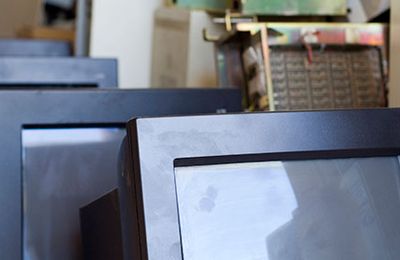
Erica McCoy: What would you do with £1 billion? The organisation behind the Recycle Your Electricals campaign, Material Focus, estimates that discarded or hoarded electricals in the UK alone could contain materials worth approximately £1 billion. Over 100,000 tonnes of e-waste is binned and more than 880 million items are stored in homes, showing the significant collective impact of keeping old devices or throwing them away rather than recycling them.
And that's not the only shocking statistic you need to know about. When Which? asked members in January about the devices they'd replaced over the previous five years, more than 50% of smartphones and tablets were still in working order. So, why are people hoarding their devices instead of recycling or reusing them? And why do they replace them before their usable lifespan ends?
Well, not everyone upgrades simply because they want the latest tech. While manufacturers like Fairphone and Framework make phones and laptops with user-replaceable parts, these are now rare exceptions, and the days of popping open your device and changing a part are mostly gone. Take laptops for example. The majority have their RAM soldered onto the motherboard, making it impossible to upgrade, which forces people to buy an entirely new model if their old one has slowed down. Thankfully, our laptop reviews now state if a device has its RAM soldered on or not, so you have the power to choose a model that's upgradeable.
Even straightforward repairs like battery replacements are trickier now as many modern devices are sealed, making them slimmer and water-resistant. Coupled with a lack of spare parts, tools, and clear and complete manuals, it's often challenging for the average person to replace parts in an otherwise healthy device.
But hoarding has a cost. Once a device is no longer used, it still has a significant impact. If it's thrown away or left in a drawer, the materials such as copper, gold, or lithium may be lost from the supply chain. But even if devices are disposed of responsibly, the recycling process still has its issues. Since the 1990s, much of our e-waste has been sent to Africa.
Dr Ulrike Ehgartner is a research associate at the University of York School for Business and Society. She says that people in these informal economies were quick to learn how to repair these goods, which helped people on the ground. However, faster upgrade cycles and the lack of compatible parts in modern devices have changed this. People slowly moved on to extracting the materials, Dr Edgortner continues. They use a lot of heat and chemicals – acid, solvents, and forever chemicals are also released to get them out again, causing environmental and health issues.
Only 1% of Africa's e-waste is formally recycled, leaving the rest to pass through unofficial channels. These informal recyclers, many of them women and children, according to the African Centre for Economic Transformation, often dismantle e-waste with their bare hands or burn it in open pits to extract and recover reusable materials.
But hopefully, this will change soon. A recently opened rare-earth magnet and lithium-ion battery recycling facility in the Midlands may reduce overseas recycling. Of the 118 confirmed elements in the periodic table, it might surprise you to learn that personal electronic devices can contain as many as 70 different elements. Some you may know, such as cobalt, nickel, and lithium, which are used in batteries, others such as lanthanum, dysprosium, and indium, may be less familiar.
Dr Sean Scott is a research associate on the Faraday Institution's ReLib project, which investigates recycling lithium-ion batteries. He says that the biggest issue with these raw materials is that they are finite. We mine them out of the ground, which brings with it a large environmental impact in terms of the energy usage and the generation of pollutants, which affect local waterways and can cause erosion.
Take cobalt for example. Dr Scott says that this is essentially a byproduct of copper mining. This means that a lot of mining has to occur to meet the demands for these crucial elements. Cobalt mining presents further issues. In 2024, 76% of the global supply was mined in the Democratic Republic of Congo, where 37% of the workers surveyed said that they were forced labour, and almost 10% were in child labour, according to research from the University of Nottingham.
So, what's being done about all this? As consumers, the responsible thing for us all to do is to make sure we keep our tech devices running as long as possible. As Mark Miodownik, Professor of Materials and Society at the University College London told us: "Yes, do your recycling, but it's the least best outcome. The best outcome by a long, long way is to give this amazing stuff a longer life."
Start by choosing a good-quality model with a decent support period – preferably refurbished to make the most of the resources used to create it. Keep your tech running smoothly so you don't need to replace it unnecessarily, and repair outdated or faulty parts where possible.
Frustratingly, consumer tech is excluded from the 2021 right-to-repair legislation in Great Britain, which requires companies to provide spare parts for specific products. Northern Ireland falls under tougher EU regulations for tablets and smartphones, but not laptops. The UK's Product Security and Telecommunications Infrastructure Act legally requires brands to publish their minimum guaranteed software update period. No minimum is mandated.
In Northern Ireland, the EU's Digital Content Directive also applies. This requires updates as long as the consumer can reasonably expect, but again falls short of mandating a specific time period. In 2024, the UK government set up a taskforce focused on reducing and reusing mineral waste, and it plans to publish the circular economy growth plan in 2026, which agrees that the government should do more to ensure that devices last longer, such as requiring mandatory minimum periods for how long different types of smart products must be supported by software and security updates.