By clicking a retailer link you consent to third-party cookies that track your onward journey. This enables W? to receive an affiliate commission if you make a purchase, which supports our mission to be the UK's consumer champion.
How to make a home insurance claim

Dean is an award-winning personal finance writer who’s spent over 15 years helping consumers navigate the tangled and fascinating world of insurance.

Get a great deal on your home insurance
We've partnered with MoneySuperMarket to help you compare a wide range of home insurance options in one place, with added insight from Which?
Get a quote with MoneySuperMarket and we'll highlight Which? Best Buys and Recommended Providers in your results.
This is a Which? exclusive, so you won't find our scores or expert analysis on other comparison sites.

Dive into the detail with our expert reviews
We rated 177 elements of each policy, covering buildings, contents and admin points such as fees.
We asked 3,419 home insurance customers who made a claim within the past two years to score their insurer.
Which are the best home insurers for claims?
The acid test for any home insurance provider is how it handles your claim.
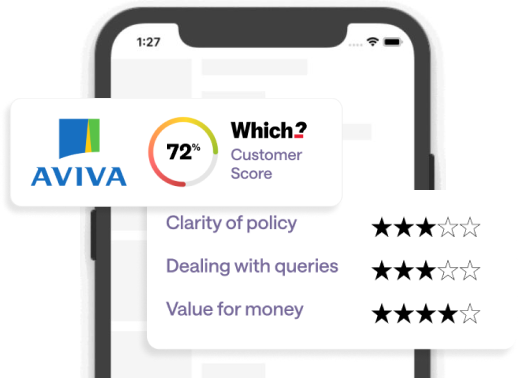
We surveyed 3,419 policyholders who had made a home insurance claim in the past two years about their experiences. The table shows how 22 insurers were rated for claims handling based on this customer feedback.
As well as giving their overall verdict on how their most recent claim was handled (the claims score), claimants also gave their view on how speedily the insurer had dealt with the claim and how well they'd been kept up to date.
Search for your insurer, or find a better one, using our table:
RECOMMENDED PROVIDER | 86% | |||||||
| 82% | ||||||||
| 81% | ||||||||
| 81% | ||||||||
| 81% | ||||||||
| 81% | ||||||||
RECOMMENDED PROVIDER | 81% | |||||||
Axa | 80% | |||||||
| 79% | ||||||||
First Direct | 79% | |||||||
| 79% | ||||||||
NatWest | 79% | |||||||
| 78% | ||||||||
| 77% | ||||||||
HSBC | 77% | |||||||
| 76% | ||||||||
Santander | 75% | |||||||
| 74% | ||||||||
| 72% | n/a | |||||||
| 72% | ||||||||
| 68% | ||||||||
Policy Expert | 53% | n/a |
Customer survey: The claims score is based on an online survey of 3,419 members of the public who own home insurance and had made a claim in the two years prior to taking the survey. Survey conducted in May-June 2026. The sample for some brands was boosted to reach minimum sample size for reporting. The final data has not been weighted and may not be representative of the customers of each home insurance company. The 'claims score' is based on how the insurer handled customers' most recent claim: a statistical analysis is applied to the customers' satisfaction with the brand and likelihood to recommend. 'n/a' means not enough responses to include a score or star rating.
Sample sizes: 1st Central (87), Admiral (245), Allianz (316), Aviva (592), Axa (127), Bank of Scotland (63), Churchill (255), Co-op Insurance (52), Direct Line (107), Esure (45), First Direct (76) Halifax (192), Hastings Direct (107), HSBC (116), Lloyds Bank (142), LV (138), Nationwide Building Society (84), NatWest (90), NFU Mutual (115), Policy Expert (54), Santander (65), Tesco Insurance (129).
Please note that this article is for information purposes only and doesn't constitute advice. Please refer to the insurer's T&Cs before committing to any financial products.
What should I do if I need to make a home insurance claim?
Watch our video, or scroll down for step-by-step instructions.
1. Prepare yourself in advance
It's impossible to predict when you may need to claim (if at all). However, there are steps you can take to prepare yourself.
If any of your items are stolen or damaged, you'll often need proof, such as a receipt. Whenever you make a big purchase, it's wise to keep the receipt in a safe place or take a photograph of the item.
It's also important to keep your property in a good state of repair. Home insurers offer buildings insurance on the condition that your home is maintained regularly.
Claims are often turned down if this is found not to be the case, especially with storm damage to a roof. Make sure your roof is inspected every few years and keep proof that this has been done.
2. Call your insurer promptly
Many insurers will give you up to 180 days to make a claim on your home insurance, but it's always best to get in touch as soon as possible.
Insurers like to handle large claims as soon as possible, especially if there's a flood or fire. Delaying a claim could also worsen the damage.
3. Don't throw away damaged items
Although it might be tempting to do a complete clean-up following a fire or a flood, don't throw away damaged items. Your home insurance company will probably want to assess what you've lost, so keep the contents unless you're told you can bin them.
You should also avoid redecorating immediately in the event of a flood. A property can take a long time to fully dry out, and lifting a wet carpet could mean it shrinks.
4. Take photographs
When you submit your claim, your home insurance provider will ask you for a full rundown of what has happened, as well as evidence.
Taking photos or making a short video of the damage to your property and its contents can be useful in case there's any dispute.
5. Get help from a loss assessor
Taking on a home insurance provider in the event of a large claim can be daunting. Usually an insurer will send round a loss adjuster to look at your property, and they will decide how your claim will progress.
However, you may wish to have someone working with you personally to also have a look at the claim.
If you bought your home insurance policy via a broker, you might be able to turn to them for help. Or you can appoint a loss assessor – a claims specialist who looks after the interest of the customer. To pay for their services, you'll either be charged an upfront fee or a percentage of the claim.
- Find out more: best home insurance 2026.
Think carefully about cash settlements
Insurers settle claims in one of three ways. They'll either organise repairs or source replacements, pay you cash to do this yourself, or a mixture of these. Among our survey respondents, insurers settled in cash in 44% of claims.
But if you're offered a cash lump sum – no matter how generous it might look on paper – it's vital that you do your homework and understand how far it will actually go towards putting you back where you were before the claim. This isn't always clear, and can require a specialist evaluation, particularly in a complex buildings claim.
Once you accept a payout, the insurer has no further responsibility for your claim.
- Find out more: search for a Which? Trusted Trader near you.
Where do home insurance claims go wrong?
There's a multitude of reasons you might need to use your home insurance – and many ways in which claims can go wrong.
Issues that Which? has repeatedly identified across various kinds of insurance include customers not receiving clear information about the claims process, being asked to repeatedly supply documents and evidence, not receiving updates from insurers when claims stall, and not being given proper explanations for why a claim wasn't accepted.
Home insurance claims: frequently asked questions
Compare home insurance
Find the right policy for your home using the service provided by MoneySuperMarket
Get a quote now