The latest scam alerts from Which?

Find out about the latest scams trending this month. Come across a scam? Let us know by using our scam sharer tool.
Join over half a million Scam Alert subscribers and get free weekly updates on the scams you need to be aware of. In just five years, Which? Scam Alerts has helped subscribers to avoid almost £5.5m in scam losses.
16 September
TV Licence email scam

This email comes addressed to your email address and says that your most recent direct debit for your TV Licence didn't go through.
It goes on to say that you could face prosecution or a fine of up to £1000 if you continue to use licensable services without paying for a TV Licence and provides a link to renew.
This link will lead to a copycat website which will steal your personal and financial details as you enter them in.
You can report scam emails by forwarding them to report@phishing.gov.uk and websites to the National Cyber Security Centre.
14 September
iPhone 18 Pro scam sites
Apple will release its latest iPhone, the iPhone 18 Pro Max, on Friday 18 September and scammers are already publishing copycat sites which claim to sell the product.
The Guardian reported on a series of scam sites being launched with words including 'Apple' and 'iPhone 18' in the domain names to trick shoppers into parting with their data and cash under the guise of purchasing the new phone.
Sites like these are also likely to contain countdown timers to urge you to make quick decisions and low prices. You can report them to the National Cyber Security Centre.
You can buy the new iPhone on www.apple.com/uk/store or via your mobile network provider.
9 September
Scam PayPal email

An email using an accurate logo and branding claiming to be from PayPal tells you that you haven't used your account in over three years.
It goes on to say that, due to this, your account is restricted and will be closed in 90 days and provides a dodgy link to 'create a new account.'
This link will lead to a malicious website impersonating PayPal that will steal your personal details. You can report it to the National Cyber Security Centre.
Scam emails can be reported by forwarding them to report@phishing.gov.uk.
7 September
Halifax impersonation email

A scam email claiming to be from Halifax tells you that you need to confirm your personal information and provides a dodgy link to do this.
Following this link will take you to a website impersonating Halifax which will steal your personal information as you enter it in.
Scam emails can be reported by forwarding them to report@phishing.gov.uk and websites to the National Cyber Security Centre.
28 August
Three impersonation scam
Scammers claiming to be from mobile network Three are making calls telling you that your number will stop working in 24 hours or that your Sim card will be blocked.
This is a tactic used by scammers to try to get you to reveal personal and payment information.
Scam calls received on an iPhone can be reported by texting the word ‘call’ followed by the phone number to 7726.
If you have an Android phone, text the word ‘call’ to 7726. You’ll then receive a message asking you for the scam number.
26 August
Nationwide scam text

Sent from a spoofed UK mobile number, a text claiming to be from Nationwide tells you that a standing order has been set up on your account.
It goes on to provide a number to call if you didn't set this up, which will put you through to a fraudster intent on getting your personal information.
You can report scam text messages by forwarding them to 7726.
24 August
Royal Mail scam

A scam email impersonating Royal Mail tells you that your parcel hasn’t arrived due to a ‘customs duty payment’ you are required to pay.
You’re then given a link to follow to make this payment, but the link will lead to a site designed to steal your personal information.
You can report scam emails by forwarding them to report@phishing.gov.uk and websites to the National Cyber Security Centre.
20 August
O2 scam calls
Recently, Which? has seen reports on scam call reporting platform Who Called Me of spoofed UK mobile numbers being used by scammers claiming to be from phone company O2 offering fake discounts on your phone bill.
The scammer will already have enough details about you to attempt to log in to your O2 account, and these login attempts will trigger a one-time passcode text.
The scammer’s goal is to then get you to reveal the passcode so they can gain full access to your account.
Scam calls received on an iPhone can be reported by texting the word ‘call’ followed by the phone number to 7726.
If you have an Android phone, text the word ‘call’ to 7726. You’ll then receive a message asking you for the scam number.
19 August
Scam apps are hiding on copycat websites
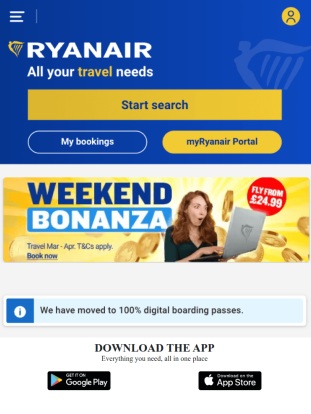
VPN company NordVPN has uncovered fraudulent websites impersonating over 65 well-known brands including airlines, government services and retail chains.
You're led to dodgy sites through scam text messages that promote airline discounts, job offers, or document renewals.
Once on the website, you're encouraged to download a fake app which will download malware to your device that can watch your screen in real time and remotely activate the microphone and camera.
Scam text messages can be reported by forwarding them to 7726 and scam sites to the National Cyber Security Centre.
DVLA scam email
An email claiming to be from the DVLA tells you that your vehicle tax renewal has not been completed and it is now expired.
It threatens fines up to £1,000 for non-payment and includes a dodgy phishing link where it will ask for your personal and financial details.
Scam emails like this can be reported by forwarding them to report@phishing.gov.uk and websites to the National Cyber Security Centre.
17 August
Nottingham Knockers warning
Kent police have warned of the recurring ‘Nottingham Knockers’ scam, a doorstep scam, after receiving reports from local residents.
The scam involves people knocking on your door claiming to be raising money, working as part of a rehabilitation scheme or selling goods at low prices. They’re actually involved in rogue trading or are attempting to establish where elderly or vulnerable people live to sell this information to other criminals.
You can report doorstep scams to Report Fraud or by calling the police on 101 if you live in Scotland.
14 August
Investment scam ad

A scam ad on Facebook leads to a fake news article written to promote a dodgy investment company.
The ‘article’ advertises the platform as a scheme where you can invest £250 and receive £2500 to £4500 a month as returns on your investments. These fake news sites usually lead to the websites of sham investment companies. You won’t be able to get your money back.
You can report scam ads on Facebook by selecting the three dots in the top-right corner and pressing ‘Report.’
12 August
Parking fine text

Sent from a spoofed UK mobile number, a scam text claiming that your parking payment hasn’t been received by parking company ParkingEye is circulating.
It says you need to follow a link to complete the payment or face additional charges.
Scam messages can be reported by forwarding them to 7726, and websites can be reported to the National Cyber Security Centre.
10 August
B&Q scam email

A dodgy email says you’re eligible to win a free BBQ worth £549. It includes a link to complete a short survey in order to receive the product.
Which? has previously reported on scams like these, which harvest data under the guise of promoting various sham special offers. They also ask for your personal and financial details to pay a postal fee to receive the item.
Scam emails like this can be reported by forwarding them to report@phishing.gov.uk and websites to the National Cyber Security Centre.
7 August
Nationwide impersonation email

A scam email impersonating Nationwide tells you that a monthly direct debit payment has been set up on your account to be sent to a dental practice.
It will tell you to click on a malicious link if you don’t recognise the payment, which will lead to a dodgy website intent on stealing your details.
Scam emails like this can be reported by forwarding them to report@phishing.gov.uk.
4 August
TV Licensing scam email

A scam email which tells you that your TV Licence payment has failed, encourages you to follow a malicious link to make payment.
The email threatens a £1,000 fine, but the link directs you to a fraudulent TV Licensing website designed to steal your personal and financial information when you enter them.
Scam emails like this can be reported by forwarding them to report@phishing.gov.uk and websites to the National Cyber Security Centre.
29 July
Scam apps are disguising online casinos
VPN provider NordVPN has uncovered a criminal network creating Facebook and Instagram ads that impersonate trusted brands, including Google Authenticator, Disney+, Duolingo and Airbnb to advertise fake apps.
Once clicked on and downloaded, the fraudulent apps actually lead to unlicensed online casinos asking for a deposit.
In some cases, by the time a victim realises something is wrong, they've already deposited money into a casino they've never heard of.
You can report scam ads on Facebook and Instagram by selecting the three dots in the top-right corner and pressing report.
28 July
Cosmetic surgery scam ads
City of London police figures reveal that victims of cosmetic surgery scams are ending up being conned through social media adverts.
Report Fraud received 49 reports of scams linked to cosmetic procedures between 2020 and 2025, with losses totalling £234,112.
After following the ads, victims were asked to pay a deposit for the procedure before it was cancelled and the company claimed to had gone into liquidation.
You can report scam ads by selecting the three dots in the top right corner and pressing 'report.'
20 July
Currys impersonation email

A scam email claiming to be from Currys says that you're eligible for a free air conditioner and dehumidifier.
It tells you that to receive the item, you need to complete a short 'survey about home comfort needs' and that your 'free reward' is 'reserved for a limited time.'
You're encouraged to follow a dodgy link to start the survey, which will lead to a website that will grab your personal data as you enter it in.
Scam emails like this can be reported by forwarding them to report@phishing.gov.uk and websites to the National Cyber Security Centre.
15 July
Amazon scam email

A scam email impersonating Amazon uses accurate logos and branding and tells you that unusual activity has been detected on your Amazon account. It goes on to say that your account is 'temporarily on hold.'
It provides a dodgy link to follow to sign into your account to restore access. However, this will likely lead to a copycat Amazon website set up to steal your personal details.
Scam emails like this can be reported by forwarding them to report@phishing.gov.uk and websites to the National Cyber Security Centre.
14 July
RingGo scam text
Watch out for a sneaky scam text that claims your 'parking payment remains outstanding from your latest parking activity'.
The message claims you can view your parking details and complete payment by visiting an 'official website'. This is followed by a link to a fake RingGo website that sneakily contains 'ringgo' within the address.
Which? has reported the fake website. To avoid scams, do not click on links from text messages.
Scam messages can be reported by forwarding them to 7726, and websites can be reported to the National Cyber Security Centre.
8 July
O2 inactive SIM cold call and texts
Watch out for scam calls and texts targeting O2 customers.
The scam message or call claims your SIM is inactive and will expire. You're typically told to give details to issue a new SIM, either over the phone or via a dodgy website.
O2 has warned that it has blocked over 1 billion scam messages to date, including thousands of the latest 'inactive SIM' scam.
Scam messages can be reported by forwarding them to 7726, and websites can be reported to the National Cyber Security Centre.
6 July
Aldi air-con scam

Cybersecurity firm Kaspersky has found fraudulent websites impersonating retailers such as Aldi to flog air conditioning systems.
It also revealed that scammers have created fraudulent emails in an attempt to promote dodgy or non-existent air conditioning products.
Kaspersky highlighted one example it came across where scammers impersonated a legitimate portable air cooler brand on a dodgy website designed to steal your personal and financial details as you enter them in.
In another example, scammers impersonated an existing brand that manufactures portable air coolers.
The websites it discovered used limited-time discounts and accurate branding of the companies they impersonated to trick shoppers into handing over their information.
Scam websites like these can be reported to the National Cyber Security Centre and emails by forwarding them to report@phishing.gov.uk
30 June
Evri scam text

A scam text message claiming to be from Evri tells you that your delivery couldn't be completed due to incorrect address details.
It then provides a link for you to follow to correct this. The link will lead to a dodgy site impersonating Evri. Entering your details into this website will hand them over to a scammer.
Scam messages can be reported by forwarding them to 7726 and websites can be reported to the National Cyber Security Centre.
25 June
Scam Aldi advert

A fraudulent advert appearing on Google impersonates Aldi and leads to a copycat website.
You can report scam ads and search results on Google by filling out a form on its website. You can also select the three dots next to the ad or search result and press 'feedback' then 'something else' and explaining the scam.
Scam websites can be reported to the National Cyber Security Centre.
Find out more about how to spot and report scam adverts found on search engines.
Housing repair scam call
Reports to Who Called Me detail a scam call made from a most likely spoofed London-based landline number.
An automated message, in an attempt to get your personal data, tells you that the call is from housing repairs.
Scam calls received on an iPhone can be reported by texting the word ‘call’ followed by the phone number to 7726.
If you have an Android phone, text the word ‘call’ to 7726. You’ll then receive a message asking you for the scam number.
15 June
'Apple iPhone hacked' pop-up

A scam pop-up which appears after clicking a dodgy link tells you that your details have be found in a data breach and your device is at risk of being compromised.
It also gives you buttons to click which typically lead to malware being downloaded on your device.
This type of scam is known as scareware and has been a popular tactic for a while. Usually, you can safely ignore these pop-ups by closing your browser.
10 June
Netflix scam email

A dodgy email impersonating Netflix tells you that your payment to the streaming service has failed and says that your account will be permanently deactivated in three business days.
It goes on to provide a link to update your payment details. Clicking this will lead to a phishing website designed to take your personal and payment information.
Scam emails like this can be reported by forwarding them to report@phishing.gov.uk
8 June
Argos account hack
Report Fraud has recently warned of a rise in reports of criminals using personal details of Argos customers, likely gleaned from data breaches, to log in to their accounts with the retailer.
Once they have control of the account, they're placing online orders and collecting the items in-person at a physical store. Sometimes, payments are made using details that aren't associated with the victim of the compromised account.
Report Fraud received 652 reports mentioning Argos in May 2026 and 1,175 reports since the start of the year.
Argos has been contacting customers who may have been affected.
Scammers are able to do this due to the use of the same password across more than one account. So make sure you create a strong, unique password for each account you have.
If you have had your account compromised, report it to the retailer using contact details on their official website as well as to Report Fraud or by calling the police on 101 if you live in Scotland.
1 June
Postcode lottery scams
Fraudsters are impersonating the People’s Postcode Lottery.
Reports claim scammers are contacting people via phone calls and fake social media accounts to promote sham version's of the Lottery.
Which? has previously reported on scam emails and letters impersonating the organisation.
You can only win the People’s Postcode Lottery if you sign up, after which you're entered into prize draws every month. The official website is www.postcodelottery.co.uk
You can report scam accounts on social media by selecting the three dots in the top right corner and pressing 'Report.'
Scam calls can be reported by texting the word ‘call’ followed by the phone number to 7726 on an iPhone. If you have an Android phone, text the word ‘call’ to 7726. You’ll then receive a message asking you for the scam number.
Scam emails can be reported by forwarding them to report@phishing.gov.uk and Royal Mail provides a form that you can use to report scam letters.
Barclays impersonation text

A dodgy text message sent from a spoofed number claims to be from Barclays.
It tells you that your credit card application for £1,500 has been approved and provides a number to call if you didn't make the application.
Calling this number will connect you to a scammer who'll try and get you to reveal personal or financial information. This number has been spoofed in other scam texts
Scam messages can be reported by forwarding them to 7726.
28 May
BT scam email

An email which claims to be from BT says you can claim a discount on a Wi-Fi booster.
This link will take you to a phishing website which will steal your information as you enter it in.
Dodgy emails can be reported by forwarding them to report@phishing.gov.uk and websites to the National Cyber Security Centre.
26 May
DVLA impersonation email

A phishing email claiming to be from the DVLA tells you that some of the information on your driving licence is out of date.
It also says that you could be fined up to £1000 if your licence isn't up to date and provides a link to follow to update your name, date of birth, full address and payment details.
This information will be gathered by scammers to scam you either immediately or in the future.
Dodgy emails like these can be reported by forwarding them to report@phishing.gov.uk
Phishing websites can be reported to the National Cyber Security Centre.
18 May
EE scam email

A scam email impersonating EE tells you that you're in with a chance of receiving a brand new Wi-Fi booster.
The email will go on to provide a link to claim the item, which will lead to a phishing website designed to steal your personal and financial information.
Scam emails like this can be reported by forwarding them to report@phishing.gov.uk
Phishing websites can be reported to the National Cyber Security Centre.
13 May
Barclays scam text

A scam text impersonating Barclays from a spoofed mobile number tells you that a direct debit has been arranged.
It goes on to provide a number to call, which will most likely put you through to a scammer who'll try to get you to reveal your personal and financial information.
Scam texts like this can be reported by forwarding them to 7726.
11 May
Scam FCA text
Text messages claiming to be from the Financial Conduct Authority (FCA) claim that your details were identified in a Report Fraud report and your personal data is at risk due to a data breach.
It gives you a number to call and reports suggest that if you call the number and you will be asked for your first and last name, who you bank with and your current balance.
One report also said they were given a 5 digit reference code to quote when called by a 'manager' to verify fraudulent activity.
Scams like these typically encourage you to give personal and financial information.
Scam texts can be reported by forwarding them to 7726.
5 May
Dodgy car finance text

A scam text sent from a claims management firm tells you that you could be owed up to £2,487 in mis-sold car finance and provides a link to see how much you're owed.
It also includes a number to text to stop receiving messages. On Who Called Me, reports of this number claim receiving the text despite not being owed any money.
Drivers who were mis-sold car finance are now due compensation and rogue claims firms are cropping up.
You can search the Financial Conduct Authority's (FCA) register to see if a company can legally provide financial services in the UK.
Scam and spam texts can be reported by forwarding them to 7726.
27 April
TV Licence scam email

A scam email impersonating TV Licensing tells you that your TV Licence could not be renewed and provides a link to start the renewal process.
The email also says that your direct debit payment has been declined and is sent from a '.jp' domain, which is a Japanese-registered email address.
The link included in it will lead to a phishing website intent on stealing your personal and payment information.
Scam emails like this can be reported by forwarding them to report@phishing.gov.uk
Phishing websites can be reported to the National Cyber Security Centre.
21 April
Apple scam text

A text which claims to be from Apple tells you that there was a 'problem processing your billing details.'
It also says that your account is temporarily paused and provides a phishing link to rectify this.
This will lead to a website which will steal your personal and financial information after you enter it in.
Scam texts can be reported by forwarding them to 7726 and scam websites can be reported to the National Cyber Security Centre.
13 April
National Rail impersonation email

An email impersonating National Rail tells you that you're in with a chance of getting a pair of earbuds for being a 'valued National Rail passenger.'
It provides a link to 'claim' these which will probably lead to a dodgy website, set up to gather your personal details.
Scam emails like this can be reported by forwarding them to report@phishing.gov.uk
Phishing websites can be reported to the National Cyber Security Centre.
Fortnum & Mason scam email

A dodgy email claiming to be from Fortnum & Mason tells you that you're eligible for a 'Tea Explorer Hamper' by following a suspicious link.
This will most likely lead to a phishing website created to steal your personal and payment details when you enter it in.
Scam emails like this can be reported by forwarding them to report@phishing.gov.uk
Phishing websites can be reported to the National Cyber Security Centre.