Josh is an award-nominated journalist with nearly a decade of experience, including writing for national newspapers. A data whizz, he specialises in covering personal finance and investing.
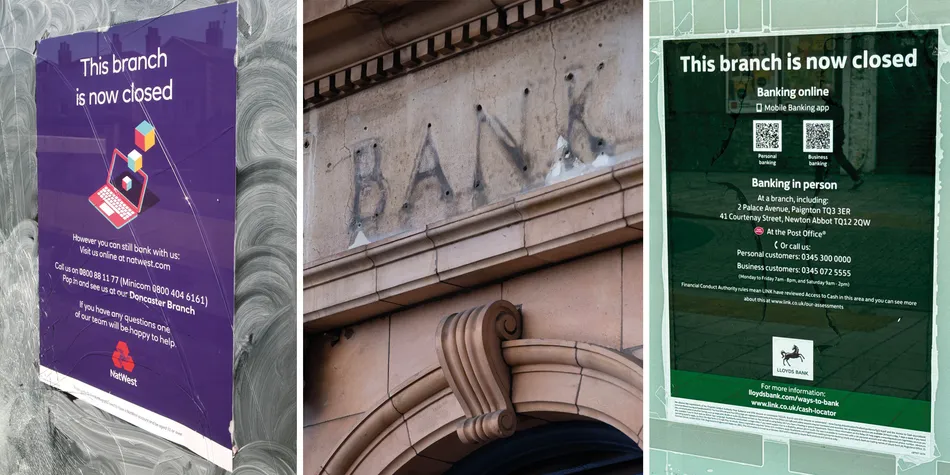
With 214 bank branches shuttered this year, and 100 more due to go by the end of December, the government has launched a review of banking services.
Putting out a call for evidence, the Treasury is concerned that reshaped branch networks and the push towards digital banking have made life harder for people who rely on face-to-face services.
The announcement has triggered responses from a range of stakeholders, including Which?. Here is what you need to know.
Be more money savvy
free newsletter
Get a firmer grip on your finances with the expert tips in our Money newsletter – it's free weekly.
This newsletter delivers free money-related content, along with other information about Which? Group products and services. Unsubscribe whenever you want. Your data will be processed in accordance with our privacy notice.
What will the review cover?
The aim of the review is to gather up-to-date evidence of the challenges faced by those who need in-person banking services.
The government will use this evidence to establish the impact of service changes, identify who is most affected, and determine the steps needed to protect essential services.
The call for evidence focuses particularly on vulnerable consumers and those with specific access needs.
The final report, which is expected to contain new recommendations, will be published in October.
Reach out to our money experts to discover smarter ways to spend, save and manage your money. Our regular guidance will help the penny drop all year for only £36.75 that’s 25% off.
Save 25% – was £49, now £36.75 for a year, offer ends 19 October 2026.
The scale of branch closures
Which? has been tracking branch closures for more than a decade now. By our count, banks and building societies have closed a staggering 6,872 branches since January 2015 – 69% of the nation’s physical banking network.
A survey of Which? members last year found that 40% had lost access to their local bank branch in the past five years.
We’ve also investigated community banking hubs, which have long been touted as the solution to Britain’s banking crisis.
Although customers of all major banks can use hubs for basic counter services, not every bank will send community bankers to every hub.
Most hubs are also closed at the weekend, and banking representatives are only available on a rotational basis, with one day per week usually given to each represented bank.
In addition, many hubs don’t offer the full range of banking services you would expect to find at a traditional bank.
Many older people rely on physical branches or a local post office to manage their money. Research from Age UK shows that 75% of people aged 65 and over want to do at least some of their banking in person
The most requested in-person services include:
Depositing money (50%)
Managing bereavement procedures (29%)
Opening new accounts (28%).
High street banks point to reduced footfall and digital banking as reasons for closures. Yet 2.6 million adults in the UK still used physical cash for most of their purchases in 2024, according to the Financial Conduct Authority (FCA).
While the FCA currently has the power to delay branch closures, it can’t keep branches open indefinitely.
Responding to the request for evidence, Which? has highlighted the need for stronger statutory powers, as well as expanding the role of community banking hubs.
There remains room for improvement with the operation of hubs, particularly regarding the limited hours offered by banking representatives, the range of services offered, and the lack of consistency across hubs.
Additionally, the provision of shared banking hubs relies on voluntary undertakings from the banking industry. Which? would like to see this placed on a firmer statutory footing, with a requirement for retail banks to engage.
Age UK is also pushing for legislation to put the provision of physical banking services on a statutory footing, and wants hubs to fully replicate the usual services provided in a typical bank branch.