James Rowe: VPNs are more popular than ever. But do you really need one? Hello and welcome to Which? Short, your free weekly insight into Which? magazine, as well as our money, tech, travel, and gardening titles too. Today I’m bringing you a piece that Callum Pears wrote for the April/May issue of Which? Tech all about VPNs, or virtual private networks. These are nothing new – they’re a tool that can grant your devices a more secure connection to the internet and have become increasingly popular since the introduction of age verification on some websites to prevent children from accessing age-inappropriate content. Recently, we’ve tested some VPNs to see how they stack up against one another. Here’s Callum’s piece, adapted for the podcast this week read by me, James Rowe.
If you regularly watch TV or YouTube with ads, or use social media, no doubt you’ll have seen the rise in VPN companies enthusiastically advertising their software. It’s sold as the answer to online privacy erosion and as a way to create top-notch data encryption. With the backdrop of ever-more intrusive third parties greedily collecting our data, and news stories about major brands being hacked, these claims have become very attractive to concerned individuals.
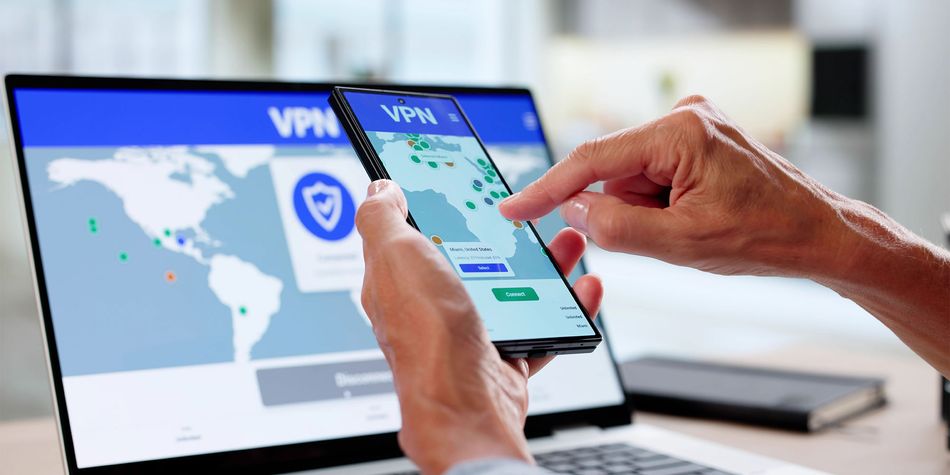
VPNs are not all-powerful though, and there are limitations and drawbacks. They work by creating a secure tunnel of internet connection between your computer, smartphone or other internet-connected device and the web. Data and information sent and received via an active VPN is encrypted and converted into unintelligible code, largely preventing third-party websites, your internet service provider, and any potential hackers from reading key information. This includes details such as your IP address, location, browsing history, and any websites you visit. By obscuring this information you become much more anonymous online and difficult to identify. It’s not a one-stop shop for creating online anonymity, but it does reduce your online footprint.
The protection of your privacy and the right to surf the web with some level of anonymity is one of the core reasons VPNs were introduced and why they’ve become increasingly popular. The Online Safety Act brought a surge of renewed interest in VPNs. The act requires sites and platforms to prevent children from accessing age-inappropriate content. Users in the UK are asked to verify their age by providing ID, such as a passport, driving licence, or a credit or debit card. A VPN bypasses this by switching your location to a foreign destination that isn’t covered by the act. This is quickly becoming one of the most notable advantages of using a VPN, as not every adult wants to give over personal information. But it’s a dubious grey area that – while not illegal – uncomfortably skirts the law.
And while they do greatly reduce third-party accessibility to your data and information, VPNs have their limits. If you’re logged into websites, third parties can still track your activity. Plus, cookies – those small text files that record data about your interaction with websites – already stored on your device remain active even with a VPN. They also can’t block new cookies; instead, they simply deceive them with false location and IP address. Cookies were largely designed to make your experience on websites easier, such as remembering preferences and keeping you logged in. But they also actively collect and share information with websites. You can minimise the impact of cookies by collectively using both a VPN and a private browser mode.
Although the concept of cookies can sound worrying and intrusive, it’s important to note that they are also useful. You can easily delete many, but not all of them, through your device's settings. But it will result in you being logged out of many sites. Say you’ve also got a basket on a shopping site – it could wipe that too. Or maybe you’ve saved your location on a food delivery app – it could wipe that as well. But do feel reassured that any collected information about you is heavily regulated by data protection laws, which govern how your personal data is collected, used, and stored. They also grant you the right to request your data to be deleted.
So what about encryption? While VPNs do shout about this as a benefit, email and most websites – particularly banking and shopping sites – already have their own level of encryption. And many government, health, and legal organisations use online portals to securely exchange information such as sensitive documents.
There is a scenario where extra encryption can be invaluable. If you’ve ever been on a train, waited at an airport or hospital, or enjoyed a drink at a pub or coffee shop, you’ll likely have been tempted to connect to a public Wi-Fi for a more stable internet connection. But public Wi-Fi lacks encryption, which leaves it at risk of being exploited by hackers, even if it is unlikely. You can get around this by using your phone’s mobile data instead, as it is encrypted. But the signal isn’t always strong, particularly in buildings with poor reception.
Apple fans – if you have an iCloud Plus subscription and use the Safari browser on your iPhone, iPad, or Mac, you have access to Private Relay. It’s not a VPN, as you can’t change your location to outside the UK, but it is a simplified privacy service that masks your IP address and Safari browsing history. For everyone else, a VPN could be the ideal solution as it will scramble your data into unreadable code and allow you to browse with peace of mind.
VPNs have also been used to access content not available from the UK. To tackle this, streaming platforms including BBC iPlayer, Disney Plus, and Netflix are increasingly blocking access to certain content when detecting an active VPN. These companies have licensing agreements regarding content they can show in different regions, and bypassing this is against their terms and conditions. Other websites may also prevent access or struggle to function if they detect a VPN. These include banking websites and some gambling, gaming, and shopping sites. You can always get around this by switching the VPN off temporarily, but depending on which one you use, this can be a chore.
So what does our testing show then? Well, we’ve checked the ones we’ve tested for security vulnerabilities to see whether they risk leaking your data, plus examined how transparent and fair any privacy and data handling claims are. We did this because if you use a VPN, you’re handing your privacy over to the VPN provider rather than your ISP. We also test how easy it is to use the app and navigate menus and settings. We look at the subscription clarity and any auto-renewal process, and how easy it is to turn them on and off. Our tests record the impact VPNs have on the performance of the device and operating system they’re used on, and what effect they have on internet connection speeds.
The latter is difficult to fully assess as our tests found various factors can have an impact, including the internet connection quality, how busy VPN servers are at different times of the day, and the country the VPN is set to. When we looked at free VPNs, we found them to be very slow, so for this test, we focused on basic paid-for versions.
So, should you get one? Well, although there is reason to be concerned about your online privacy, it’s important to remember that you have certain rights regarding your information and how it’s used, which third parties must adhere to. This includes measures to protect it in their care while respecting your right to request its deletion. A VPN is not a silver bullet for online privacy, but it does have some practical uses in certain scenarios. Weigh up the benefits to you rather than being guided by fear. Want to know which one we think is best? Click the link in the show notes to find out and read the reviews of each of the VPNs we’ve tested.
That brings to an end another podcast from Which? There’s loads more for you to read about everything we discussed today – just head to the episode description for more useful everyday advice. There you’ll also find an exclusive offer for podcast listeners like you to become a Which? member for 50% off the usual price, giving you access to our product reviews, our app, one-to-one personal buying advice, and every issue of Which? magazine across the year. Plus, your membership helps us to make life simpler, fairer, and safer for everyone. If you’d like to know when we release a new episode, then make sure you press subscribe wherever you listen. That way you can be one of the first to listen. And for any questions, comments, or anything in between, follow us on social media @WhichUK or email us: podcast@which.co.uk. Goodbye.