By clicking a retailer link you consent to third-party cookies that track your onward journey. This enables W? to receive an affiliate commission if you make a purchase, which supports our mission to be the UK's consumer champion.
free member article
Will your savings trigger a tax bill from April?
A Which? survey found only 26% of savers have a tax-free Isa

Matthew is an award-winning journalist, specialising in savings, tax and insurance.

There's now less than six months to go before income tax on savings interest rises, yet many savers appear unprepared for the change.
In our August survey of more than 2,000 UK members of the public*, a third of respondents with a savings account said they were unaware of how much you can earn in interest before being taxed.
We explain how the savings tax trap works, how much more you might have to pay to HMRC from April – and how to avoid an unexpected tax bill.
Will you fall into the savings tax trap?
The personal savings allowance (PSA) is how much you can earn before facing a bill from HMRC. A basic-rate taxpayer can earn up to £1,000 a year in savings interest tax-free, while higher-rate taxpayers get a £500 limit. Additional-rate taxpayers have no personal savings allowance.
Our survey found 34% of adults with a savings account weren't aware of the term PSA, but if you have a large sum invested in a top-rate account, you could easily find yourself earning enough interest to push you over your tax-free threshold.
For example, Moneyfacts data shows the best one-year fix on 4 November 2026 is from Afin Bank, paying 5.17% AER. A basic-rate taxpayer opening this account would need a pot worth just over £19,343 to go over their annual PSA. Higher-rate taxpayers, however, would face a tax bill with roughly half that amount saved — just £9,672.
How much will April's tax hike cost you?
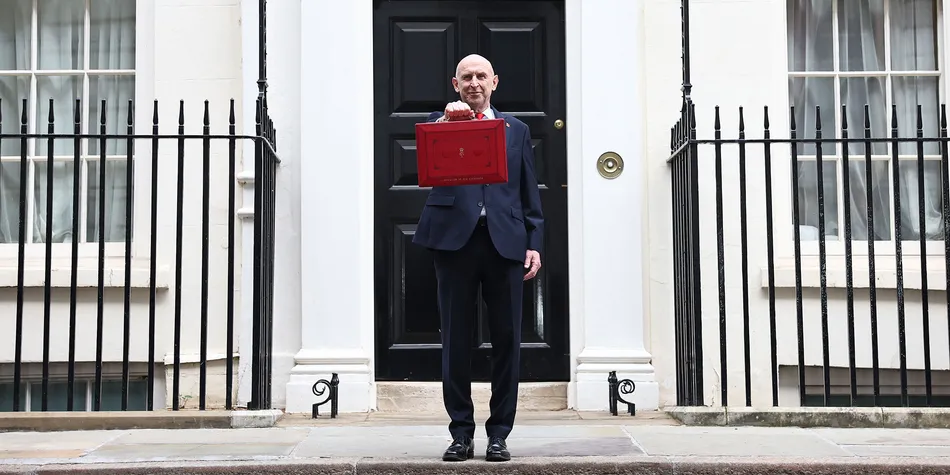
In 2025, the government announced that income tax on savings interest would rise by two percentage points from April 2027. But in last week’s Autumn Budget, Chancellor John Healey announced a further two-point increase, taking the total rise to four percentage points.
This table shows what the rate income tax rate for savings interest is now and how it will change from 6 April 2027:
| Financial year | Basic-rate taxpayer | Higher-rate taxpayer | Additional-rate taxpayer |
|---|---|---|---|
| 2026-27 | 20% | 40% | 45% |
| 2027-28 | 24% | 44% | 49% |
Source: HMRC
So how big a cut will HMRC take on returns from next year?
Let's say you open a one-year fixed bond paying the current top rate of 5.17%. If you held £25,000 in the account, you would earn £1,292.50 in interest after 12 months.
The table below shows how much income tax savers will pay on interest earned above the PSA for basic, higher and additional-rate taxpayers in 2026-27 and from 2027-28 onwards.
| Tax band | Taxable interest | Current tax bill | Tax bill from 2027-28 | Extra tax you will pay |
|---|---|---|---|---|
| Basic rate | £292.50 | £58.50 | £70.20 | £11.70 |
| Higher rate | £792.50 | £317 | £348.70 | £31.70 |
| Additional rate | £1,292.50 | £581.63 | £633.32 | £51.69 |
Open an Isa for tax-free savings
One of the most effective ways to avoid a bill from HMRC is to open an Isa (individual savings account). Yet only 26% of accounts held by respondents to our annual survey of more than 8,000 savers** are Isas.
These products allow you to save up to £20,000 each financial year without paying tax on interest or investment gains. There are four main types for adults, but the cash Isa remains the most popular option.
The latest HMRC data shows more than 10 million cash Isa accounts were opened in 2024-25 – up 8% year on year. They work much like regular savings accounts, offering both easy-access and fixed-rate options.
Cash Isa deals tend to become more competitive towards the end of the tax year, with many strong rates appearing between February and April.
But you don’t have to wait. The annual Isa allowance resets on 6 April, and using it early in the tax year can give your savings longer to earn interest. Most people save gradually rather than in one lump sum, so starting early can make it easier to budget across the year and maximise your allowance.
This table shows the current top instant-access and fixed-rate cash Isas, ordered by term:
| Instant access cash Isa | RECOMMENDED PROVIDER Charter Savings Bank | Easy Access Cash Isa | 4.26% | 82% | £1 | Internet | Monthly, anniversary | Yes |
| One-year fixed rate cash Isa | RECOMMENDED PROVIDER Zopa | Smart ISA - 1 Year Fixed Term Isa pot | 5% | 74% | £1 | Mobile app | Monthly | Yes |
| Two-year fixed rate cash Isa | RCI Bank UK | 2 Year Fixed Term Cash Isa | 5.15% | n/a | £1,000 | Internet | Monthly, anniversary | Yes |
| Three-year fixed rate cash Isa | Tandem Bank | Fixed Rate Cash Isa | 5.16% | n/a | £0 | Mobile app | Monthly | Yes |
| Four-year fixed rate cash Isa | RECOMMENDED PROVIDER Zopa | Smart ISA - 4 Year Fixed Term Isa pot | 4.70% | 74% | £1 | Mobile app | Monthly | Yes |
| Five-year fixed rate cash Isa | RECOMMENDED PROVIDER Aldermore | 5 Year Fixed Rate Cash Isa | 5.25% | 74% | £1,000 | Internet | Monthly, anniversary | Yes |
Table notes: rates sourced from Moneyfacts on 4 November 2026. Provider customer score is based on savers' overall satisfaction with the brand and how likely they are to recommend it to others. n/a means sample size was too small for us to generate a provider score.

Compare savings accounts
Find the right savings account for you using the service provided by Experian Ltd
Compare and choose3 ways to maximise your allowance
The spring savings tax rise is bad news for people with large cash savings in taxable accounts. But last week’s Budget brought some welcome relief for Isa savers.
The chancellor has scrapped plans to cut the annual cash Isa allowance for under-65s from April, meaning savers can continue to put away up to £20,000 a year tax-free.
Here’s how to make the most of your allowance:
1. Lock in for long-term returns
Locking your savings away in a fixed-term cash Isa will guarantee you the same rate for longer.
Although interest on cash Isas tends to get a boost in the spring, the future outlook looks less certain, with rates on other types of account falling.
If you're worried about putting all your eggs in one basket, you could take advantage of rules that allow you to open multiple Isa accounts of the same type.
You can place a portion of money in a fixed-term Isa and another chunk in an instant-access account, which you can easily dip into in emergencies or move to another product if you see a better deal later.
If you've got savings that you won't need for at least five years, you may earn a better return by investing with a stocks and shares Isa instead.
2. Share spouse and family allowances
If you've used up your annual £20,000 Isa allowance, but your partner hasn't, you can pay into their account instead, effectively increasing your shared Isa allowance to £40,000.
If you want to save for your child, you could open a Junior Isa on their behalf. Junior Isas have an annual allowance of £9,000.
Between them, a family of four could potentially save £58,000 a year tax-free in Isa accounts.
- Find out more: best Junior Isa rates 2026
3. Consider other taxes
Although opening a cash Isa will help shield your savings from income tax, a stocks and shares Isa can help you sidestep paying capital gains tax (CGT) on your investments.
Plus, any income such as interest or dividends will also be free from tax.
- Find out more: best stocks and shares Isa rates
*Data based on a survey of 2,029 UK members of the public. Data has been weighted and is nationally representative. Fieldwork was carried out by Deltapoll in August 2026.
** Data based on a survey of 8,509 UK members of the public who told us in August 2026 about their experiences with their savings providers. The survey was distributed to a representative sample of people who have one or more savings account, and the sample for some brands was boosted to reach minimum sample size for reporting. Fieldwork was carried out by Deltapoll.