By clicking a retailer link you consent to third-party cookies that track your onward journey. This enables W? to receive an affiliate commission if you make a purchase, which supports our mission to be the UK's consumer champion.
How will the Autumn Budget affect your energy bills?

Emily specialises in home energy advice, green home tech such as heat pumps and solar panels, and other ways to make greener consumer choices.

Gas and electricity prices are incredibly high this autumn and set to increase again in the New Year. So it's no surprise that the government's Autumn Budget has set out a handful of measures designed to provide 'breathing room' for energy bills.
We've looked into who the changes will apply to, when they will be brought in, and how they will really affect your bills.
Find out more:
£100 energy payment for households in council tax bands A-D
The standout announcement from the Autumn 2026 budget is a scheme to pay £100 towards energy bills for some homes this winter.
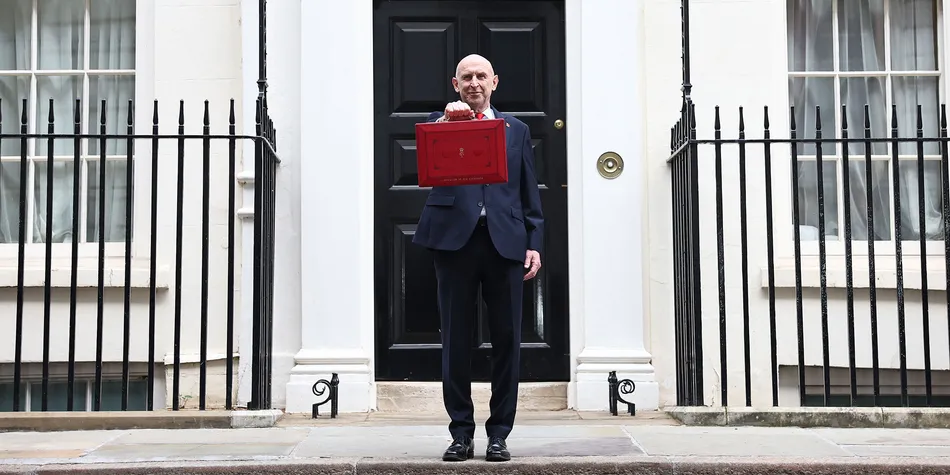
Newly-appointed Chancellor John Healey revealed that households in Council Tax bands A-D will receive a one-off £100 payment 'directly into their bank accounts' to deal with rising energy bills this winter.
The payment will be made via your council tax account, rather than through your energy provider.
The scheme will cost the government £2.6bn, and is intended to 'take the pressure off in the coldest months and see people through to the spring'.
The Chancellor confirmed that the Scottish, Welsh and Northern Ireland governments will receive their share of this funding for the same purpose.
Will you be eligible?
The payment will be made to people whose homes are in Council Tax bands A-D.
With a surge of people checking their council tax band to see if they are eligible for the payment, the GOV.UK Council Tax checker struggled to keep up with traffic immediately following the announcement.
If you are not sure which band your home is in, you can also see your band on your council tax bills and statements.
We don't yet know exactly when the payment will be made, but it will be 'this winter'.
Watch out: As always, when these types of announcements are made, it's important to be vigilant against potential scammers taking the opportunity to confuse those waiting for payments.
The payment will be made as an automatic rebate directly to your bank account through your existing Council Tax account, which means you will not need to provide your bank details.
Electricity VAT cut extended to July 2027
Earlier this year, the new government temporarily removed a 5% VAT from all domestic electricity tariffs, saving a household with typical energy use around £3.60 a month on their total energy bill.
This was due to end on 1 April 2027, but the Chancellor today announced that it would be extended until the end of June 2027, to cover a further three-month period.
The VAT removal is applied to all electricity tariffs, regardless of whether you are paying an out-of-contract, variable rate or are fixed into an energy deal. As all households pay electricity bills (but not all use gas), this measure is the most universal of those announced.
The Chancellor said that the government estimates that the extension will take £50 off the annual energy price cap for a typical household.
However, it's important to note that it will only be in place for an extra three months. The monthly saving for the same typical household is estimated to be around £4 a month. The increase from the current £3.60 monthly saving reflects the fact that bills for those on out-of-contract, variable tariffs are expected to be higher in the new year than they are now.
If you're currently on an out-of-contract tariff, you are vulnerable to the energy price increases that are predicted in both January and April 2027. But those with fixed tariffs will pay the same amount for the duration of their contract.
See the cheapest fixed deals on the market and sign up to a tariff in our guide to how to get the best energy deal.
Removal of gas standing charges
Before the Budget announcement had even got under way, it was revealed that the government will ask energy regulator Ofgem to remove standing charges from household gas bills.
The change won't take effect immediately, though. Gas standing charges will be removed 'in 2027 or as soon as possible after'.
Currently, all households pay energy bills made up of a combination of unit prices and standing charges for the fuel or fuels you use. You pay the unit price per kilowatt-hour of energy you use, so you can increase or reduce your bill depending on how much you use. The standing charge is a fixed daily payment regardless of how much energy you use.
It used to be possible to choose a tariff with zero standing charges, but these have all but disappeared amid the volatile energy market of recent years.
The current energy price cap for households paying by direct debit has an average gas standing charge of 30p a day, and an average electricity standing charge of 55p a day. The amount you pay in standing charges will be different depending on your region and the tariff you have fixed.
Over a year, this average gas standing charge amounts to £109; for electricity it's £201.
It's important to note that the gas cost will not just disappear with the removal of standing charges; instead energy companies are likely to increase the unit rates you pay in order to recoup the costs. In that scenario, households that use less gas would save money, while households with high gas usage would end up paying more.
Households with a high gas demand and a low income, often those who are elderly or disabled and have higher heating requirements, may struggle under the new setup. It's been suggested that there may be support for people in this situation coming down the line, but nothing has so far been confirmed.
The Chancellor also suggested that a similar reform would follow for electricity bills, but did not say when this would happen.
Read more on: what makes up the energy price cap
If you are struggling to keep up with your energy bills, let your energy provider know. They are obliged to help you, and you may be entitled to additional support.
Get help and find out more in our guide to: help if you are struggling to pay your energy bills.