James Rowe: You can now buy plug-in solar panels on the high street, but will they actually be suitable for your home?
Hello and welcome to Which? Shorts, your free weekly insight into Which? magazine, as well as our Money, Tech, Travel, and Gardening titles, too. Today I'm bringing you a piece that our energy experts Emily Seymour and Karen Lawrence wrote for the October issue of Which? magazine all about plug-in solar panels.
Now, these are nothing new. They've been popular on the continent for a little while now. But they're certainly a new addition to the UK's energy market after a law change earlier this year. Plug-in solar panels are a very different product to the more traditional roof-mounted ones you'll be used to seeing already. So, what's the difference, and could either be suitable for your needs?
Here's the piece adapted for the podcast, this week read by me, James Rowe.
James Rowe: You can now buy plug-in solar panels for DIY installation at home after a change to the law in August. These systems are already popular in European countries including Germany, Belgium, and the Netherlands, and are intended for use where it's not possible to install permanent solar panels, like if you rent or don't have a suitable roof.
A typical kit has one or two solar panels of around 400 to 500 watts each, a micro-inverter – which converts the direct current to usable alternating current – and a lead fitted with a standard three-pin plug, mounting brackets, and a monitoring app.
While some energy companies will be able to offer an export tariff for you to be paid to return any energy to the grid, you won't get very much back. We're talking less than 50 quid a year, even in the best-case scenarios. So you're better off focusing on using as much of the power as you can while the sun is shining.
The new rules only allow you to use plug-in solar panels in England, Scotland, and Wales. Northern Ireland's safety regulations haven't yet been revised, but we do expect this to follow soon.
So do you need permission to use them? Well, if you rent or are a leaseholder, you will need the permission of whoever owns the property. Most solar panels fall under permitted development, although there are rules you will still need to follow about their positioning and distance from your boundary, but homes in protected areas may need additional planning permission. Other safety restrictions include rules against installing them on anything timber-framed or with certain types of cladding. The plug-in solar kit you buy must have been tested and proven compliant on the ENA G98 Type Test Register. You can check this easily online.
And are they safe to install? While the government has concluded that compliant plug-in solar products can be safely installed on UK domestic wiring, it has advised that users should check their home's electrics are equipped with modern residual current protection. That's because some older homes may have wiring or protection devices not designed to tolerate electricity flowing back into a circuit. Modern homes and those rewired within the last 15 years or so should already be suitable, but if you're in any doubt, a professional electrician can do a suitability check before installing those products and, where necessary, upgrade your electrics. Of course, this will rack up extra costs. You can always find a Which? Trusted Trader on our website.
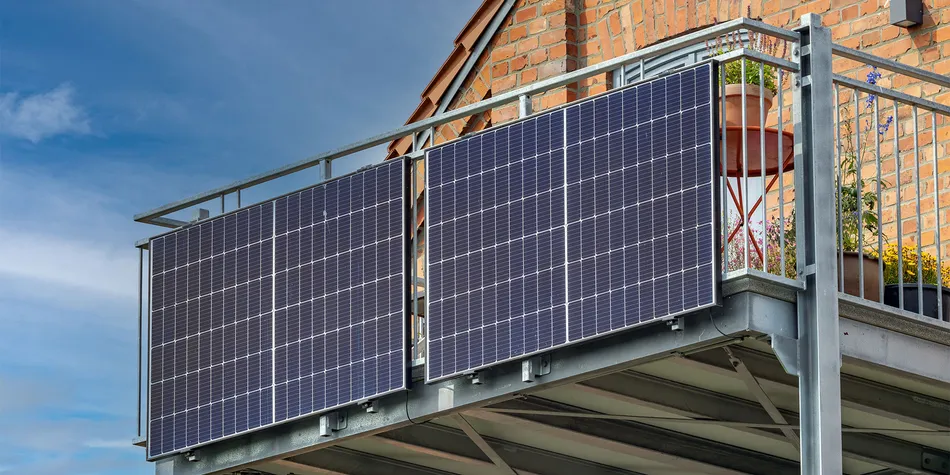
Once you have ticked those boxes, you will need to think about the installation itself. The panels can be hung vertically from a balcony or wall, mounted on a roof, or free-standing on the ground, and work best when unshaded and south-facing. You'll need to safely and securely fix the mounting bracket in your chosen spot, then connect the panels, which can weigh as much as 20 kilograms each. The cable can't be attached to an extension lead, so you will need a plug socket in the right place, preferably outdoors, as we wouldn't recommend trailing the cable through an open window.
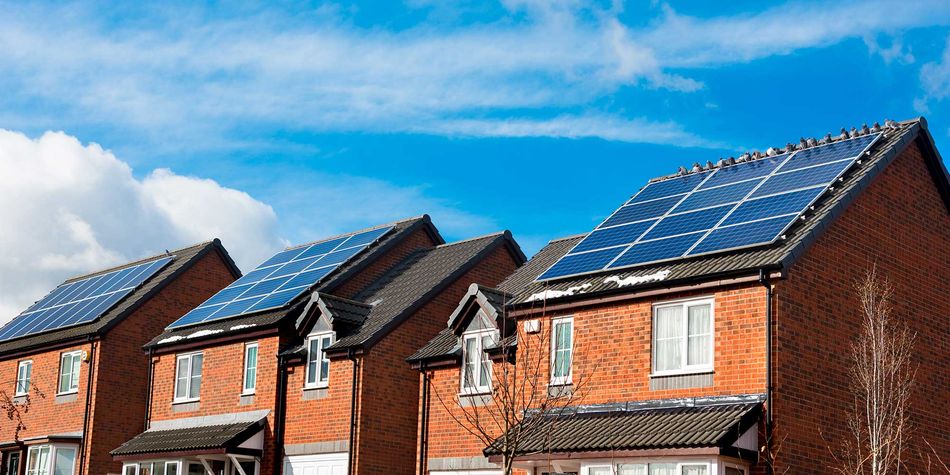
With all that in mind, could you have rooftop panels instead? Well, plug-in solar panels offer an interesting new way to dip a toe in the water if you're curious about generating your own energy. But if you own a home with a suitable roof and aren't planning to move, it is worth comparing the benefits of rooftop solar panels instead, which is likely to be more cost-effective in the long term.
Rooftop panels generate a much bigger electricity output than plug-in panels, which, in turn, generate higher lifetime savings. They have long warranties and performance guarantees, plus installers offer follow-up support, and you can earn more money for excess electricity returned to the grid as part of the Smart Export Guarantee.
The downsides, though, include higher up-front costs and longer payback times, and they're generally only available for homeowners with a suitable roof, and may not be cost-effective if you plan to move house in the short term. Whereas plug-in solar panels have lower up-front costs, they're easy to buy, quick to install, and can be put on balconies or on the ground. Plus they can be taken with you when you move home, and could even be possible for renters and leaseholders as long as you have permission.
On the flip side, they are less effective when mounted vertically, you can't make as much money by selling excess electricity back to the grid, they have shorter warranty periods, and you may need to update your electrics.
If you've got this far, the million-dollar question on your mind is undoubtedly this: Will plug-in solar panels actually save you money?
Well, more and more kits have started to appear on the market over the last month at stores like Argos and Screwfix, as well as direct from solar panel manufacturers. You can also buy them through energy companies like Octopus.
So far, we've seen prices as low as 450 quid for a small plug-in kit, going up to over £1,000 for a larger model, so they're cheaper than a professionally installed rooftop system, which, for a typical UK home, will cost around £7,400.
But the amount of electricity you get back from plug-in solar is a lot less. Government estimates suggest an 800-watt plug-in panel system could save around £70 to £110 a year from a home's electricity bill. A typical UK rooftop system – around 4.6 kilowatts – generates savings closer to 650 quid a year. With very long warranties, the lifetime savings for a rooftop solar system can be remarkably high.
Now, these are just averages and estimates, so before buying either system, make sure you calculate how long you'd expect payback times to be for your own home. And take into account any extra up-front costs and anything that might affect how much energy your panels will generate.
Think carefully, too, about how much of the power you'll consistently use. You won't make much money from selling plug-in solar back to the grid, so you need to use as much of the electricity as possible when it's generated – i.e., when the sun is shining. If no one is home during the day, it'll still supply your baseload energy, powering your always-on stuff like your fridge and your broadband router, but using panels in this way is unlikely to make back the initial cost.
If you can maximise the energy generated and use it well, a plug-in solar panel system could be a useful tool in your home energy efficiency kit, particularly if prices start to come down as the market grows.
That brings to an end another podcast from Which?. There's loads more for you to read about everything we discussed today; just head to the episode description for more useful everyday advice. There, you'll also find an exclusive offer for podcast listeners like you to become a Which? member for 50% off the usual price, giving you access to our product reviews, our app, one-to-one personalised buying advice, and every issue of Which? magazine across the year. Plus, your membership helps us to make life simpler, fairer, and safer for everyone.
If you'd like to know when we release a new episode, then make sure you press subscribe wherever you're listening. That way, you can be one of the first to listen. And for any questions, comments, or anything in between, follow us on social media @WhichUK or email us: podcast@which.co.uk. Goodbye!