6 things you should never clean with bicarbonate of soda – and what to use instead

Hannah has dedicated her career to understanding what matters to consumers, and writes practical, trustworthy advice to help people spend wisely and make everyday life easier.

Bicarbonate of soda has become a popular natural cleaning solution.
It's affordable, widely available and frequently promoted online as a simple, quick fix for several household issues, including clearing blocked drains and tackling burnt pots and pans.
But while it's versatile and eco-friendly, bicarbonate of soda is far from being a miracle cleaner. In some cases, its mildly abrasive and highly alkaline properties prove ineffective, neutralise when combined with other products, or may even cause damage or irritation.
Below, we reveal the common bicarbonate of soda cleaning mistakes to avoid, along with the alternative methods to use instead.
Is bicarbonate of soda the same as baking soda?
Bicarbonate of soda and baking soda are the same ingredient. In the UK, it's most commonly known as bicarbonate of soda, while it's often referred to as baking soda in the US.
Both contain sodium bicarbonate, a mild alkali often used in baking, deodorising and household cleaning. It also appears in some health and personal care products, such as toothpaste.
It's not to be confused with baking powder, though. This contains bicarbonate of soda, mixed with a starch ingredient, such as cornflour or rice flour, to absorb moisture, as well as acidic ingredients designed to help cakes and breads rise.
Achieve a perfect rise and golden crust every time with our essential oven features for home bakers
Should I mix bicarbonate of soda with vinegar?

While mixing bicarbonate of soda and vinegar is a frequently recommended tip, it doesn't always deliver a powerful clean.
Vinegar is an acid, and bicarbonate of soda is an alkali. When combined, they react and neutralise each other, reducing their cleaning effectiveness.
The bubbling and fizzing reaction is simply the release of carbon dioxide gas. While it may look impressive, it doesn't mean the two ingredients become more effective cleaners when mixed together.
However, Jacob Compton, a Which? scientific adviser, says bicarbonate of soda and vinegar can still be a powerful duo for household tasks, such as cleaning ovens and carpets, if used strategically.
Our expert says:

'To successfully clean with bicarbonate of soda and vinegar, it's important to use them in the right order.
'They can be effective for cleaning ovens, but you should use them sequentially rather than mixing them beforehand.
'To get the best results, let the alkaline bicarbonate of soda paste break down the grease first, then use the vinegar spray to trigger the bubbling action and dissolve any chalky residue left behind, which you can then wipe away.
'The same approach can also work for deodorising carpets. Sprinkle bicarbonate of soda over the carpet first, vacuum it up, then follow with a light spray of diluted vinegar.
'But vinegar isn't suitable for every type of carpet. Some, such as wool carpets, are more sensitive to acids, so they can lose colour or become brittle if the solution is too strong.
'If you want to use diluted vinegar on your carpet, ideally you should patch test it in an inconspicuous area first.'
Jacob Compton, Which? scientific adviser
From mirrors to kitchen countertops, we reveal 8 things you shouldn't clean with vinegar
Bicarbonate of soda cleaning hacks to avoid
Bicarbonate of soda is often praised for being a cheap, natural alternative to specialist cleaning products. However, some viral cleaning 'hacks' deliver a less-effective clean – or could risk damaging delicate surfaces and fabrics in your home.
There are plenty of DIY recipes online for making cleaning products with bicarbonate of soda, but we found many didn't work well in our rigorous tests.
In fact, when we tested a homemade laundry detergent recipe, mixing bicarbonate of soda with salt, liquid Castile soap, lavender oil and hot water, we found it did almost nothing to get our clothes clean.
Read on to discover more common bicarbonate of soda cleaning mistakes to avoid.
1. Unblocking drains

You might spot online advice claiming that bicarbonate of soda, salt and vinegar can help to clear blocked pipes. But our expert tests have found this method to be ineffective.
Using equal parts bicarbonate of soda, salt and vinegar on both hair and grease clogs resulted in little more than a fizzy reaction. Even after repeated attempts, the blockage remained and had to be cleared with rigorous plunging.
With this reaction you are essentially creating salty water plus carbon dioxide, so the power of the individual cleaning agents – bicarbonate of soda and vinegar – are cancelled out.
If you're dealing with a blocked drain, we recommend opting for a plunger or purpose-made drain cleaner instead. For our top-rated recommendations and tips to prevent future blockages, see our guide to the best drain unblockers for kitchen sinks, showers and baths.
Learn how to unblock a sink – and discover the everyday items that could be wrecking havoc on your drains
2. Boosting laundry detergent
Topping up your laundry detergent with bicarbonate of soda is often promoted as a way to help remove stains, soften the water, brighten white clothes, relieve allergies and banish smells.
While our tests have found it to be one of the best home remedies for stain removal, adding large amounts to a full wash isn't a good idea.
The British Skin Foundation warns that bicarbonate of soda can irritate the skin, potentially leading to underarm rashes, redness and burning. Most people won't realise they're sensitive until they start using it in this way.
If you need to shift stubborn stains, stick to spot-treating rather than adding scoopfuls to full loads of laundry. Mix a small amount of bicarbonate of soda with water to form a paste and apply it directly to the affected area.
Don't waste your time, money or detergent – we've rounded up 7 laundry detergent hacks you shouldn't try
3. Skincare

In recent years, bicarbonate of soda has gained popularity in DIY beauty treatments, such as homemade deodorants, skin cleansers and facial washes.
However, Dr Susannah Fraser, consultant dermatologist and spokesperson for the British Skin Foundation, warns it can disrupt the skin's natural barrier and can also be abrasive.
The main issues with using bicarbonate of soda are that it has a much higher alkaline pH, compared to the slightly acidic pH of healthy skin. Bicarbonate of soda can also cause damage to the surface of the skin. This is particularly relevant in people with sensitive or inflamed skin. Homemade skincare products will lack preservatives so there may also be a risk of microbial contamination.
Instead, look for skincare products that have been specifically formulated and tested for use on the face.
Best anti-ageing creams: our independent lab tests reveal the face creams that reduce wrinkles and improve skin hydration
4. Tackling burnt pans
A common cleaning hack for tackling burnt pots and pans is to make a paste using bicarbonate of soda, salt and vinegar.
However, our rigorous tests found it to be the least-effective cleaning method. It required multiple attempts and significant scrubbing to remove all of the stains completely.
If you have heavily burnt cookware, a simple dishwasher tablet or soaking with hot water and washing-up liquid is likely to be more effective.
What's the easiest way to clean a burnt saucepan? We scorched baked beans onto the bottom of pans to find out which cleaning hacks work best
5. Cleaning delicate surfaces

While bicarbonate of soda's mildly abrasive nature can help blitz stubborn stains and grime, it can also scratch delicate surfaces.
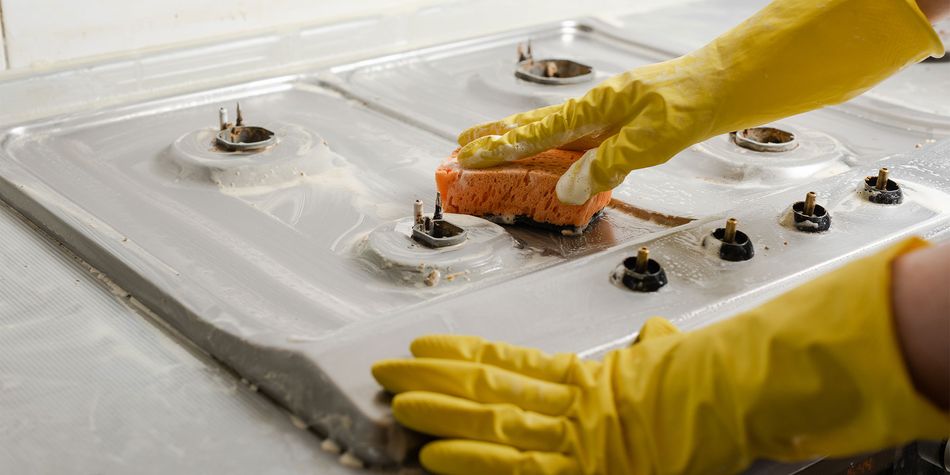
To prevent irreversible damage, avoid using it on materials with high-shine or polished finishes. This includes mirror-finish stainless steel, chrome or plastic trims, where even fine abrasions could degrade or dull the surface.
Be particularly careful when cleaning non-stick cookware or air fryer baskets, where abrasive cleaning could damage the coating. Instead, use warm water, washing-up liquid and a soft sponge or cloth.
For more advice on cleaning kitchen appliances, check out our guides on how to clean a ceramic hob, how to clean an oven and how to clean a cooker hood
6. Disinfectant
Although bicarbonate of soda is often marketed as an excellent, eco-friendly alternative to chemical cleaners, it can't help with all household cleaning tasks.
It lacks the same disinfecting properties as bleach, making it unsuitable for killing bacteria on surfaces. Additionally, it's not effective at removing limescale, rust or heavy mineral deposits.
For tougher cleaning jobs or baked-on grease, purpose-built products are usually more reliable.
Discover the best cleaning sprays, including our top-rated bathroom, kitchen and all-purpose cleaners that will leave your home sparkling
Can I clean jewellery with bicarbonate of soda?

While bicarbonate of soda is often recommended for removing tarnish from silver, its mildly abrasive texture can scratch softer jewellery, plated items and delicate gemstones.
For valuable or precious pieces, it's safer to use a specialist cleaner and follow the manufacturer's care instructions.
What can bicarbonate of soda be used for when cleaning?
Despite its limitations, bicarbonate of soda remains a useful option for several chores around the home.
1. Cleaning a rug and carpet
Bicarbonate of soda, combined with white vinegar, makes for an excellent natural deodoriser and stain remover for your carpet.
But remember, one is an acid and the other is an alkali, which means they will cancel each other out if you combine them.
To clean your carpet effectively, first sprinkle bicarbonate of soda over the surface, leaving it to sit before using one of the best vacuum cleaners from our independent lab tests to remove it.
Follow this by lightly spritzing a solution made of equal parts water and white vinegar over your carpet, allowing it to dry completely.
Get more expert tips on how to deep clean a carpet by hand, and discover the best carpet stain removers from our tests
2. Pre-soaking smelly laundry

If your laundry basket is overflowing with sweaty gym gear or grass-stained rugby kits, it's probably already not smelling fresh as a daisy.
Instead of chucking these items straight into the washing machine, give them a good soak beforehand to help stop odours clinging on through the wash.
You can dissolve half a cup of bicarbonate of soda in a basin of warm water, soaking the garments for half an hour – or longer for particularly smelly items – and then washing them in the machine as normal.
Give your clothes the best chance with our 7 easy ways to get fresh-smelling laundry
3. Deodorising bins
Nasty kitchen smells can appear suddenly, particularly in hot weather, so it's worth knowing how to get rid of them quickly.
To keep your bin smelling fresh, empty the contents and sprinkle bicarbonate of soda in the base to absorb any odours.
If bicarbonate of soda fails to do the trick, it might be time for a replacement. Check out the best kitchen bins and best food waste bins from our expert tests.
Banish bad smells with our step-by-step advice on how to deal with a smelly kitchen
4. Tackling oven grease

Many people swear by everyday products, such as bicarbonate of soda, for oven cleaning.
If you're keen to try this natural alternative, make up a cleaning paste of equal parts bicarbonate of soda and water. Rub this onto stubborn spots of grease or burnt-on food, leaving it for a few hours before scrubbing it off.
For a deeper clean, check out the best oven cleaners from our rigorous tests
5. Cleaning a mattress
Maintaining a fresh and odour-free mattress is essential for its longevity, even if scrubbing stains is a chore you'd rather avoid.
For blood, food and drink stains, use a little bicarbonate of soda mixed with cold water. Apply to the stain, leave it for 30 minutes, then dab with clean water and leave to dry.
To find out how to remove more stubborn stains, read our expert guide on how to clean a mattress