Where to next?
Discover inspiring destinations, recommended by our in-house travel experts. Know the best places to go, who to book with and how to pay less.
Join Which? Travel
An Orwell prize-nominated investigative journalist, Kate lives in Portugal and covers news, travel rules, tourist taxes and visas.

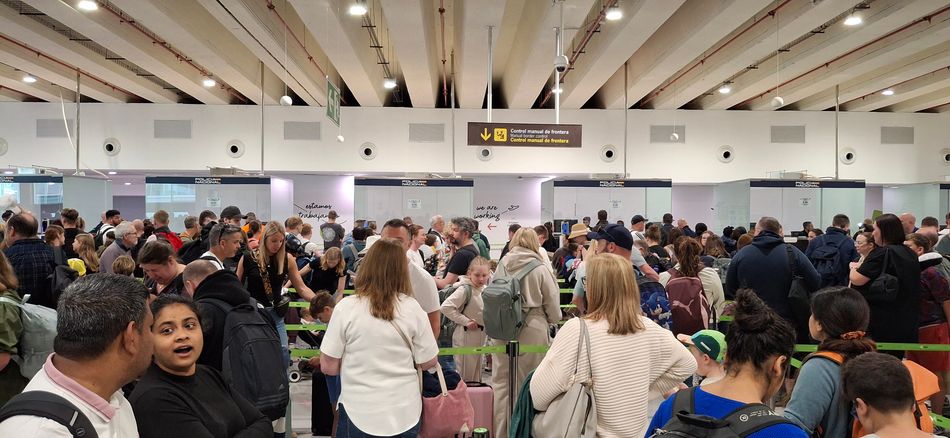
If you’re heading off on a trip to Europe soon, you might encounter longer queues on arrival and departure at some European airports.
That’s because of the EU’s newly introduced biometric border checks, called the Entry/Exit System (EES), which impact British travellers.
They were rolled out in April, and initially led to long passport control queues at a number of European airports. Our travel editor witnessed queues several hours long and passengers missing flights at Palma airport, and in April a flight from Milan to Manchester took off without over 100 passengers – who were stuck in EES queues. Most weeks, there are further stories of passengers missing flights due to these queues.
EES checks happen on arrival and departure at European airports, and the queues pile up at busy times because all third-party nationals arriving in Schengen countries, including UK passport holders since Brexit, are now required to register their biometrics and ‘enrol’ in the system. The Schengen zone includes popular holiday destinations such as France, Italy, Spain and Portugal, but not Cyprus or Ireland.
As the summertime travel season subsides in September, EES queues and subsequent disruption may lessen – but there’s a new issue for airports, ports, and the travellers using them. During peak travel season, the European Commission allowed airports and ports flexibility to pause biometric checks in cases of excessive queues and disruption. Several airports, such as Lisbon and Milan, and airports in Greece have previously suspended EES checks for this reason. However, this rule expires in early September.
It’s wise to prepare as if you will have to queue, and anticipate delays. There is no way to find out which airports are suspending checks at any given time, meaning travellers still face unpredictability.
Airports will no longer have the right to suspend checks after 6 September. Or, at least not automatically. This may affect your return flight from airports in Europe, as long EES queues could mean some travellers miss their flights home.
It is possible the European Commission will extend flexibility beyond 6 September. When it was asked, The Commission’s spokesperson for internal affairs, Markus Lammert explained that it is ‘in close and constructive contact with (the) few member states that have challenges…or had challenges before the summer’ and said it would be ‘in touch’ with those states to determine next steps.
At European airports that have a large number of UK arrivals and departures, it’s sensible to arrive as bag drop opens, usually three hours before departure, so you have enough time to make it through exit EES checks.
EES involves having your fingerprints and/or a facial scan taken at EES kiosks or by a border officer, as well as answering questions about the reason for your visit.
If you’re stuck in the queue for EES checks, you can try to speak to a member of staff and inform them you’re at risk of missing your flight home. In some situations, airport staff may use their discretion and allow you to move to the front of the queue.
If you don’t need to check in a bag at the airport, you may want to arrive even earlier. Clearing security sooner could mean you’re able to join EES queues ahead of time, potentially helping you to stay on schedule for your flight.
Always go to the gate as soon as it is announced – this will help to maximise the time you have to clear EES queues.
Read more on how to prepare for EES queues.
The new digital EES requires all non-EU passport holders, including those with British passports, to be fingerprinted and photographed at border control.
When the system is fully operational, travellers of all ages will be subject to these border checks, although children under 12 won't have to give fingerprints.
This will usually be done at new, dedicated automated kiosks, alternatively, by a border officer when arriving overseas at airports and, for Eurostar/Eurotunnel and at the Port of Dover, before leaving the UK.
Visitors also have to answer questions about the length of their stay and whether they have enough money to fund their trip.
Theoretically, the system should have replaced passport stamping from 10 April 2026, but this step will likely be phased out more slowly. Member states are allowed to pause real-time checks and instead retroactively upload passport data into the EES system, and in these cases, passports are stamped instead.
As a rule of thumb, if you’re travelling soon and are given the opportunity to have your passport stamped, you should accept it.
Yes – the changes rolled out officially on 10 April 2026. But EU countries will still be allowed to pause EES to avoid long queues during peak summer travel, until 6 September.
EES applies across all Schengen countries, including Bulgaria and Romania. The only exceptions are Ireland, which shares a Common Travel Area with the UK, and Cyprus, which will operate border controls separately.
For more expertly researched destination ideas and unbiased travel advice and recommendations, subscribe to Which? Travel
Discover inspiring destinations, recommended by our in-house travel experts. Know the best places to go, who to book with and how to pay less.
Join Which? TravelEES rules state that UK travellers may spend 90 days in every 180 in the Schengen zone. Unless you’re taking longer and/or more frequent trips than this, it’s not something to worry about – just make sure you get your passport stamped each time you travel in and out of the EU until this step is phased out.
If you do overstay, the UK’s Foreign, Commonwealth & Development Office (FCDO) says you could be banned from countries in the Schengen Area for up to three years. These rules come under the EU’s Return Directive 2008/115, which states that any entry ban should take into account the specific circumstances of each individual case – meaning that it may depend on factors such as the length of your overstay, and any other mitigating factors.
If you’re concerned, you can use the European Union’s 90/180 calculator tool, which is available on the official Travel to Europe website.
No, apart from checking your passport validity and making sure you’re following the 90/180-day Schengen rule.
There’s no advance registration or paperwork needed before you travel.
However, it’s worth allowing extra time for your journey. For example, when booking transfers, car hire or other onward travel, take into consideration that you may wait longer than normal to exit the airport when you arrive at a European country. You may want to ensure that your car hire company doesn’t impose a penalty for late pick-up – and warn it if you’re delayed.
For peace of mind, you can also double-check the entry requirements of your destination by checking its FCDO Foreign Travel Advice page.
Not yet. Some airports, such as those in Germany and Bulgaria, along with Lisbon and Faro in Portugal, Prague and Rome Fiumicino, are already allowing UK travellers through the e-Gates, and it is hoped more will do so in future.
Even if you do go through an e-Gate, you may still be given the chance to have your passport stamped by a border guard. It's wise to do so if you're given the opportunity, as it acts as further documentation of your movements in or out of the Schengen zone.
You may be asked when registering for EES if you have enough money to cover your stay. But we haven’t found any instances of British passport holders being refused entry on the basis of their answer.
Rumours of British tourists being fined under Spain’s '£97-a-day' rule are unfounded. The rule has long existed and technically applies to UK visitors post-Brexit, but Spanish authorities confirmed to Which? that it’s not enforced against British tourists, and none have been refused entry. That said, it’s sensible to carry a return ticket and accommodation details in case you’re asked.
Again, this is unlikely. Some countries in the Schengen area list travel insurance as a requirement for entry, but it’s not a rule that has ever been used to deny entry to UK travellers – as far as we’re aware.
When Eurostar first introduced EES, passengers were asked about travel insurance, but this and other questions have been temporarily dropped, with no mention of them on Eurostar’s EES page. Which? has reached out to Eurostar to ask when, and if, these questions will be reintroduced, but it has not yet shared more information.
There is also a helpful Eurostar tool for checking border requirements for your journey – just type in your destination.
Either way, purchasing travel insurance as soon as you’ve booked a trip is advisable. While a UK Ehic/Ghic card can cover medically necessary state healthcare in the EU, it won’t cover private treatment or repatriation. Plus, travel insurance will protect you against wider issues, including cancellations or lost baggage.
No. Just prepare for extra border checks. You may be able to pre-register on an official app called Travel to Europe in future, but at the moment this is only available if you’re travelling to Sweden or Portugal.
The EU has created an app, called Travel to Europe, that allows travellers to pre-register their passport information, upload a photo and answer the questions asked at kiosks up to 72 hours before arriving at border control. It is currently only available for arrivals into Sweden and Portugal.
Eurostar is currently asking some Eurostar Premier passengers, or those travelling with Carte Blanche or Étoile Club Eurostar membership, to register with EES at a pre-registration kiosk.
It says it accounts for time needed for border checks within arrival times on tickets, and will provide a further update regarding when EES registration will be mandatory for all passengers, including information on how it impacts their travel plans, and will do so 'well in advance'.
Eurotunnel LeShuttle at Folkestone says there will be no EES biometric capture at LeShuttle terminals in Folkestone or Calais during the summer holiday period, and that for now, customers can continue to travel through terminals as normal.
Similarly, the Port of Dover’s FAQs state that the EES system has not yet been fully implemented for cars, that passengers should continue to travel to the Eastern Docks as usual on arrival, and that no biometric data is currently being collected.
After EES, adding to the abbreviations is Etias (European Travel Information and Authorisation System): a new visa waiver that British travellers will have to pay for to visit Europe.
This was due to be introduced in late 2026, but the European Commission has postponed the scheme and has not yet announced a new start date; it is unlikely to be in 2026 and will not affect any holidays you’re taking in the next few months.
When it is fully implemented, all holidaymakers will need to apply online and pay a fee of €20 (around £17) before travelling. The authorisation is expected to be valid for three years, or until your passport expires.
When Etias launches, UK travellers will need it to travel to the following:
Austria, Belgium, Bulgaria, Croatia, Cyprus, Czechia (aka the Czech Republic), Denmark, Estonia, Finland, France, Germany, Greece, Hungary, Iceland, Italy, Latvia, Liechtenstein, Lithuania, Luxembourg, Malta, Netherlands, Norway, Poland, Portugal, Romania, Slovakia, Slovenia, Spain, Sweden and Switzerland.
While Andorra, Monaco, San Marino and Vatican City are not part of the Schengen Area, they do not have independent external border controls. Travellers normally enter these territories via France or Italy. As these are Schengen member states, visa-exempt travellers will need a valid Etias travel authorisation before entering the Schengen Area.