Where to next?
Discover inspiring destinations, recommended by our in-house travel experts. Know the best places to go, who to book with and how to pay less.
Join Which? Travel
One of the UK's most trusted travel journalists, our award-winning travel editor spent a decade writing guidebooks around the world. Since 2016, he has been recommending where to go, who to go with and championing passenger and holiday rights for Which?

I was warned. The easyJet app advised passengers to arrive early at Palma airport on the first day that the EU’s European Entry-Exit system (EES) was fully implemented.
'Expect long queues,’ it said. What it should have said was to expect chaos.
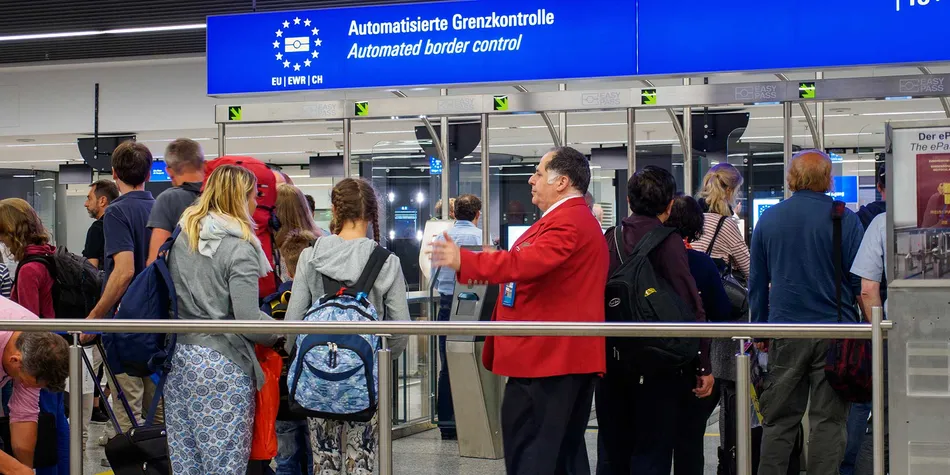
The queue for British passport holders at passport control was several hundred people deep and hours long. For most of the time just five or six border control stations were open to UK passport holders. That was clearly far too few.
It’s almost certain that some people missed their flights. Two members of airport staff occasionally walked along parts of the queue calling people forward once ‘final boarding call’ was shown for their flight, but in some cases they still had to wait 10 to 30 minutes or more in a queue of other passengers called forward.
One woman, whose Liverpool flight was flashing final call, finally made it to the front of the queue only to struggle to take an acceptable photo of her young son with the EES photo kiosk. She had to make repeated attempts to get the right height and distance, with no help from a grumpy border guard. It took several minutes.
I later saw the woman speed walking to the gate, remarkably calm, while explaining to her crying young children that everything would be alright if they missed their flight.
In the queue, there were more tears and anger. Staff members were inconsistent in who they called forward and for which flight. Some people had stood for hours, only to find out they were still unlikely to make their flight, and were upset when other passengers were called forward.
There was no one in charge, or any attempt to communicate with passengers about the situation. The one member of airline staff present was from Jet2, whom I regularly saw remonstrating with disinterested staff from the airport on behalf of her customers.
You can understand why passengers were angry. They arrived at the airport early, as instructed, but the airport was so poorly prepared for the new checks that they were still at risk of missing their flight. Worse still, if they did, they may well be left to foot the bill for a new ticket.
Palma, in Spain, isn’t the only airport affected. In Milan, more than 100 passengers missed their Manchester flight because of EES queues that were three hours long. EasyJet offered to rebook them for free, but on a flight five days later, leaving some passengers to pay huge amounts for flights departing sooner.
Greece has suspended EES checks for British passport holders. While at Porto and Lisbon airports, border control officers made the decision to temporarily suspend EES checks because of very long queues
The EES requires Schengen countries to carry out biometric checks on arrival and departure. Non-EU passport holders are photographed and/or fingerprinted on departure, which is taking longer than a quick flick of your passport by a border guard.
These checks may only add a minute or two extra for an individual passenger, but for a flight of 300 passengers, it adds up.
Many airports simply have not installed enough infrastructure to carry out the checks, don’t have enough staff, or both.
No. The EES applies to all non-EU passport holders, including UK passport holders, since Brexit. EES is in use by all 29 Schengen countries, but your experience of EES will vary greatly. Different levels of checks are seemingly used in different countries, while some airports have more infrastructure or border guards.
The most significant delays are occurring at airports with large numbers of UK flights, such as Tenerife, Lanzarote and Palma, but also Krakow, Milan and Amsterdam.
It’s very difficult to predict if you will face very long queues, because much depends on whether your flight departs or arrives at the same time as several other UK flights.
There are EES checks on arrival, and on departure, although they differ. Read our full guide to EES checks
Arrive early at your departure airport is the best advice. Consider not checking in a bag too. Check-in desks and bag drops typically open just two to three hours before departure, and that may not leave enough time for you to get through the border at the worst airports.
If you can, travel outside of peak travel periods, such as half terms and summer holidays. More flights mean more passport holders to be checked and longer queues.
They can. Some flights have waited for passengers stuck in EES queues, but in other cases, because it is more costly for the airline to miss its air traffic control slot, or because pilots may time out and there is no available replacement crew, they may decide to depart.
Legally, the airline is not even obliged to put you on the next flight, although many carriers have been rebooking passengers.
Discover inspiring destinations, recommended by our in-house travel experts. Know the best places to go, who to book with and how to pay less.
Join Which? TravelIt’s unlikely. Some travel insurance policies do have cover for ‘travel delay’ or ‘missed departures’, but even then you would need to clarify whether it covers you for a missed departure because of border queues.
If you do have travel insurance and think you are covered, to help your claim it’s worth having evidence that you arrived at the airport on time for the flight. That could be provided by your bag drop receipt, or a receipt for a coffee or tea at the airport if travelling without a bag.
Find the best policy for you with our ratings of 55 UK travel insurance policies.
Possibly. If nothing changes between now and the peak travel period in the summer, queues may well get worse. But given the level of disruption, it’s hopeful that the worst-impacted airports will make more kiosks and staff available. Staff will also become better trained, and the teething trouble with the technology will have been resolved.