By clicking a retailer link you consent to third-party cookies that track your onward journey. This enables W? to receive an affiliate commission if you make a purchase, which supports our mission to be the UK's consumer champion.
We’ve found the best compost for growing seeds – and our expert tests prove it

With over a decade of experience at Which?, Tom covers everything from tech advice to money-saving tips, and highlights the best deals during major sales events.

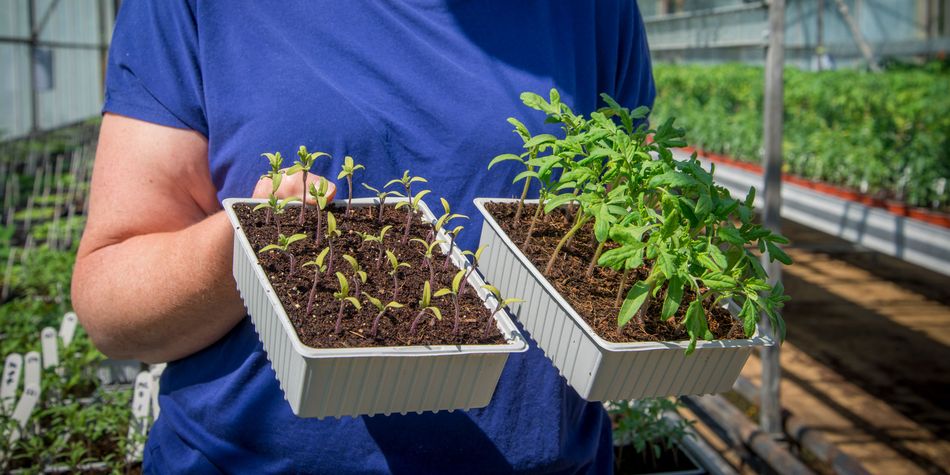
The compost you use for sowing seeds makes a dramatic difference to how many germinate and how strong those young plants become, our expert tests have found.
After comparing the performance of composts at our testing site within a well-respected horticultural institute, we found that price and brand name don’t guarantee quality. Without consulting our reviews, you risk buying poor compost. This can lead to patchy germination and weak roots, resulting in spindly seedlings that struggle long before they reach the garden.
Below, we reveal the composts that impressed our gardening team, plus expert tips to help you succeed with sowing, even if you’re not an experienced gardener.
Not all composts are created equal
Our independent tests show just how wide the gap in performance can be between composts.
One reason is the move to peat-free composts. The shift has led to a surge of new products, making it difficult to know which ones you can rely on without Which? experts.
Peat extraction is believed to damage peatlands and increase carbon emissions, and a ban on peat compost has been talked about for several years. As a result, most manufacturers are now switching to peat-free alternatives, but quality varies widely.

Our highest-scoring composts for sowing seeds
The five composts listed below delivered the strongest overall results in our sowing tests, producing good germination rates and healthy, vigorous seedlings. They scored highly for both vegetables and flowers, giving seeds the best possible start.
- The best compost we've tested – a free-draining compost that retains enough moisture for excellent seed germination.
- The worst compost we've tested – scored a dismal one star for petunia germination. If you’re relying on it to raise seedlings, you’ll likely be let down by weak growth from the start.
To find the best compost for growing from seed, our gardening experts tested each compost by growing tomatoes and petunias under controlled conditions and assessing their performance. Scores are based purely on results, not on price or brand name.
Log in now or join Which? to unlock our full table below.
| Compost | Which? test score | Tomato germination | Tomato quality | Petunia germination | Petunia quality |
|---|---|---|---|---|---|
Sign up to reveal Get instant access to this and all our scores and recommendations Unlock tableGet Digital access at £9.99 a month, cancel at any time. Already a member? | |||||
Sign up to reveal
Get instant access to this and all our scores and recommendations
Unlock tableGet Digital access at £9.99 a month, cancel at any time.
Already a member?
Log in
To explore our full list of test results for brands including John Innes, Levington and Miracle-Gro, see our guide to the best compost.
Our expert says:

‘Our compost tests replicate how gardeners use compost. We sow tomato and petunia seeds at the same time that our members would be doing this at home. We choose tomato as it’s a favourite for all gardeners and can grow very slowly in poor compost. Petunias are fussy and only germinate in a well-balanced compost.
'It’s a real thrill to see plants grow from tiny seeds, but hugely disappointing if your sowings fail due to poor compost. In our tests, it’s sadly not unusual to find poor compost on sale. Some have a very rough texture that makes it hard for fragile new roots to absorb water and nutrients. Others have too much fertiliser, which will overwhelm tiny seedlings, making them die.
'The good news is that our tests show there are a number of very good seed composts. These will give great results and bring back the pleasure of growing a bumper crop of veg and flowers from seed.’
Adele Dyer, Principal researcher & writer
Tips for sowing success
Using a good-quality compost backed by Which? experts gives seeds the best-possible start, but a few simple techniques can also make a big difference to germination and early growth.
- Don't rush – light levels are low early in the year, and so seeds sown too early will produce tall, weak seedlings that are ready to be planted before it’s warm enough outside. Better to wait until March before you start sowing most plants.
- Check the 'sow by' date – if you have seeds left from last year, see the dates on the packet if they’re still sealed in their foil pack. If the pack is open, it depends on the seed as to whether they’re worth sowing, as some lose viability sooner than others. Onions, carrots and parsnips are best sown fresh, while tomatoes can last up to ten years.
- Buy your seeds from a reliable source – poor-quality seeds can struggle to germinate, even in good compost. For more details, see our guide to the best places to buy seeds and plants online.
- Consider using a heated propagator – this provides extra warmth. Most are cheap to run and fit on a windowsill (see also: Best heated propagators).

How to sow seeds in 5 steps
Sowing seeds carefully will help to maximise germination and give seedlings a strong start. Our experts recommend following these steps for the best results:
- Fill a seed tray or pot with compost, leaving it about a centimetre below the rim so there’s space for watering
- Gently tap the compost to level the surface and to help it settle. You don’t want large air gaps in the compost
- Scatter or place the seeds on the compost surface. For very fine seeds, make a V-shaped chute by folding the seed envelope
- Cover the seeds with a fine layer of compost or vermiculite, following the instructions on the seed packet. Some seeds need to be exposed to the light, while others can be 1cm deep
- Water the tray and place it in a light spot, such as a windowsill. The seed packet will tell you if they need some extra heat from a propagator.
Once seedlings are large enough to handle, move them into module trays or individual pots. Choose a pot that’s taller than the full length of the roots and still leaves room for them to grow. Loosely fill your pot with compost.
Gently hold the seedling by the leaf, never the stem, and use a dibber or pencil to ease it from the compost. Use the dibber to make a hole in your new pot of compost and gently lower in your seedling. Tap the pot to level the compost and ensure the compost is all around the roots. Water the pots carefully with a watering can, or put them in a tray of water to absorb the moisture from the base.
What to sow when
March
- Flowers: Hardy annuals such as calendulas and sweet peas
- Vegetables: Lettuce, spinach, onions, spring onions, cabbage, calabrese, cauliflower, radish, turnip, kohlrabi, Florence fennel, beetroot, asparagus and celery
- Mid-month: Tomatoes to grow indoors and tender annual flowers such as cosmos
April
- Vegetables: Leeks (early month); courgette, squash, sweetcorn and cucumber (late month)
May
- Vegetables: Kale, Brussels sprouts, autumn cabbage and cauliflower (early month); French and runner beans (mid-month)
May
- Vegetables: Kale, Brussels sprouts, autumn cabbage and cauliflower (early month); French and runner beans (mid-month)
June
- Flowers: Biennial flowers such as foxgloves
- Vegetables: Carrots, beetroot, autumn kale, cabbage, cauliflower and purple sprouting broccoli
August
- Vegetables: Spinach, salad rocket and oriental leaves such as pak choi (early month); land cress, spring cabbage, winter purslane and spring onions (mid-month)
Even those gardeners who like to get their hands in the soil have times when a pair of garden gloves is essential. See our guide to the best gardening gloves for our recommendations.
Sign up for Which? Gardening

Our product tests and plant trials uncover the best varieties, composts, feeds, techniques and tools to help you get better results in your garden.
- Garden with confidence – Which? Gardening magazine is the practical read you need to become a better gardener. Our experts show you what to do and when, our plant trials and garden product tests inform our Best Buy and Don't Buy recommendations, and our topical articles will guide you to create the garden you want.
- 1-to-1 advice by email – Message us whenever you need, and we'll respond within a couple of days with clear advice tailored to your own particular circumstances and experiences.
- Know what to do when – Keep your garden looking great with practical guidance that covers the key aspects of any garden: flowers, pruning, wildlife and vegetables.
- Jobs at a glance – Our gardening year planner shows you the monthly jobs to do for your garden to flourish.
You can sign up for Which? Gardening to start getting expert advice and recommendations.