By clicking a retailer link you consent to third-party cookies that track your onward journey. This enables W? to receive an affiliate commission if you make a purchase, which supports our mission to be the UK's consumer champion.
You might not be watering your plants properly – here’s what to do

Championing consumers since 1957, our team of over 150 expert researchers and editors test, investigate, and campaign to protect your rights and help you shop smarter

We're often told that peat-free composts need more watering than composts that contain peat. However, it's easy to go too far and overwater, drowning young plants and washing out the fertiliser that's held in the compost.
Our team of gardening experts wanted to know the best way to water a range of plants that are likely to be in your greenhouse in late spring, to ensure they mature into large, healthy plants.
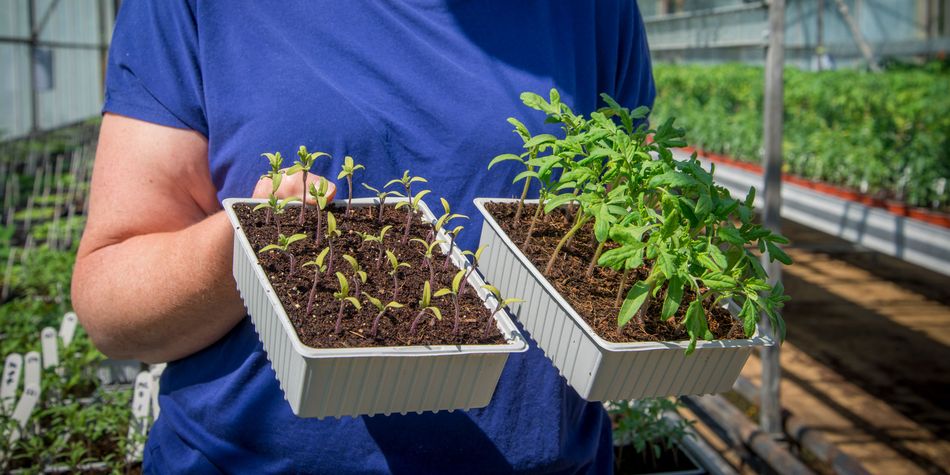
To test different watering methods, we grew tomatoes, geraniums and petunias using peat-free coir compost over a six-week period. We compared approaches across four categories, recording how often we watered and assessing plant health and growth each week. Watering every day turned out to be the worst method of all.
In our watering test, we tried 10 methods across four categories:
- Judging by observation – either putting a finger just under the surface of the compost to feel how wet it is, or picking up the pot to assess its weight. A well-watered pot is heavier than one that needs watering. We typically use these methods when growing plants for our trials.
- Watering indicators – we used two brands to tell us when to water: SUStee and Westland. Both use colour-changing strips to indicate when the plant is low on water.
- Water-retaining substances – products designed to hold water in the compost and reduce how often you need to water. We used Bronte AquaBoost Granules (a synthetic product) and an organic alternative, Mad Moisture.
- Watering overhead or using a water bath – we watered most plants with a watering can, but one set was watered only in a water bath, using touch and pot weight to judge when it was needed. Two sets of plants were allowed to wilt slightly before being revived, either by overhead watering or in a water bath. As a control, one set was watered from overhead every day.
Our results
Observing compost vs using a watering indicator: which is better?

Overall, using a finger or weighing the pots was as accurate as using an indicator stick, but you’ll need to build up the skill over time. We watered a few more times doing this than by looking at an indicator – an average of 18 compared to 14 for the indicators – but the plants were marginally larger by the end of the trial in most cases.
The indicators were helpful if you need to build up confidence in watering less. We tested two options:
- SUStee Watering Indicator – SQUIRREL_TEXT_50026741
- Westland Watering Indicator – SQUIRREL_TEXT_50026742
The SUStee suggested one of the lowest frequencies of waterings, and the plants were generally slightly smaller than other techniques but still very healthy.
Meanwhile, the Westland indicator said we needed to water more frequently, and gave larger plants, but they weren’t as healthy. We found the Westland harder to read than the SUStee, particularly as the water in the pot diminished, which perhaps explains why we watered more frequently.
Using a water-retaining substance

We needed to water slightly less using these products than when we judged when to water by touch and weight, and the plants were a similar size and health.
However, the difference in frequency wasn't huge – roughly 14 times compared to 17 for touch and weight.
Overhead watering vs water bath: which is better?
We found the water bath an excellent way to regularly water tomatoes, and it reduced the number of times we needed to water. However, overall, there wasn’t much difference in terms of plant size and health compared to the ones that were watered overhead.
When watering plants that had wilted, a water bath was slightly less effective than the overhead approach. This was perhaps because we took our time to rewet the compost when using a watering can. We waited for water to soak into the pot before giving one or two more doses from the watering can, to ensure the plant was thoroughly wetted through.
Discover the best composts for sowing seeds, raising young plants and growing plants in containers

Caring for tomatoes, geraniums and petunias
- Tomatoes – the largest, healthiest plants were watered in a water bath after we had felt the compost and picked up the pot to judge whether they needed to be watered. Watering every day made the plants grow tall, but they suffered from a lack of fertiliser by the end of the trial. Using a water bath also cut the days we needed to water from 32 for daily watering down to just 16.
- Pelargoniums – the best method was feeling the compost, but the indicators were useful. The SUStee suggested watering less than we would have by using touch; the plants were only a tad smaller and less healthy. The Westland suggested more watering, but the plants were less healthy, as too much fertiliser washed out. Watering daily produced terrible pelargoniums – leaves turned scarlet from lack of feed.
- Petunias – moisture-retaining Bronte AquaBoost granules proved useful for petunias, as they don’t like to be too wet or too dry. However, picking up the pot to weigh it was just as good, and we watered on a similar number of days for both methods. Watering every day gave plants with yellow leaves that were starved of nutrients, and overwatering made the coir pots disintegrate.
The bottom line

'The cheapest way to become a master of watering your plants is to get used to feeling the compost and picking up your pots, provided they’re small enough. While you learn how they should feel, you can use a water indicator to give you more clues as to how your plant is faring.
'Always check your pots before you water. Overwatering will wash away the fertiliser, and plants will suffer.'
Adele Dyer, principal researcher & writer
Top watering cans from our tests
We believe every tool in your shed should earn its place, which is why we put watering cans of all shapes and sizes through their paces, from the cheapest plastic models to the most expensive designer cans. We tested them all to find the ones that are easiest to fill, carry, pour and clean.
Below are some of the top-scoring watering cans we've tried:
Log in now or join Which? to unlock our full table below.
| Product | Available from | Filling from a tap | Filling from a water butt | Carrying and lifting when full |
|---|---|---|---|---|
Sign up to reveal Get instant access to this and all our scores and recommendations Unlock tableGet Digital access £9.99 per month, cancel at any time. Already a member? | ||||
Sign up to reveal
Get instant access to this and all our scores and recommendations
Unlock tableGet Digital access £9.99 per month, cancel at any time.
Already a member?
Log in
To see our full list of recommended watering cans, check our guide to the best watering cans.
Sign up for Which? Gardening

Our product tests and plant trials uncover the best varieties, composts, feeds, techniques and tools, to help you get better results in your garden.
- Garden with confidence – Which? Gardening magazine is the practical read you need to become a better gardener. Our experts show you what to do and when, our plant trials and garden product tests inform our Best Buy and Don't Buy recommendations, and our topical articles will guide you in creating the garden you want.
- 1-to-1 advice by email – Message us whenever you need, and we'll respond within a couple of days with clear advice tailored to your own particular circumstances and experiences.
- Know what to do when – Keep your garden looking great with practical guidance that covers the key aspects of any garden: flowers, pruning, wildlife and vegetables.
- Jobs at a glance – Our gardening year planner shows you the monthly jobs to do for your garden to flourish.
You can sign up for Which? Gardening to start getting expert advice and recommendations.