Get a year of super-useful advice
Solve your tech issues and get expert buying advice whenever you need it, all year for only £49.
Join Which? Tech SupportBy clicking a retailer link you consent to third-party cookies that track your onward journey. This enables W? to receive an affiliate commission if you make a purchase, which supports our mission to be the UK's consumer champion.

The best camera is the one you have with you – or so the saying goes. These days, that usually means your phone. And image quality has improved dramatically over the years. Today's phones can take sharp, well-exposed photos in a range of conditions.
But convenience isn't everything. Dedicated cameras offer several clear advantages. From better performance in low light to more natural-looking images and greater creative flexibility, cameras can produce the goods in areas phones will struggle to match.
Below, we explore where dedicated cameras still outperform smartphones, and help you decide whether it's worth investing in one. We'll also explain the different types of camera available and what to look for when buying, to help you choose the right model for your needs.
Need a new digital camera for your holiday? Our expert, impartial camera reviews help you find the right model at the right price.
A longer version of this article was originally published in Which? Tech magazine (June/July 2026 issue, p20).

Cameras capture more light than smartphones, producing clearer, more detailed images with richer colours and less noise (this shows up as speckles or a grainy texture in your shots) – especially in low light.
That means you’ll get better-looking photos indoors, at night or in tricky lighting, where phone camera systems often struggle or rely on heavy image processing.
This difference is particularly noticeable in areas such as background blur. Phones simulate this using an artificial ‘portrait mode’, which can struggle with fine details like hair or clothing. Cameras achieve background blur naturally using wide apertures that lower the depth of field, producing smoother, more convincing results.

Unlike phones, which often crop into the image when you zoom, or offer only a single separate telephoto lens, cameras use true optical zoom to bring distant subjects closer without reducing detail. This makes a massive difference for wildlife, sports and travel shots, where you can’t always get physically closer and really need a good zoom to capture the moment.
Many models support interchangeable lens systems, which enable you to attach different lenses for different situations – a macro lens for extreme close-ups, a fast lens for portraits, a long telephoto lens for sports and wildlife, and so on.
Even fixed-lens cameras (such as compact cameras) often offer better quality optics and more versatile zoom ranges than a phone.
Best compact cameras – our recommended models enable you to take detailed photos with greater control than your phone, plus they're easier to use than a pricey DSLR.

Both smartphones and cameras can record high-resolution video. But cameras often capture more polished, cinematic-looking footage.
Larger sensors and high-quality lenses help produce cleaner video with natural colours and background blur, while advanced stabilisation and frame-rate options deliver smoother results – ideal for family events and creative projects.
Some higher-end models have advanced optical image stabilisation to help reduce blurring and wobbling in videos (and photos).

Cameras give you full control over settings such as shutter speed and aperture, so you can shape how your photos look. They also typically offer a comfortable grip to help you set up your shot, physical buttons and a viewfinder.
This makes for composition and control that’s more intuitive, more responsive – and more enjoyable – than using a touchscreen on a phone.
There’s also something to be said for how a camera feels to use. Dedicated cameras are built with shaped grips, well-balanced bodies and physical controls. This can make them more comfortable to hold for longer periods and easier to operate without looking away from your subject.
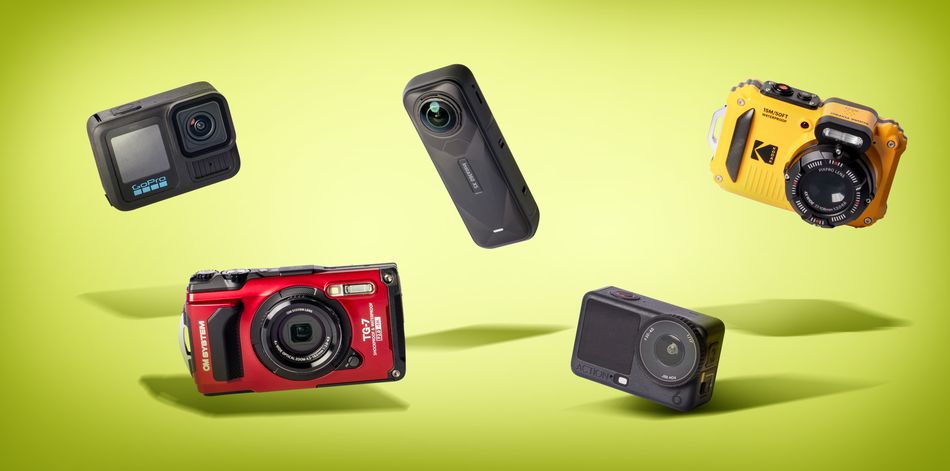
If you're looking for a camera that can handle holidays, water sports and outdoor adventures, see our expert reviews of the best action cameras.

Depending on the model, dedicated cameras can offer features such as Raw shooting (capturing more image data for editing), fast burst modes and advanced autofocus. While some high-end smartphones now include similar tools, cameras typically offer greater control and more consistent results – especially when shooting or editing more demanding scenes.
Most dedicated cameras offer automatic modes for when you just want to point and shoot. But they also allow you to take a more hands-on approach, with full control over settings such as aperture, shutter speed and ISO. These determine how much light enters the camera and how motion and depth are captured.
Dedicated cameras also typically offer faster and more reliable autofocus and burst-shooting modes that can capture a rapid sequence of images. There’s also little to no shutter lag (the delay between pressing the button and taking the photo), which can make a big difference when timing is critical

Smartphone photography has got dramatically better in recent years. Thanks to improvements in both software and hardware, phones are better at judging exposure, reducing image noise and handling tricky lighting. Clever features like HDR (High Dynamic Range) improves colour and detail, night mode and artificial intelligence (AI) optimisation all help to improve image quality.
The latest and greatest features are usually reserved for high-end models. But tech trickles down over time, so you don't always need the most expensive handset. Flagship phones were the first to include multiple rear cameras, enabling you to switch between a main wide lens, an ultra-wide for landscapes, and a telephoto for zooming in without losing too much detail. Today, however, it's common to find even mid-range phones offering two or more cameras.
Resolution has increased too, with many phones now using sensors in the 48Mp to 200Mp range – often combining pixels rather than using full resolution, or merging data from cameras to improve detail, colour and exposure. Many also support Raw shooting, giving you greater control when editing, while improved stabilisation helps keep photos and videos sharp.
A good compact camera should be easy to use and take consistently great photos, whether you're capturing family holidays, landscapes or everyday moments. That's why we put every model through a series of demanding lab tests before recommending it.
Nobody wants a camera that takes blurry photos. Our experts test picture quality in a range of lighting conditions, assessing sharpness, colour accuracy, low-light performance, image stabilisation and face detection.
We also assess video quality, looking at sharpness, colour accuracy and how smoothly cameras capture moving subjects and panning shots.
To find out which models we recommend, go to best compact cameras.
Solve your tech issues and get expert buying advice whenever you need it, all year for only £49.
Join Which? Tech SupportWhich? Tech Support can help you keep on top of your home tech. Our experts explain things clearly so that you can resolve issues and feel more confident using your devices. They will also give you 1-2-1 buying advice.
Get unlimited 1-2-1 expert support:
Join Which? Tech Support.
Additional reporting by Tom Morgan.