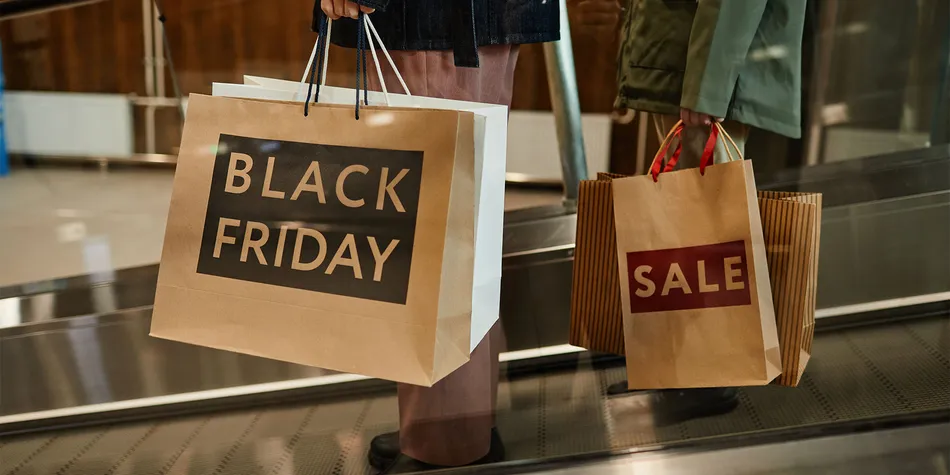
James Rowe: The sales are upon us. Here's how you can be a savvy sales shopper.
James Rowe: Hello and welcome to Which? Shorts, your free weekly insight into Which? magazine as well as our money, tech, travel and gardening titles too. Today I'm bringing you a piece that our retail expert Hannah Walsh wrote for the December/January issue of Which? magazine, all about Black Friday.
Sales season is in full swing. We've already had Amazon Prime Day. Up next is Black Friday, Cyber Monday, Boxing Day and, before you know it, we'll have the January sales. So how can you cut through the hype and find genuine deals?
Well, here, Hannah's research reveals how to navigate those sales, arming you with the knowledge of the best times to buy and the retailers to focus on to have the best chance of finding a real bargain. Here's Hannah's piece, adapted for the podcast, this week read by me, James Rowe.
James Rowe: If you're listening to this within a day or so of us releasing it, then Black Friday is at the end of the week. But many retailers have already started their deals, and while shoppers no longer fight for TVs in the supermarket, it is still popular.
We surveyed over 2,000 members of the public in September and 30% of them had shopped in the Black Friday sales last year, and most spent more than £100. Clothing, shoes and accessories were the most popular purchases, followed by tech and health and beauty products.
We compared prices in the four weeks around last year's sales day with those in the six months before and after the sale at eight retailers: Amazon, AO, Argos, Boots, Currys, John Lewis, Richer Sounds and Very. We analyse a four-week period as Black Friday sales often start earlier in November and continue beyond Cyber Monday – the Monday after the Black Friday weekend – and into December.
We analysed more than a quarter of a million prices for 756 home, tech and health appliances on offer on Black Friday last year, and just 22% of the products were at their lowest price of the year during the Black Friday sales. For 66% of the products, the Black Friday price was equal to the cheapest price during the year. So only two-thirds of 'deals' are worth looking at, and most of these don't need to be urgently snapped up as deal prices are likely to be repeated.
Every year, our research shows that you don't have to buy on Black Friday for the lowest price. A pair of Bose QuietComfort headphones at Amazon were on a Black Friday deal at £399, down from an RRP of £449.95, but were cheaper on 29 occasions after the sale. They even dropped to £299.95 for a week in March and were cheaper than their Black Friday sale for most of May.
At Argos, a Dyson Airwrap found in the Black Friday section, although not marked as a Black Friday deal, was £429.99 on the day, with a saving of £50. It then dropped to £399.99 on the 4th of December and stayed at that price for the month.
We know TVs drop in price when new ranges launch, but sometimes savings can be had at other times as well. A 75-inch LG TV at AO was £1,800 on the day of Black Friday, but around £1,535 for some of the sales period. It was £1,599 for most of December too, so you could have saved more than £200 by buying at the right moment.
So, where should you shop and what should you actually buy? Well, at Very, a third of the deals we analysed were at their cheapest during the Black Friday period, followed by Amazon where 27% were at their best price. This fell to 23% at John Lewis and Currys, 21% at Boots and Argos, and 18% at AO. At Richer Sounds, just 6% of prices were at their lowest during the period.
If you include products that were sold at prices equal to their best price of the year, the proportion of deals becomes more respectable, with Argos leading on 86%, followed by Currys and Boots at 79%, and John Lewis at 74%. Even Richer Sounds climbs to 59%, suggesting that while it isn't big on Black Friday, it does at least match its best prices in the period with more than half of its deals.
These deals vary by product too. Just over half of the coffee machines and TVs in our analysis were cheaper than their Black Friday price outside of the sales period, with the best time to buy being December and April to July respectively. But most vacuum cleaners and tablets in our analysis were cheapest during the Black Friday sales, so November and December are the best time to buy them.
Wherever you're shopping, be sure to watch out for common pricing tactics. Shopping, especially online, is littered with pitfalls. We've repeatedly found examples of retailers using potentially misleading pricing practices on products sold online, including electric toothbrushes, TVs and furniture.
At Boots and Superdrug, for example, we uncovered hundreds of potentially problematic loyalty promotions that risked loyalty members thinking savings were better than they were. Separately, we found recommended retail prices, or RRPs, that we believe could mislead consumers on potential savings on Amazon Marketplace, eBay, Wayfair, Temu and Boots, as the RRP shown was higher than the actual price anywhere.
Some retailers also pile on the pressure with certain sales tactics. These include countdown clocks, where a timer shows when a sale price ends, only for it to still be there after the deadline, and popularity claims – these are vague pop-ups declaring how many people are looking at or have bought an item. Now, without access to historical pricing and a significant amount of time to check the retailer claims, it can be almost impossible to know whether you can take them at face value.
So next time you shop, bear these four things in mind to help you along. First, try Ask Which?. This is our new AI assistant which is powered by our testing data and can recommend products based on what's important to you. For example, if you want the quietest dishwasher for an open-plan living space or a hairdryer that's a good size for travelling, just type it in for our best advice.
Next, know where to shop. Each year we survey thousands of customers to find out the best places to buy tech, home appliances, furniture and baby products, and where you might want to avoid. Check out which.co.uk/bestshopdeals to see which shops you can trust.
Next, make sure you create your wishlists. Once you know the products and shops to target, see if you can build a wishlist in your online account. It's an easy way to keep track of prices on the products you want to buy from retailers you trust.
And finally, get deals direct to your inbox. You can sign up to our free deals newsletter. Our experts trawl through discounts to find genuine bargains on products that have impressed us in our tests. There's a link to sign up to that in the show notes.
We reached out to the retailers to find out what they had to say on our research. They all said they offer year-round value, and several said the real benefit of Black Friday is the number of promotions available concurrently. Argos, AO, Currys, John Lewis, Very and Richer Sounds pointed out their price guarantees, and AO and Boots said their deals run throughout November. You can read more about our research, including more shopping tips for specific stores, in the magazine or on the Which? website.
James Rowe: That brings to an end another podcast from Which?. There's loads more for you to read about everything we discussed today; just head to the episode description for more useful everyday advice. There you'll also find an exclusive offer for podcast listeners like you to become a Which? member for 50% off the usual price, giving you access to our product reviews, our app, one-to-one personalised buying advice and every issue of Which? magazine across the year. Plus your membership helps us to make life simpler, fairer and safer for everyone.
If you'd like to know when we release a new episode, then make sure you press subscribe wherever you're listening. That way you can be one of the first to listen. And for any questions, comments or anything in between, follow us on social media @WhichUK or email us: podcasts@which.co.uk. Goodbye.