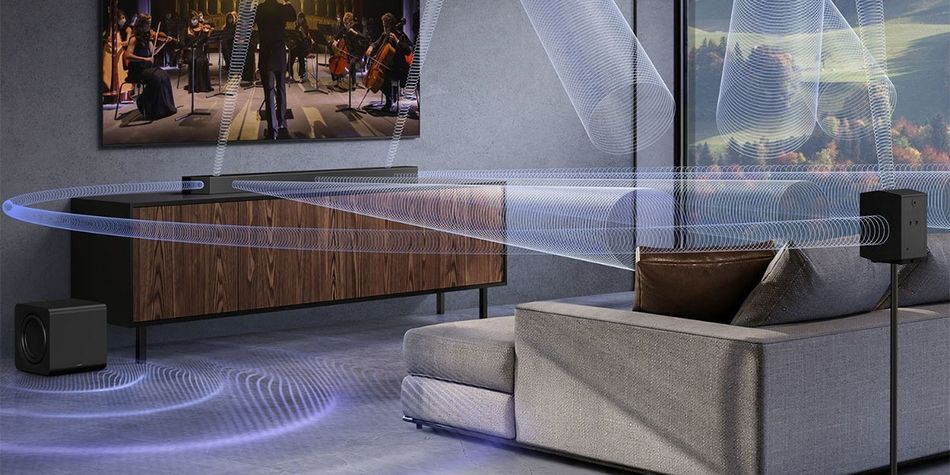
Do soundbars really need a subwoofer?

Martin has more than 10 years of experience and has tested more than 1,500 TVs, soundbars and speakers - few people know more about AV

There's nothing complicated about a subwoofer. It's got one job: bass. These big boxes are designed to create beefy, low rumbles and bring atmosphere and immersion to music, TV and films.
Some soundbars come with a subwoofer, others claim to have subwoofers inside, while most at least give you the option to buy and connect one separately.
Subwoofers from popular audio brands, including Marshall, Sonos and JBL, start at over £400, so they are far from a cheap addition to your TV audio setup.
We've tested several soundbars with and without their subwoofers, so we've got a good idea of whether it's worth forking out for one.
Best soundbars for 2026: discover the models that actually improve your TV audio
Why don't all soundbars have subwoofers?
TVs typically struggle to produce low frequency sound, often because the speakers are just too thin to create the resonance required.
Soundbars are deeper to fit bulkier speakers and do a much better job creating bassy low-end, but even the very best soundbars can't create the lowest audible frequencies that you'd expect to hear in a cinema.
That's what subwoofers are for. Interestingly though, our highest-scoring soundbars don't have one, and there are various reasons why manufacturers don't include them:
- Subwoofers are expensive: already costly high-end soundbars get even less palatable if you have to pay several hundred pounds more for a subwoofer.
- Low bass isn't always preferred: why ask customers to fork out for low tones that may not suit their audio preference? Better to make it an optional addition later.
- The soundbar produces enough bass: no brand will admit its soundbar doesn't produce deep bass (you'll often find marketing claims that their soundbar produces rich, deep bass without a subwoofer even if that's not strictly true).
Do subwoofers improve the sound?
Sort of, but it's important to know that a subwoofer isn't a silver bullet that will turn a bad soundbar into a good one.
A subwoofer is only interested in the lowest frequencies and deepest bass, so it's not impacting the mid and high tones at all.
Think of it as a drawer: with a good soundbar, you can pull it out most of the way, but adding a subwoofer lets you pull it out just a bit further. What's in the drawer is still the same, you're just seeing a bit more of it.
Subwoofers aren't always welcome either. We've tested several where the bass lacks subtlety and is out of sync with the rest of the mix. A good sub should blend seamlessly with the rest of the audio and when it doesn't, you'll find you're better off without one.
When they work well, they create a thick bedrock of low-end that makes whatever you're watching sound more immersive and atmospheric.
See all our soundbar reviews to find models with and without subwoofers that sound great and suit your needs.
To subwoofer or not to subwoofer?
All that subwoofer information brings us neatly to our recent tests.
We tested three soundbars with and without their optional subwoofers to see if they made a big difference.
1. Marshall Heston 60 + Heston Sub 200

- Soundbar price - £499
- Subwoofer price - £429
The Marshall subwoofer is almost as expensive as the soundbar and we weren't overly impressed. Does it add bass? Sure. Is that bass welcome? Not always.
The low-end is imprecise and sits separately from everything the soundbar does rather than blending in. For the hefty price, we expect the bass to be more subtle and refined.
Read our Marshall Heston 60 review and Marshall Heston 60 + Sub 200 review to see how they differ.
Sonos Arc Ultra + Sub 4

- Soundbar price - £849
- Subwoofer price - £799
We had high hopes for the Sub 4, not least because it costs the better part of £1,000.
It's definitely one of the better optional subwoofers we've tested. The bass is punchy and precise, and never really felt separate from the rest of the soundbar audio, which is vital.
The low-end is strong, but doesn't overpower the rest of the sound.
Read our Sonos Arc Ultra review and Sonos Arc Ultra + Sub 4 review to see how they differ.
3. Klipsch Core 300 + Flexus Sub 200

- Soundbar price - £1,049
- Subwoofer price - £419
The Core 300 is one of the pricier soundbars on the market, but its subwoofer is at the cheaper end, particularly compared with the Sonos Sub 4.
Despite its price, the Flexus is impressive. It expertly renders the long deep drones that make thrillers and horror films so intense, and the louder rumbles from explosions and thunder without ever feeling out of step with the soundbar.
Read our Klipsch Core 300 review and Klipsch Core 300 + Flexus Sub 200 review to see how they differ.
How to get the most out of a subwoofer
Whether you've bought one separately or the soundbar you have comes with one, make sure you're getting the most out of it.
Put it in the right place
Where you put it in your room is important.
They are typically designed to be understated, but subwoofers are bulky, so you're probably not going to want it too out in the open and it will need to be plugged in.
You want to find a spot in your room where the bass is strong and consistent. The easiest way to do this is to put your sub at ear height where you sit, then move around the room listening for that sweet spot.
Put on a piece of music with a lot of low-end to really hear the bass clearly. Once you've marked the places where the bass sounds best and is out of the way enough for your tastes, you've found your sub's new home.
Use your soundbar's equaliser
Most soundbars have a way of tweaking the subwoofer strength with an equaliser.
In the settings you'll be able to reduce or increase the strength of the bass, or sometimes there's a separate setting for the subwoofer.
You'll find options to tweak mid and high tones, too, so experiment and see what sounds best to you.
Don't feel pressured to use one
Many soundbars come with a subwoofer, but you don't need to use it. If you find the bass off-putting, too powerful, or maybe your neighbours don't like it, then you don't have to plug it in.
A good soundbar will have a lot more bass than your TV and that might be enough for you.