First Halifax, now TSB? Why are banks disappearing?

Having worked at the BBC and in commercial radio before joining Which?, James produces our always-on podcasts, and oversaw the launch of our member-exclusive podcasts in 2025.

The sheer scale of bank branch closures has caused concern inside government. And with one – maybe two – high street brands set to disappear from the high street, is the situation going to get even worse?
In this episode, Which? senior data journalist Josh Wilson crunches the numbers to reveal the stark reality of high street banking in 2026: 69% of the nation’s physical banking network has been lost since January 2015.
Josh explains why banks keep closing branches and what an official government review into access to face-to-face banking services could reveal.
Plus, Which? senior researcher Faye Lipson details what Halifax customers need to know as the brand disappears from the UK, and why TSB customers should be aware that the pioneering brand could vanish too.
James Rowe: The sheer scale of bank branch closures has caused concern inside government. And with one, maybe two, high street brands set to disappear from the high street, is the situation going to get even worse? We'll chat about that on this episode of Which? Money.
Hello, it's James in the Which? studio alongside our senior researcher, Faye Lipson. Faye, hello.
Faye Lipson: Hiya.
James Rowe: Nice to have you back in the studio with us. And alongside Faye is our senior data journalist, Josh Wilson. Josh, hello.
Josh Wilson: Hi. Great to be back.
James Rowe: Likewise. Let's start with you, Josh. We're going to chat about bank branch closures today. It's nothing new. We've covered it on the podcast for a long time, and I know you more widely at Which? have been covering the story for a number of years now. This year we're on track for, give or take, nearly one closure per day of bank branches. But that's actually lower than previous years. Do you want to give us a bit of an idea about the numbers?
Josh Wilson: Yeah. So, by Which? count, we've seen nearly 7,000 branches close since January 2015, which is an enormous amount. This amounts to about 69% of the banking infrastructure that we had in 2015. So we're talking serious numbers here.
And speaking to our members, we know that this has had a pretty severe impact on their day-to-day financial lives. In a survey that we did last year, we found that 40% of our members told us that they'd lost access to their local branch within the past five years. So, serious numbers of people here.
And having dug into this a bit myself as well, from the numbers that I've crunched, I think one of the most devastating things that I've found is that around 55 parliamentary constituencies across the country have got no branches remaining. None at all. So that's about 6 million people in the UK that don't have a branch left in their parliamentary constituency.
So this is serious, serious stuff. And as you say, the number of branch closures has reduced down a bit compared to the peak years a few years ago – 2018, 2019, I think was when it really peaked. But we're still seeing hundreds of branch closures each year. I think we're on course for – I think we've had just over 200 branch closures so far this year, and another 100 set to close before the end of this year. So it's still hundreds of branches every year. This is a serious problem that doesn't look like it's going to end anytime soon.
James Rowe: They've just closed so many that they haven't got enough to close. Maybe that's why it's slowing down.
Give us an idea why banks are closing branches then, because people clearly still like to go into them. But why do they close them?
Josh Wilson: So the excuse that they always tend to roll out whenever they make an announcement or we ask them about this is that they tell us it's related to footfall. They've seen footfall numbers come down, that they've done research with their customers and many of their customers have switched to digital banking.
But this really doesn't take into account, for example, older customers, vulnerable customers who really like to do their banking face-to-face, particularly when they've got when they want to do more complicated banking – stuff like power of attorney or anything to do with mortgages or anything that's a bit more complicated than just withdrawing and depositing money.
James Rowe: And it isn't just older people or more vulnerable people who require in-branch banking. Faye, I imagine we or you have had scenarios where you want to just go into a branch because you want a bit more reassurance face-to-face.
Faye Lipson: Absolutely, yes. So I'm a digital native. I'll do 99.9% of banking stuff in my banking app. But recently we wanted to make some changes to our mortgage – to move house. And even though there is a banking branch available for the bank where we have our mortgage, they don't send mortgage advisers to that branch anymore.
So I was told over the phone when I was asking about it that you have to make a video appointment to organise the mortgage changes. And even if you were to come into the branch, all we would do is set you up in a side room and you would have that same video appointment on a screen. There is no mortgage adviser there.
Most things are really easy to do online. I don't have a problem with it. But with a mortgage, if you misunderstand a question on the application and you mess up and the mortgage is declined, you then have to wait six months or a year or something to apply again, and the whole chain collapses. So that's really serious.
So if you were ever to want to do something in person, that would be it. And you just can't do that anymore. And even where branches exist, services are being stripped away from them. So it's a bit disingenuous, I think, sometimes when banks say footfall is reduced, so we are closing the banks, because I think they're partly responsible for that.
Because if they're removing services from the branch, if they're cutting the operating hours of the branch, then of course fewer people are going to come. It becomes a vicious cycle, doesn't it?
James Rowe: Yeah. Yeah.
And it's caused, as I said at the top, a bit of concern inside government. They've launched the Access to Banking Review – or at least it was launched under Keir Starmer's premiership, I should say. Do you want to give us a bit of an idea about what this is all about, Josh? What's the government trying to discover with this review?
Josh Wilson: Yeah. So essentially this feeds into a more long-standing review into banking services that the government has done. So, for example, the way things stand right now is whenever a bank wants to close down a branch, they need to do a review into what cash services are currently available in the local area. And the FCA requires banks, if there is substantial gaps found within that local area in terms of face-to-face banking services, the banks are required to demonstrate how they would plug those gaps – whether that be opening up a new ATM, a community banking hub, something like that.
But the problem at the moment, there's nothing that the FCA can do to prevent a bank from closing down a branch. Banks just need to go and do that kind of review into the area, but there's nothing the FCA can do to permanently stop a bank, say, "You cannot close that branch down."
So what this review is looking into essentially is: do the rules that we have at the moment, do they go far enough? And with a particular view – it takes a particular view on older and more vulnerable customers – are they being adequately protected by the rules that are in place when it comes to face-to-face banking services? Is enough being done to protect them and their access to face-to-face banking services? Because there are still a substantial amount of payments carried out by the public that are carried out with physical cash.
James Rowe: Some stats from Age UK say that 75% of people aged over 65 want at least some of their banking done in person. So this again speaks to this idea we mentioned before about how older people do want to go into a branch to do their banking.
But if these branches are closed – because at the moment the FCA, the Financial Conduct Authority, the regulator, they don't have the power to keep a branch open – what else can they do? You mentioned opening an ATM, which I guess covers off the idea of just wanting to withdraw cash. But community banking hubs is another one. Do you want to give us an idea about what those are?
Josh Wilson: Yeah. So community banking hubs, they've kind of been long-touted as the answer to Britain's banking crisis. And for those who don't know, a community banking hub is a shared banking space where, in theory, any customer of any bank can go to this community banking hub and do their banking with a representative from their bank – whether that be Santander, Halifax, Lloyds, whoever.
In practice, there are some issues with this, whereby mainly the issue is that not every bank will have representatives at every community hub. There's also no statutory legal requirement for banks to actually engage with the community banking hub program, which is a big issue.
And also there's no standardization of services across community hubs. So you might get one community hub where you can go and do your – you can get your appointment with your banking representative and you can talk to them about mortgages, you can talk to them about power of attorney, all that stuff that you would have done in your traditional physical bank branch. But then there are other community hubs where maybe you might not be able to do very much more than withdrawing, depositing, paying bills, and maybe a little bit of account management.
So some kind of minimum service requirement across all community hubs would be really ideal. And that's something that Which? – we at Which? – really want to see. As part of this call to evidence that the government has put out for this review that they're doing, we've said to them that we want to see a standardization of minimum services across community hubs. And we also want to see a legal requirement for banks to have to engage with these community hubs.
And we also voiced our concerns to do as well with the fact that many of these community hubs have quite limited opening hours as well. So, for example, most of them are not open at the weekends. And also, when it comes to the banking representatives from the main banks like Santander, Halifax, HSBC, whatever, a lot of the time their banking representatives, you can only see them one day a week. Which means you might have to plan your entire week around being able to go on that particular day when your banking representative is available. And oftentimes you might have to book an appointment well in advance to be able to see them. And sometimes they're not even there for the entire day.
I went to visit a community banking hub last year, and I looked at the hours that the different banking representatives were available. And some of them were only there for a few hours, one day a week. This is not great for a lot of people who previously may have just been used to – oh, they'll pop into town, do a bit of shopping, and then they know that whenever they want, they can just pop into the branch and do their banking. It's not like that anymore.
If you want to take advantage of the community banking hub, the services they offer, you may need to plan this weeks in advance. It's not something you can just do off the cuff – you just happen to be in town, "Oh, I'm doing a bit of shopping, I can just pop into my banking hub and do a little bit of banking." You are going to need to really look up online your local hub, exactly where it is, what's available when, what services are offered, and potentially book an appointment well in advance. So there's a lot of issues that I think are still to be ironed out when it comes to community banking hubs.
James Rowe: And they are opening up – I wasn't going to say in huge numbers – around 100 opened in 2025, and so far, according to our numbers, 36 have opened so far this year. So it pales into insignificance, doesn't it, compared to the amount of bank branches that are closing? 400 or so closed last year, so it doesn't really stack up.
You mentioned you've been to one as well. I think you came on the podcast last year to tell us about that experience.
Faye, what about you? Have you seen one in your community, in your village, town, or anything?
Faye Lipson: Yeah. So I live in a South London suburb, and it sort of feels indicative of what's happening everywhere. So we used to have, some years ago, two banks on the high street. And then during the pandemic, one of them closed down and became a Starbucks. And so there was just one bank left.
And then a short time ago, it was announced that that bank was going to close. And there was a lot of concern – panic, even – in the town, knowing that we're not going to have a single one on our high street in this busy London suburb.
And then somebody did some Googling and found this kind of quite mysterious mention on the Banking Hub website that there will indeed be a banking hub in our area, possibly early next year. But it's all very cloak-and-dagger. It says that it will have a certain number of brands, but it doesn't say who they are – which banking brands they are. And it says "TBC" for the location.
So nobody really knows whether their bank is going to be represented or not. So it's obviously better than nothing, but I don't think it's entirely allayed people's concerns.
James Rowe: And this speaks to this review, doesn't it, Josh, about how we're just not quite sure about what is going to replace bank branches or in-branch banking for people. It's all a bit, as Faye says, a bit mysterious. Where's the transparency? We should know, shouldn't we?
Josh Wilson: Yeah. It is all a little bit nebulous. And I think it's important to say that we at Which? here do support community banking hubs. I think on paper they're a really good idea. It's just the issues that they have, I want to see those ironed out.
And I'm hoping that when we see the results of this review – I think the results of the review are being released later this year – I'm hoping that the government is going to address some of these issues with community banking hubs.
One of the other things I'd really like to see is, as Faye was just saying, better promotion and advertising of when these community hubs are actually opening and exactly where they're opening. I've seen many times in the past when one of these community hubs has opened, it's often opened in a temporary location. And then it's stayed in that location for maybe a year and then has moved to somewhere more permanent. That's better than nothing, but I don't think that's an ideal way of doing things.
So yeah, it really is a case of ironing out these issues with the community hubs. And I would like to see the pace – even though they have picked up the pace of opening them – I would like to see that roll out continue to gather steam, as it were.
James Rowe: And as you say, that review – the findings are due out later this year, and the government has been clear. It says it will act quickly where the evidence shows action is needed to protect access to banking services. So I guess we'll wait and see what that review says, and we'll see if it does indeed act quickly if action is needed.
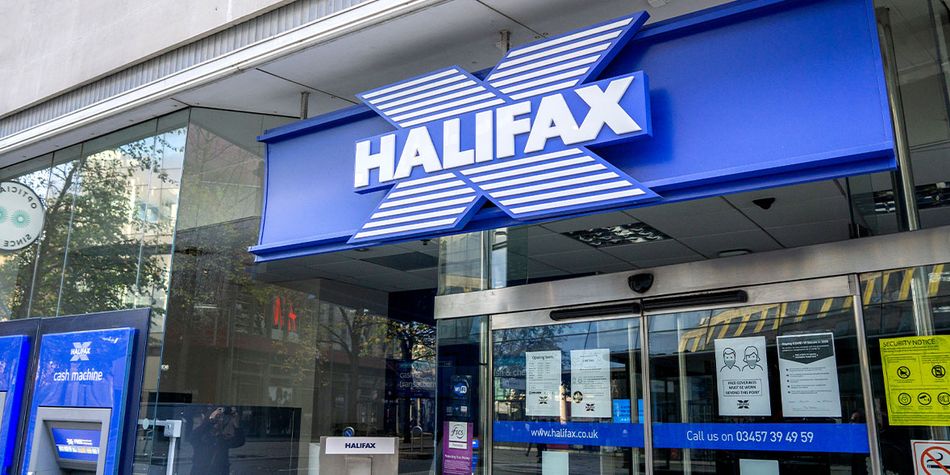
From bank branch closures to full-on bank brand closures – it was announced earlier this year that the Halifax brand will be phased out across this year and next. Is that the full story? I feel like I've just painted a bit of an outline. Do you want to add some colour to my sketch?
Josh Wilson: Yeah. So we recently found out that after more than 170 years, the Halifax brand is being phased out. For those who don't know, Halifax was folded into the Lloyds Banking Group brand in 2009, I believe. So Lloyds Banking Group is Lloyds Bank, Halifax Bank, and Bank of Scotland.
It was originally founded as a building society in 1853 in the town of Halifax, West Yorkshire, and spread across the UK during the following decades. It became a very successful banking brand.
But yeah, recently found out that it's now going to be phased out. So over the next couple of years, you will see Halifax bank branches, all the branding disappearing, and eventually they're going to be changed into – it's all just going to be Lloyds Bank now.
James Rowe: As you say, it is a big household name. It's a really well-known name on the high street. I've had an account with Halifax before. Have you two, Faye? Have you banked with them before?
Faye Lipson: Yeah. So, strangely enough, I think an account was opened for me when I was just a few days old. I was a newborn, essentially, and my granddad, who was big into saving – very traditional guy – he opened me a savings account within a few days of me being born.
And Halifax used to really go to town on this with young kids. So it was called the Little Extras Savings Club, and I used to receive magazines with these little characters in them. And there was this iconic plastic, brightly primary-coloured savings house that you could save your pennies into.
James Rowe: Like a piggy bank?
Faye Lipson: Yeah, it was like a little house, which I guess is a nod to their previous status as a building society before they became a bank. And it was just brilliant.
And they're so iconic now. When it was announced that Halifax was going to close as a brand, I had a look online, and eBay and Vinted as well are full of these vintage money boxes from the '80s and '90s. And they're just cheap plastic, but they're selling for more than a few quid in some cases.
James Rowe: The nostalgia element.
Faye Lipson: Yeah, the nostalgia factor for aging Millennials! So yeah, it's kind of sad on a nostalgic level to see all of that go.
James Rowe: Josh, just to come back to what you were saying before about the brand disappearing from the high street, and physically disappearing from the high street because we will see those branches be rebranded. Halifax said that sites would either be rebranded or – and I'm quoting here – "where there is another branch close by, customers will be served by an existing Lloyds branch in the same community."
To me that sounds like some branches could then close. Is that right?
Josh Wilson: Yeah, so you're completely right. As part of the initial announcement, Lloyds Banking Group told us, as part of this announcement, "We're not announcing any additional branch closures," but that doesn't preclude more closures coming down the line in the near future.
I think it's important to point out that Lloyds Banking Group, they've closed more than 1,600 branches since 2015, and that's the most out of any banking network in the country. So I would not be surprised to see some closures from Lloyds Banking Group in the near future. I would keep an eye out for that.
James Rowe: So what's that going to mean for customers then? If you currently bank with Halifax – and we've already said it is a bit of an issue if you want to go into a branch – so you may lose the branch that's closest to you. But what about all the other services that you use via Halifax? What's going to change?
Josh Wilson: Yeah, indeed. So as part of this phasing out of the brand, Lloyds Group told us that this is going to include basically everything – current accounts, savings accounts, credit cards. These are all going to become very soon unavailable, and it's all going to be rebranded as Lloyds stuff.
But they've also told us that there's nothing right now that customers need to do. All of their login details should stay the same – PIN codes, passwords, all of that stuff. None of that should change.
Also, any deals that they're currently on should continue until those deals run out, and then they should be ported over to – or given the opportunity to change onto – a Lloyds current account or a Lloyds credit card.
That's my understanding from having spoken to people at Lloyds – what customers should look out for and should be aware of. And if you are a Halifax customer, either you should already or will soon be contacted by Lloyds, and they should lay all of this out to you – what's going to happen in terms of what's staying the same, what's changing, what you need to do, what you don't need to do. So you shouldn't need to worry.
But yeah, keep an eye out for emails, keep an eye out for alerts on apps, because you should be contacted soon in the near future with all the information that you should need to know about.
James Rowe: And maybe it's actually a good time for customers as well. Once they get told what's going to happen, maybe it's actually a good time as well to see whether or not they want to switch to a different provider as well.
I was looking at some of our latest survey results. Halifax, for a current account, was ranked joint 19th out of 22 banks for a customer score, whereas Lloyds – let me look – is 13th out of 22. So if you're going to be ported over to a Lloyds account, maybe it's worth looking at our reviews on our website to see if you can get with a better or a different banking provider. We'll pop some links in the show notes so you can go and read all of those reviews.
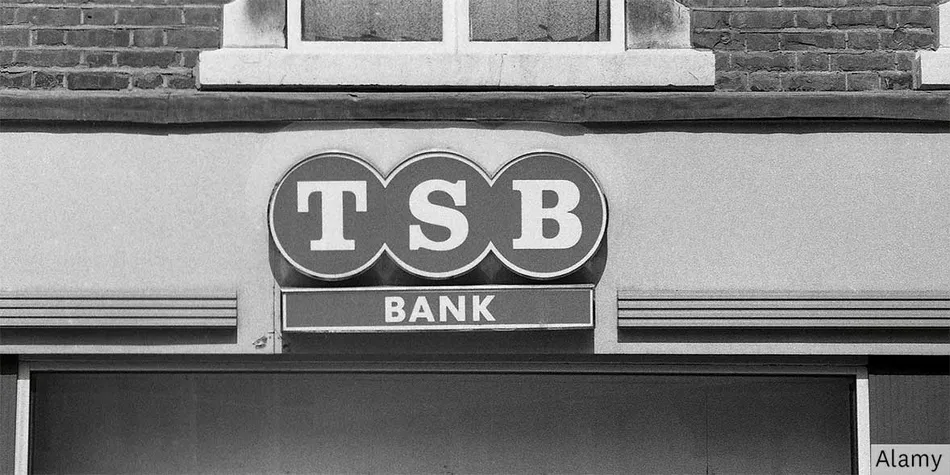
From one bank associated with Lloyds to one that used to be, Faye – TSB. There's been question marks over its future too recently, hasn't there? What can you tell us?
Faye Lipson: Yeah, that's right. TSB has had a really storied past. It did use to be part of Lloyds, and it broke away just over a decade ago and launched again as an independent bank, like it was originally when it was founded 200 years ago.
And it's more recently been acquired by Santander, which has a history of absorbing brands and then rebranding them as Santander. And it's kind of been widely reported that TSB is going to go as a brand.
But when I spoke to Santander about this, they insisted that no final decision has actually been made. So it's kind of hard to know, despite the reports, whether it truly is the end for TSB or not.
James Rowe: Yeah, I was reading the piece that you wrote about TSB in one of the latest issues of the Which? Money magazine. And I was fascinated by its storied history. I didn't realize quite where it had come from. It's well worth a read if you are a Money member. I think you've written a piece about it for the website as well.
But just to go back to what you said – you said you spoke to Santander, they said they had no immediate plans of getting rid of that TSB brand. But I imagine a lot of customers with TSB might be a little bit nervous after what we were just chatting about Halifax, that brand is going to be going over the next year or so. Should customers be wary that they're going to lose that brand that they're currently with?
Faye Lipson: If we look to the past as a guide, Santander does have this history of purchasing and absorbing smaller brands. So in the past, it's absorbed quite famous UK brands like Abbey National, Alliance & Leicester, and Bradford & Bingley. And all of those have been rebranded to Santander.
So if the past is a guide, then that would indicate that TSB is really under threat as a brand. But as I say, they have not confirmed what they're going to do with the brand. I would be nervous if I was a TSB customer, definitely.
James Rowe: It's not going to stop people speculating about whether or not it is going to happen, and we can quite easily sit here and speculate ourselves, because it may indeed happen. And if it does happen, Josh, we may again see more branches close, because surely they're not going to keep all of the rebadged TSB branches as Santander. They're not going to keep them all open, surely. The trend suggests that they might get rid of some, right?
Josh Wilson: Yeah. So actually, TSB and Santander have been two of the brands who have closed fewer branches over the past few years compared to some of the other brands. And Santander did announce recently that as part of the acquisition, they've made a branch promise where they're not going to close any TSB or Santander branches until at least 2028.
After that, it's a little bit less clear. Where there is crossover between TSB branches and Santander branches, we may see some closures in 2028 and beyond. But at least customers know that until that time, there will be no branch closures from either of those two brands.
James Rowe: And TSB, Faye, just to put your fraud and scams hat on for a moment, was a bit of a trailblazer as well, wasn't it, with its – was it called the fraud refund guarantee or the fraud guarantee that they launched?
Faye Lipson: Yeah, I think it was the fraud refund guarantee or the fraud guarantee. But it was quite unique at the time.
So now the case is that legally, banks need to reimburse victims who are persuaded by scammers to send a bank transfer. So in most cases, victims are going to get reimbursed by law. But back in 2019, that wasn't the case. And TSB did launch a guarantee that in the majority of cases, it would reimburse customers, even though it wasn't legally required to do so. And at the time, a lot of banks would actually fight really hard to avoid repaying customers. So this was quite a different offering from TSB.
James Rowe: And there's been plenty more that they've been at the forefront for. They were the first high street bank to offer safe spaces in its branches for the general public, and it launched what they called emergency flee funds as well for existing customers trying to escape abusive situations. It just shows that some brands who we know and love are at that forefront of actually putting customers first, which is exactly what we want, isn't it?
Faye Lipson: Yes. So they are quite progressive, commendable initiatives, I would say. And one real question, I guess, for Santander is, regardless of whether it keeps the TSB brand or not, is it going to maintain the momentum of those initiatives or not, really? And that's something that we've kind of really yet to see.
James Rowe: So let's wrap up in a second. But just to look ahead – in the short, medium, and long term, feel free to choose any of those three that you want to look ahead to – what are we expecting? Obviously we're going to see this Access to Banking Review findings come out in the next few months or so. But for each of you, do you want to give us an idea of something you're maybe looking to, or what people can expect?
Josh Wilson: Yeah, so once this review comes out, obviously we'll publish the findings of the review. But I'm really hoping to see more robust rules for banks when it comes to branch closures – when they can and when they can't. I'd like to see more powers given to the Financial Conduct Authority so that they could prevent banks from closing branches in particular areas. That would be something I'd really like to see.
And as I said previously, I'd like to see some of the issues with community banking hubs ironed out. And it's important to add as well, I think, that if you are worried about access to banking services in your local area, if you're concerned that there aren't enough where you live, you can actually put in a request to LINK.
So LINK are the ATM provider, but they also carry out reviews in local areas where there are concerns about access to banking services. So if you have concerns, you can actually write to them and request them to do a review of your local area. And if they deem it relevant, they can actually recommend that a banking hub be opened in your local area. So that's something worth – if you're concerned, yeah, you can write to them. Or you could write to your local councillor, who could then potentially put in a request on your behalf.
James Rowe: So there's plenty we can do as customers. What about you, Faye? What are you looking – presumably you're going to be with your fraud and scams hat on again. You'll be looking to make sure Santander keep a lot of this TSB DNA around from fraud and scams and that kind of thing?
Faye Lipson: So yeah, legally now there's a requirement that people are reimbursed in most cases. But I think what's kind of interesting about – increasingly there are lots of these kind of mergers happening where brands are being lost or absorbed into bigger brands. And what can happen sometimes is that fraudsters can take advantage of that kind of confusion and chaos for customers by kind of impersonating bank communications around the merger, and sometimes trying to use it to persuade people to kind of send their money to new accounts and things like that.
It can be a breeding ground for scam attempts when banks are merging or brands are being lost or moving over to other brands. So I would just say to people, you know, there's lots of this happening in the sector, and it could affect you at some point even if not now.
And you need to be very careful when you receive things that appear to be from your bank to make sure, verify that that's absolutely genuine, especially if it's asking you to log in, click a link, move money. Be extremely careful and verify things using trusted contact details.
James Rowe: And one of the best tips, if you are in any doubt about somebody ringing you claiming to be from the bank or an email or a text, just ring the bank on a trusted number – maybe the number on the back of your bank card – and ask them to verify, and they'll be able to do that, won't they?
Faye Lipson: Absolutely, yeah. Never just give over your login details or make a payment just on the strength of one piece of contact.
James Rowe: Well worth remembering. We've got loads of more scams and fraud advice written by Faye and some of Faye's colleagues as well on our website. We'll put some links to those in the show notes as well.
But for now, Faye, thanks very much.
Faye Lipson: Thank you.
James Rowe: And Josh, thank you.
Josh Wilson: Thanks for having me.
James Rowe: That brings to an end another podcast from Which?
There's loads more for you to read about everything we discussed today. Just head to the episode description for more useful everyday advice.
There you'll also find an exclusive offer for podcast listeners like you to become a Which? member for 50% off the usual price, giving you access to our product reviews, our app, 1-to-1 personalised buying advice, and every issue of Which? magazine across the year. Plus, your membership helps us to make life simpler, fairer, and safer for everyone.
If you'd like to know when we release a new episode, then make sure you press subscribe wherever you're listening. That way, you can be one of the first to listen. And for any questions, comments, or anything in between, follow us on social media @WhichUK or email us: podcasts@which.co.uk.
Goodbye!
Be more money savvy
free newsletter
Get a firmer grip on your finances with the expert tips in our Money newsletter – it's free weekly.
This newsletter delivers free money-related content, along with other information about Which? Group products and services. Unsubscribe whenever you want. Your data will be processed in accordance with our privacy notice.
More podcasts from Which?
The Which? podcast showcases the best content from across our website and magazine.
In our Which? Money episodes, released on Fridays, we give advice to help you get on top of your bills and tackle the issues hitting your pocket, whether that's spiralling energy costs or your weekly food shop.
The Which? Shorts podcasts offer you a free insight into some of our favourite articles from our suite of magazines.
Plus, keep an eye out for bonus episodes that tackle important issues, from motoring and tech to health and wellbeing and travel.
How to listen to the Which? podcast
We're always releasing new episodes, and the podcast is available from wherever you usually get your podcasts.
Subscribe using one of the links below, or click this link on your mobile to find us in your favourite podcast app.
As part of your subscription, Which? members also get access to exclusive podcasts.
- Listen to member-exclusive podcasts on our website
- Listen on the go by downloading our app on Google Play
- Listen on the go by downloading our app from the App Store
If you're not already a member, podcast listeners can get 50% off the first year of an annual membership.