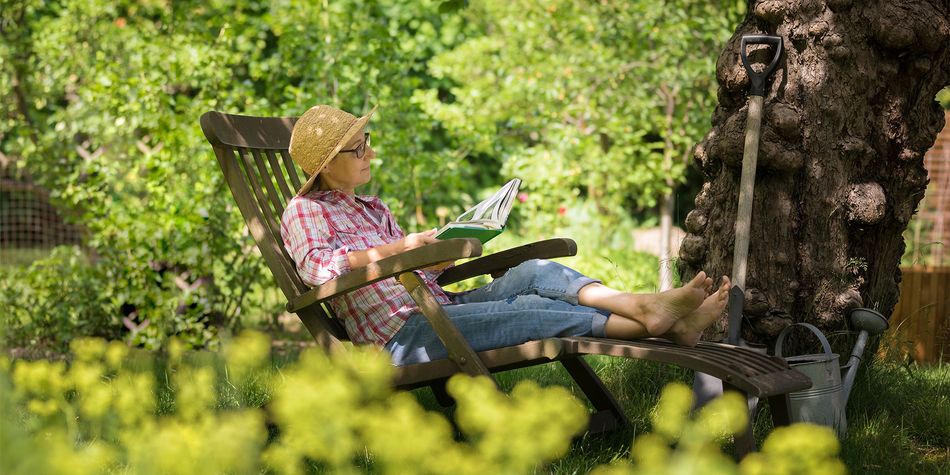
In this series, Which? members share the story of how they retired.
We’ll explore the different circumstances in which people retire and share advice to help you prepare for life after work.
In this article, Which? member David explains how he retired early to care for his wife.
‘Arranging care for my wife would have cost more than I earned in a month’
David retired at 62 to care for his wife Cecilia, who had been diagnosed with muscular dystrophy as a teenager.
During the 2000s, the couple lived and worked in Essex. They adapted their home so that Cecilia could carry out everyday tasks independently, and worked together for a period – first for a local authority and later for a retirement housing company.
However, as Cecilia’s condition progressed, working became more difficult. In 2021, she decided to take early retirement on medical grounds, aged 53.
David had supported Cecilia since their marriage, finding ways to balance caring responsibilities with his full-time job for a retirement housing company. ‘I was able to work from home, which she loved!’ he said. But in 2022, changes to David’s position made this much more difficult, and the couple decided to look for a carer to help Cecilia with daily tasks.
As Cecilia wasn’t eligible for local authority funding, they would have to cover the costs themselves. David said he was quoted £900-£1,200 a week by the care agencies he contacted. ‘It would have cost more than I was earning in a month,’ he said. ‘That’s when Cecilia and I decided I would look into early retirement.'
The care crisis
Experts and charities have warned that the social care system is in crisis after years of underfunding.
According to the Home Care Association, £34.42 is the minimum rate at which services can provide home care while complying with employment and care regulation obligations in 2026-27 (more would be needed to fairly recognise the work carers do). However, many councils and NHS bodies pay less than this.
Unpaid carers are increasingly relied on to fill a gap in care provision. According to a 2025-26 survey by Carers UK, 35% of carers who had given up work said more affordable, accessible, or reliable social care services would have prevented them from reaching a tipping point.
Get to grips with pensions, boost your retirement income and enjoy the lifestyle you want with our expert tips.
Our Retirement Planning newsletter delivers free retirement-related content, along with offers from third parties and details of Which? Group products and services.
How I funded my retirement
David received guidance from the free government-backed service Pension Wise before seeking independent financial advice.
Cecilia and David both had defined benefit pensions from their time working for local authorities, as well as David’s military pension and defined contribution pensions from the retirement housing company they had both worked for. ‘Taking early retirement did impact my savings, but we were confident the other pensions provided enough to live on,’ David said.
The decision to retire early involved selling the flat that David and his brother grew up in. With the help of his financial adviser, David transferred his workplace pension to a new provider and topped it up with money from the sale.
He was still a few years off state pension age, but David expected to receive the full amount when he became eligible.
However, he’s recently been told there are gaps in his National Insurance record. ‘That came as a surprise,’ he said. David plans to speak to his financial adviser to work out what’s happened, but says it’s really important to check that your state pension forecast and National Insurance records are up to date.
David says that when it comes to retirement, the most important thing is not to put off the planning: ‘It’s really something you need to prepare for,’ he said. ‘You need to be confident you’ll have enough to get your shopping and pay your bills. I wouldn’t recommend anyone say "I’ve had enough, I’m retiring on Monday".’
Are you retired? We’d like to hear from you about how you retired and how you’re adjusting to life after work.
If you’re interested in featuring in this series, please send your retirement story to retirement@which.co.uk.
We won’t publish any information you send us without your consent. We’ll store your data securely. For further information about how we handle your data, please review our privacy notice: www.which.co.uk/privacynotice.
My retirement lifestyle
David with a Galápagos tortoise. All images supplied by David
After years of juggling work and caring responsibilities, David said the adjustment to retirement was ‘remarkably easy’.
The early days were focused on supporting Cecilia: ‘I became a full-time carer,’ he said. This involved supporting Cecilia at home and travelling to London for medical appointments. David said the Motability scheme allowed them to live with more independence: 'Cecilia leased a custom wheelchair-adapted van and was able to sit in the front.'
However, in October 2023, Cecilia's condition deteriorated rapidly, and she sadly passed away a few weeks before the couple’s 25th anniversary.
Nearly four years on, David’s embracing life in retirement. He enjoys weekly trips to the cinema and has joined his local U3A: ‘I’m doing my family history,’ he said. ‘I’m up to 5,500 people on my tree, but my friend has 32,000 on theirs!’
And he’s been travelling, something that he and Cecilia had hoped to do together. ‘Cecilia had a huge list of places she wanted to visit,’ David said.
David has just returned from a trip to Ecuador and the Galápagos – a trip that had been on the couple’s bucket list. ‘It was absolutely fantastic,’ he said. ‘I stood either side of the equator and saw hummingbirds, blue and red-footed boobies, pelicans, penguins, sea lions and Galápagos tortoises.’
Make money make sense
Reach out to our money experts to discover smarter ways to spend, save and manage your money. Our regular guidance will help the penny drop all year for only £36.75 that’s 25% off.
Save 25% – was £49, now £36.75 for a year, offer ends 19 October 2026.
What you need to know about early retirement
1. Consider the impact on your retirement savings
Early retirement normally means taking a smaller pension, and you'll need to take this into account.
If you have a defined contribution pension, you’ll miss out on additional contributions and potential investment growth.
If you have a defined benefit pension, and your annual payments are usually significantly reduced.
Use our pension calculator to estimate how much your savings could be worth at retirement, or contact your provider for an illustration of what you’ll get if you retire early.
If you’re retiring on medical grounds and have a defined benefit pension, you may receive additional years of service to make up for the years you’re unable to work. Speak to your provider for more information.
2. Understand your retirement finances
You’ll need to spend some time considering where your income will come from in retirement: many retirees rely on multiple income sources, including pensions, savings, investments and part-time work.
You’ll also need an idea of your outgoings, as your spending habits may change in retirement. Pension UK’s retirement living standards are a good starting point for thinking about how much you’ll spend.
3. Know when you can access your pension
Under current rules, the earliest you can access money in your private pensions is 55 (in most circumstances).
This will rise to 57 in 2028 – and those who turn 55 between 6 April 2026 and 5 April 2028 should pay particularly close attention to how the rule change will affect them.
You may be able to access your money earlier if your pension scheme has what’s known as a ‘protected pension age’. Speak to your provider if you’re unsure.
4. Different rules apply if you retire on medical grounds
You may be able to access your pension earlier than 55 if you can’t work due to illness or disability.
You’ll normally need to provide medical evidence that you can’t do your job, or a similar one. Application processes and eligibility criteria vary between pension providers; check your pension scheme documents or contact your provider for more information.
5. Understand how much state pension you’ll get
Retiring early could result in a smaller state pension, as the amount you get depends on how many years of National Insurance contributions you've made. You’ll need at least 10 years to receive any, and 35 years to receive the full amount.