- eco buy
Get Digital access at £5 per month for your first 3 months, cancel at any time.
Already a member?Log in

Michael joined Which? in 2017 and is the senior researcher on the Cars team. He’s passionate about improving safety and fairness for all road users — from drivers to pedestrians.

Plug-in hybrid cars (PHEVs) are more popular than ever, with sales increasing by more than 40% in the past two years according to recent data.
It’s not hard to see why PHEVs are selling so well. They get big tax breaks and you see some pretty amazing mpg claims.
I’ve long thought that the next car I buy will be a plug-in model: either a PHEV or an electric car (EV). But I’m holding off on my purchase because public charging is too expensive, particularly in London and the South East. I also can’t charge at home.
If the oft-rumoured VAT reduction on public charging ever happens, that will be the trigger that starts my search. However, I recently completely ruled out buying a plug-in hybrid instead of an EV.
At a glance, PHEVs appear to offer the perfect blend of cheap electric motoring with fossil-fuel-powered long range. The appeal is real, and I’d be lying if I said I haven’t ever been tempted by them. It’s EV life on easy mode – at least that’s how it looks on the surface.
But when I looked into the data, I found too many downsides that, for me, mean they make little sense in reality. And I think that's probably true for many other people (though my colleague, Dino, has a different view on this).
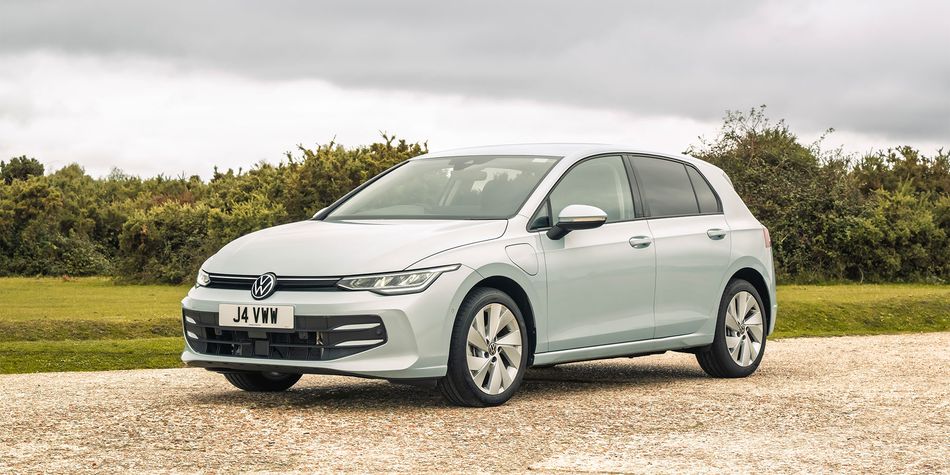
Don’t get me wrong, I’m not one to yuck people’s yum, and there are reviews of some cracking PHEVs on our website (some are Best Buys) that deliver a great mix of driver enjoyment and comfort. I recently drove the latest PHEV Volkswagen Golf, and it was a surprisingly peppy and enjoyable car to drive.
But a car simply being good doesn’t mean it’s right for everyone.

First, I’ll lay out the perks.
They’re mostly related to running costs – PHEVs are particularly cheap to tax thanks to generous benefit in kind (BIK) tax breaks for company car drivers. And if you can charge at home, and don’t drive far each day, the fuel costs of a PHEV can be very low as you’ll barely ever use the petrol or diesel engine.
For those occasional journeys where you do go further afield, you’ll be able to drive 500 miles or more without needing to stop to fuel up. But if, like me, you rarely drive that sort of distance, you might as well just get an EV instead.
Yes, on very long journeys with an EV you’ll have to stop at a rapid charger – which isn’t cheap – but most modern EVs charge significantly faster than a PHEV. With an EV, it takes around 15-35 minutes for a full charge and a couple of hundred miles of range; it's three-plus hours for around 60 miles of range on a PHEV (most PHEVs can’t use rapid chargers).
In other words, once you’ve set off in a PHEV, you’re not going to be charging your battery on the cheap – or quickly – before arriving at your destination. You’re stuck paying for petrol or diesel.
And therein lies one of the biggest problems with PHEVs: once the battery is depleted, you’re now effectively lugging around a large battery but unable to use most of it. Yes, your car will still recover some energy when decelerating, but what you’re essentially driving is a very heavy 'self-charging' full hybrid.
A PHEV with an empty battery is the least efficient type of car, at least in our lab tests, which means the benefits of driving even 50 or so miles on EV mode quickly diminish. The average petrol PHEV, according to our data, gets 32.3mpg on the motorway and 47.1mpg in town once the battery is depleted. Meanwhile, the average full hybrid will get you 37.4mpg on the motorway and 66.1mpg in town. For higher-mileage drivers, this could have a big impact.
When running on the electric motor, PHEVs are also generally significantly less efficient than EVs. This is due to the electric motors having to carry around an often redundant petrol or diesel engine.
We’ve reviewed only one PHEV that’s efficient enough to be a Which? Eco Buy (Which? members can see which one below).
Get Digital access at £5 per month for your first 3 months, cancel at any time.
I drive my self-charging hybrid car as efficiently as I can and I take immense joy in knowing that every time I slow down, I’m charging up my battery for the next traffic light, hill or overtake.
In a PHEV, I know I’d be immensely frustrated on every journey knowing just how much dead weight I’d be carrying around.
There’s more. Our data suggests that plug-in hybrids are more expensive to own in the long run. According to our annual Which? car survey (63,000 respondents between April and June 2025), owners of PHEVs up to four years old paid on average £444 each time they took their car for a service.
This compares unfavourably to electric cars both in terms of cost and frequency. EV owners paid £351 on average, and 55% took their car for a service – in most cases, EVs don’t need annual servicing. This compares with 69% of PHEV owners.
According to our survey, plug-in hybrids are also less reliable than any other type of car, with 44% of cars suffering at least one fault compared to an average of 32% for all cars aged 0-4 years.
Of course, there are plenty of PHEVs that buck this trend – Volvo’s PHEVs get a decent overall reliability rating of four stars – but there are no PHEV brands or individual cars that get five stars for reliability in our survey.
See reliability and cost of ownership data from all the big brands in our guides to the most reliable car brands, most reliable cars and servicing and repair costs
And things are set to get worse. From 2028, PHEV owners will pay 1.5p for every mile driven to make up for the assumption that PHEVs pay less fuel duty thanks to their ability to run on electricity alone, regardless of how far your PHEV can go on a single charge and how much you spend on petrol or diesel for it.
At the same time, BIK tax rules will change, meaning PHEV company car drivers could pay significantly more in tax if they get another PHEV in the next few years. Meanwhile, EVs will be taxed at less than half the rate.
So is the PHEV dream actually just a pipedream? Not for everyone, no. But anyone considering a PHEV should also consider their driving habits and longest journeys to see whether a standard EV would do the trick instead.
Or if you can’t charge at home, look to the best self-charging hybrids instead for that bit of extra fuel economy.

Dino Buratti, Which? researcher
As Michael has explained, there are many reasons why you shouldn’t buy a PHEV.
I’ve driven PHEV versions of cars, such as the Audi Q8 and Hyundai Tucson, that use far too much fuel when the battery is empty to be viable options for most people. But as someone with the ability to charge at home, I certainly wouldn’t rule out the entire PHEV market for myself.
Most PHEVs I’ve driven fall into two categories: they either have a large battery and a correspondingly long EV range (like the Audi A3 and Volkswagen Golf) or have clever hybrid systems that allow them to recuperate as much electricity under braking as possible (like the BMW 5 Series Touring and Lexus RX).
As a result, these cars (in my experience) offer similar fuel economy with an empty battery when compared to non-PHEV rivals.
I’ve also seen heavily discounted new and nearly-new versions of these cars advertised online, which means you may be able to get a PHEV (which typically have more power than non-PHEV cars) for the same amount as a petrol or hybrid car.
Perhaps the most intriguing PHEV option for me is the range of diesel plug-in hybrids that Mercedes sells. Despite the high cost of diesel, the GLC 300de model is one of the most frugal PHEVs we’ve tested when driven with battery assistance and doesn’t use too much fuel when the battery is empty.