Where to next?
Discover inspiring destinations, recommended by our in-house travel experts. Know the best places to go, who to book with and how to pay less.
Join Which? Travel
One of the UK's most trusted travel journalists, our award-winning travel editor spent a decade writing guidebooks around the world. Since 2016, he has been recommending where to go, who to go with and championing passenger and holiday rights for Which?

When I tell people in this country that I'm Irish, the most common response I get is 'I really must visit.
It's estimated that less than a third of English, Scots and Welsh people have visited Ireland. Now, there are reasons for that. Connemara, as beautiful as it is, is not the Costa Blanca. Still, for most of the UK, Ireland is the closest and easiest country to holiday in.
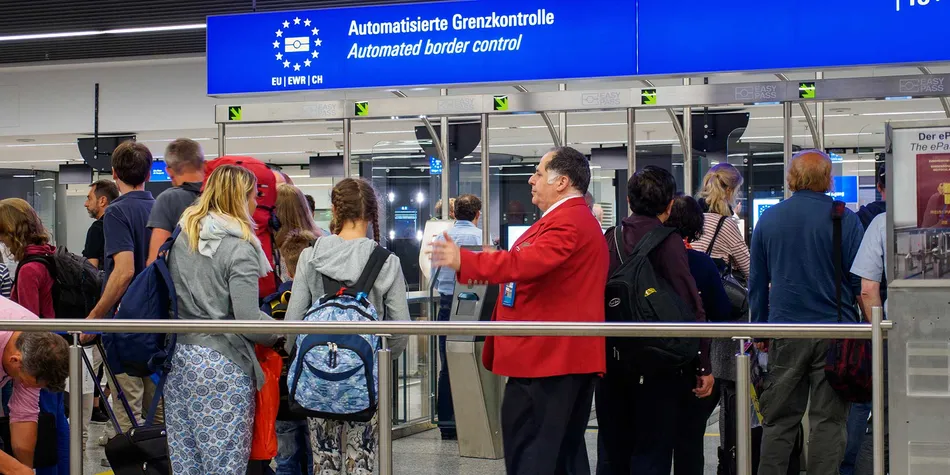
There are cheap flights from almost every UK regional airport and, unlike travel to the rest of the EU, you'll never be fingerprinted - EES does not operate in Ireland. In fact, the Common Travel Area means you don't even need a passport to jump on the ferry; a driving licence or bus pass will do.
You will also be welcome. A difficult history, yes, but more shared in culture and character, from sport and self-deprecation to pints and tea drinking. Similar, but not the same. There is also much in Ireland that is unique and extraordinary. The scenery in the west is unmatched on these islands in its wildness, the friendliness of local villages uplifting, and I can confirm the pubs are the best in the world. You must go.
This article first appeared in full in Which? Travel magazine.
Discover inspiring destinations, recommended by our in-house travel experts. Know the best places to go, who to book with and how to pay less.
Join Which? Travel
The 700ft Cliffs of Moher, dramatic scenery along the Ring of Kerry and the 40,000 otherworldly volcanic columns of the Giant's Causeway are rightly regarded as Ireland's blockbuster landscapes.
Each is extraordinary, but also very busy, and Ireland has many places just as spectacular with fewer tour buses.
Remote and breathtakingly beautiful, Connemara is a mercurial landscape of bogland spread across the region like carpet. Cradled by the ocean on three sides, Atlantic weather systems constantly sweep over the waterlogged peat fields, ponds, glacial crags and the Twelve Bens mountain range, creating a perpetual dance of gloom and ephemeral brilliance.
Just north is Croagh Patrick, a mountain where St Patrick is said to have fasted for 40 days to banish snakes from Ireland, and large, if dwindling, numbers of pilgrims ascend barefoot. Tackle the moderate three-hour climb for a seemingly infinite horizon over hundreds of small islands and drumlins scattered across Clew Bay. Clifden, Connemara's capital, is a good base for the trip; it specialises in big sky views, excellent seafood and pubs that hum to the sound of fiddles.
For a more classic Irish landscape of fields in a thousand shades of green, you could land almost anywhere and be happy, but the Dingle Peninsula is in my opinion the prettiest. Rolling green hills and patchworks of emerald fields dip to meet Blue Flag beaches and Atlantic rollers.
The 40km Slea Head Drive (and there are some tour buses on this one) loops around all the best jaw-dropping spots. You start and end in Dingle, a cosy fishing port set round a high street of candy-coloured restaurants and gift shops, and renowned for its traditional pubs. It's only an hour to Killarney, where tours round the Ring of Kerry start.
Arguably, only Ireland could produce 'fertile rock' – the best way to describe the 138 square miles of otherworldly limestone landscapes of the Burren, a Unesco Global Geopark. Crafted by a retreating glacier, the great curves of karst hills are split by bursts of grass, and hundreds of orchid species. This biodiversity is thanks to fissures in the limestone that create microclimate pockets and make this the only place in the world where Arctic and Alpine plants grow alongside Mediterranean ones.
Visit in spring for maximum colour. The villages of Ballyvaughan and Kinvara are both pretty bases, or, if you want something livelier, it's just an hour from Galway.

Irish cities are great for long weekend breaks because they are small enough to be walkable, safe and friendly.
Dublin excels at culture, especially with its rich literary history, and nightlife, but is eye-wateringly expensive. Belfast is cheaper and easily as much fun. It's generally agreed (except in Dublin and Cork) that Galway is Ireland's best city, in part because it's the most distinctly Irish; you'll hear some Irish spoken and there is a passion for celebrating Irish culture and music. It's friendlier and more relaxed, making it a better reflection of the rural towns that are Ireland's beating heart.
Ireland's smallest county town, Carrick-on-Shannon, will give you a truer sense of Ireland. Tractors still roll along the main street, and farmers talk cattle prices with local politicians over bowls of vegetable soup at the 200-year-old Bush Hotel bar. But this quaint market town is also a popular escape for Dubliners looking for a slow-paced break somewhere stunning.
Independent and family-owned shops and cafés line the high street, there is Michelin Bib Gourmand food at the Oarsman and a quick boat lesson at the Marina qualifies you to explore 50 miles of loughs, canals and river along the Shannon-Erne Waterway. Just avoid Carrick during weekend evenings when the pubs wrestle with visiting stags and hens.
Carrick-on-Shannon was one our nine underrated city picks for 2026
In summer, head for Dunmore East. Set in Ireland's hopefully named sunny south east (the sun does have a better track record of turning up here than in the rest of Ireland), this small seaside resort cradles a bay of soft sand against cliffs in golden gorse and swaying cabbage palms.
It's just up the road from Rosslare, where the Fishguard ferry pulls in.
Kinsale and Cobh, 30 minutes from Cork, often grace lists of Europe's most charming towns thanks to their painted houses, handsomely arranged around harbours, and dozens of restaurants famous for seafood. The drawback is that any visit is shared with half of Ireland – the small streets are packed at the weekend.
Instead, go west.It's just an hour from Cork to Clonakilty, where you'll find the same pretty harbour setting (and a sweeping Blue Flag beach too) but half the crowds and cost. World-class produce from the Atlantic and its rural hinterland make everything you eat here extraordinary. It's famously home to the country's best ingredients for a full Irish breakfast, while Whale Tail on the waterfront serves up delicious smoked salmon from just up the road.
The town sings and dances to cultural events, while the dramatic peninsulas of West Cork are a playground for kayaking, paddleboarding and whale watching.

With nearly 800 years of colonisation and plantation, much of Irish history and culture, from museums and monuments to poetry and song, springs from rebellion. You can hear it in the music at a 'trad' session of Irish folk music in pubs across the country. Dingle, Doolin and Ennis are all excellent places to experience both the beauty of laments and rousing revolts.
In Dublin, walking tours of the events of 1916, or a visit to Kilmainham Gaol, where the leaders of the uprising that led to freedom for most of Ireland were executed, are popular, poignant and fascinating, but perhaps more meaningful is a visit to the Gaeltacht.
British rule almost killed the Irish language, and just 2% of the population use it in everyday life in areas collectively known as the Gaeltacht. Take the 40-minute boat from Rossaveel to the Aran Islands – the last stop before North America – which is celebrated for connections to Irish language and traditional culture.
Learn cúpla focal (a few words) to use when buying an Aran sweater, sailing around the magnificent coastline in a traditional currach boat or being swung around in a ceilidh at one of the half a dozen pubs.
Irish, and Celtic, mythological stories of giants, fairies and heroes still play a big part in contemporary identity, art and literature. No more so than Newgrange – one of the oldest buildings in the world.
Built by Stone Age farmers more than 1,000 years before Stonehenge, and covering an acre of land, the grass-covered roof of this prehistoric temple remains wholly intact (and still waterproof) while many of the huge kerbstones ringed around it are carved with Megalithic art. You'll need to book a tour in advance to step inside the inner chamber.
To understand modern Ireland, and why brightly coloured flags swing from every front garden, get yourself to a GAA (Gaelic Athletic Association) game. Hurling and Gaelic football are cornerstones of community identity, and every parish, no matter how small, fields teams.
County teams enjoy huge rivalries – millions watch the biggest games. Both are fast and aggressive games, which make for an electric (but friendly) atmosphere. For maximum excitement, head to Semple Stadium, Thurles in County Tipperary, the GAA's spiritual home, where up to 46,000 fans shout on their heroes.

From the smallest hamlet to the biggest city, you'll find great pubs full of character and characters all over Ireland (apart from Dublin's Temple Bar, a tourist trap selling overpriced Guinness to stag dos).
The best Guinness is at the Guinness Brewery bar, but it's £20 to visit, and most Dublin pubs serve excellent pints anyway – try the traditional ones along Baggot Street.
The quality of local produce is noticeable here, and Ireland's dozens of Michelin stars are built on the abundance of high-quality ingredients from pastures, farms and fishermenThere are oyster farms and festivals along the Atlantic coast; try the creamy seafood chowder for a tenner at Nancy's Barn (Ballyliffin, Co. Donegal) or freshly hooked fish and chips on stunning Strandhill beach at Shells Cafe (Co. Sligo).
Irish comfort food is a bowl of vegetable soup, a creamy mix of potatoes, leeks, onions served with a slab of brown soda bread served in many pubs for just six or seven euros.
You won't have to worry about a heatwave ruining your summer holiday – average highs rarely reach 20°C.
But while rain has ruined many a fine Irish summer holiday, the truth is, the risk is not that much greater than in the UK. It rains less in Dublin than in Manchester, for example. It is a lot wetter in the west – where you might expect rain every other day in July and August. In short, don't come in summer if pulling on an anorak will upset you.
April, May and early June are the driest months, while Ireland's northerly latitude means there is no astronomical night around the summer solstice, as the sun only just dips below the horizon, leaving a hallowed twilight.
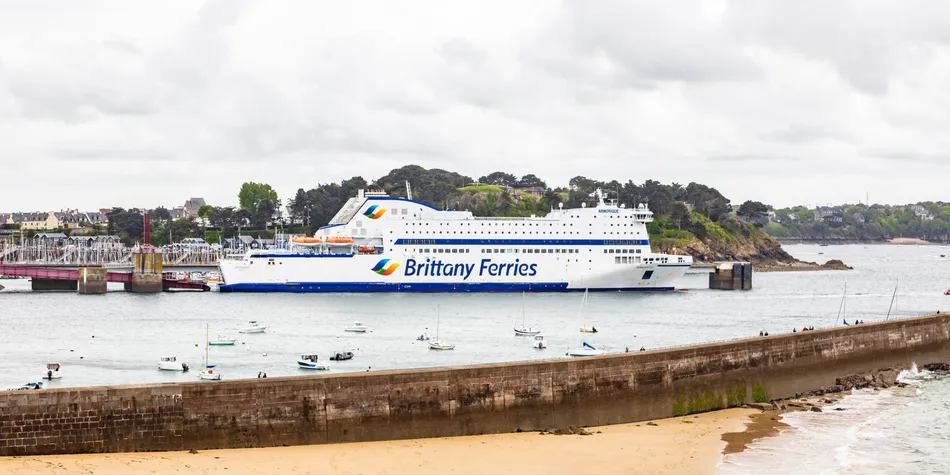
Flights are frequent, available from most UK airports and cheap. If you're taking a car, the ferry from Holyhead, Fishguard, Cairnryan and Liverpool can be a bargain. While foot passengers can use rail sail with Irish Ferries or Stena Line; a combined train and ferry ticket from any UK train station to Dublin or Rosslare from £100 return.
Irish Ferries vs Stena Line -check our best and worst ferry ratings
British citizens don't need a passport to enter Ireland because of the Common Travel Area agreement; however, most airlines (including Ryanair and Aer Lingus) now require one to check in. If travelling by ferry, you can use almost any UK photographic ID to travel, such as a driving licence, bus or train pass or international student card.
There are no Entry/Exit System checks on UK citizens in Ireland. There are rarely any border checks at all at ferry ports, and at the airport you join the same queue as Irish citizens.