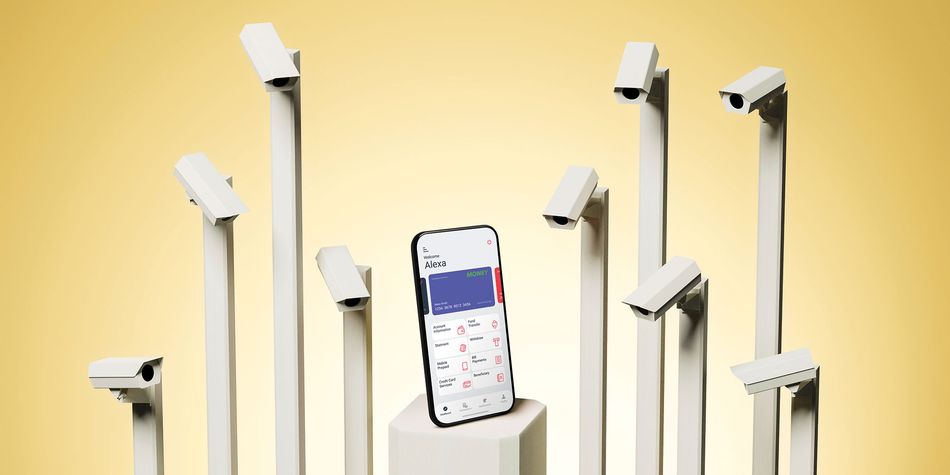
Banking app outages have become an all-too-common feature of modern life, with major incidents routinely locking out millions of customers at once.
According to our research on banking outages, Santander and its digital brand Cahoot experienced the highest number of outages between April 2025 and March 2026. Lloyds Bank followed with 22 reported incidents, while Bank of Scotland and Halifax recorded 20 each.
If you are caught in an outage, you do have rights – and in some cases, you may be eligible for compensation.
Here, we explain what to do if your bank goes down, when you could get compensation and how to protect your money.
Why banking outages matter
Banks rely on complex digital infrastructure, third-party vendors, and real-time payment networks. With many institutions depending on the same handful of major cloud providers, a single technical fault can quickly cascade across hundreds of financial services.
Over recent years, recurring outages have prevented customers from:
- Accessing accounts and online banking services
- Making card payments
- Transferring funds
- Receiving wages
- Paying bills
- In several instances, individuals have been left unable to withdraw cash or make essential purchases for hours.
The Treasury Committee has warned that repeated disruptions risk eroding confidence in the banking sector. This is a problem compounded by widespread branch closures, which can leave you with fewer physical alternatives when digital systems go down.
How could outages affect your finances?
Failed direct debits are often where outages become genuinely costly. Missing a payment could cause you to incur late payment penalties, overdraft fees, disrupted services, cancelled subscriptions, or missed loan and credit card payments.
An outage can also pose a serious risk to your credit record. If a payment bounces because your account was inaccessible, lenders may automatically log a missed payment with credit reference agencies. You can check whether your score has taken a hit using free credit-checking services such as ClearScore or Experian.
If an outage leaves an inaccurate marker on your report, notify both your bank and the company that received the failed payment. Then ask your bank for written confirmation that the missed payment was caused by an IT failure on their end. Supply this evidence to the lender and request that the mark be removed from your credit history.
key information
Can you get compensation?
Banks aren't legally required to pay compensation just because they experienced an outage or technical issue. The system for banking companies differs from that of the telecoms industry, where compensation is due for loss of services like broadband.
However, you may be entitled to a payout depending on the extent to which the disruption negatively affected you.
This can include missing bill payments that result in late payment fees or overdraft fees due to the outage, as well as a negative impact on your credit score. The amount of compensation will depend on how you were impacted by the outage.
4 steps to take if you experience a bank outage
If you are affected by a banking outage, you should follow these steps:
1. Contact your bank
If you can, go to your local bank branch – especially if you urgently need to access your money. If you don’t have a local bank branch nearby or transport to get to it, try to call your bank and ask for its guidance on what to do.
That's assuming telephone banking isn't also down. If that's the case, or lines are busy, try contacting your bank on social media if it has a verified account to ask what to do. But don’t ever share your account details over social media.
If a bill payment or direct debit may fail because of the outage, contact the company expecting payment as soon as possible. Explaining the situation early can sometimes prevent penalties or negative reporting.
2. Gather evidence
If your bank cannot fix the issue or does not respond to you, then you should start gathering all the evidence you need for a formal complaint. This evidence should include:
- Financial records: Statements showing any charges or fees directly resulting from the problem. You can also include receipts such as bus tickets/petrol receipts if you had to travel to a branch.
- Proof of contact: Emails, logs, conversations with customer support, or social media posts proving you contacted your bank when the issue arose. Include all forms of contact across the outage.
- Impact documents: This includes examples such as your credit score if it was negatively affected due to missed payments.
Screenshots can be especially useful if services are restored quickly and evidence later disappears. You should also keep a timeline of events, including when the outage started and how it affected you financially.
3. Complain to your bank
Complain to the bank and ask for compensation to cover the losses, and ask it to take all the steps to put the situation right.
In your complaint, make sure you include:
- Who you spoke to at the bank during the outage – include when you spoke to them and what they advised you to do.
- The losses you suffered as a result of the outage – include the service you wanted to perform, what happened to you as a result and any financial and emotional distress this caused you.
- What you want the bank to do to put things right – include the amount of compensation you expect and when you expect to be compensated.
4. Complain to the FOS
If you are unhappy with how your bank dealt with the problem or if your bank or provider refuses to rectify the issue or cover associated costs, you can contact the Financial Ombudsman Service (FOS), which has official powers to help customers solve problems with their banks when they can’t agree.
The FOS will look at the facts, ask questions and make a decision on the fairest course of action. The Ombudsman can order a bank to pay compensation if it finds the customer was treated unfairly or was left out of pocket.
The FOS can also tell the bank to take steps to make sure you’ve not lost out any other way – for example, by telling them to correct your credit file. The FOS can usually get involved 15 days after you’ve raised your concerns with the bank – but sometimes it can be even sooner.
How to protect yourself before the next outage
While you cannot completely protect yourself from bank outages, there are a few ways you can protect yourself if you experience one:
- Keep a small amount of cash with you for daily basics like food, travel, and emergencies.
- An outage might only affect the mobile app. Try logging in through the bank’s website on a computer, or use telephone banking. Keep your login details written down and hidden in a safe place.
- Set up a free backup account with a different provider and keep a small amount of money in it so you can still pay for things if your main bank goes down.
- If your bank has frequent technical issues, think about moving your money to a more reliable provider.
Find out more: how to take a complaint to the Financial Ombudsman Service
key information
'Beware of scammers taking advantage of outages'
When banking outages make headlines, scammers frequently attempt to exploit affected customers.
Which? Scams and consumer rights editor Lauren Deitz advises: 'Always be cautious of acting on any request to share personal or financial details, or account information.
'If you receive a message you are worried about, contact the relevant organisation by another means, but be aware their phone lines will be very busy during any outages, so only do this if it's urgent. You can contact your bank by using the number found on the back of your card, or by dialling 159 to be connected to its fraud team.'