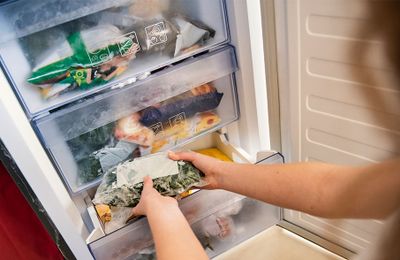
Which? scientist explains what freezer burn is and how to prevent it

Fran scrutinises over 100 fridges, freezers and fridge freezers a year, to help you know what's hot, and what's – thankfully – not.

With a Masters in biochemistry, Monika applies scientific principles to rigorously test products from fridge freezers to air purifiers.

If you’ve ever unearthed a forgotten steak from the back of the freezer only to find it covered in dry, greyish patches, you’ve witnessed freezer burn.
While it may look like a reason to bin your groceries, understanding the science behind this 'cold dehydration' can help you save money and keep your food tasting better for longer.
We spoke to Monika Gil, Which? senior scientific adviser, to find out more about the chemistry behind freezer burn, how to avoid it and why freezer-burned food is still safe to eat.
Best fridge freezers: see the fridge freezers that aced our tough and independent lab tests
What is freezer burn and how can you spot it?

Freezer burn occurs when meat is exposed to the harsh cold air of the freezer for an extended period, developing a greyish-brown discolouration and a harsh, leathery texture on the surface.
Monika explains: 'It's caused by the loss of water through a process known as sublimation, where ice crystals turn directly from a solid into a gas without melting first. As this moisture escapes, it leaves behind empty spaces in the meat, which are quickly filled with air. This leaves the previously moist cut of meat dehydrated, making its texture significantly denser and rubberier.
'The oxygen from the air is able to penetrate these new gaps in the meat, too, leading to an oxidation reaction. Because fat is particularly sensitive to oxidation, foods with a high fat content will typically have a much shorter shelf life in the freezer. In red meat, this reaction affects myoglobin, the protein which gives meat its colour, oxidising it and turning the tissue from a fresh red to a dull brown.'
What temperature should a freezer be? Read our guide to find out.
What causes freezer burn?
As freezer burn is caused by moisture escaping from your food, it's more likely to affect items that aren't securely sealed in airtight packaging. For example, if you only use one or two items from a pack or box, it's worth transferring the rest to a sealed container or a heavy-duty freezer bag, removing the air before sealing. Remember to label what the contents are and how to cook them before you dispose of the packaging.
The longer food is left in the freezer, the greater the chance of freezer burn occurring, so it's best not to leave food in there for too long if you can avoid it. Getting ahead by freezing the Christmas meat in summer might seem like a good idea, but you could regret it come the big day.
Stock up with our guide to the best freezers and chest freezers for garages.
What foods are prone to freezer burn?
While meat is often impacted by freezer burn, it's not the only food prone to it, so vegetarians and vegans should take note.
Foods with a higher moisture content are more susceptible, including fish, fruits, vegetables, ice cream and sorbets. Ice cream and sorbet won't experience the same discolouration as meat, but will instead be coated in large ice crystals and have a gritty texture, while fruits and vegetables become visibly dry and shrivelled.
Starchy foods, such as baked goods and cooked grains, tend to develop a rougher texture, which you might have experienced if you store bread in the freezer for toasting.
It's not just visual clues that can alert you to freezer burn. Affected food can have a stale, cardboard-like smell.
When it comes to fruit and veg, is fresh always best?
Freezer burn vs ice crystals: what's the difference?

It's important to distinguish between these two conditions, as freezer burn is an irreversible chemical change to the produce's surface. Once it has occurred, the colour and the texture of the food have changed permanently and cannot be restored by cooking.
However, there's no need to panic if you spot ice on frozen food.
Monika says: 'While ice crystals can be a precursor to freezer burn, the produce hidden under them could still be perfectly fine. In many cases, these crystals will simply melt away during the thawing process, leaving the produce as good as the day you first froze it.
'Fruits or vegetables can be refreshed by rinsing off the ice crystals in cold water, then leaving them in a bowl of water to rehydrate. You can also scrape off any ice crystals from ice cream or sorbet before eating to avoid crunching on ice.'
Freezer icing up? See how to defrost your fridge freezer.
Freezer-burned food is still safe to eat – but why?
Monika says: 'While the chemical changes to the food may sound scary and even look unappetising, this doesn't change the fact that it's still safe to eat.
'The temperature in a standard freezer is low enough to stop the growth of bacteria and mould entirely. Ironically, the water loss that causes dehydration is also inhospitable to pathogens, which require moisture to grow and multiply. In this sense, freezer burn actually contributes to the food's biological safety, even as it ruins its quality.
'Ultimately, there will come a point where the texture degrades to such a level that the food simply becomes not worth eating, but it won't make you ill.'
Reintroducing moisture when cooking can help make freezer-burned food more palatable. Poaching, marinating, stewing or braising food, or incorporating it into soups can rescue it. If only a small area of the food is affected, you can trim this and cook the rest as usual.
Five reasons your fridge smells – and what to do about it.
How to prevent freezer burn

By following a few simple tips, you can help reduce the risk of freezer burn affecting your food.
- Banish the air Use a vacuum sealer or the ‘water displacement’ method to remove as much air as possible from bags before sealing. To do this, place the food in a bag, seal it almost completely and slowly submerge it in water, leaving only the tiny opening above the surface. The pressure forces air out, preventing freezer burn.
- Double-wrap for safety Wrap items tightly in plastic wrap or foil before placing them in a freezer bag to create a protective ‘second skin’. For ice cream, press a layer of plastic wrap, wax paper or parchment paper directly onto the surface of the ice cream before sealing with the lid to prevent air exposure.
- Prioritise stability If you're buying a new appliance, choose a model with high temperature-stability ratings to prevent the fluctuations that trigger moisture loss.
- Keep it ‘full-ish’ A well-stocked freezer stays cold more efficiently than an empty one, as solid food retains its temperature better than air. But avoid overcrowding your freezer. A packed freezer can struggle to keep items at a consistent, safe temperature, as air can't circulate as well, increasing the risk of freezer burn.
- Minimise ‘headspace’ Fill containers as close to the top as possible to reduce the volume of air sitting directly on the surface of food.
- Label and rotate Use a ‘first in, first out’ system, dating every package to ensure you eat older items while they're still at their best.
- Cool before freezing Don't put hot or warm food directly into the freezer. Instead, let it cool down first to prevent ice crystal formation.
- Temperature management Maintain a steady temperature of -18°C. Avoid letting the freezer get too warm, try not to open the door frequently and don't keep it open longer than necessary.
Use the filters on our fridge freezer reviews and freezer reviews to find a temperature-stable appliance.
How long does food last in the freezer?

It can be tempting to freeze food and forget about it, but even under ideal conditions, your ingredients won't last forever. Here's a handy guide with the recommended maximum times you should keep different items.
| Food category | Recommended time |
| Red meat (raw steaks/joints) | 6-12 months |
| Red meat (cooked) | 2-3 months |
| Minced meats | 3-4 months |
| Poultry (raw, whole) | 12 months |
| Poultry (raw, parts, such as chicken breasts) | 9 months |
| Seafood (lean fish, such as cod) | 6 months |
| Seafood (fatty fish, such as salmon) | 2–3 months |
| Cured meats (such as bacon) | 1-2 months |
| Butter | 6-9 months |
| Cheese (hard, such as cheddar) | 6 months |
| Bread | 3 months |
| Leftovers (soups, stews, meals) | 2-3 months |
| Fruits (bananas/berries) | 6 months |
| Vegetables (blanched or par-cooked) | 12 months |
For more, see our food storage tips to help make your food last longer.