Are you wasting money on collagen supplements?

Erica is a senior presenter and producer who has spent more than fifteen years crafting stories across for major international broadcasters. At Which? she works across our award-winning audio and video content.

Public health nutritionist with 20+ years at Which? and the NHS delivering evidence-based food and nutrition insights.

Midlife can be an exciting new chapter, but it can also bring some unexpected changes to your body. Dry, itchy sensitive skin, adult acne and hot flushes are all common symptoms of the menopause. We discuss how to deal with some of these symptoms, whether retinol should be part of that fix and how skincare doesn’t need to be expensive to work.
In this episode you’ll learn the best things you can do for your skin as you age, the truth about retinol and vitamin A and why you’re seeing collagen everywhere.
We think it’s time for a better conversation that’s impartial to help us separate myths from genuine science.
This episode features Shefalee Loth. She is a nutritionist at Which? and leads the research for the health and wellbeing team. With over 20 years of experience, Shefalee’s extensive career includes working with the NHS, The London School of Hygiene & Tropical Medicine, and the World Cancer Research Fund.
We also have Dr Anjali Mahto. She’s a highly respected and renowned medical and cosmetic consultant dermatologist based on Harley Street, as well as the author of the bestselling book The Skincare Bible.
This is The Health Reset.
Presented by Erica McKoy.
Erica McKoy: Midlife can be a wonderful time. You might be starting to look back at all of your life achievements, spending more time with your loved ones, and stepping into a new era of life. But something also tends to change during this time: our bodies. You might experience weight changes, shifts in your hormones, and unexpected changes to your skin, which is the focus of this episode. We think it's time for a better conversation that's impartial to help us separate myths from the genuine science. And this week, I'm joined by two exceptional experts.
Shefalee Loth is our principal researcher and nutritionist at Which? She leads the research for the Health and Wellbeing team. With over 20 years of experience, Shefalee's extensive career includes working with the NHS, the London School of Hygiene & Tropical Medicine, and the World Cancer Research Fund.
We also have Dr Anjali Mahto. She's a highly respected and renowned medical and cosmetic consultant dermatologist based on Harley Street, as well as the author of the bestselling book, The Skincare Bible.
Shefalee, Dr Anjali, welcome to The Health Report.
Shefalee Loth: Hello.
Dr Anjali Mahto: Hey.
Erica McKoy: We've got so many questions I want to get through today, but to get us started, I thought we'd do 60 seconds on the clock, quick-fire round to get through all these questions. Let's go.
What's the single best thing we can do for our skin as we age?
Dr Anjali Mahto: Wear daily sunscreen.
Erica McKoy: Does skincare need to be expensive to work?
Shefalee Loth: No, not at all.
Erica McKoy: If you could use only one product, what would it be?
Dr Anjali Mahto: Cleanser.
Erica McKoy: Cleanser! Are LED masks worth it?
Shefalee Loth: The jury's still out.
Erica McKoy: Aside from a good skincare routine, what's the next best thing you could do for your skin?
Shefalee Loth: Making sure that you're eating well for your skin.
Erica McKoy: Inside out. Okay, cool. Is it better to drink your collagen or to apply it to your skin? Anyone?
Dr Anjali Mahto: Honestly, I'd say neither. Collagen in creams is only going to do so much, and you just want to make sure your protein intake is good.
Erica McKoy: How much does perimenopause and menopause affect the skin's collagen?
Dr Anjali Mahto: Quite significantly. Oestrogen levels drop as we age, so things can change over time.
Erica McKoy: We'll talk about that. Should everyone be using retinols?
Shefalee Loth: I think probably not – it depends.
Erica McKoy: Okay. We'll talk about that in a second. Thank you so much.
So, we spoke about skin changing as we age. I'm 30 now, my skin is different to my teenage skin, and I'm guessing it will be different in midlife. How does our skin change as we get older?
Dr Anjali Mahto: I think the biggest change and shift that we see is changing hormone levels, particularly in women. As we age, we do get declining levels of oestrogen, and there are oestrogen receptors in our skin that keep our skin plump and hydrated. So, the biggest thing that you tend to see, particularly as people hit their late 30s, early 40s onwards, due to that loss of oestrogen, is new-onset problems like dryness, sensitivity, redness, and in some people, acne breakouts for the first time.
Erica McKoy: Really? What is that all about?
Dr Anjali Mahto: As we age, oestrogen levels fall. Female patients, and females in general, also have testosterone – I know we think of it as a male hormone. But what happens is our testosterone levels stay relatively constant. As oestrogen drops, the ratio between the two hormones starts to change. So, if you end up with relatively more testosterone than oestrogen in the skin, that can drive breakouts.
Erica McKoy: What's one of the biggest things – you kind of mentioned dryness. Are there any fixes that people can do? I know everyone's always looking for a quick fix, but is there anything that anyone can do if they are starting to feel their skin's getting a bit drier?
Dr Anjali Mahto: It's interesting, because I think you're right, we do look for quick fixes. We live in the world of Amazon Prime, which is difficult in its own right. But I think what a lot of mistakes that I see happening in clinic are people not changing their skincare routine. So, you may start off with a routine that you had in your 20s or your 30s that worked beautifully for you at that point in time, but as you get older, that needs to change. That might be switching from a foaming cleanser to a non-foaming cleanser, so you're not stripping the barrier of the skin so much. Switching to a more hydrating moisturiser, so it's got ingredients like glycerin in it, ceramides in it. Possibly thinking of adding in something like a hyaluronic acid serum underneath that, so an extra layer to lock in that moisture.
Erica McKoy: And what is – we always speak of layering our moisturisation. What's the best way we can do that? What do we start with on the skin?
Dr Anjali Mahto: Always cleanse first. You want to make sure there's a nice, clean barrier and base for everything to go on top of it. Serum if you need it. And I would say serum should be targeted. So, if you are concerned about dryness, hyaluronic acid would make sensible sense. And then after that, your moisturiser, and then your sunscreen. So, that is a good morning routine.
Erica McKoy: And you do it in terms of the thickness, right? Or is that –
Dr Anjali Mahto: There is an argument for thinnest to thickness, but ultimately, the sunscreen is going to be what protects your skin from the elements and the environment, so you want that to be the last thing that goes onto the skin surface.
Erica McKoy: We've just had an incredibly hot summer, and we've spoken about the sun cream. What should people be doing as we transition from autumn into winter? I'm guessing maybe we should be changing or thinking about changing our skincare routine.
Dr Anjali Mahto: That's right. I think for a lot of people, as soon as the dark months settle in towards the end of October, it gets cold, the central heating goes on on top of that, a lot of people do find their skin becomes more dry, more dehydrated. But then also, our face is exposed to the elements. When we're out and about, the cold weather, the wind can also strip moisture out of our facial skin. Clearly, the rest of our body is protected by clothing. So, in that scenario, I do think if you know that every winter that's a problem for you, or sensitivity develops or redness develops, this is the point where you need to start switching to your heavy moisturisers and your non-stripping cleansers, and also backing off active ingredients a little bit as well. So, things like your vitamin C and your retinols.
Shefalee Loth: Okay. This is interesting, because I would have thought winter was the time that you introduce those, because of the lack of sun exposure.
Dr Anjali Mahto: So, it's interesting, because it's never a one-size-fits-all with all of these things. Retinols in general can cause dryness and irritation when you start using them. So, if your baseline is already – barrier is a little bit broken, not working as well as it should be, then you've got the elements drying your skin out, and you're trying to introduce that retinol at the same time, you could run into problems. So, slowly and cautiously is really important. There's no perfect time of year to do it.
Erica McKoy: Amazing. Thanks for bringing that up.
Okay, so we're going to get our skin in order, we're going to maybe change our skincare routine. Nutritionally, what should we be doing during this time? Is there anything we should be doing? Drinking more water?
Shefalee Loth: Yeah, always drinking more water. But I think this applies all year round, really. Try and get your five a day, your 30 different plants a week. Fruit and veg has important nutrients in it, it has antioxidants that can help prevent oxidative damage to skin cells. You've got beta-carotene, vitamin C, and vitamin E that are really important for skin cell protection from damage, but also renewal of skin cells. And vitamin C is really key for the production of collagen as well.
Make sure you're including your healthy fats in your diet, so that's from avocado, oily fish, nuts and seeds. Fibre is really important for skin as well. There's a real link between your gut microbiome and your skin barrier. So, if you have your fibre intake increased or up where it should be – and you know a lot of us aren't hitting that target of 30 grams of fibre a day – actually, that can really benefit your skin barrier. And you mentioned it, hydration.
Erica McKoy: Hydration, always. There's so much there, and I'm guessing people will be like, "Oh my god, I'm really not doing all of that!" But more than likely, we probably are?
Shefalee Loth: Absolutely. If you're eating a healthy, balanced diet, you'll be getting all those important nutrients naturally from the food that you're eating.
Erica McKoy: All of this sounds like really expensive to me. Does skincare need to cost the earth?
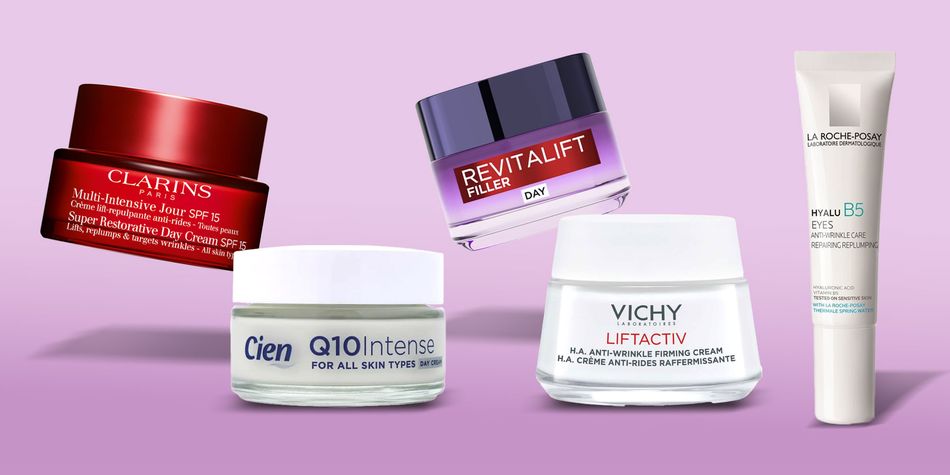
Shefalee Loth: It absolutely doesn't. And at Which?, we've tested anti-ageing creams. We carried out independent lab testing on 10 different skincare products that had 'anti-ageing' in the title, and we tested each product on 30 users aged between 40 and 65. Now, each user was scanned at the beginning of the trial for wrinkles and also skin moisturisation, and then for four weeks, they used these products on half of their skin, and on the other half, they used a simple moisturiser. So, products were blinded, so participants couldn't get influenced or biased to any product. And actually, at the end, we also took the same skin measurements. And the skincare creams that did best for us were not necessarily the most expensive. And actually, one of our great-value creams is from a supermarket. And the wrinkle reduction, the change in moisturisation was higher than some really expensive products.
Erica McKoy: What do you think of this? Because this is kind of – I think people would be really surprised about that.
Dr Anjali Mahto: It's interesting, because as a dermatologist, I agree. I don't think skincare needs to be expensive. I think it's more important to look at the ingredients that are in it. You could have a very cheap, well-formulated product, and an expensive product that really isn't. If you think about it, with a lot of this stuff, it is about branding, marketing, packaging. Why do we choose to buy a certain handbag, or a certain pair of shoes? The same goes for skincare, and I think sometimes people spend more money on skincare because it makes them feel a certain way. The click of the bottle, or how it looks on the shelf. That doesn't necessarily translate into performance.
Erica McKoy: Yeah, as we've seen.
Retinols, they're kind of seen as a bit of a magical anti-ageing – apply it to your skin, everything's going to work out. What does retinol actually do for the skin?
Dr Anjali Mahto: So, I'm going to regroup that as 'retinoids', because retinoids are the umbrella term for vitamin A compounds that you can find in skincare, and retinols are one of those. Retinols are available over the counter, they're a cosmetic product. Then you have got prescription-strength vitamin A products, which are drugs, which you would only get from a doctor.
Erica McKoy: So, is this like Roaccutane, or –
Dr Anjali Mahto: Roaccutane's a tablet, so that's separate, acne treatment. So, what we're talking about in terms of prescription are medications like tretinoin, which are used for anti-ageing purposes. And that was the original vitamin A compound that a lot of the anti-ageing skincare studies took place on, decades ago. But retinols are weaker, and you can buy them over the counter, so they're almost like a couple of steps down, effectively.
Now, the key thing with vitamin A compounds in general is they can increase skin cell turnover, they can help build collagen in the skin, so they can be useful for fine lines, wrinkles, and pigmentation. That is the benefit of their use, and that's why they are so popular in anti-ageing skincare routines.
Erica McKoy: I feel like everyone's talking about it – influencers, everyone. Shefalee, can you tell us a bit about some of these changes that are coming to retinols in the UK?
Shefalee Loth: Yeah, so there have been some changes in regulation in the UK and EU. And actually, up until now, people have been able to buy over-the-counter retinol products with a concentration of 1%. Now, actually, that has changed now, and the maximum concentration that is allowed to be sold is 0.3% for face creams, and for body lotions it's 0.05%. Now, brands are allowed to get rid of existing stock, so they have until next May, May 2027, to clear their existing stock of those higher concentrations, but after that, you won't be able to buy those higher-strength retinol products over the counter.
Erica McKoy: Do we expect that people might see this or learn about this and maybe try and apply more retinol to compensate for those few per cent that's not going to be in it anymore?
Shefalee Loth: I hope not. I wouldn't recommend that.
Dr Anjali Mahto: No, but I think you're probably right, there probably is a risk of that happening.
Erica McKoy: Should everyone be using retinols? What's our thoughts on this?
Dr Anjali Mahto: So, my answer is no. Not everybody needs it. So, I do see a lot of skincare being marketed to very, very young people that do not need to be worrying about anti-ageing. So, there's a whole conversation to be had about teenagers and what they are being sold.
You start to lose collagen from your mid-20s onwards, but then the other thing to bear in mind is also different ethnicities age differently. So, it's not simply about suddenly turning, I don't know, 30 and thinking, "I need to start this." You need to look at the person's start point.
The second aspect is it can be really irritating. Not everybody's skin tolerates it. So, the second issue there is you could actually be making your barrier worse. In darker skin types, using strong products such as these can lead to pigmentation and a worsening of other skin issues. So, it's not for everyone, and we shouldn't be starting it at a super-young age. I would look at the individual, and probably say if you're going to push me to a number, maybe in your 30s.
Erica McKoy: But it's about individual skin. Look at your own skin, maybe see a dermatologist, and have that sort of consultation.
Correct me if I'm wrong: I think there might be some new science that's going on in the retinol world where some products are less resistant to the sunlight. Is that right, or have I made that up?
Dr Anjali Mahto: It's not made up, but I think a lot of it is to do with formulations. So, I think there is a risk that these products can degrade in sunlight, but also make you more sensitive to the sun as well. So, I think that formulators are looking at ways to improve tolerability all year round, because, ultimately, you want people to repurchase that product, and if people get on with it well, they're much more likely to repurchase it. So, it's not incorrect to say that.
Erica McKoy: For the most part, though, if you were to apply a retinol to your skin, it does break down in the sunlight, that's something we know, and it can be really irritating for your skin, as you said at the beginning. As the days get shorter – maybe not – but as the days get shorter, is now a good time to start thinking about maybe trying retinol if that's something you feel like your skin needs?
Dr Anjali Mahto: I think there are pros and cons to doing it in winter over summer. There's no blanket answer here, but what I would always say, and what I say to patients in clinic, is when you start using it, you start using it at night time, after cleansing, pea-sized amount, full face, avoiding the eye area. You only start once or twice per week on non-consecutive nights, maybe a Monday and a Thursday. And if over a couple of weeks you get no redness, no peeling, no flaking, no soreness, then maybe try three nights a week, four nights a week, and so on and so forth, and a thin layer of moisturiser on top. But the point is, this is not a race. Take your time with it, and build it up slowly.
Erica McKoy: I think often what happens with a lot of people is that they try it once, and then they almost forget. They're like, "Oh, I forgot. I applied it last week, but I haven't done it for a few days now." Do you ever find that people end up trying to – as you said, keep up, and almost try and do it some more just to compensate for the time that they didn't do it?
Dr Anjali Mahto: 100%. I think people forget, and then they're like, "Oh no, I'm not going to get the benefits," and then we'll use it several nights in a row –
Shefalee Loth: Or use more in one go.
Dr Anjali Mahto: Exactly, and that will irritate the skin, so you need to be cautious and you need to be slow.
Erica McKoy: I've got a retinal here. This is different to retinol, right? What should people be looking out for if they are thinking about applying a retinal to their face? Or retinal!
Dr Anjali Mahto: So, I think this is where we go back to this idea of vitamin A compounds in general, so retinoids, that umbrella term. Tretinoin, prescription strength, ignore that. Over the counter in cosmetic products, there is a ladder of strength of these vitamin A compounds. So, there is retinal, or retinaldehyde, which is the same thing. Then you've got retinol, which is weaker than retinal. And then a step below that, you've got things known as retinyl esters, so retinyl acetate, retinyl palmitate. So, this would be on the stronger end of that ladder or that hierarchy, if that makes sense.
So, in terms of what somebody is looking for, if you know that you are sensitive skinned, you are prone to redness, you are prone to dryness, you're better off starting with a retinol than a retinal. On the other hand, let's assume your skin is quite oily, it's quite resilient, and you are a little bit blemish prone, a retinal might be a better option for you.
Erica McKoy: And you start with a pea-sized amount, always. And as you said, you're applying it to your whole face, so don't go squeezing out lots of pumps for your face. What happens if someone does? What do you typically see?
Dr Anjali Mahto: The main issue is irritation, so that will manifest as redness, peeling, flaking, soreness, and then in darker skin types, you might start noticing change in pigmentation, so darkening of the skin.
Erica McKoy: Is there anything we should be aware of when we're trying a retinol?
Shefalee Loth: So, I think as Anjali has said, you need to start small and infrequently, and build up, but there are also other active ingredients that you probably shouldn't use at the same time, and those include things like vitamin C serums, types of acids such as AHAs and BHAs, but also there are other creams that you can apply to the skin, or even medications that might make you more sensitive to the sun, that you should probably be avoiding as well, such as things like Roaccutane or products that you would use for acne.
Erica McKoy: So, let's start with AHAs. What are they?
Dr Anjali Mahto: AHA, alpha hydroxy acids. So, these are exfoliating acids, and they are very good at removing that upper layer of dead skin cells.
Erica McKoy: So, is this like a glycolic?
Dr Anjali Mahto: So, this would be things like glycolic acid, lactic acid, mandelic acid. They're the ones that you will usually see in either cleansers or in toners.
Erica McKoy: And then we had BHAs. What's that?
Dr Anjali Mahto: So, these are beta hydroxy acids, so this is your salicylic acid. And salicylic acid is really good at getting into the pore and unclogging pores, so particularly good for people who are blemish prone.
Erica McKoy: And I think most people would think, "Well, vitamin C, vitamin A, vitamins, great! Let's just apply them." But that's not the case with this. We shouldn't be layering up sort of vitamin A, which is retinol, with a vitamin C, right?
Dr Anjali Mahto: So, I would use the vitamin C in the morning and the vitamin A at night. So, the vitamin C is a really good antioxidant, so it's very helpful at reducing damage to the skin from sunlight. It can also help your sunscreen work better as well. So, if we go back to that morning routine: cleansing, serum – so, if you want an anti-ageing routine, it could be a vitamin C serum – and then your moisturiser, then your sunscreen. But at that end of the day.
Erica McKoy: And then evening, what's our routine? What are we thinking?
Dr Anjali Mahto: Cleanse, vitamin A, moisturiser.
Erica McKoy: What happens if we do apply an AHA with a retinol? What happens to our skin?
Dr Anjali Mahto: Because the AHA is exfoliating the top layer of the skin, it then means that when you put the retinol on, it will penetrate deeper, so you can increase the risk of irritation.
Erica McKoy: Super-sensitive, I can imagine.
And just to be clear, AHA is different to a HA. HA's nice.
Dr Anjali Mahto: HA is hyaluronic acid, and this is where it gets a bit confusing, because all of them have the word 'acid' at the end of them, but your salicylic, your glycolic, your lactic, your mandelic, they are exfoliating acids, whereas your HA, your hyaluronic acid, is a hydrating, moisturising acid.
Erica McKoy: So, this is drawing in moisture from your environment, keeping your skin plump. It's kind of like a – we said it in the last series, it's a bit of a – it's a nice beginner-friendly acid, right?
Dr Anjali Mahto: I wouldn't describe it that way. I would put HA into your moisturising category, and I would put the other acids into your exfoliating acid category.
Erica McKoy: We've been reviewing high-street retinols and vitamin C serums for our members, so this feels like the perfect time to mention that you can get 50% off our Which? membership in an exclusive offer to our podcast listeners. Just click the link in our show notes. You'll get access to our product reviews, our app, one-to-one personalised buying advice, and every issue of Which? magazine across the year.
But most importantly, you'll be helping us to make life simpler, fairer, and safer for everyone.
So, let me get back into the episode. We've been doing lots into LED masks. The last series, you'd have seen me head to Harley Street to get my face analysed, and to find out more on the latest round of testing, I spoke to James Aitchison, one of our senior researchers and writers here at Which?
Can you tell us how long we've been testing LED masks?
James Aitchison: Sure. It's been a while. We started testing in September of 2025. We did one round of testing with 10 masks in total. We then looked at the data and decided we wanted to see if we could get some more results, so we did two more rounds of testing. We finished the second round, and we are now in our third and final round of testing.
Erica McKoy: And we saw some different results for the summer round, right?
James Aitchison: Yes. We noticed that in almost every case, our testers saw a deterioration in redness and poor quality. This is largely due to the fact that we did the second round over summer. So, in the hotter temperatures, your skin produces more oil, this oil mixes with dead skin cells, with dirt, and that mixture clogs your pores, which causes your pores to enlarge, which resulted in these worse scores over summer. Additionally, in hotter months, your skin gets flushed, activity levels increase redness in your skin.
Erica McKoy: What about sun cream?
James Aitchison: Well, this I think is even more evidence of why you need to use sunscreen, especially in summer. Not only does the sun potentially cause skin cancer, but it does damage your skin's ability to produce collagen, which can result in premature ageing.
Erica McKoy: Looking a bit to the future, there's been a bit of a conversation about LED masks and rosacea. What do we know about that?
James Aitchison: We don't know much. This is the problem with LED masks: it's a relatively – well, at-home LED masks are a very new technology, so there isn't really a lot of peer-reviewed research, clinical trials into their long-term use at treating various ailments such as rosacea. There have been examples of dermatologists using laser therapy to treat some of the symptoms of rosacea, but there's very little evidence regarding the use of in-home masks and that kind of treatment.
Erica McKoy: So, what do we know about LED masks and the menopause?
James Aitchison: So, during the menopause, the body produces less oestrogen. Less oestrogen results in a decreased production of collagen. Collagen is the thing in your skin that gives it its flexibility and its firmness, so as that production decreases, you get more wrinkles, more visible wrinkles. So, someone who is pre-menopausal or going through the menopause is obviously going to see more visual improvements in their wrinkles if they're using a device that is reducing the appearance of wrinkles. That said, with caveats, there isn't a lot of long-term clinical studies in the use of these at-home devices to reduce wrinkles.
Erica McKoy: Thank you so much for joining me, James. Hopefully we will see the third round of results soon.
James Aitchison: Thank you very much.
Erica McKoy: And we've got one of the masks here. Shefalee, can you tell us a little bit about our second round of testing? What have we found?
Shefalee Loth: Okay, so as you said, we're on our second round of testing. We've got testers testing each of the 10 masks, and they're being scanned at the beginning of the period, they use the masks for six weeks, and then they have another facial scan at the end. And actually, our results so far have been really interesting. The first round of results, there were two masks that did particularly well – well, I say particularly well, we saw a modest reduction in wrinkles and also redness of the skin. And so with our second round of testing, we tried to recruit different types of testers, so different ages, different genders, and different ethnicities and skin tones as well.
And actually, at the end of round two, we found again that the same two masks worked the most, or were most successful in wrinkle reduction on our testers. What we saw overall on our second round of testing, which was carried out over the summer months, was that actually there was a gentle decline in everybody's skin in terms of brown spots became more pronounced, dryness, redness, all these things got marginally worse. And actually, I was one of the testers, and all of my skin measures decreased a little bit, so they got worse.
Erica McKoy: What are we putting this down to?
Shefalee Loth: Sun, essentially. And so I think it takes us back right to the beginning when Anjali was talking about how important SPF is, because across the board, we saw that decline in skin quality on all of our testers.
Erica McKoy: Interesting. Anjali, what do we think? We should be, clearly, applying sun cream, right?
Dr Anjali Mahto: 100%, and bearing in mind the summer that we've had this year as well, that does not surprise me in the slightest.
Erica McKoy: And what sort of factors should people be aiming for? Now we're out of the summer months, you said all year round, what sort of factors should we be looking at during this time of the year?
Dr Anjali Mahto: In terms of picking a good sunscreen, I think the most important things are really going for a factor 30 to 50, ideally. It should have UVA and UVB protection. And then there are a couple of nuances depending on what the issues and the underlying skin type is. So, for example, if somebody is at risk of pigmentation, they may benefit from a sunscreen which contains iron oxide or that's tinted, versus somebody who doesn't have that issue. Somebody who is acne or oily or blemish prone might want to go for a gel formulation rather than a cream formulation. So, then there are individual differences you can seek out, but the best sunscreen is the one that you're going to wear.
Erica McKoy: I think a lot of people will be thinking, "Well, I've got SPF in my makeup, I don't need to apply another SPF." What are we thinking?
Shefalee Loth: Yeah, so this really frustrates me, actually, because lots of people will think it's either in their makeup or their moisturiser, but it really isn't enough, is it?
Dr Anjali Mahto: That's exactly right. I mean, you do need a separate product. The amount of foundation or moisturiser that you would need to get the factor 30 or the factor 50, people just don't use those sorts of quantities, which is why you need a separate product to get the protection that you're hopefully looking for.
Erica McKoy: What's the rule again? It's a spoonful for each section –
Dr Anjali Mahto: Teaspoon for face and neck.
Erica McKoy: Perfect. And that's a really simple way of remembering.
I know there's often a concern about getting vitamin D, enough vitamin D during the winter months. Is that something that we should be concerned about if we are applying sunscreen?
Shefalee Loth: So, actually, between October and April in the UK, you cannot synthesise vitamin D from sunlight. It's just not the right wavelength. So, I think everybody really should be supplementing with a minimum of 10 micrograms a day of vitamin D during that time, and then certain groups who are more susceptible to deficiency, such as people with darker skin tones or people who spend a lot of time indoors, should really consider supplementing all year round. So, I think the whole SPF-vitamin D debate over winter really isn't a problem.
Dr Anjali Mahto: Yeah, I agree. And if you look at the studies that take place on people wearing sunscreen and their vitamin D levels, there is data which shows that most people underapply anyway, so you really would not be blocking out any vitamin D production from sunlight. Not that we have that between October and March.
Erica McKoy: At Which?, we've been looking at LED masks, anti-ageing creams. What else are we looking at at Which?
Shefalee Loth: Okay, so we're really trying to expand our research into skincare, because we know people want to know whether these products work and whether it's worth their money buying them. So, we've got our results on vitamin C serums coming up, where we've looked at the ingredients and the formulations to see if some products are better than others. We're planning to do the same for retinols in the near future. And we're also planning to do a comparative test of collagen supplements as well, using a user panel.
Erica McKoy: I saw a little smile there from our doctor in the room. Collagen! I did ask at the beginning, should we be applying it, should we be ingesting it? What's our thoughts and feelings on collagen, because there's a massive conversation about it online?
Dr Anjali Mahto: There is, and the collagen industry in terms of supplements is worth millions, and people really feel quite strongly about their oral collagen. Now, what I'm going to say is currently where the data stands, there is no good evidence that taking an oral collagen supplement for your skin is going to reverse the ageing process or slow down the ageing process or thicken up the collagen in the skin.
Most of the studies which exist at the moment are industry funded. Collagen supplements are expensive, so chances are if you're spending the money on the supplements, you're probably doing all the other things. You're eating well, you're probably using your vitamin C, your vitamin A, and all of the other bits and pieces that go alongside that. The studies which exist, they don't compare like for like. It sounds great as a marketing story, but if I ingest this, it's suddenly going to end up in my skin. There are over 30 different types of collagen plus in the body. Your skin doesn't know when you take that oral supplement that that's where it needs to end up.
I think where we see benefit is there is a huge explosion in the weight-loss drugs. And people that take the weight-loss drugs, there's a very high chance that they may be nutrient deplete in the things that they need. So, if you're taking a collagen supplement and it's proving to be a protein source for you, because you don't have enough protein in your diet, there may be some benefit to that. And that may be where I think there is a little bit of confounding going on. But at this moment in time, I certainly wouldn't waste my own money on it. I am willing to change my viewpoint if I see better data. I just haven't seen good enough data to convince me yet.
Erica McKoy: Fair. And I feel like 'collagen banking' is another phrase I've seen. We can collagen bank by applying SPF essentially, right? By keeping our skin healthy as we get older?
Dr Anjali Mahto: Yeah, so I think collagen banking also refers a lot to non-invasive treatments that one can do. So, LED masks to help collagen banking, things like laser treatments or lifting and tightening treatments which can collagen bank, and the idea is that what you're doing to the skin is creating a controlled injury and trying to generate a wound-healing response where you build more collagen in the skin. And I think that's really what it means in the cosmetic derm space. Again, it depends on the device, it depends on how frequently you do it, it depends on the individual patient's lifestyle, it depends on their skin type. So, there are so many variables that need to be considered.
Erica McKoy: I love that you said that. Everything is about the individual here. You need to be thinking about your own self, your own skin. There are no quick fixes to this.
Dr Anjali Mahto: It's not. You could have two 40-year-olds that look completely different, and they've got the same biological age, but they look completely different, and that is also because those individual lifestyle factors and genetics do make a difference.
Erica McKoy: We wanted to ask our audience to send in some questions, because we've got experts in the room. We put the question out there: are there any viral skincare hacks that have left you confused?
Sarah said she's heard about a natural Botox, lemons and bananas, applying that to the skin – does that work?
Dr Anjali Mahto: No. To be totally honest, on a purely basic level, Botox works by acting on the muscle, and there is no way applying bananas and oranges to the surface of your skin is getting down to the muscle. All it's going to do is cause irritation from the lemons.
Erica McKoy: It won't tighten the skin at all?
Dr Anjali Mahto: No. No, and it won't get rid of any lines that Botox is designed to treat.
Erica McKoy: I'm sorry, Sarah.
Shefalee Loth: Sarah would be better off eating those bananas and lemons.
Erica McKoy: Absolutely. Get it in the diet.
We had another question in from Ellie. She was wondering if French skincare products are any better than Korean skincare products. Both have their space in the skincare world. Everyone loves a French pharmacy, Korean skincare is obviously very popular. What's our thoughts?
Dr Anjali Mahto: My opinion here is neither is better or worse than the other. It depends on your skin type, it depends on the product, it depends on the make – all of those things matter. So, I wouldn't simply buy something because it's French or Korean.
Erica McKoy: And finally, a question from Melissa: silk pillowcases, are they a win for our skin? What do we think of these?
Dr Anjali Mahto: So, the reason that they've become popular is this idea that they will cause less wrinkling or less folding of the skin whilst you sleep. Now, again, I think if you want to spend the extra money on a silk pillowcase, go for it, but if you're not doing the basics every day – good skincare routine, good fitness levels, good diet – the amount that that is going to move the needle is probably minimal.
Erica McKoy: Okay, so we're going to wrap up with some takeaways. What are the key takeaways here? Do we need to spend a lot to get good skincare?
Shefalee Loth: Testing at Which? shows you really don't. There are cheap, very effective options out there.
Erica McKoy: And what's our thoughts at the moment for LED face masks?
Shefalee Loth: Our Which? testing isn't complete. At the moment, I'd say the jury's out, but results are very modest.
Erica McKoy: And what's the best habits our listeners can go away with, start today to protect their skin for greater longevity?
Dr Anjali Mahto: Keep the skincare simple: cleanse morning and evening, sunscreen in the morning, vitamin A at night.
Erica McKoy: Perfect. Thank you so much for joining me today.
Dr Anjali Mahto: Thank you.
Shefalee Loth: Thank you.
Erica McKoy: This is The Health Report, a podcast by Which?, helping you to separate the myth from the genuine science. You can head to which.co.uk for more like this. If you also like this episode, why not check out our free Healthy Living newsletter? We'll leave a link in the show notes.
Thanks for listening to the show.
Live well and stay healthy
free newsletter
Sign up for our Healthy Living newsletter, it's free.
Our Healthy Living newsletter delivers free health and wellbeing-related content, along with other information about Which? Group products and services. We won't keep sending you the newsletter if you don't want it – unsubscribe whenever you want. Your data will be processed in accordance with our privacy notice.
More health podcasts from Which?
Get the Which? lowdown on popular health topics, with insight from leading experts and our in-house research team. Here are some of our recent podcast episodes:
- The truth about menopause supplements
- Is dark chocolate good for you?
- Is private healthcare good value for money?
- Why you don’t need to spend big to look good and sleep better
More podcasts from Which?
The Which? podcast showcases the best content from across our website and magazine.
In our Which? Money episodes, released on Fridays, we give advice to help you get on top of your bills and tackle the issues hitting your pocket, whether that's spiralling energy costs or your weekly food shop.
The Which? Shorts podcasts offer you a free insight into some of our favourite articles from our suite of magazines.
Plus, keep an eye out for bonus episodes that tackle important issues such as motoring, tech, health and wellbeing and travel.
How to listen to the Which? podcast
We're always releasing new episodes, and the podcast is available from wherever you usually get your podcasts.
Subscribe using one of the links below, or click this link on your mobile to find us in your favourite podcast app.
As part of your subscription, Which? members also get access to exclusive podcasts.
- Listen to member-exclusive podcasts on our website
- Listen on the go by downloading our app on Google Play
- Listen on the go by downloading our app from the App Store
If you're not already a member, podcast listeners can get 50% off the first year of an annual membership.