By clicking a retailer link you consent to third-party cookies that track your onward journey. This enables W? to receive an affiliate commission if you make a purchase, which supports our mission to be the UK's consumer champion.
'Too bright', 'dazzling' and 'scary': what you've told us about modern car headlights

With over a decade of experience at Which?, Tom covers everything from tech advice to money-saving tips, and highlights the best deals during major sales events.

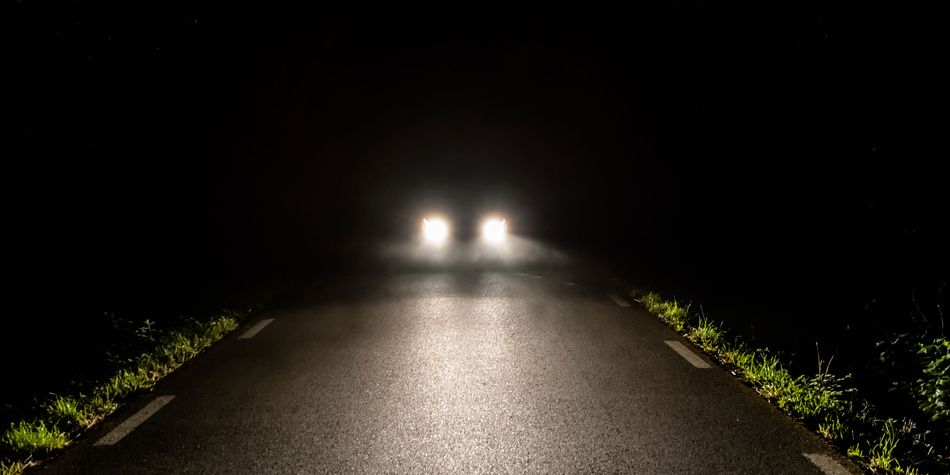
Modern car headlights seem to be getting brighter. And according to the majority of readers who responded to our call for feedback, they're a real problem.
After we asked for your experiences of driving at night online and via Which? magazine, we were inundated with emails. Most described the frustration and fear of bright headlights, while some told us they've now stopped driving after dark entirely.
We examine the main issues drivers highlighted, why headlight glare seems to be getting worse and what’s driving the debate around modern lighting technology.
A key factor is the use of brighter and more economical bluish-white LED headlights or xenon/high-intensity discharge (HID) bulbs as standard. Many older cars still use 'yellow light' halogen headlamp bulbs.
The growing popularity of SUVs and other taller vehicles is also causing issues for motorists, as the vehicles' headlights often align with the eye level of drivers in oncoming or lower vehicles – making glare more likely to shine directly into their eyes.
Our original story on car headlights at night explores government plans and tips on dealing with harsh lights on the road.
What you told us about modern car headlights
Sheer brightness of lights
The most common complaint we heard was simple: today’s headlights seem painfully bright.
One reader told us that modern headlights are 'so bright that they dazzle even in daylight' and can be 'even more shocking when encountering them from a bend'.
Another message to our inbox said the lights are 'too bright to see beyond the oncoming vehicle', while one driver described being 'totally blinded' and 'unable to see my own way ahead'.
We also heard concerns about the colour of headlights as well as their intensity. Comparing older halogen bulbs with the harsher white light of modern LEDs, one Which? reader said: 'Old bulbs used to be a softer yellow and much less dazzling.'
The lights blind me, dazzling with halos and lights shooting off them – the rest of the road is thrown into complete unfathomable darkness
Age and eye health were recurring themes. Elaine (a 57-year-old reader with early cataracts) said the lights create 'dazzling with halos and lights shooting off them' and that the rest of the road is thrown into 'complete unfathomable darkness'.
However, not everyone felt the lights alone were to blame. One driver told us: 'As an older person, I'm aware that daylight can be bright in certain circumstances. I think the same may apply to older drivers being affected by the light and not necessarily just the lights themselves. Hopefully, research will be fully done before any decisions are made.'
Some readers felt the issue was less about brightness and more about poor alignment. One driver explained: 'The problem is that the car headlights on some cars are not set right. This is easily fixed. Just go to your local garage. From my point of view, I believe in see and be seen.'
Automatic beam
Many people felt it wasn't just brightness, but also automatic full beam systems causing problems.
Several readers said automatic or adaptive headlights react too slowly. One described the delay as 'a second or so too late', while another called automatic beam 'a bad idea' that encourages 'laziness and inattention'.
Not everyone was critical. One driver praised the matrix headlights on their Volkswagen ID.3, saying they 'block individual cars approaching you' and allow full beam use without dazzling others.
From the AA and RAC to Green Flag and Aviva, we compare the top breakdown providers in our survey of thousands of customers.
Reflections in the rain

Wet weather came up repeatedly in the feedback we received.
Readers described losing sight of the road entirely when light reflects off rain-soaked surfaces. One said that on soaked roads, they have 'totally lost sight of the road due to the reflection of oncoming cars'. Another added that it's all very well to say look away, but in wet weather you might miss something dangerous.
I have totally lost sight of the road due to the reflection of oncoming cars. That has been very scary.
Another driver suggested that tolerance to glare reduces with age and said they now avoid wet night driving because 'reflections off wet roads double the problem'.
Speedbumps

Speedbumps and hilly roads can make the problem worse, causing the headlight beams to temporarily shine directly into oncoming traffic.
Margaret told us speed bumps are 'one of the worst problems', saying: 'Cars being driven towards me are lifted up at the front and their headlights dazzle me. At 75, my eyes don’t readjust as quickly as before.' Margaret added: 'The continued use of these bulbs is discriminatory against older people and others who have problems with them. The roads are there for all of us to use.'
The bottom line

Across the responses we received, the message was clear: many drivers believe that modern headlights are too bright, too harsh in colour and too reliant on automation that doesn't always work quickly enough.
Some called for limits on intensity, while others suggested better enforcement of alignment standards or even banning certain automatic systems. A few felt the issue might partly relate to ageing eyes rather than the lights themselves. Meanwhile, a very small minority said brighter lights are beneficial and that drivers should simply avoid looking directly at them.
To help deal with bright headlights, we suggest trying the following:
- Adjust your rear-view mirror – some cars have tinted rear windows or self-dimming rear-view mirrors, but most need you to adjust the mirror manually when it's dark – do this to help cut down on glare.
- Keep your distance when driving – our depth perception isn't as good in the dark, so leaving more space between you and the vehicle in front is a good night-time driving strategy.
- Let your eyes adapt to the dark – sit for a minute or two in your car before driving off, to allow your eyes to adjust to lower light levels.
- Keep your windscreen clean – dirt and streaks on the window can cause light to scatter, potentially making headlight glare worse.
Learn how to protect your car in the cold with our winter maintenance checklist, plus advice that could prevent serious damage to your vehicle.