Fitbit Air review: is this screenless tracker worth the money?

A certified smartphones, tablets and wearables whizz, Adam's been hands-on with tech for more than six years, sharing expert knowledge and buying advice.

Whether it's your phone, a smartwatch or a fitness tracker, constant digital distractions can be a daily frustration. Finding a wearable that doesn't constantly buzz or light up your wrist is appealing. If you want to cut down on screen time without losing your health and fitness tracking, the £85 Google Fitbit Air offers a minimalist solution.
We test every wearable in an independent lab to measure sensor accuracy and battery life under identical, controlled conditions. This is exactly what we’ve done with Google’s new screenless tracker. But we’ve added a personal touch, too.
Alongside those definitive lab results, I tested the device on my wrist for around a month to see how it performs in daily life. Here are our lab findings and my expert thoughts.
Browse the best smartwatches to see which come out on top, or check our guide to the best smart rings.
What is the Fitbit Air?

The Fitbit Air lacks the display, buttons and menus you usually find on a fitness tracker. Instead of a glowing touchscreen, you get a discreet little pod nestled in a fabric band.
Sensors quietly gather your health data – like your heart rate, skin temperature and sleep stages – and send the information to your smartphone using Bluetooth. It also tracks blood oxygen levels, but during sleep rather than on demand.
Weighing 11.9g and measuring 8.2mm thick, it's light and slim. Fitbit includes a small vibration motor for gentle wake-up alarms and an LED status light to show when the battery runs low.
How accurate is the Fitbit Air?

Our lab tests show the Fitbit Air has high-quality sensors that are impressively accurate under controlled conditions. It does remarkably well compared to smart rings – the only other screenless option on the market.
People looking for a screenless wearable often turn to smart rings, but our tests show they often struggle with resting heart rate accuracy, averaging a 20.25% error rate across models tested (some are a lot better than others). For the Fitbit Air, the error rate is just 0.83%. It also tracks heart rate during intense exercise better than the averages for smartwatches and fitness trackers.
On running tests, the average error rate for fitness trackers is 9.22%, while smartwatches average 6.13%. The Fitbit Air is far more precise (2.35%). That means it captures your hardest workouts reliably, even if you have to wait until you open your phone to see the figures. Beating a category average doesn't mean it beats every smartwatch, but it proves this screenless pod doesn't compromise on basic sensor quality.
Without built-in GPS, the Fitbit Air relies on step counts to work out how far you walk or run. Our tests show this results in a 10.80% error rate for total daily distance. That's roughly in line with the fitness tracker average of 10.22%, although smartwatches with GPS average 2.98%. It measures steps accurately on a walk – a tiny 1.66% error rate – but struggles to calculate overall distance accurately across a full day unless your phone is connected.
Relying on software to auto-detect exercise creates another drawback. Without having a device with buttons on your wrist, you can't manually trigger a workout. In our lab, the software correctly identified longer activities like a steady 30-minute run. In the real world, automatic tracking can take 10 to 20 minutes to kick in.
When I took it on brief 10-minute exercise sessions or quick bursts of activity, it failed to log the effort entirely. The sensors match or beat many traditional wearables, but you trade away reliable, immediate workout tracking.
How does the Fitbit Air compare to other tracking devices?
Our lab data shows how the Fitbit Air performs against average test scores across major wearable categories.
| Category / Model | Price | Overall heart rate error | Overall distance error | Walking step count error |
| Google Fitbit Air | £85 | 1.34% | 10.8% | 1.66% |
| Smartwatch average | £100-£400+ | 3.85% | 2.98% | 3.45% |
| Fitness tracker average | £30-£120 | 5.7% | 10.22% | 3.26% |
| Smart ring average | £250-£400 | 9.36% | 15.24% | 3.59% |
Note: Table shows Which? lab category average test data vs the Fitbit Air. Prices reflect typical market ranges at the time of writing.
How long does the battery last?
Leaving out a power-hungry display gives the battery exceptional stamina. Our lab tests show the Fitbit Air lasts an impressive 199 hours – more than eight days – on a single charge.
In my testing, wearing it continuously with daily syncing, I comfortably reached six to seven days of wear before needing a top-up. You have to charge many smartwatches daily, but I spent a long four-day weekend away with the Fitbit Air without even thinking about packing a charger.
Short bursts of activity barely register. The lab found that a two-kilometre run drains 0% of the battery. When you do need to top it up, 30 minutes restores 67% of the battery, and a full refill takes just one hour two minutes.
Head to our guide to the best cheap smartwatches for more on picking the best budget option.
How comfortable is the Fitbit Air?
The lab team gave the Fitbit Air a top rating for comfort and being completely unobtrusive. It's light (11.9g) and just 8.2mm thick. The elastic strap leaves no sticking-out parts to dig into your skin, so you avoid catching it on your sleeve when pulling on a tight jumper.
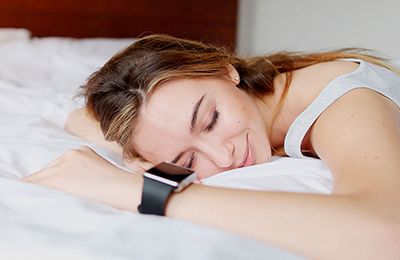
My hands-on testing matches the lab's glowing assessment. Moving to a screenless fabric band is a breath of fresh air if you find typical smartwatches clunky. You barely notice it during daily wear. Without a glass screen or heavy metal frame, it's incredibly pleasant to sleep in and never flashes a bright light in your face at 3am. The fabric strap feels soft against the wrist, although it stays damp for around 20 minutes after a shower or sweaty workout.
How easy is it to set up and use?

It's simple to set up. Using Google Fast Pair, the device connects to surrounding phones automatically the moment it sits on its charger. The updated Google Health app guides you seamlessly through account pairing and permissions, making initial setup quick and hassle-free. The app also lets you log food to track calories and monitor hydration, filling gaps the tracker can't measure directly.
Day-to-day use introduces serious friction. The lab gave the device a poor usability score for phone-free fitness tracking. During my month testing a screenless wearable, I constantly caught myself glancing down at a blank wrist out of pure muscle memory to check the time or my step count mid-walk, only to remember I had to stop, pull out my phone and refresh the app. Instead of curbing screen time, adopting a screenless design can effectively double your phone reliance for basic health checks.
Pros and cons of the Fitbit Air
Pros
- Long battery life
- Minimalist and light
- Excellent tracking accuracy for heart rate and step count
- Pairs and syncs easily
Cons
- Need your phone nearby for it to properly function
- Lacks built-in GPS and NFC chips for route tracking and contactless payments at the till
- No automatic tracking for less than 10-20 minutes of exercise
How much is the Fitbit Air?
The Fitbit Air costs £85 upfront, which is a fair baseline hardware price compared to screen-free competitors such as smart rings. But the companion software and subscription model severely complicate its long-term value.
Out of the box, the free app lists your raw numbers with almost no guidance or health interpretation. To get meaningful insights, Fitbit pushes you to pay for an ongoing Premium subscription (costing £7.99 a month or £79.99 annually) to unlock an 'AI Coach'.
During my month of testing, I found this AI Coach thoroughly disappointing. After a restless night, rather than offering actionable advice on recovery or light movement, the AI coach simply regurgitated my data in plain text, telling me 'you slept five hours last night'. While some may enjoy conversational summaries, paying a recurring fee just to have your own numbers read back to you makes little financial sense when the non-subscription experience, from this device and rivals, provides baseline context for free.
Who should buy a Fitbit Air?
The Fitbit Air suits anyone who wants to log steps, calorie burn and sleep without another screen flashing on their wrist or constant vibrations disrupting their day.
Choosing a screenless pod means accepting clear trade-offs. Standard smartwatches offer phone-free GPS and contactless payments, while traditional trackers let you check your heart rate mid-workout for half the price. A smart ring offers the closest match, quietly tracking health metrics out of sight.
But this tracker may not suit active fitness enthusiasts. Our lab team rated the tracking poorly for runners and cyclists, in part because you can't check your pace during a 5km run. If you want true screen-free minimalism, you might decide not to wear a tracker at all.
Discover the best fitness trackers we recommend investing in.
Expert verdict: my final thoughts
Wearing a screenless wearable for a month showed me that stripping away the display is a double-edged sword. On one hand, you gain freedom from constant wrist buzzing, incredible battery life and a device so light you forget it's there. On the other, you lose quick time checks and phone-free workout tracking.
If your main goal is passive health monitoring without digital distractions, the Fitbit Air offers impressive sensor accuracy for £85. But if you want to track active workouts or check your progress mid-run without digging out your phone, buying a standard fitness tracker and turning off notifications gives you the best of both worlds.