Warning: These are the worst airports for EES queues

One of the UK's most trusted travel journalists, our award-winning travel editor spent a decade writing guidebooks around the world. Since 2016, he has been recommending where to go, who to go with and championing passenger and holiday rights for Which?

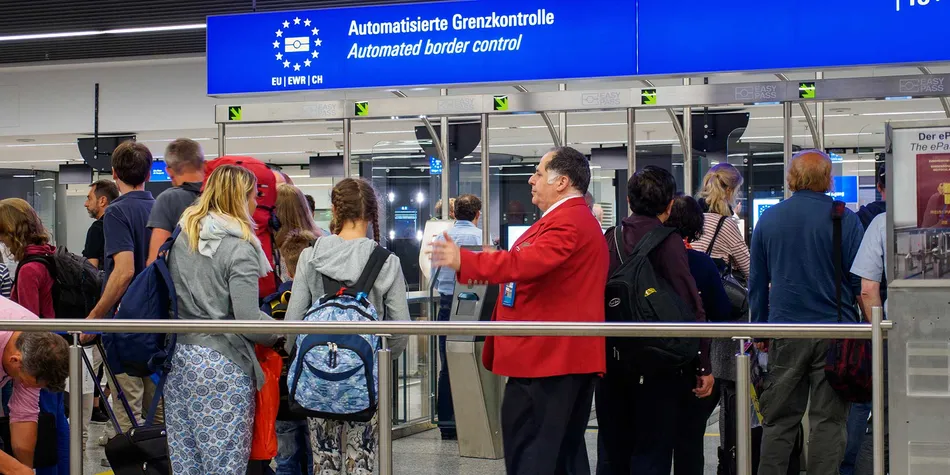
Thousands of UK passport holders have likely missed their flights home because of new Entry/Exit System (EES) checks at EU airports.
That’s a fraction of the total number of travellers, but tens of thousands more have endured huge EES queues several hours long. The situation is likely to worsen this summer, as millions of British holidaymakers head to Europe.
The question on every holidaymaker's mind is: where are the worst queues, and will I run into them? It’s frustratingly hard to answer, not least because the European Commission doesn’t release data on which airports are worst affected. I approached Frontex, the EU agency responsible for Europe’s borders, and asked it which airports are seeing problems with EES queues most frequently. It said it 'doesn't collect data on the waiting time of non-EU nationals.'
Instead, I turned to travellers' own experiences. I looked through more than one hundred traveller forums, and analysed hundreds of reports about EES queues to see which airports were most frequently complained about.
I focused on EES queues on departure. While delays on arrival are often worse, it's long queues at departure that causes passengers to miss flights, as many have in Paris and Milan. These were the 11 airports that were most frequently mentioned in my research.
The 11 worst airports for EES queues
These are the 11 airports that appeared most frequently in traveller reports of long EES queues on departure.
Alicante | Spain |
Amsterdam Schiphol | Netherlands |
Berlin | Germany |
Krakow | Poland |
Lisbon | Portugal |
Malaga | Spain |
Milan Bergamo | Italy |
Milan Linate | Italy |
Palma de Mallorca | Spain |
Paris Beauvais | France |
Tenerife South | Spain |
Based on airports most frequently mentioned in traveller reports of long EES queues on departure. Delays are not guaranteed and can vary throughout the day.
'Bunching' is the problem
It’s no surprise there are so many Spanish airports, like Alicante and Malaga, in the list. The primary driver of EES delays is 'bunching' — when multiple UK flights are scheduled to depart simultaneously. Some Spanish airports have more flights to and from the UK than any other international destination.
While EES checks only take a minute or two for an individual passenger, when you have four or five planes full of passengers departing in the same time period, and close to 1,000 people to process, long queues quickly form.
That’s what I saw when I flew from Palma Airport earlier this year.
This doesn’t mean you will definitely experience long EES queues at these airports. There will be periods when just one or two UK flights are departing, and there should be no queue. An hour later, queues could be several hours long. Similarly, airports can and have suspended EES checks when queues become unmanageable. In short, it’s very difficult to predict specific times when long queues will form.
Equally, some other airports not on this list experience queues when there are multiple UK departures - Naples and Paris Charles De Gaulle are names that came up in my research. The reason they have not made the list is likely because there are fewer UK departures overall, or these are not bunched together.
Ryanair also produced a list of the airports where it says passengers are experiencing significant delays because of EES on both arrival and departure. It lists many of the same airports that are in my analysis, as well as Madrid, Lanzarote, Milan Malpensa, Verona, Frankfurt Hahn and Budapest.
What to do if you are flying from these 11 airports?
Given that you can’t reliably know what the situation is with queues at the exact time you are flying, our advice is to prepare for long queues.
Mostly, this means arriving at the airport as early as possible before departure. Consider not checking a bag, if possible. Bag drop can open as little as two hours before departure, which may not leave you enough time to get through the border at the worst airports. If you do need a bag, arrive as soon as the bag drop opens.
Arrive when the bag drop opens. If you do end up in a long queue and are concerned about missing your flight, make staff aware of the fact - unfortunately, you may need to do this repeatedly.
Given it has warned of delays at 15 airports, we asked Ryanair if it would open its bag drop earlier at those destinations. It didn't respond.
Once you have passed through security, head straight for the border. If you want to eat or drink, do this after the passport and EES checks. Keep in mind that these non-Schengen areas of the airport usually only have basic facilities.
For families, make sure you have nappies, toys and other essentials you may need for a queue several hours long. It’s also worth having children use the toilet before you head to the border.
When will EES queues get shorter?
Without an intervention by the EU, queues this summer will be worse because of the number of UK travellers. Many of these travellers will also be registering at EES kiosks for the first time, which takes slightly longer.
After the summer, queues should ease. There are fewer flights, and many more UK travellers will have registered for EES - subsequent checks will be shorter.
But some of the fundamental problems that are causing queues, such as too few EES kiosks, not enough staff and poor understanding of what checks should be carried out, are likely to continue. Frontex warned that queues may continue for up to two years.