Help with inheritance tax
Our money guidance team has decades of experience in inheritance tax and estate planning. As a Which? Money member you get unlimited access to them via phone included in your subscription.
Find out more
We save into pensions in the hope that they will last for the rest of our lives. And, until recently, it didn't matter if they outlived us entirely.
This is because unspent pensions weren't counted as part of your estate when calculating inheritance tax (IHT). Beneficiaries could inherit defined contribution pots, only having to pay income tax if you died over the age of 75.
But from April, pensions will be counted as part of your estate and could incur IHT bills, making them a far less tax-efficient way to pass on money.
This has consequences for everything from writing a will to working out how much you'll need to live on when you first retire.
We've spoken to Which? members to see how the announcement has changed their plans.
The announcement in the 2024 Autumn Budget that IHT arrangements would be changing has caused many families anxiety and stress.
For deaths occurring on or after 6 April 2027, pensions will be treated in the same way as other assets – like property, savings and investments – and will count towards your estate.
This means that unused defined contribution (DC) pensions will be considered when calculating a possible IHT bill. This includes funds that are in pension drawdown but not payments from annuities.
However, where a defined benefit (DB) pension pays a regular income to a spouse or civil partner after your death (known as a dependants’ scheme pension), this will remain exempt.
Inheritance tax is usually charged at 40% on the value of your estate that exceeds your tax-free allowances.
The combined allowances (nil-rate band of £325,000 and residence nil-rate band of £175,000) let you leave up to £500,000 tax-free. Allowances can pass to a spouse or civil partner tax-free, meaning a couple can leave up to £1m tax-free.
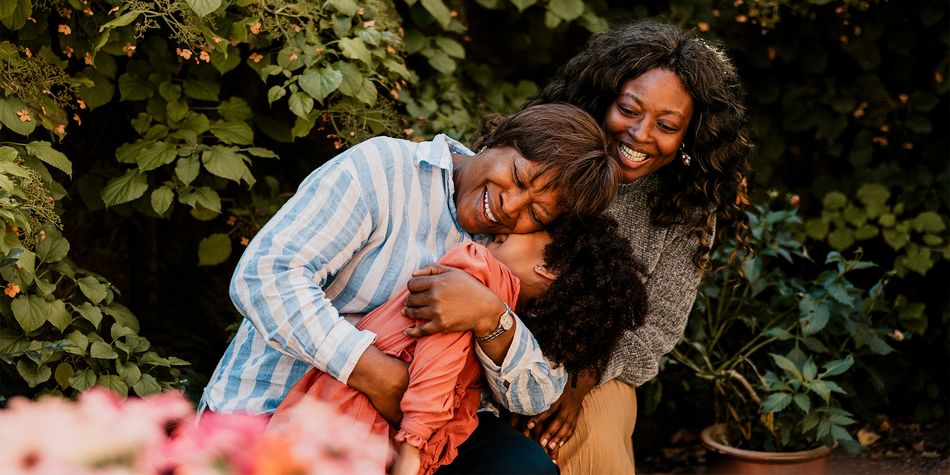
Gloria (pictured, 77) and her husband Trevor (79), from Herefordshire, originally took only the tax-free cash from their pensions to fund some home improvements and a new electric vehicle.
They had planned to leave the remainder of the pots in drawdown and then eventually pass them on to their daughter as part of her inheritance.
The couple were managing quite nicely with their ongoing retirement finances, the tax-free cash supplemented by sufficient savings to meet their day-to-day needs for three months and a stocks and shares Isa each.

However, in light of the forthcoming inheritance tax overhaul, they changed their plans in May 2025.
After consulting their financial adviser, they decided to convert the rest of their drawdown pot into an annuity, taking advantage of the attractive annuity rates on offer, so that they could use the money themselves to ‘live a bit more while we can!’.
Gloria told us: ‘We feel that it was a good decision to take the annuity, as we wanted to minimise the hassle for our daughter in sorting out our estate and reduce a possible tax liability for her on our death.
Our money guidance team has decades of experience in inheritance tax and estate planning. As a Which? Money member you get unlimited access to them via phone included in your subscription.
Find out moreJean (pictured, 81) from Brentford had been hoping to reduce the inheritance tax liability for her loved ones by leaving money untouched in a pension.
But as this will no longer be exempt from IHT, she’s recently given some large lump sums to members of her family. The gifts are to help them with their mortgages, and Jean hopes that she will live for another seven years so that they fall outside of her estate. She also plans to start making some regular gifts from surplus income, plus one-off gifts within the tax-free allowances.

Seeking financial advice will be Jean’s next step. She said: ‘Giving now is my preference, but I have to balance my needs against that. It's a difficult issue and, even if you think you've got it right, everything could change at the next Budget.'
Jean feels that the inheritance tax system is unfair and discriminates against single people without children. She told us: ‘My neighbours are a couple with two children. We have identical houses of roughly the same value.
They’ll have a total tax-free allowance of £1m, whereas I will only have £325,000. There should ultimately be no inheritance tax to pay on the value of their house (depending on other assets), but my estate will be liable to pay tax on roughly two thirds of the house value.’
Other Which? members have acted since the changes were unveiled.
Stephen (63) from Oxford told us that concerns around inheritance tax had prompted him and his partner of 35 years, Julia, to enter a civil partnership, so they would benefit from these rules.
Using retirement savings now rather than worrying about passing on the funds has been a common reaction to the forthcoming rule changes. Patrick (68) from Wakefield said: ‘We have been bolder with our purchasing decisions like holidays and replacing our car. We have discussed the impact of the changes with our children, who are comfortably off and said "spend it", so we are!’c.
Phil (71) from Surrey told us: ‘The inclusion of pensions [within inheritance tax rules] will leave my family with a significant tax bill. I have taken the full 25% tax-free cash and drawn as much as possible while staying within the basic-rate tax band.'
The saving grace is that inheritance tax is only charged on the value of your estate that exceeds the tax-free thresholds, so by reducing its value you can reduce – or avoid – a potential bill. For example, you could:
Select the option that best describes your current situation.