Health? or Hype?
Make the right choice with recommendations you can trust, backed by expert testing.
Explore health recommendationsBy clicking a retailer link you consent to third-party cookies that track your onward journey. This enables W? to receive an affiliate commission if you make a purchase, which supports our mission to be the UK's consumer champion.

Kate puts health advice and kit through their paces, from marathon-tested gear to cutting through overhyped supplements

Getting enough fibre in your diet can do more than just support your digestive and wider health; it could also benefit how healthy your skin looks.
It’s been established for many years that adequate fibre intake is important for good heart health and digestion, but new research suggests that the ‘gut-skin axis’ can affect the visible signs of ageing – and that a high-fibre diet might slow those signs down.
We asked experts, including Dr Linia Patel, registered dietitian and women's health expert, and Professor Glenn Gibson, professor of food microbiology at the University of Reading, for the facts about fibre and your skin, how to get more, and the one thing you need to be careful of when increasing your fibre intake.
The connection between your gut and your skin is more direct than you might think. When you eat fibre, so-called ‘good’ bacteria in your gut ferment it into short-chain fatty acids (SCFAs).
Research such as this 2025 study published in the Journal of Investigative Dermatology (JID) has shown that these SCFAs enter the bloodstream and act as powerful anti-inflammatories that can boost the skin barrier, helping your skin to retain moisture and thus stay ‘plump’ looking.
They also help to calm low-grade chronic inflammation, one of the main drivers of wrinkles.
A 2023 study in the JID also found that dietary fibre improved the rate of wound and scar healing – although this was a study on mice, not humans.
Professor Glenn Gibson explains: ‘The key is that approaching 75% of our immune system originates in the gut, including inflammatory regulation. Fibre is broken down by bacteria in the colon – generally these are the ones seen as positive for health, hence the longstanding view that fibre is a good thing.
'The responding bacteria, by nature of their cell wall and/or the products they make, then influence immunity. In some cases, this involves acting upon cells or other molecules that help anti-inflammatory processes. These are transported to the skin or elsewhere via the blood.'
Healthy skin isn't just about the structure of the skin itself, but about its internal health, or reactivity.
Dr Linia Patel explains that fibre affects skin health because lower inflammation means less immune 'overactivation.'
'This overactivation is a key driver behind common skin concerns like acne, eczema and premature skin ageing,' she says.
'Emerging research also suggests SCFAs can help to regulate immune responses in the skin and support a more balanced microbiome – both of which are linked to clearer, calmer skin.'
Do collagen supplements really work? We review the evidence for their impact on skin, hair and joints

For women, the benefits of fibre go even deeper. Dr Patel points out that fibre supports the ‘oestrobolome’ – a specific collection of gut bacteria involved in metabolising oestrogen.
'A well-nourished microbiome helps regulate circulating oestrogen levels, preventing both excess and imbalance,' she explains. 'This matters because hormonal fluctuations – particularly in midlife – can drive breakouts, dryness and changes in skin quality. By supporting gut health with adequate fibre, you’re helping to stabilise hormones and, in turn, supporting healthier skin from the inside out.'

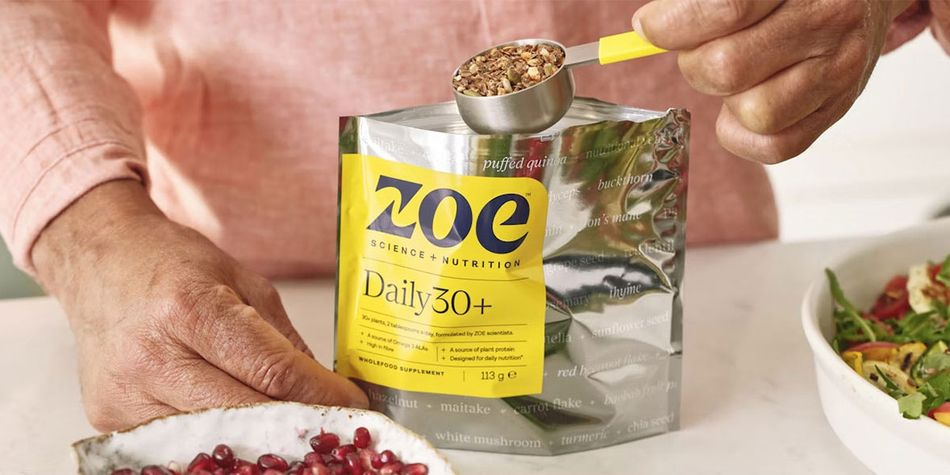
It might be tempting to reach for supplements if you're among the many Brits who struggle to reach their 30g a day recommended fibre intake through diet alone. The latest government data from the National Diet and Nutrition Survey 2019-2023 suggests that the average UK adult manages only about 16.4g.
However, experts agree that a ‘whole food’ approach is superior.
Dr Patel explains: 'When it comes to skin health, whole foods offer something supplements simply can’t replicate: a complex, synergistic matrix of nutrients. Fibre, protein, healthy fats, vitamins, minerals and phytochemicals all work together to support gut health, reduce inflammation and protect the skin from oxidative stress.
'For example, a meal rich in plant foods delivers not just fibre for SCFA production, but also antioxidants like polyphenols that help to defend against skin ageing, which many supplements that contain an isolated nutrient can’t fully mimic.
'As a dietitian, my approach is always food first. Build your foundation with a diverse, fibre-rich diet, then use supplements strategically to fill specific gaps or support particular needs, rather than relying on them as a shortcut to skin health.'
While many, if not most of us, don’t meet our daily recommended fibre targets, it's important not to try to bridge the gap overnight. Suddenly ‘smashing’ lots of fibre can lead to digestive distress and unpleasant side effects like bloating and cramps.
Increase your intake gradually over a few weeks and remember to drink plenty of water to help the fibre move through your system.
If you have existing gut issues such as IBS or SIBO (small intestinal bacterial overgrowth), or if you're taking proton pump inhibitors (PPIs) for acid reflux, suddenly increasing fibre can be counterproductive.
In these cases, undigested fibre can ferment in the wrong part of the gut, leading to bloating and even triggering skin flare-ups such as rosacea.
If you have a sensitive digestive system, consult a health professional before making significant changes, and always prioritise whole foods over supplements.
As Dr Patel explains: 'Fibre is beneficial, but in IBS, SIBO or altered gastric environments (for example PPI use), type, timing and individual tolerance are critical to avoid exacerbating gastrointestinal and potentially systemic symptoms. Gradual introduction allows the microbiota and gut to adapt.
'Sudden increases – especially via supplements or highly fermentable fibres – can overwhelm this system, particularly in those with underlying gut dysfunction. So think marathon-style slow and steady vs a sprint.'
The best and worst food combinations for optimal nutrient absorption – what to try and what to avoid for maximum benefit

Fruit and veg are important, but Dr Patel warns that they’re not the main contributors when it comes to hitting your 30g-a-day target. If you really want to move the needle, she suggests going for the 'big hitters': wholegrains, beans and pulses.
Dr Patel recommends these swaps to boost your intake:
'And then there are the smaller, often overlooked contributors – brewed coffee, dark chocolate, herbs and spices – which all contain modest amounts of fibre,' she adds. 'They won’t get you there alone, but they can help to top up your intake alongside those core staples.'
Make the right choice with recommendations you can trust, backed by expert testing.
Explore health recommendationsSix of the best breakfasts for energy and fibre - more tips and inspiration on starting the day fibre-filled
While a healthy glow might be a welcome bonus, hitting your 30g daily fibre target also has wide-ranging health benefits, including:
Find out the best affordable ways to look after your skin as you age in our podcast episode