Fake British Gas calls and other energy scams to avoid

Tali writes about scams and consumer rights for Which? delving into fraud, technology and consumer rights topics to keep readers safe and empowered.

As energy prices are set to increase, scammers ramp up efforts to peddle their dodgy cons.
Energy scams are popular among fraudsters and are typically spread using dodgy emails, texts and calls. While some can be easy to spot, others use sneaky tactics to make their schemes seem incredibly convincing.
Below, we warn you of some of the most recent energy scams we've seen so you know how to avoid them.
British Gas scam call
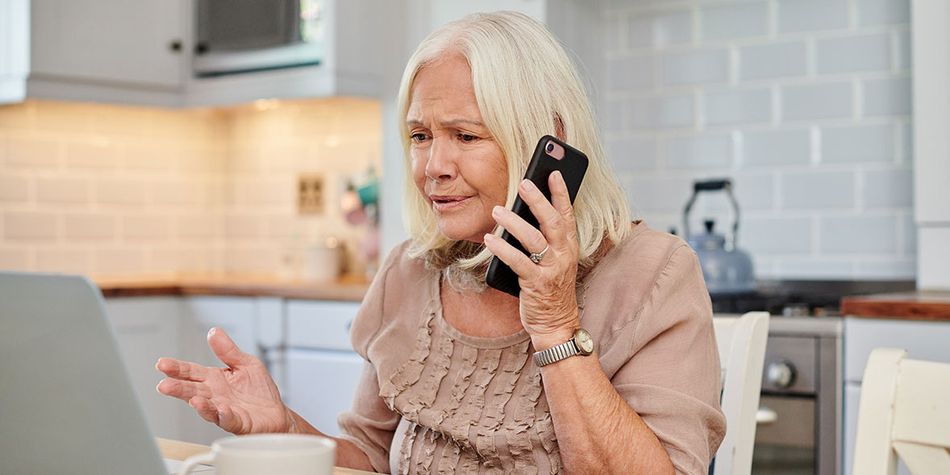
Recent reports to Which? show that scammers are impersonating British Gas through cold calls. Worryingly, some recipients of this call noted that the caller knew information about them, including their email address and postcode.
A similar report explains that a cold caller claimed to be from British Gas and asked for personal information, including sort code, to check the recipient of the call was covered for boiler breakdown and repairs.
Other reports warned that callers have asked for their billing details and meter information, and that they were told that there was a problem with their upcoming bill. All appear to be an attempt to get bank details.
Reports are also circulating about cold calls from 'your energy savings adviser'. This is also likely to be a scam, and you should end the call and contact your energy supplier using a trusted contact number taken from a recent bill if you believe it could have been genuine.
'Fuel subsidy' and 'winter allowance' texts
Scammers are using text messages to impersonate the Department for Work and Pensions (DWP).
The winter allowance scam text has been circulating for some time, and reports of this text have spiked again. Last October, DWP issued a warning to pensioners to be on alert for scam text messages about the Winter Fuel Payment.
The scam text tells you that the winter allowance offers a one-off payment of £200 to £300.
Another version of this message mentions an 'application for the fuel subsidy', which results in a 'one-time' payment of £300.
The messages will contain a link to claim, but this link will send you to a copycat government website, which will steal your personal and financial information.
Avoid this scam by only accessing government services on the Gov.uk website, and do not follow links from text messages.
Most people will get the Winter Fuel Payment automatically if they’re eligible in November or December 2026.
Energy-saving device adverts

Which? has warned about these dodgy so-called energy devices several times. These devices don’t work and could be dangerous.
As energy bills are forecast to rise in July, a new advert has popped up on Facebook and Instagram, which appears to be a deepfake video of a person peddling a plug-in energy-saving device.
The advert claims the device ‘analyses and optimises’ your power usage after plugging it into a power socket.
At the time of writing, the advert had reached roughly 155,260 accounts across the social media platforms and included a phishing link, which will steal your personal info, to purchase the £34.95 device.
The website claims that the device needs to be plugged in 24/7 and will lead to up to 90% savings on your electricity bill without changing your usage habits.
Reporting energy scams
Scam calls can be reported on an iPhone by texting the word ‘call’ followed by the phone number to 7726.
If you have an Android phone, text the word ‘call’ to 7726. You’ll then receive a message asking you for the scam number.
For scam calls received on WhatsApp, open the WhatsApp chat with the dodgy phone number and tap 'block.' You can report the contact by tapping 'report contact' and 'block'.
Scam texts can be reported to your phone operator by forwarding them to 7726.
Scam websites can be reported to the National Cyber Security Centre, and suspicious ads on Facebook and Instagram can be reported by clicking on the three dots in the top right corner and selecting ‘report.’
If you've lost money or spot an unauthorised transaction on your account, you should contact your bank immediately using the phone number on the back of your card.
Scams should also be reported to Report Fraud, or by calling the police on 101 if you live in Scotland. You can also tell Which? about a scam using our scam sharer tool.
Seen or been affected by a scam? Help us protect others
Sharing details of the scam helps us to protect others as well as inform our scams content, research and policy work. We will collect information relating to your experience of a scam, but we won't be able to identify your responses unless you choose to provide your contact details.
Share scam details