Health? or Hype?
Make the right choice with recommendations you can trust, backed by expert testing.
Explore health recommendationsBy clicking a retailer link you consent to third-party cookies that track your onward journey. This enables W? to receive an affiliate commission if you make a purchase, which supports our mission to be the UK's consumer champion.

Public health nutritionist with 20+ years at Which? and the NHS delivering evidence-based food and nutrition insights.

Iron supplements can require a little more thought – and a little more trial and error – than others to get right.
It's not necessarily as simple as popping a pill and hoping for the best. You need to be a bit tactical about the type of iron you use, when you use it and what you use it with to get the best results.
This is partly because, as a mineral rather than a vitamin, it requires specific conditions to enter your bloodstream.
So, if you want to avoid wasting money on supplements that don't have the effect you hoped for, follow my five key tips below.
Listen to our latest Healthy Living podcast episode for more insights and tips on Iron and B12 supplements from our experts, plus don't miss your chance to sign up to our Live Q&A session on 26 May

Iron supplements contain different formulations of iron. Lots use ferrous salts – specifically ferrous sulfate, gluconate or fumarate. These are inexpensive and technically well absorbed by the body, but there's a catch: they can cause digestive upset.
Ferrous sulfate is the most common culprit for unpleasant gastrointestinal side effects often associated with iron supplementation, including nausea, stomach pain and constipation.
Because of these issues, many people give up on taking iron supplements, which is a problem if you have an underlying iron deficiency that needs addressing.
I recommend iron bisglycinate (often marketed as ‘gentle iron’). Unlike standard iron salts, this iron is 'chelated' – chemically bound to the amino acid glycine.
This enables it to pass through the stomach more easily, reaching the small intestine for absorption. This means you get a higher absorption rate and fewer unpleasant side effects.
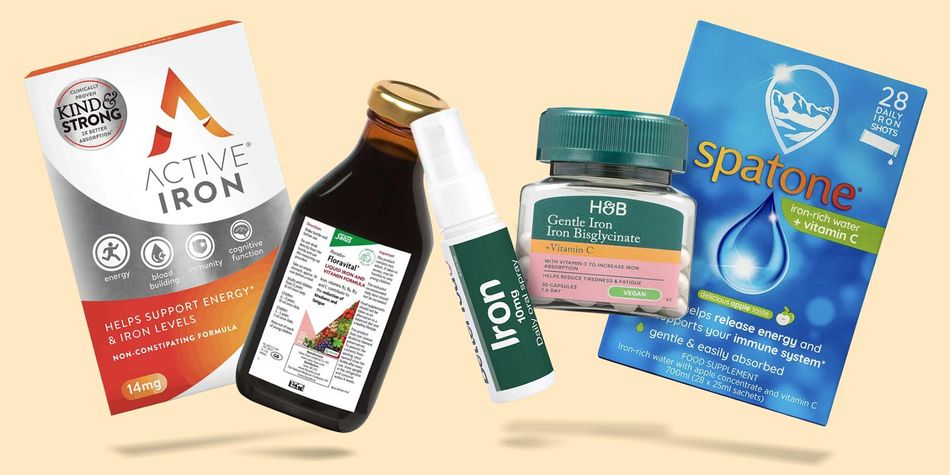
There are some other formats that can work well, too: we've reviewed a range of supplement formulas, including liquid and advanced tab formulations.
Fancy formulas can be pricey though, so you'll want to be sure they're worth it. We've uncovered the products that work best and are the best value too.
Of the iron supplements that Which? tested recently, these were some of the best overall:
| Product | Which? test score | Metric | Metric |
|---|---|---|---|
Sign up to reveal Get instant access to this and all our scores and recommendations Unlock tableGet Digital access £9.99 per month, cancel at any time. Already a member? | 95% | ★★★★★ | ★★★★★ |
| 92% | ★★★★★ | ★★★★★ | |
| 92% | ★★★★★ | ★★★★★ |
Sign up to reveal
Get instant access to this and all our scores and recommendations
Unlock tableGet Digital access £9.99 per month, cancel at any time.
Already a member?
Log in
Join Which? to see which products got these high scores, and all our reviews of the best iron supplements.

Iron is actually quite difficult for your body to extract from the digestive tract. It exists in two states: ferric and ferrous, and your body is better at absorbing the ferrous state.
Vitamin C acts as a sort of carrier, converting iron into a more soluble form that's easier for your gut to absorb. And that's why I'd never take an iron supplement without making sure I also get some vitamin C.
Some supplements include vitamin C (ascorbic acid) in the formulation, so do check the label. If that’s the case, you don’t need to take anything extra.
Many don't, but it's easy enough to wash them down with a small glass (around 150ml) of orange juice. You don’t need to drink a lot – you just need enough ascorbic acid from the juice to create the acidic environment in the stomach that helps absorb the iron.
Having other vitamin-C-rich foods, such as peppers, is also fine.
However, don't be tempted by a hot citrus drink, such as hot lemon, as vitamin C is heat-sensitive and can break down in boiling water.
The best magnesium supplements reviewed by nutrition experts – get our verdict on the optimal types to take

It might sound counterintuitive, because you’d naturally assume that taking iron daily would mean faster results. But the opposite can be true. Taking a high dose of iron every day can actually trigger your body’s internal ‘braking system’.
The reason lies in a hormone called hepcidin. This acts like a gatekeeper for iron in your body: so when you ingest a large dose, your liver detects this surge and releases hepcidin to block further any absorption for around the next 24-48 hours.
So if you take another pill the next morning, while those hepcidin levels are still high, your body will struggle to absorb it. Instead, it will sit in your gut, potentially causing those unpleasant gastrointestinal side effects I talked about earlier.
Studies now suggest that taking iron supplements every other day can be just as effective at raising your iron levels as taking a daily dose. And by giving your hepcidin levels time to drop back down, you maximise the absorption of your next dose.
While studies on this have mostly looked at larger doses typically prescribed for people with anaemia, which are more likely to trigger a significant rise in hepcidin, it's worth knowing for an everyday dose too.
Because this method is kinder on your stomach, you are more likely to stick with it. Not to mention, it saves you money too!

This is perhaps the most common mistake. You could be taking the highest-quality iron supplement on the market, but if you wash it down with your breakfast cuppa, you are effectively neutralising it.
Tea and coffee contain compounds that inhibit iron absorption. Tea is packed with tannins and polyphenols, while coffee contains chlorogenic acid. These bind to the iron molecules in your stomach, creating a complex structure that is too large for your body to absorb. Similarly, the calcium in milk (and even in some calcium-fortified plant milks) competes for the same entry ‘doorway’ into your bloodstream.
Interestingly, tea is a stronger inhibitor than coffee. It’s the tannins in tea that have the biggest effect. Clinical studies have shown that a single cup of tea can slash your iron absorption by a staggering 90%, while even the strongest coffee typically only manages a 60% reduction.
Avoid combining your iron supplements with a brew.
Use a two-hour buffer. Aim to take your iron at, say, 8am, then wait until 10am for your morning coffee.
Don’t assume that what you might consider healthier tea options, like green or peppermint, are better – they also contain polyphenols, which can impact iron absorption.
Be aware, too, of what’s in your food. If you take your iron pill with calcium-rich yoghurt or cereal with milk at breakfast time, you’ll also reduce the bioavailability. If it’s not possible to time it so that you take it on an empty stomach, then stick to combining it with something that won’t clash with it, like a piece of fruit.
The best anti-ageing creams – independently lab-tested: we reveal the products that really make a difference

People are often told to take iron with food to avoid nausea. And while it’s true that this cushions your stomach, it also creates a trade-off for efficiency. A whole load of different nutrients are then sitting in your digestive tract, effectively fighting each other for absorption.
Our bodies use specific pathways to move minerals from the gut into the bloodstream.
Calcium, magnesium and zinc use the same paths as iron. And because these minerals are often present in larger quantities in meals (such as a cheese omelette or a bowl of fortified cereal) they can effectively muscle out the iron.
As above, you ideally want to take your iron on an empty stomach, either about an hour before a meal, or about two hours after. This means there’s no competition from other nutrients.
However, if you find it hard on your stomach, try to avoid pairing it with a big meal. Instead, reach for a low-calcium snack, such as an apple, a handful of berries, or a slice of toast (ideally without butter).
Another thing to watch out for in your food is ingredients that are high in phytates, which are also compounds that can block iron absorption. If your meal is high in grains, legumes and nuts, ideally wait two hours for them to be digested before supplementing.
Boiling, soaking and fermenting grains and legumes can reduce phytate levels, but it's probably simplest to avoid combining the two.
Make the right choice with recommendations you can trust, backed by expert testing.
Explore health recommendationsIt can feel a bit overwhelming trying to find the optimal time to take iron to avoid issues. But really it boils down to:
And finally, if you suspect you might have low iron levels, or have related symptoms, it's always best to consult your GP or another health professional before starting iron supplements.
Excessive iron can be harmful – particularly if you are pregnant or have underlying health conditions – and low iron symptoms such as tiredness, fatigue and brain fog can have many other causes.