James Rowe: Getting a suitcase or cabin bag that first of all has enough space, second of all survives baggage handling, and finally fits the airline size limits can feel like an impossible task. So which brands do we recommend you buy?
Hello, I’m James Rowe and welcome to Which? Shorts – your free weekly insight into Which? magazine, as well as our Money, Tech, Travel, and Gardening titles too. Today I’m bringing you a piece that Amy Axworthy wrote for the May–June issue of Which? Travel, all about suitcases and cabin bags.
There’s no worse feeling than worrying about whether or not your bags will fit into the sizer at the airport gate, twinned with the dread that a wheel will be missing once your case has made its journey from the plane to the baggage carousel. So we’ve asked real-life consumers which brands they’ve bought and what they think about them to help you decide which bags to buy for your next trip away. Here is Amy’s piece, adapted for the podcast, this week read by Kat Cereda.
Kat Cereda: Rough baggage handling and inconsistent size restrictions can make choosing luggage for a flight feel like a gamble. So we asked precisely 2,730 people to tell us about their suitcases and cabin bags to find the brands you can rely on.
Fortunately for you, a top-rated brand's large cabin bag can cost as little as 40 pounds, while some pricey designs have handy compartments to maximise space and dodge extra baggage fees. If you opt for a Which? recommended brand – or WRB – you’ll be getting a product from one of the highest-rated brands from our survey, where customers rated them based on how satisfied they were and how likely they are to recommend them.
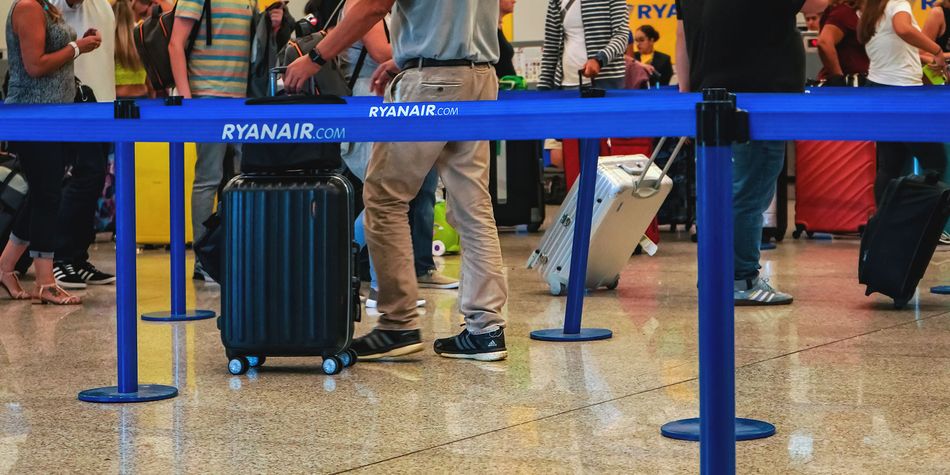
All our WRBs have luggage that’s built to last and fully covered, so a manufacturing defect won’t leave you out of pocket. Booking in a large cabin bag or hold luggage can easily double a budget fare. But don’t be tempted by recommended bundles. In a recent Ryanair investigation, we found that choosing the basic fare at the start of the booking process and adding bags on top usually gets you the cheapest price.
Airlines currently set their own luggage sizing, and it’s an expensive mistake if you get it wrong. But more on that later. So, which luggage brands do we recommend? We have four WRBs.
First up is Eastpak. They're tough on the outside, organised on the inside, and comfortable on the move. Top durability scores and up to 30 years warranty mean you can expect an Eastpak bag to last. Beyond strong materials, customers praised smart details such as zips over handles to protect them in transit, making sure every element lasts longer. Large suitcases aren’t too heavy either, and one owner told us that a combination of robust build quality and multiple handles mean it’s easy to pick up in whatever direction you approach it.
Next, with stylish light luggage with intuitive storage, is John Lewis. One customer described their John Lewis bag as Goldilocks – just right. And it’s a feeling shared by many who have found the brand to be a reliable mid-range option. Its bags have an up-market feel and come with a 10-year guarantee – apart from bags in the cheaper Anyday range, where it’s likely to be five years. When one traveller had an issue with a handle, the case was replaced without quibble.
Tripp is next, which offers outstanding value at any size. Tripp was one of the highest-rated budget brands in our survey. Its luggage is often on sale, costing from 35 pounds for a small cabin bag to 75 pounds for large suitcases on average. Holidaymakers were pleasantly surprised by how roomy its large cabin bags are inside, with smart compartments to maximise space. They’re easy to fit, and the four-wheel suitcases glide smoothly and quietly across airport floors. Owners told us that they hold up well to rough handling, although dents can appear in its popular hard-shell designs – most can easily be pushed back out.
Our final recommended brand is Cabin Max, which makes wallet-friendly cabin bags that make every bit of room count. Cabin Max bags are designed to maximise space within strict airline cabin restrictions, and they’re hard to beat on price. Features such as compression straps and un-padded pockets make the most of every possible inch. One customer said, for a small under-seat bag, it can pack a lot in, and the number of separate sections makes it easy to organise. Many of its designs don’t have wheels, so they’re built to be lightweight, and one holidaymaker was pleased that theirs was good-looking enough to double as a small day-pack on holiday.
Which? Travel members can read more about the 11 brands we rated in the latest issue of the magazine, or you can find them on our website. There’s links in the show notes to find out more.
But let’s get back to cabin bag restrictions. All airlines have restrictions on how big and heavy your luggage can be, but you should expect budget carriers to be the strictest at enforcing these. If something as minor as a bulging pocket is sticking out the sizer, they can charge you. The gate fee is unpredictable, and airlines can charge a range of prices, sometimes more than 70 pounds a bag for a short-haul flight.
If you realise you need more space only a few hours before your flight, it’s almost always cheaper to pay for a bigger bag online. If the online window is closed, pay it at the check-in desk. It’s a sting, but likely cheaper than paying the departure gate fee, which is designed to be the most expensive penalty.
Most airlines say the final decision on whether a bag is over the limit rests with the ground crew. So, if you think you’ve been unfairly charged while at the gate, take lots of photos of your bag in the sizer and ask for a paper or digital receipt for the gate fee. Make a note of things like your gate number, flight number, and the exact time you were charged. Once you’re home, take more photos – this time with a measuring tape showing the height, width, and depth. Then you can make a formal complaint to the airline with this evidence.
If the airline rejects your claim or you’ve waited eight weeks with no reply, take it directly to the alternative resolution scheme that your airline has an agreement with, or contact the Civil Aviation Authority. Gate fees should be a distant memory though, as a new EU resolution aims to end hidden fees by guaranteeing passengers one under-seat bag and a cabin bag on every EU flight. Several budget airlines are fighting the change, but it could become law by 2027.
James Rowe: That brings to an end another podcast from Which? There’s loads more for you to read about everything we discussed today – just head to the episode description for more useful everyday advice. There you’ll also find an exclusive offer for podcast listeners like you to become a Which? member for 50% off the usual price, giving you access to our product reviews, our app, one-to-one personalised buying advice, and every issue of Which? magazine across the year. Plus, your membership helps us to make life simpler, fairer, and safer for everyone. If you’d like to know when we release a new episode then make sure you press subscribe wherever you listen. That way, you can be one of the first to listen. And for any questions, comments or anything in between, follow us on social media @WhichUK or email us: podcasts@which.co.uk. Goodbye.