Health? or Hype?
Make the right choice with recommendations you can trust, backed by expert testing.
Explore health recommendationsBy clicking a retailer link you consent to third-party cookies that track your onward journey. This enables W? to receive an affiliate commission if you make a purchase, which supports our mission to be the UK's consumer champion.

Public health nutritionist with 20+ years at Which? and the NHS delivering evidence-based food and nutrition insights.

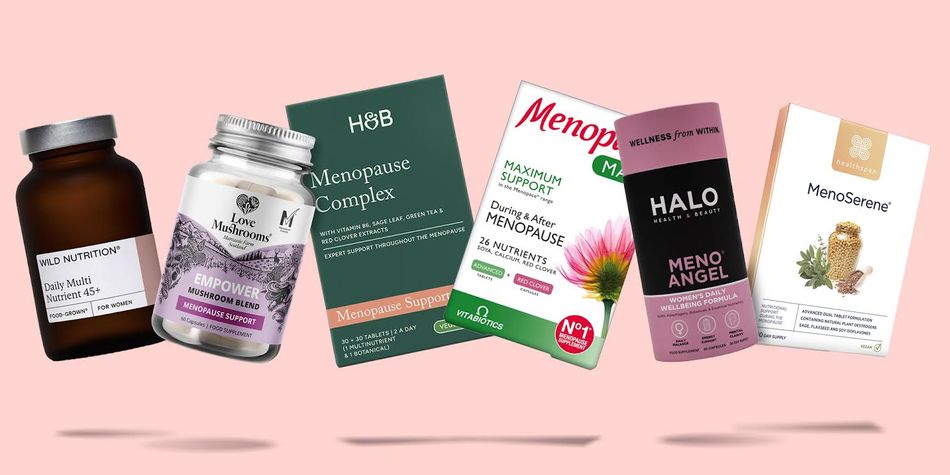
After reviewing 26 popular supplements marketed for the perimenopause, menopause and for women over 45, I've discovered that choosing a good one is a near-impossible task.
Across these popular supplements, we found more than 80 different active ingredients, including vitamins, minerals and botanical (plant) extracts being used; however, not one ingredient featured in every supplement.
This reinforced our suspicions that good evidence to support the use of many of these ingredients for menopause symptoms is lacking. And, in reality, most people don't need a menopause-specific supplement.
A recent 2026 study from UCL reached a similar conclusion, calling for more research to be done. Read on for the key pitfalls to watch for.
Make the right choice with recommendations you can trust, backed by expert testing.
Explore health recommendations
Many of the menopause supplements we assessed were very similar to standard multivitamins with a sprinkling of botanical ingredients added, often at doses too low to be effective.
However, adding the term 'menopause' to the name seemed to be an excuse to inflate the price.
The menopause supplements in our analysis cost between 22p and £1.33 per daily dose. Over the course of a year, this can add up to almost £500.
Whereas you can buy one of our Great Value Multivitamins for as little as 6p a day – just £21.90 a year.

There are some plant extracts that repeatedly appear in menopause supplements (although again, not in all). The most common are black cohosh, isoflavones (from soy and red clover), ashwagandha and St. John's Wort.
There is some research that has shown these can help to relieve bothersome menopause symptoms such as night sweats and hot flushes. However, other research shows they're not effective – a gold standard Cochrane research review of black cohosh found it had no effect on menopause symptoms.
Trials on herbal and botanical ingredients can be more complicated than those carried out on traditional vitamins and minerals – for example, plants change and it's harder to reach potency conformity across different batches. As a result, trials are harder to replicate, and it's harder to definitively say that a certain dose is effective at treating symptoms.
At the same time, many people assume botanical supplements are safe because they're 'natural'. This is absolutely not the case and, although rare, there have been cases of liver damage and toxicity caused by black cohosh and ashwagandha supplements. Less severe side effects include stomach upsets, headaches and dizziness.
Some botanical ingredients can also interfere with medication. If you take regular medications, it's important to check before adding any supplement to your routine.

Two nutrients that have the most evidence to support their use during menopause are calcium and vitamin D, but we found that they are often present in token doses in menopause supplements – if at all.
Oestrogen plays a key role in bone health, it aids calcium absorption and maintains bone density. As oestrogen levels drop during peri-menopause and menopause, bone begins to break down at a rate faster than it repairs, and you can become more susceptible to bone density loss and fractures.
To counteract this, it's essential that you have enough calcium. The British Dietetic Association recommends calcium intake should increase from 700mg a day to 1,200mg.
But 20 out of the 26 of the menopause supplements in our analysis were missing calcium entirely, while others had it in doses as low as 60mg.
Vitamin D is necessary for the absorption of calcium, but six out of 26 supplements didn't include vitamin D. Others included it in doses as low as 1.5mcg – only 15% of the 10mcg the NHS recommends.
Similarly, many supplements containing botanicals included them in token amounts, way lower than the doses that have been found to be beneficial in scientific research. Seeing the ingredient name on the label might reel you in, but it's probably not doing anything useful at that level.

While gummies can offer a preferable alternative to swallowing a pill, if you can I'd steer clear.
Making a gummy tasty requires a lot of sugars, sweeteners and gelling agents. This doesn't leave much space for active ingredients. This ups the cost (as you may need to take multiple gummies to get a useful dose) and the sugar content, and means they are often missing key nutrients.
For example, the recommended daily dose of Health & Her Perimenopause Support gummies is six gummies, which will set you back £1 a day.
See how all the main options compare in our full menopause supplement reviews

Instead of buying combination menopause supplements, make sure you're getting enough of the nutrients that really matter – such as calcium and vitamin D.
None of the supplements we looked at contained the recommended 1,200mg of calcium a day advised for women post-menopause, and many didn't even contain 10mcg of vitamin D that everyone is recommended to take in the UK in the winter months.
If you're not getting enough calcium from your diet, you could benefit from a dedicated calcium supplement.
But before reaching for a supplement, think about your diet overall. Are you getting enough fibre and protein? Both of these nutrients are particularly important for women around the menopause.
And, last but by no means least, don't forget your GP. If you're struggling with menopause, visit your GP surgery and ask to see someone who specialises in women's health.
You can talk to them about whether HRT (hormone replacement therapy) might benefit you.