Health? or Hype?
Make the right choice with recommendations you can trust, backed by expert testing.
Explore health recommendations
Having worked at the BBC and in commercial radio before joining Which?, James produces our always-on podcasts, and oversaw the launch of our member-exclusive podcasts in 2025.

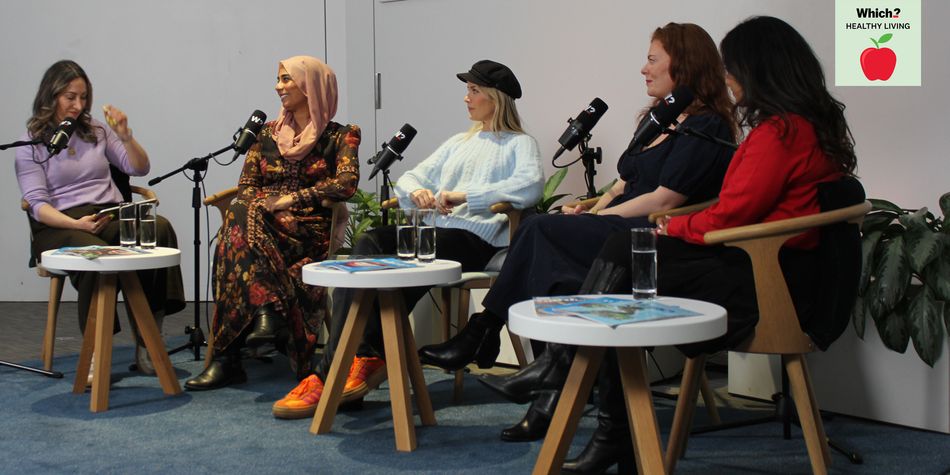
Back in January we brought you a live podcast with our health experts who answered your questions on how to get healthier as you age. We couldn't answer them all, so we've recorded another episode to cover more of your burning health questions.
In this bonus episode of our healthy living podcast, we're joined by our public health nutritionist Shefalee Loth and the founder of CityDietitians, Sophie Medlin, who share their expertise on supplements, exercise and the menopause.
Plus, our experts explain whether or not it's ever too late to adapt your lifestyle to make you live longer.
Erica McKoy: Back in January, we did a live podcast with our health experts and they answered your questions on how to get healthier as we age. We answered as many questions as we could, but today we’ll be answering even more of them. Welcome to this podcast from Which?
Hello, it’s Erica here with a brand new episode of our healthy living podcast bringing you expert advice and recommendations to help you live your best life. So let’s welcome back our public health nutritionist, Shefalee Loth.
Shefalee Loth: Hi. Hello.
Erica McKoy: And the founder of City Dietitians, Sophie Medlin.
Sophie Medlin: Hello.
Erica McKoy: Hello. So we recorded a live podcast in January, which feels – that time has just whizzed by. Can you remember the podcast and how do you feel now it’s done? Because we were planning it for a while.
Shefalee Loth: We were and actually, on the night after it was done, we all said how well we thought it had gone, but also how quickly it had gone. It felt like we could have carried on talking for at least another hour or two – there were so many interesting angles that came up and actually we could, yeah, could have talked for ages.
Sophie Medlin: Kept going. Yeah. It felt really nice and cosy. I don't know, it just felt like we all sat down – I was there live – but it felt like we could all be sat on a sofa enjoying ourselves. It was just lovely, it was very lovely.
Erica McKoy: And it was really interesting. I learned lots as well. Totally. Okay, so we've got some extra questions that have come through since the podcast, during the podcast that we didn't get a chance to answer – so I'm going to put them to you now so that we get our answers, we know what's going on. The first question is from Denise and she has the question – she’s wondering whether supplements are necessary for healthy ageing or can most people get most of their nutrition through their diets?
Shefalee Loth: So actually, I guess what I would say is you don't need to have supplements – apart from vitamin D, you should be able to get all the nutrients that you need from your diet and that applies when you're getting older or ageing as well. There are some nutrients that do get harder to absorb as you age – for example vitamin B12 – so actually some people might find in later years that they do need to supplement or top up.
Erica McKoy: And am I right in thinking that some supplements need to be paired together? They won't – you won't get the most from the supplement if you're not pairing it with the right food or taking it at the right time?
Shefalee Loth: Yeah, absolutely, so I guess a really easy example of that is vitamin D, which is a fat-soluble vitamin. So you need to take it at the same time as eating something that contains fat. When we reviewed vitamin D supplements for Which? actually a lot of them already contained fat, which means it's just a much more convenient supplement to take and means you don't have to take it with food, you can take it when suits you because the fat's already present.
Sophie Medlin: The other thing we should consider is that some nutrients compete for absorption. So for example, if you're taking zinc, it can flood the receptors that take zinc into the bloodstream, but those receptors are also used for copper, and so if you take too much zinc then you can't absorb as much copper as you need and you can become copper deficient. So actually what's always best is to take something in combination with other – so take a good-quality multivitamin if you're struggling with getting all the nutrients that you need from your diet.
And the other thing we should mention about ageing is of course lots of people will need calcium supplements, but that's usually decided once you've seen your GP and you've had a bone scan – something called a DEXA scan. If they notice that your bones are thinning, you've got something called osteopenia or osteoporosis, then you would be put on calcium supplements from your GP. So there's lots of reasons why you might be put on supplements by somebody as you age, but it's not necessary for healthy ageing for everybody.
Erica McKoy: That's great to know. But also, I think – did we talk about this in the live podcast? That there's something in moving as well, having good movement because your bones need it, they need to experience movement.
Sophie Medlin: Yeah, totally. And also the lighter your body weight is, the more likely you are to get things like osteoporosis and osteopenia. Your bones need to be under pressure for the signals to come into your blood to draw more calcium into the bones and recalcify them. So we absolutely need weight-bearing exercise and to be a healthy weight, not just – I think we focus so much when we talk about healthy weight on losing weight, but also if you're getting older, having a bit of extra weight on you is actually really beneficial.
Erica McKoy: Julie was curious, how can I work out which supplements are actually beneficial and how can I stop myself from wasting money? Because I think that is, whenever I go into the shops I'm always like, oh, which ones? Where do I start?
Shefalee Loth: It's totally overwhelming. It's completely overwhelming. There are so many supplements out there and actually I suppose that's really why we've been focusing on this at Which? over the last year because there are – there's so much choice, there's so much misinformation and so we're trying to cut through that noise and make it easier for consumers to choose the right supplements for them.
And as Sophie said, not everybody needs to be taking supplements, but what we've been trying to do in our supplement analyses is look at iron supplements or vitamin D or magnesium and say well look, you might not need these, but if you are going to buy one then we've done the work for you. We've looked at a range of 20 to 30 supplements out there on the market and we can recommend out of this group which are the best to buy and so you're not wasting your money.
Erica McKoy: And these tests are thorough.
Shefalee Loth: We’re really getting into it. Yeah, they're really thorough. Sophie and I have created a framework where we assess supplements based on the form of nutrient that's in them and how bioavailable that is – how easily your body can absorb that vitamin or nutrient. We look at the dose and make sure that it's appropriate. So it's not too low but also not too high because we don't want it interfering with the absorption of other nutrients.
We also look at what else is in that supplement – so whether that be other active ingredients or the additives and fillers. And of course some supplements need some fillers, but a lot of them we found have many unnecessary fillers. Sometimes we'll also take into account other factors – so with iron we've looked at actually how tolerable is that form of iron? Is it linked to having lots of side effects or actually is it tolerated quite well? And then when we've got our top-scoring supplements, we send them off to a lab to be independently tested to make sure that they contain the amount of nutrient that they say they do.
Erica McKoy: Which is very important.
Sophie: Absolutely. There's lots of stuff online where they're putting in far too much of whatever.
Shefalee Loth: Yeah, totally. We found some really high-dose supplements, haven't we?
Sophie Medlin: Absolutely. And I think it's really important to say that it's really hard even for the – for nutritionists and dietitians to decipher what's a good supplement versus a bad supplement. It's not easy and when people say to me oh how do I know, it's really hard to explain and I think that's why this work we're doing at Which? is so important and helpful to people. We know people are going to buy supplements, let's help to make sure they're choosing the best ones out there. It is difficult, it's complicated science and the supplement companies will make – or some supplement companies I should say – will make some really wild claims and what you see on social media you have to be really careful of. And our adage would be if it sounds too good to be true, it probably is.
Shefalee Loth: Yeah, absolutely.
Erica McKoy: Sophie, Shefalee mentioned bioavailability. What is that? What does bioavailability mean?
Sophie Medlin: Yeah, good question. It means how easy it is for your body to use, absorb and then use that nutrient in the body. So it's getting the nutrients as close as possible to how they're actively used in your body. So for example, B vitamins – certain B vitamins particularly – need to go through a process called methylation where they're broken down and created into something that your body can use. And you can buy just straight-up B vitamins or you can buy methylated B vitamins which circumnavigates that need for them to be further broken down in the body. So it's a bit easier for your body to use those nutrients.
Erica McKoy: Great. Thanks for that. There's a question from Angie, she says, what are the most effective lifestyle changes I can make for healthier ageing when I'm over 40? That's what she said.
Sophie Medlin: Great question. I think sometimes people think that our answer to this might be to take a handful of supplements when in reality the answer is thinking about the basics – so stopping smoking, managing alcohol intake, but exercise, sleep and nutrition are the cornerstones of healthy ageing. And there's some amazing data on how if we just increase those three ever so slightly – we're talking about half a portion of fruit and veg a day, two minutes extra exercise a day, five minutes extra sleep a night – that you can increase your life expectancy by a whole year. Amazing. And then if you increase that to being a bit more exercise, a bit more sleep and a bit better eating, you can increase your life expectancy by nine years even if you make those changes later in life. So there's loads of great reasons to focus on those as your core pillars of healthy ageing.
Erica McKoy: Okay, let's go onto the next question. We did talk about misinformation online. How can I trust the claims made on supplement packaging?
Shefalee Loth: So there's actually regulation in the EU and UK about the claims that can be used for vitamins and minerals on supplement packaging and on advertising. And actually this is really highly regulated. So supplement manufacturers shouldn't be making claims that are unfounded. That said, there will be some that try to break the rules or over-exaggerate their claims.
But actually, in our research what we see is the real problem is with online and on social media where people aren't really held to the same standards and by the same regulations. So actually a lot of people will be on social media really promoting products, selling them, making these outlandish claims that really don't stack up.
Sophie Medlin: And what we're also seeing, which is frightening, is some of our colleagues being put into deep-fake videos and selling – selling supplements as in the – it looks to every other person like doctors and nutritionists and dietitians who are high-profile are selling supplements or recommending supplements when really it's just a – it's a deep-fake video and they could be looking like they're on, this morning or TV shows when in reality it's just someone who's made up that video. So it is so hard to trust what's on social media now. Be cautious.
Erica McKoy: Be cautious. Okay, more questions, more questions. So much obviously the whole conversation is about ageing and getting healthier as you get older. We've got a question here about menopause. Which symptoms of menopause respond to lifestyle or nutritional changes?
Sophie Medlin: Well, when we look at the research, actually all of them can. Unfortunately the research that's been done on menopause to date – a lot of it is quite woolly. And we know that every woman, every person goes through different menopause symptoms and experiences things differently. What we know to be true is that eating well during the menopause can reduce all of those symptoms and the impact that you notice them in how you feel them in your body. So if we think about things like hot flushes, sleep disturbance, anxiety, all of the symptoms that we would associate with the menopause. If we look at the big data on following for example a Mediterranean-style of eating during the menopause, we know that most people have much lower symptom severity during that time.
Erica McKoy: And what are the foods that you'd expect in a Mediterranean diet?
Shefalee Loth: So if you talk about a Mediterranean diet, those are generally eating patterns that are based around whole grains, lots of fruit and veg, some lean proteins, pulses, legumes and healthy fats. But actually Sophie mentioned this earlier to me and I think it's really true, a Mediterranean diet is very Western-based. And obviously it's not inclusive for dietary patterns around the world, but actually lots of other diets from other areas around the world are based on similar eating patterns – that emphasis on fruit and veg, plant-based foods, whole grains, healthy fats. So it's those types of foods that really can help improve menopause symptoms. But also things like reducing caffeine and alcohol intake can be beneficial too. There is some research that shows actually spicy foods can be problematic for some people, so it may be worth reducing those as well.
Erica McKoy: How can women safely take supplements alongside other medication? Do I need to take into account any chronic health conditions before I take them? That's a question from Vicky.
Shefalee Loth: I would say absolutely, yes. Just because things might be natural or a vitamin or mineral, that doesn't mean it's safe to take if you're taking other medication. And so there are interactions between certain drugs – for example if you take a blood-thinning drug such as warfarin, you shouldn't be having grapefruit because then that can lead to excessive bleeding. And there are lots of other examples like this, so really in all our advice we would say if you're on existing medication and you want to introduce a supplement, do check with your pharmacist or your doctor before doing so just to make sure there's no interactions.
Sophie Medlin: Yeah, and I would extend that even to if you have a medical diagnosis actually. So if you have a diagnosed medical condition, no especially, but I'm thinking particularly of things like liver and kidney problems because your liver and your kidneys are so heavily involved in processing things like supplements. If you're having any problems in those departments, then you can really struggle and that you can overload your organ system. So if you have any medical diagnosis, do check with a GP or pharmacist before you start a supplement.
Erica McKoy: Absolutely. Thanks for that too, I think Vicky will find that very helpful. Let's see, we've got some more questions. Nora says, which diet best supports energy, metabolic health and weight management during the menopause?
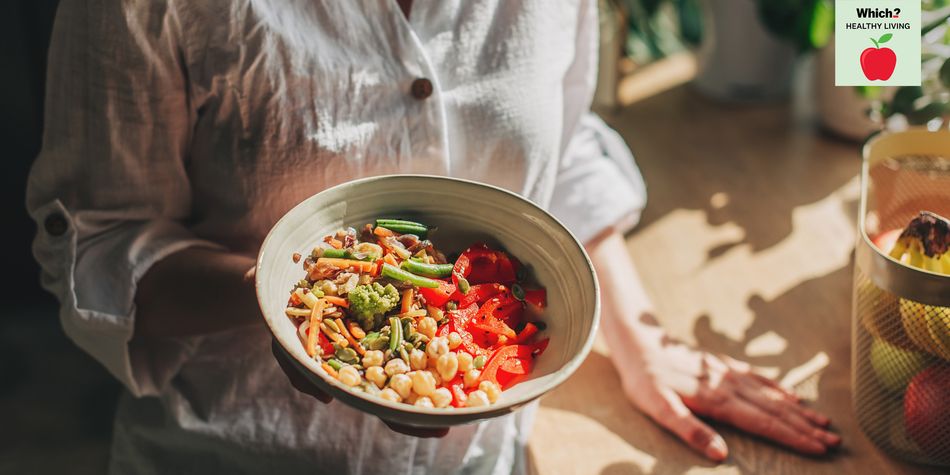
Shefalee Loth: So we've talked about this already and it really boils down to that Mediterranean-style of eating – so try and base your foods around whole grains and plant foods, lean meats or lean proteins I should say and healthy fats.
Sophie Medlin: And then also of course limiting sugary foods, processed foods – those kinds of things which if we imagine people eating in the Mediterranean, we can't imagine them eating Mars bars and crisps so much. So it's about trying to limit those fried foods, excess sugar, those kinds of things. But sugar from fruit of course is absolutely fine, it's just processed foods that we want to be a bit careful with.
Erica McKoy: Are there any alternative that someone could swap out? Instead of having a chocolate that's full of sugar and fats and unhealthy things, is there anything that someone could swap out that's relatively just as tasty but is going to do the body a lot more good?
Sophie Medlin: It's so difficult because we're talking about what we would call hyper-palatable foods – foods that are designed and manufactured to be irresistible to humans with something that – the ideal swap would probably be some nuts and a piece of fruit, right? If you're having a chocolate bar every day and I'm asking you as a dietitian to swap it to some nuts and a piece of fruit, that's not going to hit the spot in the same way. No.
So what we would do is think about a staging of that. So it might be that you start with having some chocolate-coated nuts or some chocolate rice cakes and something else as well.
Erica McKoy: Or those really easy dates. I love, I often like cut them open, get rid of the seed, put some peanut butter in, dark chocolate.
Sophie Medlin: Perfect, that kind of thing. Yeah. And sometimes that's still too much for people, dates might be completely unfamiliar. So we just have to find shifts that move them in the right direction. But ultimately, I think with these hyper-palatable ultra-processed foods, it is a case of trying to reduce how often you're having them quite significantly if it is a daily part of your diet.
Erica McKoy: And to wrap up, we've got a question from Angie. If someone has not prioritised their health earlier in life, is it still possible to significantly improve healthy outcomes later on?
Shefalee Loth: So this question makes me really sad actually just because I want to say yes, of course it is. Don't feel like you've left it too late and your health has been written off because there are always small changes you could make which will have a beneficial impact and that could just be reducing the amount of highly palatable sweet, sugary foods that you're eating or it could be increasing your fruit and veg intake, it could be increasing your fibre intake, upping your protein a bit. There are small incremental changes that you can make that will have a really significant impact on your health and wellbeing.
Sophie Medlin: Yeah, and I think it's so important to say that all of us make lifestyle changes when we're younger that we probably wouldn't make for ourselves when we're older and teenagers are vaping now and all these things that hopefully adults aren't doing regularly. It's something that's completely repairable – your liver repairs itself, everything is amazing at restoring itself within your body.
But of course, there are some bits that you can do that make a big difference and I've got some statistics I'm going to share with you. I grabbed my piece of paper because I cannot retain them. So in terms of diet and lifestyle, we talked about sleep, diet, activity and physical activity, but especially smoking and drinking as well being careful with those even in your 40s and 50s. We know that if we are conscious of diet, activity, not smoking and no excess alcohol and of course sleep as well, we can enjoy 60 to 70% lower all-cause mortality. And that means your risk of death from anything is lowered by 60 to 70%. Wow. And actually for cardiovascular disease – heart disease – 70 to 80% reduction in cardiovascular disease mortality.
These are big statistics. Amazing. And even if you make those changes after the age of 50, still substantial benefit – so still close to that level of improvement. And if men change their lifestyle after the age of 50 – so I don't know how old the question asker was, but let's say they're in their 40s, still got a bit of time to keep messing around I'd say – they can think about changing lifestyle after 50. Men can add 10 to 12 years to their life expectancy and women can add 12 to 14 years to their life expectancy. So there's loads of great reasons and easy ways to improve your lifestyle in your 40s and 50s that can have remarkable benefits – not just to your length of life, but also the quality of life and lack of medical complications later in life.
Erica McKoy: It's brilliant, isn't it? How the body is?
Sophie Medlin: Yeah. And none of those things mean taking handfuls of supplements, right? None of those things relate to taking supplements – all of them are about lifestyle changes: diet, exercise, sleep, the things we've talked about. Fantastic.
Erica McKoy: Thank you so much. Are there any things that you just want to leave our listeners with that will kind of hopefully inspire them to maybe set the next meal to be a bit healthier or improve the health in some way?
Shefalee Loth: Mine would be think about those stats. We're not asking you to overhaul your whole lifestyle, but it is about just increasing your fruit and veg, doing a bit more physical activity – especially that strengthening exercise, those strength-bearing exercises. We know that we lose muscle mass especially after 40, so it's just about making sure that you're building those up through exercise.
Erica McKoy: And creating surely small habits?
Shefalee Loth: Yeah. Little easy bits. Things that you can sustain – the thing is if you make a massive change, it's really hard to maintain, whereas if you make small changes they're much easier to stick to.
Sophie Medlin: Yeah, I totally agree with you. I think that when I'm working with patients, people often think I'm going to give them this complicated diet plan with loads of foods they don't recognise. And in reality it's let's swap this for this and this week or this month let's work on this change – small change. Let's add an extra portion of fruit or veg at lunchtime and a bit more in the evening and it really is nudges in the right direction which over a short amount of time can turn out to be something really life-changing and life-lengthening and life-improving for people.
And I think we do think of this stuff and I think people listen to other types of podcasts and think oh my god I'm doing everything wrong, when in reality we all have a starting point and whatever your starting point is, you can easily make a quick change that will make a big difference quite quickly.
Shefalee Loth: Yeah. And actually I would add one thing there – it's not about depriving yourself. So instead of thinking about what do I need to cut out, actually maybe reverse that to think what could I add into my lifestyle or my diet that could help me?
Erica McKoy: I would love to add an extra hour of sleep. Make it work. More fruit. It’s great. This is such a positive way I think to end this podcast because as you said lots of people do go, what can I take out? What do I need to remove? What do I need to – and it doesn't need to be that. It doesn't need to be that. Thank you so much for joining me today.
Shefalee Loth: Thanks for having us.
Sophie Medlin: Thank you.
free newsletter
Sign up for our Healthy Living newsletter, it's free.
Our Healthy Living newsletter delivers free health and wellbeing-related content, along with other information about Which? Group products and services. We won't keep sending you the newsletter if you don't want it – unsubscribe whenever you want. Your data will be processed in accordance with our privacy notice.
Do collagen supplements actually work? We review the evidence and explain what you need to know before buying
Get the Which? lowdown on popular health topics, with insight from leading experts and our in-house research team. Here are our recent podcast episodes:
The Which? podcast showcases the best content from across our website and magazine.
Which? Money episodes, released on Fridays, give advice to help you get on top of your bills and tackle the issues hitting your pocket, from spiralling energy costs to your weekly food shop.
The Which? Shorts podcasts offer you a free insight into some of our favourite articles from our suite of magazines.
Plus, keep an eye out for bonus episodes that tackle important issues, from motoring to tech, health and wellbeing to travel.
We're always releasing new episodes, and the podcast is available wherever you usually listen to podcasts.
Subscribe using one of the links below or click this link on your mobile to find us in your favourite podcast app.
As part of your subscription, Which? members also get access to exclusive podcasts.
If you're not already a member, podcast listeners can get 50% off the first year of an annual membership.
Make the right choice with recommendations you can trust, backed by expert testing.
Explore health recommendations