By clicking a retailer link you consent to third-party cookies that track your onward journey. This enables W? to receive an affiliate commission if you make a purchase, which supports our mission to be the UK's consumer champion.
Revealed: the surprising fault affecting new hybrids and EVs

Michael joined Which? in 2017 and is the senior researcher on the Cars team. He’s passionate about improving safety and fairness for all road users — from drivers to pedestrians.

New and nearly-new hybrid and electric cars from brands including Toyota, Kia and Hyundai are suffering high rates of 12V battery faults, leaving owners stranded without a functioning vehicle.
With technology improving all the time, you’d be forgiven for expecting seemingly basic parts, such as the 12V battery, to work near flawlessly – especially on cars that are less than four years old. However, according to Which? car survey respondents, this isn’t the case, with hi-tech vehicles including hybrids and EVs suffering a high frequency of battery failures.
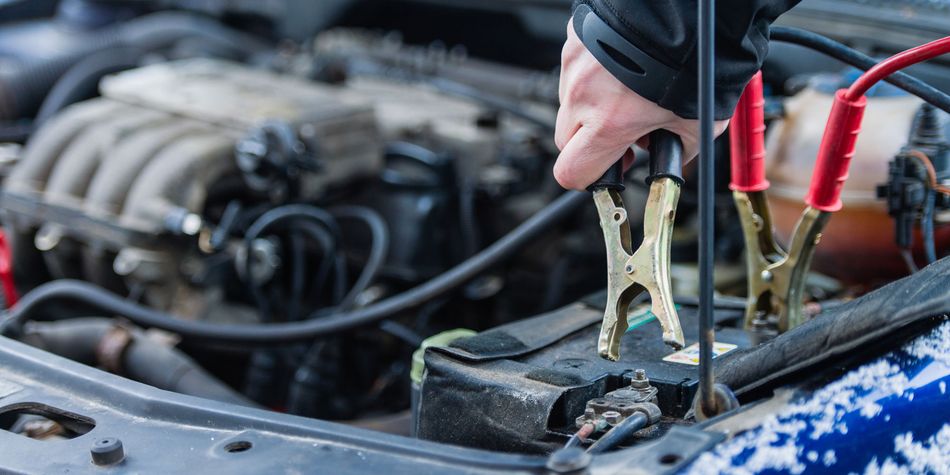
It’s not the main batteries that power the electric motors that are causing concern here; it's the 12V starter (auxiliary) batteries found under the bonnet or in the boot of all cars.
Read on to find out which brands are worst affected and how they responded.
Have you got a relatively new car (aged 0-4 years) that's suffering 12V battery faults? If so, we want to hear from you.
Send your experiences to cars@which.co.uk
We read every email and your responses will be used to help hold car companies to account, but we can't promise to reply to everyone.
Full hybrids particularly affected
We found that owners of full hybrid cars are four times more likely to be left with a flat 12V battery than owners of pure petrol cars, while owners of plug-in hybrids and electric cars are more than twice as likely to have this issue.
Which? survey data from more than 60,000 car owners revealed that 5.6% of owners of self-charging hybrid cars less than four years old experienced a flat or failed 12V battery in the year covered by our survey.
That compares to 1.4% of petrol car owners and 1.8% of diesel car owners in this car age group. EVs had a 3.8% failure rate; for plug-in hybrids it was 3.5%.
The table below shows the 12V battery failure rate in cars aged 0-4 years for each fuel type.
| Fuel type | 12V battery fault rate |
| Full hybrid | 5.5% |
| Electric | 3.8% |
| Plug-in hybrid | 3.5% |
| Diesel | 1.8% |
| Petrol | 1.4% |
Survey details: 63,334 car owners were asked about their cars including any faults experienced in the 12 months before taking the survey. The survey was conducted April-June 2025.
The picture gets worse when you look at a few very popular car brands, with some having a failure rate of more than 10 times that of the average petrol car.
Most notably, it’s cars from brands that are part of two common parent companies that seem to suffer the most.
| Brand and fuel type | 12V battery issue rate |
| Hyundai electric | 16.1% |
| Toyota full hybrids | 10.3% |
| Lexus full hybrids | 9.4% |
| Kia electric | 7.5% |
Hyundai EVs top the table of the brands suffering the most 12V battery issues in the year covered by our survey, while EVs from its sister brand Kia also have a notably high fault rate, albeit half that of Hyundai.
Toyota and Lexus, also part of the same company, suffer a similarly high rate of 12V battery failures on their full-hybrid models.
Particularly bad examples include the Lexus LBX and Hyundai Ioniq 5 (fault rates of 29.2% and 27.3% respectively), making them around 20 times more likely to suffer a 12V battery problem than the average pure petrol car.

It’s worth noting on the Hyundai Ioniq 5 that only around half of respondents reported a breakdown as a result of this issue; the rest were able to drive their car and just under half had the fault rectified as part of a recall. Repairs dealt with under a recall are still classified as a fault in our survey, as the inconvenience of having the car repaired affects the ownership experience.
Some of Kia’s recent EVs are prone to these issues, too, with the current Kia EV6 (18.8%) and Kia Soul EV (18.8%) having a significant number.
Of course, in some cases a flat or failed battery could be due to owner error. But that's the same for all brands, so it's unlikely to be the reason behind the very high fault rates for these brands and models.
In the table below you can see all the models where cars less than four years old that had a high 12V battery failure rate in the 12 months covered by our survey.
| Car (click for review) | 12V battery fault rate |
| Lexus LBX (2024-) | 29.2% |
| Hyundai Ioniq 5* (2021-) | 27.3% |
| Toyota Yaris Cross (2021-) | 19.1% |
| Kia EV6 (2021-) | 18.8% |
| Kia Soul EV (2019-24) | 18.8% |
| Hyundai Kona Electric (2018-24) | 16.7% |
| Toyota Yaris (2020-) | 12.2% |
| Ford Kuga PHEV (2020-) | 11% |
| Toyota Corolla Hatchback (2019-) | 8.9% |
| Toyota C-HR Hybrid (2017-23) | 8.3% |
All models had a minimum owner sample size of 64 and a minimum number of faults reported of 10.
*47% of owners who reported this fault said they had had it repaired as part of a recall.
What owners told us
Linda, a Which? member, returned home from two separate one-week holidays to find her 2025 Toyota Yaris Cross hybrid’s battery completely flat.
She told us that Toyota said the fault wasn't with the battery itself and that it was due to her leaving the car for a week without driving it.
Linda said: 'It is utterly ridiculous that you cannot go away on holiday for a week and, on return, find that the car is completely dead. I bought this car in March 2025 and no one tells you that unless you drive it every day you could be left with a flat battery.
'Toyota should have sorted this years ago, but don't seem to feel any sense of responsibility for letting people down.'

Mr Lawrie, a Hyundai Kona Electric owner from Birmingham, told us: 'We had a 12V battery failure after two years and 4 weeks, when the warranty is only two years. Hyundai refused to pay towards replacement.'
Meanwhile Rob, a Kia EV6 owner, said: 'The car suffered a 12V battery phantom drain and was at the dealer's for six weeks while they tried to diagnose and rectify the issue.'
We also heard from a Lexus NX owner – his dealer told him that driving less than 8,000 miles per year was the cause of his 12V battery problems.
If you've had problems with a 12V battery on a relatively new car, we want to hear from you. Share your experiences with us at cars@which.co.uk.
How the brands responded
We approached the brands most affected by 12V battery faults for comment. Here's what they told us.
Kia
Commenting on our findings, a Kia spokesperson said: '12-volt battery discharge can be caused by a variety of reasons. These include when the vehicle system is kept active for extended periods without the vehicle being in 'Ready' mode.
'To help customers mitigate 12-volt battery discharge situations, Kia vehicles are equipped with a 'Low 12--volt Battery' notification, visible both in the Kia App and via the infotainment screen.
'In 2024, Kia issued an ICCU (Integrated Charging Control Unit) software update to improve charging of the 12-volt battery and manage its voltage/thermal behaviour. This update is free of charge to customers with affected vehicles.'
Hyundai
A Hyundai spokesperson told us: 'Hyundai is aware that some customers have experienced 12V battery charge issues, and as part of Hyundai Motor Company’s policy of continuous improvement, several software updates have been developed to improve 12V battery management on both previous generation Kona and Ioniq 5 models.
'Customers can check if their vehicle has any outstanding software updates via our service campaign checker or via their local Hyundai retailer. Any outstanding service campaigns can be carried out free of charge to the customer.'
Toyota/Lexus
Toyota/Lexus provided information on each of the cars we highlighted in this article:
- Toyota C-HR: A higher-capacity battery was made available in January 2022
- Toyota Corolla: A higher-capacity battery was made available in January 2023
- Toyota Yaris/Yaris Cross: A higher-capacity battery was made available in October 2025
- Lexus LBX: A higher-capacity battery was fitted to new cars from April 2025, and cars brought in for routine maintenance will receive a battery quality inspection. If the battery is identified as from the same production run as those with reliability problems, it will be replaced for free.
A Toyota spokesperson also told us that owners can book a battery quality inspection from a main dealer. This test has been updated as of May 2026 and anybody whose car is identified as needing a replacement will get one for free.

The brands that did better
While some brands fared badly, there were also those that performed much better.
Below are the brands and fuel types with a 12V battery issue rate of less than 2% for models aged 0-4 years.
| Brand and fuel type (click for reviews) | 12V battery failure rate (0-4 years) |
| Kia full hybrids | 0.4% |
| Volvo EVs | 0.6% |
| Renault full hybrids | 0.8% |
| Hyundai full hybrids | 1% |
| Honda full hybrids | 1.1% |
| Renault EVs | 1.4% |
| Skoda EVs | 1.5% |
| Tesla EVs | 1.5% |
| Volvo PHEVs | 1.5% |
| BMW EVs | 1.6% |
| Mercedes-Benz EVs | 1.6% |
| Mercedes-Benz PHEVs | 1.8% |
| MG EVs | 1.9% |
Use our data to find a reliable car
If you’re thinking of buying a car and want to find out how susceptible it is to 12V battery failure (or any other type of fault), be sure to check the results of our latest reliability survey:
- Most reliable car brands: browse our database of brand reliability data, including by fuel type
- Most reliable cars: get detailed reliability data for individual models
- New and used car reviews: we provide reliability data in all our expert car reviews
Best cars for 2026: new or used, big or small, find your perfect next car
Expert view: What's going on with these 12V batteries?

Michael Passingham, Which? senior researcher
Based on the responses we received from Toyota and Hyundai, there are at least two separate issues at play here.
In Hyundai's case it seems to be a software problem that isn't keeping the batteries properly charged, or draining the battery while the car is off.
In the case of Toyota/Lexus, it seems to be an issue of parts quality; the company seems to have originally fitted batteries that have too low a capacity to keep the car powered up while parked for extended periods.
It's intriguing that there is no mention of a software update here, suggesting that the fact these cars drain their batteries while parked isn't solvable in any other way aside from throwing a bigger battery at it.
If you own a car from any of the manufacturers we've mentioned above, make sure you get in touch with your local dealer to see what options are available to you.
See the best full hybrids, best plug-in hybrids and best electric cars according to our tough lab tests
Would your warranty cover a 12V battery failure?
Whether your warranty will help depends on the brand of car you own and what's causing the fault.
Toyota and Hyundai offer a three-year/36,000-mile warranty, while current Toyota and Lexus hybrids are covered by a three-year/60,000 mile policy. If you’re outside that warranty period, you may well have to cover the cost of a replacement battery.
Of all the cars that suffered any sort of 12V battery issue from new up to four years old, 63% of repairs were covered under warranty or recalled and repaired for free.
Keep in mind that if your car chews through its 12V battery (which will be likely if it's constantly being discharged due to a fault), it could present significant long-term expense, unless the manufacturer is able to identify and rectify the fault.
How to keep your 12V battery healthy
Taking your car for at least a half-hour drive every fortnight will help to keep the battery charged and in good condition, but you can also use what's called a trickle charger. These low-voltage devices are able to fully charge a 12V battery in around 48 hours.
They can cost anything between £25 and £200, depending on their features, and are typically easy to use. However, not all cars are compatible with trickle chargers, so check your car’s manual or get advice from a local dealership before using one, and be sure to follow the instructions carefully.
If you find that your car won’t start because the 12V battery has run flat, you may be able to jump-start the car.
Should I buy an electric car? The questions you need to ask yourself before making the switch