Health? or Hype?
Make the right choice with recommendations you can trust, backed by expert testing.
Explore health recommendations
Having worked at the BBC and in commercial radio before joining Which?, James produces our always-on podcasts, and oversaw the launch of our member-exclusive podcasts in 2025.

Iron and B12, along with vitamin D, are the most common nutrient deficiencies in the UK. And failing to take action can affect your health.
In the first episode of a new series of our healthy living podcast, our public health nutritionist Shefalee Loth and the founder of CityDietitians Sophie Medlin tell us who is more likely to be suffering nutrient deficiencies and the ways we can improve our intake via our diet.
Fatigue, weakness and low energy levels are all signs of iron deficiency, while for low levels of B12, symptoms can include tingling or numbness in the hands and feet, poor balance and memory problems.
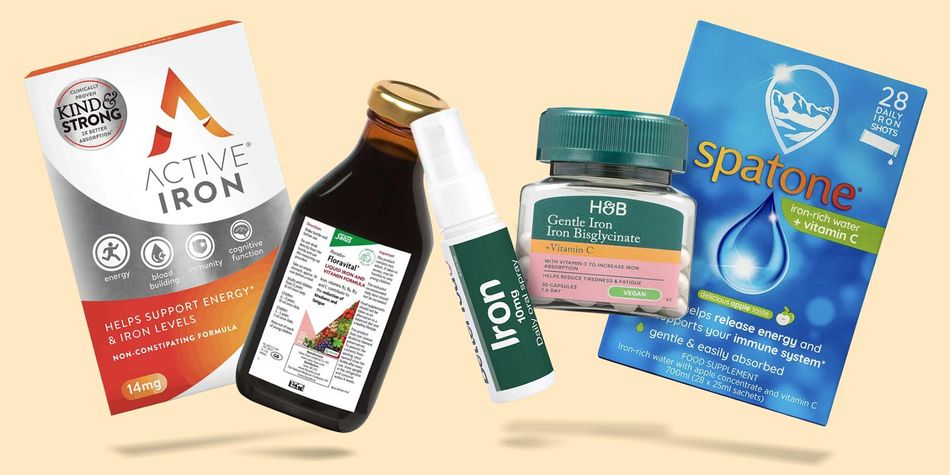
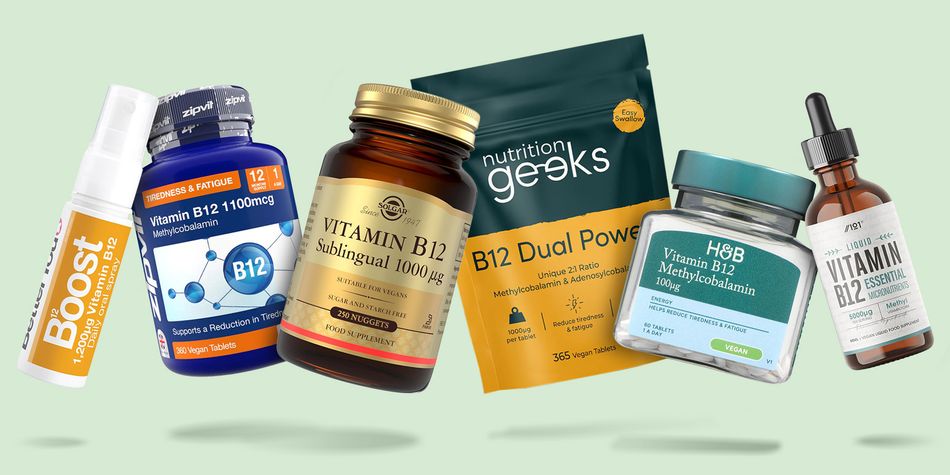
Plus, for the first time, we've been reviewing iron and B12 supplements to find out which brands are leading the way. Our thorough, independent testing allows us to recommend the products that really work, and highlight the ones that failed our tests.
The full podcast, which includes our test results, is available only to logged-in Which? users. If you're not a member, join Which? to instantly listen to the full podcast and gain access to all our product reviews – all with 50% off your first year's membership.
Erica McKoy: In the UK, B12 and iron deficiencies are incredibly common. Today, we're going to dive into the science of these all-important nutrients. Welcome to this podcast from Which?
Hello, it's Erica here with a brand-new episode of our healthy living podcast, bringing you expert advice and recommendations to help you live your best life. But before we dive into today's episode, I have a pretty big announcement. It's great to be back with our new series, but at the end of the series, we're doing a live podcast where you can put your questions to the experts. The episode is called Healthy Living: Spend Smarter, Live Better, and it's happening on the 26th of May at 6:00 PM. We'll pop a link in the show notes – it'd be wonderful to have you there.
So, let's welcome back our public health nutritionist, Shefalee Loth.
Shefalee Loth: Hello.
Erica McKoy: And the founder of City Dietitians, Sophie Medlin.
Sophie Medlin: Hi, Erica.
Erica McKoy: New episode of a new season.
Shefalee Loth: Yeah, absolutely.
Erica McKoy: So, welcome back. Today we're talking about nutritional deficiencies – more specifically iron and B12. I'm going to put you two in the hot seat and maybe make you feel a little bit uncomfortable. This is not what we normally do, but we are going to do five rapid-fire questions to start off. Are you ready? I want small, simple answers and then we'll really get into it in the episode. OK, so what is the most common deficiency in the UK?
Shefalee Loth: Vitamin D, surely.
Sophie Medlin: I was going to say vitamin D too.
Erica McKoy: And then what's the number one sign that someone might have low iron?
Shefalee Loth: Tiredness.
Sophie Medlin: Yeah, and breathlessness – noticing that you're short of breath walking upstairs and things like that.
Erica McKoy: Interesting, we'll talk about that. And can we get B12 from plant sources?
Sophie Medlin: Not really. I'm now not going to give you a quick answer.
Shefalee Loth: We're not getting a quick answer!
Sophie Medlin: Not really.
Erica McKoy: Should we dive into it in the episode?
Sophie Medlin: Not really, apart from if it's fortified.
Erica McKoy: OK, interesting.
Shefalee Loth: And Marmite.
Sophie Medlin: OK, oh, big extra!
Shefalee Loth: I love how we were like 'short answers', but I've got to get the Marmite in there.
Erica McKoy: Do women always need more iron than men?
Shefalee Loth: Yes.
Sophie Medlin: Yes.
Erica McKoy: What food combo boosts iron absorption the most?
Sophie Medlin: Vitamin C.
Erica McKoy: OK. And then what's one thing that people get completely wrong about B12?
Shefalee Loth: I think people think they need loads and loads of B12 when actually you don't need a huge dose of it.
Erica McKoy: OK, we'll get into that in the episode. We'll talk more about B12 deficiencies in a moment because it is really common, but let's kick things off with iron. I'm a pescatarian; I know loads of vegans and vegetarians. It's not only us that should be thinking about our iron intake, is it?
Shefalee Loth: No, we all need to think about it. But like you, I don't eat a huge amount of red meat – well, I don't eat any red meat, actually – so I am conscious of where I'm getting my iron from in my diet.
Erica McKoy: Is there a difference between the way beef is absorbed in the body vs spinach, which also has lots of iron?
Sophie Medlin: Yeah, absolutely. So, there's two types of iron: haem-iron, like the word haemoglobin – so it comes from blood and that comes from animal sources – and then there's non-haem-iron, which is all the plant sources of iron. The body is much more efficient at absorbing haem-iron than it is the non-haem-iron. That's not to say that non-haem-iron isn't important – it really is – but if you are consuming animal sources and you have that haem-iron, you're much less likely to get iron-deficiency anaemia than if you're relying on non-haem-iron sources.
Erica McKoy: And what does iron do? I'm guessing iron is exactly like the iron metal, right? What does it actually do in the human body?
Sophie Medlin: It's essential to create haemoglobin, which allows oxygen to be transported around the body. Hence, if you don't have enough iron, you can be short of breath because you've not got enough oxygen going around the body.
Erica McKoy: Interesting. I'm glad you mentioned that because I was confused by that quick-fire answer. I thought, 'Hmm, didn't know that to be a symptom'. Iron deficiency is one of the most common nutrient deficiencies in the UK. What do you think is going on? Why do you think people aren't getting enough iron in their diet?
Shefalee Loth: I think one of the main reasons is, as you've said, a lot of people are following more plant-based diets. A lot of people don't eat red meat or animal products for either religious purposes or preference. So, obviously, that does have an impact. Also, over the last few years – or the last 20 years – we've been told to reduce our red meat intake. Compared to 50, 60 years ago, we're eating a lot less red meat than we used to, and that's not a bad thing, but obviously to get enough iron, we do need to have some in our diets.
Sophie Medlin: Yeah, and I think as well, obviously for menstruating women, conditions like endometriosis are becoming more common. We're not really sure why yet, but that can lead to very heavy periods and things like that. When you go through the menopause – or perimenopause, I should say – you can go through periods of time where your periods are very heavy, and so if you're having heavier periods and things, you are more likely to get iron-deficiency anaemia.
Shefalee Loth: And there's one other thing, which is actually red meat is really expensive. So, if you're thinking about budgeting for your weekly food shop, red meat is a big chunk of that, so a lot of people are forgoing it.
Erica McKoy: How much iron are we meant to be getting in our diets every day? Is there a recommended amount?
Shefalee Loth: Yeah, there is. So, the nutrient reference value, which is basically how much we need on average, is 14 milligrams a day. So, if you're eating red meat once or twice a week, you're going to be getting enough iron in your diet. But if you're not and you're relying on those non-haem-iron sources, which aren't as efficient in absorption, then actually you will need to think a bit more about what you're eating and where you're getting that from.
Erica McKoy: And I guess in those cases, maybe you might think about supplementing?
Shefalee Loth: Yeah, absolutely. A supplement is a really easy way of replenishing your iron stores if you're low.
Erica McKoy: I often, when I go into your classic shops with all the vitamins and supplements, I look at the iron section – sometimes it's in the energy section – and I look and I'm like, 'Oh, there's so many different types of iron'. What should people be taking? And what are the differences out there?
Sophie Medlin: So, the one that your GP might prescribe is usually called ferrous sulphate, and that's the one that anyone who's ever had iron supplements from the GP will associate with constipation and having black poo, which can be really quite alarming.
Erica McKoy: Black poo? Oh, wow.
Sophie Medlin: Not for everybody, interestingly, and I don't know why, but lots of people get black poo when they take ferrous sulphate. The good news is there are easier-to-digest and iron supplements with less side effects on the market. What's important to say is that if you are anaemic and you choose not to take the iron supplement from your GP, you need to match the milligrams that the GP's prescribed you with another iron supplement that you buy. That can actually be really difficult because the one that's easier to absorb, more bio-available, and gets interfered with less by other foods that we eat – and is more gentle on digestion, easier to tolerate – is called iron bisglycinate. But you might need to take quite a lot of those iron bisglycinate tablets in comparison to the number of ferrous sulphate tablets you need to take. So, that's worth a chat with a pharmacist or your GP if you're saying, "I really can't tolerate this, but I do want to take something. Can I take this instead?"
Shefalee Loth: And as you've said, Erica, you go into a health food shop or a pharmacy and there are so many different supplements on the shelves that it can be really overwhelming, even within that iron category, to know which one to go for. That's why Sophie and I have analysed the best-selling ones on the market. We've looked at around 25 or so iron supplements and looked at what forms of iron they contain, which ones are better tolerated and cause fewer side effects. Also, what's the dose – is the dose good, is it going to be problematic, is it too high and give you those horrible side effects? And also, what else is in that supplement? We talked about vitamin C helping absorption of non-haem-iron, and actually, as part of our scoring process, we looked at supplements that had vitamin C already in them, which obviously just takes out an extra level of you having to think about what you're taking it with, what time of day you're taking it. And so, out of 25 supplements, we've scored them and we've got some that we recommend as best buys and are great values, so that at a glance, you know which one to pick up when you're out.
Erica McKoy: What were we looking for when we were testing?
Shefalee Loth: So, bio-availability is basically how well-absorbed that form of iron is – and Sophie mentioned, you know, there's ferrous sulphate or there's iron bisglycinate, and iron bisglycinate is better absorbed, it's more bio-available. We also looked at tolerability with iron. So, again, which are the gentler forms of iron and are going to cause fewer side effects like that constipation and black poo – because a real problem with iron supplements is people stop taking them because the side effects are so unpleasant. So, actually, if you can take a gentler form, then obviously you're more likely to stick to it and then get the benefits. We looked at dose – so does it contain the amount of iron that you need in a day? If not, then actually maybe you're better off going for a different option. And then finally, we looked at additives – so what are the extra fillers? Some fillers are fine, others are a bit more problematic, so we rate each supplement on the fillers it contains. And then finally, we look at the best scoring that we have and send the top five or six off to a lab to be independently tested to make sure they contain the amount of iron that they say they do on the label.
Erica McKoy: We'll get to the results in a second for our members, but how often do you send off a supplement and they come back and it's just not what it says on the packet?
Shefalee Loth: Well, you wouldn't think very often, but recently when we've been looking at iron and B12 especially, we've had multiple samples that haven't matched the label. And, you know, we obviously don't write them off based on one sample, so we will then re-test different batches of the same supplement to see if they give us better results. Generally speaking, we'll test three different batches, and if two of them pass, then we will recommend it, whereas if only one out of three passes, we won't.
Erica McKoy: And Shefalee, you mentioned time of day. I never assumed that there'd be a particular time of day that you should have a supplement. What are you talking about here? What is going on?
Shefalee Loth: So, I guess it depends, really. So, with vitamin B12 – and I guess we'll come on to this – you should really ideally take it in the morning because it helps with giving you energy, and so if you're taking it later on in the day, some people actually report that it can cause sleep problems for them. With iron, it's more about actually taking it not with certain foods – because that can inhibit the absorption – but in terms of times of day, I'm not aware that there's a better or worse time to take it.
Sophie Medlin: No, not necessarily with iron. You also don't want to take iron alongside calcium, so it sort of depends on when you're taking other medications and supplements potentially. But it's not about 'you have to take iron in the morning' unlike B vitamins as Shefalee says, which are best taken in the morning. It doesn't matter what time of day, but having an iron supplement with a piece of fruit is generally a good idea.
Shefalee Loth: Yeah, like a nice orange.
Sophie Medlin: Exactly.
Erica McKoy: And we'll be talking about food pairings next week, so I'm looking forward to getting into that. We have mentioned the 'C' word, constipation, quite a bit, and it is something that comes up for people that do take iron. I think sometimes when it's a new supplement in the body, sometimes the body goes, "Ah, I don't like this." What is actually going on when someone's getting constipated from iron supplements?
Sophie Medlin: What's going on is that iron is just a very heavy metal and mineral, and it's just going to slow your digestion down and make it more difficult to get those stools out. So, it can dry out the stools a little bit but slow everything down a bit, and that's the thing that causes the problem for lots and lots of people. Because it's a metal, it can also change the colour of the stools, and that can be alarming for some people as well, but the black stools is nothing to worry about – it's just a side effect to keep an eye out for.
Erica McKoy: Sophie's like, 'Been there, done that, whatever.' And is there anything that people can do? Like, you know, just to kind of help the body kind of get everything going, keep things active?
Shefalee Loth: So, on the instructions for a lot of supplements that we looked at, it said it would be better to take iron on an empty stomach. But for some people, that's just too problematic. And so, what we say is: do have it with some food, but as Sophie said, don't have it with a really calcium-rich food because then the calcium and iron will compete for absorption. So, have it with a piece of fruit – ideally something vitamin C containing – but also an apple or something like that that's just going to line your stomach a bit.
Sophie Medlin: We would also just recommend general constipation management advice. So, drink more water, try more soluble fibre – so, you know, lots of nice fruits and vegetables and things like that. And also, kiwis are amazing for constipation. So, two kiwis a day is the magic formula for lots of constipation problems. They contain an enzyme that helps to speed up digestion through the bowel. So, if you're struggling with constipation generally or it's related to iron, then kiwis are a bit of a magic potion.
Erica McKoy: With skin?
Sophie Medlin: Doesn't have to be.
Shefalee Loth: Yeah.
Erica McKoy: Kiwis are also kind of trending online – everyone's like having their kiwi to have like good rest and things.
Shefalee Loth: But lots of people are eating the skin too, which I've never tried.
Sophie Medlin: Very furry!
Erica McKoy: In the quick-fire questions, we spoke about some of the signs and symptoms that you might expect to see someone who might have low iron. One of the things that came up was breathlessness. You did quickly mention it, but like, what is going on? So, it's about oxygen, right?
Sophie Medlin: Iron is essential for the transport of oxygen around the body. And when we haven't got enough of it, you can feel quite breathless even just when you're moving around. If you have children, if you're picking up your children and carrying them around the house, you might think, 'Oh, you know, I'm really more breathless than I normally am'. If you're walking up a few stairs and you notice you're more breathless than normal, that's one of the symptoms. But also things like hair loss is a symptom of iron-deficiency anaemia, as is sort of pale skin. So, you might notice that your gums look really pale in colour, or the inside of your eyelids you can notice they're more pale. Tiredness is really the cornerstone of iron-deficiency anaemia symptoms – noticing that you're really tired and exhausted by the end of the day or in the afternoon and having these real energy crashes. That's one of the big things to look out for with iron deficiency.
Erica McKoy: I feel like that's what people often – like when they're going to the doctors it's like, 'Oh, I'm feeling really tired, I think I'm low in iron'. Menstruating people – are we the only ones that should be sort of upping our iron?
Sophie Medlin: Yeah, absolutely. And the heavier your periods are, the more likely you are to develop iron deficiency. So, I work a lot with people with endometriosis and a condition called adenomyosis, which is similar but contained within the womb itself. And those people are much more likely to get iron-deficiency anaemia because periods are longer and heavier. And that is purely because of the blood loss. So, we lose the blood, we lose the iron content through that blood, and that's when people can become deficient. That can also lead to B12 deficiency as well – there's lots of B12 in blood and that can be part of that problem too. So, that's the main thing. But other people who we would worry about with iron deficiency are, of course, our vegetarians, vegans, pescatarians – anyone who's limiting or restricting or not consuming red meat. Eggs are generally a pretty good source of iron, but you need to consume quite a lot of them to catch up with the red meat side of things. Anyone who's had an operation recently or is coming up for an operation probably wants to be thinking a bit more about iron because, of course, in any operation there's blood loss. We do think about iron deficiency in people who don't menstruate, but generally it's because of a dietary insufficiency rather than anything else.
Erica McKoy: And we spoke about periods. I'm putting you on the spot here, but like, how much blood is kind of like a normal amount of blood that people – because I guess people don't know like if they're losing too much and when's the right time maybe to see a GP or a doctor about it?
Sophie Medlin: So, I think one of the things that's sort of a cornerstone of there being a problem is something we would refer to as 'flooding', where you're using your sanitary product but you're having to change it really, really regularly and perhaps you're still leaking into knickers or into your clothes – especially overnight, for example. So, if you're having that flooding symptom, that's one thing. But painful periods – we shouldn't really need more than just simple paracetamol, if anything, to get through period pain. So, if you're noticing that you're having to use stronger painkillers, you're asking your GP for stronger painkillers, or you're still having a lot of breakthrough pain despite using painkillers, that's a sign that you really need to go and chat to somebody about looking to see whether there's any other cause of having periods that you're struggling with.
Erica McKoy: Something else we've also tested is B12. There's so many different types of B vitamins out there. Why do we need B12 specifically and what does it do for the body?
Sophie Medlin: So, B12 is essential for our nervous system. So, without B12, our nerves don't function properly. And it's also a really important precursor for neurotransmitters like serotonin, melatonin – these sort of really important neurotransmitters that connect our brain up. So, if you think of B12 as being – if you think of iron as being the blood piece, then B12 is like the nerves piece, right? So, if you are deficient in B12, unsurprisingly, you can have things like mood changes as well as fatigue – so fatigue is again a cornerstone – but mood changes is a big one. And if it goes on too far, you can get sensation changes in your hands and feet, numbness or tingling and things like that. And unfortunately, sometimes that is permanent and irreversible. So, we do have to keep on top of B12 deficiency and make sure it's not something that's continuing and getting out of control.
Erica McKoy: Are there any demographics or, you know, people of a certain age that are more likely to have a B12 deficiency?
Shefalee Loth: Yeah, well we touched on this before, but actually anybody who's following any kind of plant-based – a vegan diet is definitely at increased risk of B12 deficiency because it's found mainly in animal products. Now, there are some plant foods that contain vitamin B12, but not naturally – so they're fortified. So, you'll find it in breakfast cereals or plant-based milk sometimes, also in yeast extract spread – so Marmite will have it. But actually the main sources of B12 in our diet are animal products.
Sophie Medlin: The other people that are at risk of B12 deficiency apart from our vegan friends are anyone who's had bowel surgery. So, there's a particular piece of the bowel called the terminal ileum right at the bottom end of the small intestine, and that's where vitamin B12 is absorbed. So, people who've had an operation there – which is a population group that's close to my heart, I've worked with people who have a condition called having an ileostomy, which means that instead of pooing out of your bottom, you're pooing into a bag that's on your right-hand side of your abdomen – often they – 30% of people who've had that bowel surgery will be deficient in B12. And for those people, it doesn't matter how much B12 you put in the top end, you can't absorb it because you've not got the bit of bowel left that does the absorption of B12. So, they have to have injections of B12. And there's another group who have an insufficiency of something called intrinsic factor, which is produced in the stomach and it helps with or is essential for the absorption of vitamin B12. That can happen as we get older, sometimes there's a genetic predisposition to not producing enough intrinsic factor. Again, it doesn't matter how much B12 supplements you take, it won't be absorbed – you need to have the injections.
Erica McKoy: So, you can't go, 'Let me just take the highest strength B12 out there' – it just won't work?
Sophie Medlin: No, nothing will work. Just has to be injections, unfortunately. Three-monthly injections, and what I would say to you is try not to be afraid of those injections because you feel like you're coming back to life when you've had your B12 injection.
Shefalee Loth: I have B12 injections every three months, and they do make a real difference. But make sure you're getting them from your GP. You know, there are clinics, hairdressers on the high street that are now offering B12 and other nutrient injections – please don't go to them. Make sure you're getting it via your GP.
Erica McKoy: We've done lots at Which? all about that – like Etsy sellers providing supplements. Don't do it.
Shefalee Loth: Yeah, don't do it.
Sophie Medlin: Don't do it.
Erica McKoy: Shefalee, I know you are partial to a little bit of Marmite on toast.
Shefalee Loth: I am.
Erica McKoy: Sophie, do you like Marmite on toast?
Sophie Medlin: Not especially, no, sorry.
Erica McKoy: Me neither. But for those who kind of want a little bit of B12, Marmite is surprisingly packed full of B12, isn't it?
Shefalee Loth: It's a good source and it's a good plant-based source. But as I said, I've had bowel surgery, so I can't absorb it anyway, which is why I have to have my injections.
Erica McKoy: B12 is present in animal liver. Can you tell us a bit more about it, Sophie?
Sophie Medlin: Yes, so B12 is stored in humans in the liver, and similarly in lots of animals, it's also stored in the liver. And so, you can get loads of B12 from liver. And now people are quite keen on making liver and other organ meats into powder and putting them in supplements and things like that. It's not the conventional way of getting B12, so we don't really have any research on it. And of course, if you're – well not necessarily 'of course' – but if you're pregnant, you must be very careful with consuming organ meats because they can contain excess of other nutrients like vitamin A, which can be dangerous for the baby. So, you know, organ meats are great in small quantities for some people some of the time, but they're not the easiest or most accessible answer to B12 deficiency.
Erica McKoy: What would you recommend then? What sort of foods do hold lots of B12 in?
Sophie Medlin: All animal products contain B12. So, whether it's steak, whether it's chicken, whether it's eggs, milk, dairy – not butter, but you know, cheese and things like that – contain B12. So, it's actually – as long as you're consuming some animal products, it's easy to get enough B12 in your diet.
Erica McKoy: And Shefalee, how much B12 should we be having in our diet?
Shefalee Loth: So, we talk about the nutrient reference value – I think for B12 it's something like 2.4 or 2.5 micrograms. So, it's a really, really small amount.
Erica McKoy: For our members, they would have just heard our Best Buys and Great Value products. And if you do want a membership, you can, of course, get 50% off – we'll leave the link in our show notes. What are the final takeaways? What would you like to leave people with? What do they need to know about B12 and iron?
Shefalee Loth: Our main takeaways, I think, are if you're following any kind of diet that excludes certain food groups, especially animal-based products, then really iron and vitamin B12 are nutrients that you need to be super conscious of.
Sophie Medlin: And I think I would just add to that that obviously if you have heavy periods, then you need to be more aware of these nutrients. But really those symptoms of fatigue and energy level dropping, breathlessness – all of those kinds of things – go and get checked out because it's not something you have to live with and it could be a really simple fix.
Erica McKoy: Sophie, Shefalee, thank you so much.
Sophie Medlin: Thanks for having us.
Shefalee Loth: Thank you.
Erica McKoy: That brings to an end another podcast from Which?. If you enjoyed the conversation today, head to the episode description for more useful everyday advice. There, you'll also see an exclusive offer for podcast listeners like you to become a Which? member for 50% off the usual price, giving you access to our product reviews, our app, one-to-one personalised buying advice, and every issue of Which? magazine across the year. Plus, your membership helps us make life simpler, fairer, and safer for everyone. If you'd like to know when we release a new episode, then make sure you press subscribe wherever you're listening. That way, you can be one of the first to listen. And for any questions, comments, or anything in between, follow us on social media @WhichUK or email us podcasts@which.co.uk. Goodbye!
free newsletter
Sign up for our Healthy Living newsletter, it's free.
Our Healthy Living newsletter delivers free health and wellbeing-related content, along with other information about Which? Group products and services. We won't keep sending you the newsletter if you don't want it – unsubscribe whenever you want. Your data will be processed in accordance with our privacy notice.
Join us for a live recording of our health podcast on Tuesday 26 May at 6pm to put your questions to our experts. Sign up for free
Get the Which? lowdown on popular health topics, with insight from leading experts and our in-house research team. Here are our recent podcast episodes:
The Which? podcast showcases the best content from across our website and magazine.
In our Which? Money episodes, released on Fridays, we give advice to help you get on top of your bills and tackle the issues hitting your pocket, whether that's spiralling energy costs or your weekly food shop.
The Which? Shorts podcasts offer you a free insight into some of our favourite articles from our suite of magazines.
Plus, keep an eye out for bonus episodes that tackle important issues, from motoring and tech to health and wellbeing and travel.
We're always releasing new episodes, and the podcast is available from wherever you usually get your podcasts.
Subscribe using one of the links below, or click this link on your mobile to find us in your favourite podcast app.
As part of your subscription, Which? members also get access to exclusive podcasts.
If you're not already a member, podcast listeners can get 50% off the first year of an annual membership.
Make the right choice with recommendations you can trust, backed by expert testing.
Explore health recommendations