Health? or Hype?
Make the right choice with recommendations you can trust, backed by expert testing.
Explore health recommendations
Having worked at the BBC and in commercial radio before joining Which?, James produces our always-on podcasts, and oversaw the launch of our member-exclusive podcasts in 2025.

The number of skincare products on the market that claim to make our skin look healthier and slow down the ageing process seems to be growing. But which ones are worth your money?
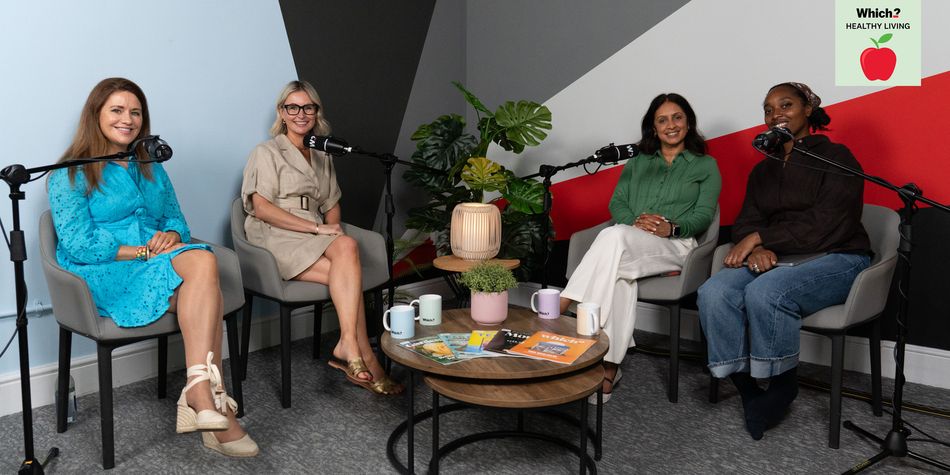
In this episode of our healthy living podcast, Which? researcher James Aitchison takes us inside the research he's been conducting into the effectiveness of LED face masks and collagen supplements, while consultant dermatologist Dr Emma Wedgeworth shares her thoughts on the changing face of the skincare market.
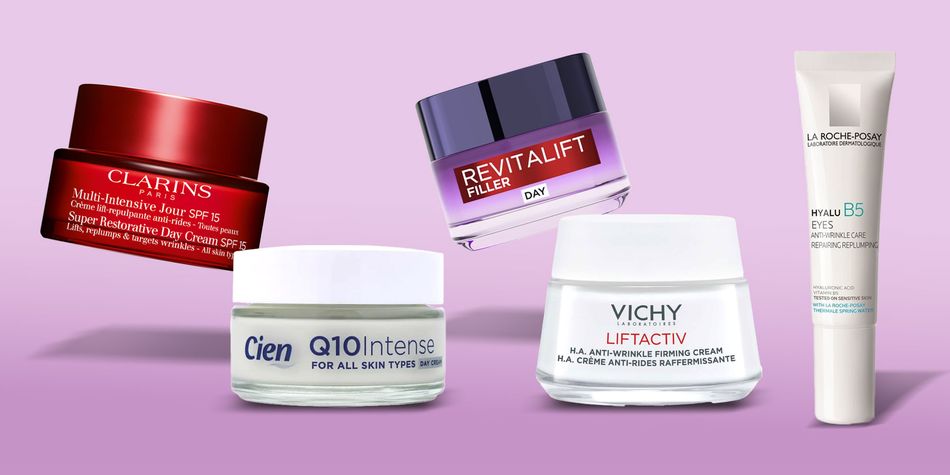
Plus, for the first time, we've been reviewing anti-ageing creams to find out which brands are leading the way. Our thorough, independent testing allows us to recommend the products that really work, and highlight the ones that failed our tests.
The full podcast, which includes our test results, is available only to logged-in Which? users. If you're not a member, join Which? to instantly listen to the full podcast and gain access to all our product reviews – all with 50% off your first year's membership.
Erica McKoy: After 25 our collagen production drops by 1% every year. So should we be finding a fix to slow down ageing or is it all just a fad? Welcome to this podcast from Which?
Hello, it's Erica with a brand-new episode of our healthy living podcast, bringing you expert advice and recommendations to help you live your best life every day. But before we get into today's episode, it's a good time to remind you that we've got a live podcast coming up on the 26th of May. We'll be cutting through the noise and getting straight to what works – and we have a great lineup of guests for you too. You won't want to miss it; the link is in the show notes. Let's welcome senior researcher and writer James Aitchison.
James Aitchison: Hello.
Erica McKoy: And someone who will be joining us on the 26th, consultant dermatologist Dr Emma Wedgeworth. Hello.
Emma Wedgeworth: Hi, thank you for having me.
Erica McKoy: It's great to have you both in the studio. A couple of weeks ago, I was in your clinic getting my face scanned. It was so much fun.
Emma Wedgeworth: I'm glad you enjoyed it.
Erica McKoy: And we'll be talking about what that was all about in a moment. But I thought, let's kick off today's episode with five rapid-fire questions. What's the one thing that ages the skin the most?
Emma Wedgeworth: Got to say sun. The external ageing is 80 to 90% driven by UV exposure.
Erica McKoy: LED masks: fad or the next big skincare revolution? James?
James Aitchison: I'm going to lean towards fad, even though I think there is some evidence that they work.
Erica McKoy: We'll talk about that. Can we find collagen in plant sources?
Emma Wedgeworth: No. You can make collagen from the amino acids that you get in plants, but plants themselves don't contain collagen.
Erica McKoy: What's the top red-flag ingredient in anti-ageing cream that you're immediately like, "Not good"?
Emma Wedgeworth: I don't like essential oil fragrances. I think they tend to be irritant. The minute I look at a product that's got an essential oil fragrance in it, I'm like, "Why would you put that in?" So for me, it's not that necessarily it's a terrible ingredient for everybody, but it just makes me think, "Hmm, why is that formulator put that in?"
Erica McKoy: Without retinol, without Vitamin C and peptides, can a skincare product really boost your collagen?
Emma Wedgeworth: Yes. If you think about sunscreen, that is preventing your collagen from breaking down significantly. So I get it's a little tenuous, but I'm getting it in there. Bakuchiol – so that's a derivative of retinol which is thought to have some degree of collagen boosting. So I think maybe. It's hard. If you're going to build a skincare routine and you don't have those ingredients in there for anti-ageing, then it's a little bit harder.
Erica McKoy: I love that this is a rapid-fire section and Dr Emma was like, "No, we've got to explain more." And then final question, I want to sneak this in: after 25, is it true that we lose roughly 1% of our collagen every year?
Emma Wedgeworth: Yes, approximately.
Erica McKoy: Let's really get into the episode. What's the thing that people get wrong about ageing skin?
Emma Wedgeworth: Lots of things. One is that it is inevitable and there's nothing you can do about it. That's not true. Ageing of all of our cells is at the moment, as we stand, inevitable. As time goes on our cells become less efficient. But actually from our skin perspective, because our skin is the interface between our internal organs and our environment, protecting our skin against the environment is a huge part of actually how we can help. So actually, whilst ageing is something that happens to us all, the way that our skins and our bodies – for that matter – age, we do have some control over.
Erica McKoy: One thing that we're focused on at Which? at the moment are LED masks. It seems to be the thing that every influencer owns; any skin fanatic is talking about online. James, I want to put it to you: do they really work? When I asked you, you were a bit like...
James Aitchison: So, I'm going to give you two answers. The short answer: probably. And the long answer is that there is a fair amount of evidence that is slowly increasing that the exposure to certain low-light sources can interact with the cells and improve their natural functions. The process is called photobiomodulation.
Erica McKoy: The at-home masks that you can buy online, are they better or okay compared to going into a clinic? Should people be going into a clinic for this?
James Aitchison: The home masks are very convenient. They are relatively affordable. They are expensive, but they are relatively affordable. And I think using them based on what we've seen, it's likely that you'll see some small improvements over a long period of time. Please feel free to correct me on this, but I would assume that the clinic LED masks are going to have higher intensities, they're going to have more precise wavelengths, but more importantly they're going to be operated by a trained professional who will know what they're doing.
Emma Wedgeworth: I think that all comes down to what is your definition of "it working". When you set out to do a study, you're like, "What is it that I want it to achieve?" and I think this is a big problem when people think about anti-ageing. Whenever someone comes into my clinic, I'm always like, "Right, what do you want to achieve and how are we going to go about achieving that?" because what does it mean – "does it work?" Does it do something? Probably. But if you're using it because you want to get rid of this big line on your forehead, it's not going to work. So I think it all comes down to what is your definition of working.
Erica McKoy: I think that's really important to say because there's so many of them online and so many influencers saying, "Use my code and buy this mask." But yeah, maybe you need to figure out what it is that you want it to do. We're testing exclusively red light, but there is also a blue light. What are the differences between red light and blue light?
James Aitchison: Blue light – as far as I understand it – doesn't penetrate the skin as deep as red light and is primarily to deal with bacteria like acne. Whereas red light will penetrate a little bit deeper and some studies have indicated that red light can reduce the appearance of fine lines and wrinkles.
Erica McKoy: As I mentioned at the top of the podcast, I did pop in to see Emma at the clinic to get my face scanned. So let's see what happened.
(Audio clip of Erica at the clinic)
Erica McKoy: Emma, can you tell us a bit about what that scan was in your clinic? Because you had me facing this screen with lights and cameras and it was doing all sorts of cool things.
Emma Wedgeworth: Absolutely. This is one of these new-generation three-dimensional cameras which takes a very detailed picture of your skin and it uses different lights to do that as well. So we can get a sense of, for example, lines – not that you have any – pigmentation, pore size, texture of the skin, redness, all of those sorts of parameters. And what we're doing with the study is to look at how people are at the beginning of the study and then actually tracking their changes over time with this really intensive and accurate photography system.
Erica McKoy: Let's get into the basics of collagen in the skin – because a decline in collagen will lead to lines and wrinkles. What is collagen?
Emma Wedgeworth: Your skin has a few different layers. The outer layer of your skin, which is like your skin barrier and what holds in water, is called your epidermis. And then beneath that is your dermis. This is basically like the scaffolding structure of your skin and it has lots of different types of proteins which work together to produce this robust scaffolding which gives your skin partly its strength, its elasticity, all of the factors that actually make it a nice robust covering for us. And collagen is one of the key parts of that within your skin. But there are other proteins – things like elastin and fibrillin – but collagen is a very key part of the structure of our skin.
Erica McKoy: And we mentioned 25 is the age where we'll start to see a decline. Is it most people or some people?
Emma Wedgeworth: These sorts of things are based on a few different studies. But I think actually everyone ages differently. So there are lots of different reasons why you might age differently: internal health, then things like our lifestyles – so for example smoking, sun exposure – and then we know that different skin tones will age in different ways. So for example Caucasian skin, because it has the least amount of melanin, will actually age quicker than darker skin which has more protective melanin in it.
Erica McKoy: Are there any differences between men and women? I don't often see ageing creams for men promoted; it's often for women. But are there any differences in the way men's skin ages versus women?
Emma Wedgeworth: It's such an interesting question and to be honest, I don't think there are really good studies actually looking at that. I think you're right; the beauty industry has been very focused on women, but I think it is changing and I'm definitely noticing more and more men in my clinic.
James Aitchison: One of the numbers often cited is that those going through menopause are going to see a dramatic decrease in collagen in the five years after. Have you seen any evidence to that effect?
Emma Wedgeworth: Such a depressing statistic – particularly for a perimenopausal woman. However, I think there is definitely going to be an acceleration in ageing because we know that oestrogen, which is essentially what declines in menopause, is a key part of the way that a lot of our different cells work. So our fibroblasts which produce collagen, even the way that we hold water in our glycosaminoglycans, they're really oestrogen driven. So yes, there's this statistic that you say that we lose at least a third of our collagen in the five years after menopause. Again, I'm hoping that's something that we're going to change and people are taking HRT more and more, so I think there are changes, but it's definitely a point of acceleration of ageing.
Erica McKoy: A couple of weeks ago, Episode 1, we spoke to Shefalee Loth and Sophie Medlin about B12 and iron. I was wondering: are there any vitamins that help our body produce collagen naturally?
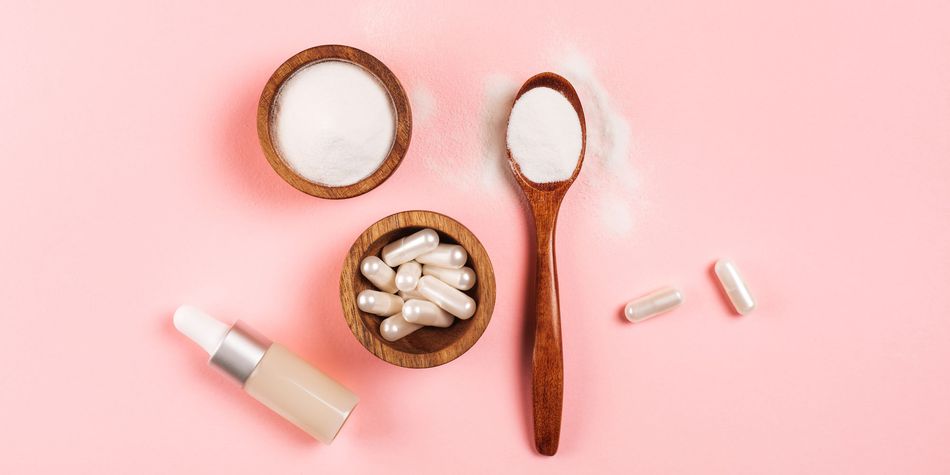
James Aitchison: There are a few – you've mentioned them already: B12 or biotin, copper is another one, zinc and Vitamin C. So we're going to be testing collagen supplements and a lot of them will include those vitamins along with the collagen supplement. Now, as far as I can tell there's no evidence that those vitamins will help you absorb the collagen, but they can help your body to produce it.
Erica McKoy: Supplements are such an interesting market and they're a huge market at the moment, especially collagen, it's just blown up.
Emma Wedgeworth: But I think the step between – if you are deficient in something, so for example you mentioned Vitamin C and that's a co-factor in the way that we produce collagen, so it's essential for that. If you've got scurvy, you don't produce collagen all that well. So we know that from people who have scurvy. But actually the vast majority of us are pretty replete. We are lucky enough to have enough Vitamin C. And so the big question about supplements is: if I have enough Vitamin C, does taking more Vitamin C make me make more or better collagen? And I think the honest answer to that is probably not. So you can take a huge amount of vitamins, but if actually you've got a nice replete diet and you're getting lots of balance of your collagen amino acids from your first-class proteins and you're getting your Vitamin C from your fruits and vegetables, then actually are supplements on top of that helpful? And if I'm really honest, I don't think they probably are that helpful.
Erica McKoy: Sophie in Episode 1 said it just makes expensive pee – all this extra supplements. Have you heard of collagen banking?
Emma Wedgeworth: It's a big thing at some of the conferences as well when you go to a lot of these aesthetic dermatology conferences and it's about essentially trying to optimise your collagen levels at a young age so that actually you lose less collagen over time.
Erica McKoy: Is it possible? Can you do it?
Emma Wedgeworth: Some protection in some ways is collagen banking. It's actually not losing too much of your collagen. So can you prevent ageing changes? Yes, by being careful around the sun. Can you do things like procedures in clinic? Things like microneedling or lasers, they can sometimes boost your collagen at a younger age where actually you can produce collagen in a more effective and a higher quality so that actually longer term you're delaying the signs of ageing. So there is some rationale to that, yes.
Erica McKoy: I was curious: is there a difference between marine collagen versus bovine versus porcine? There's all these different types of collagen supplements or powders out there.
James Aitchison: That remains to be seen. We are going to be testing a mix: bovine and marine. I don't believe we have any porcine or chicken collagen. From what I've seen, bovine is recommended for joint health whereas the marine apparently can have a better effect on skin, hair and nails.
Emma Wedgeworth: The studies are really hard to interpret because so many of them are industry driven. And there's nothing wrong with that; the beauty industry is fundamentally an industry and actually within that we've got some brilliant things – they brought sunscreen to market. So we've got lots of things to thank them for. But the studies and the quality of the studies are such that it's really hard to interpret how much benefit they have. And if you look at the studies with oral collagen, in my mind most of the benefit seems around hydration of the skin. And you're like, "Well, if you put that head-to-head with a good moisturiser, would it really be that great?"
James Aitchison: It's also a relatively new trend so we're not really seeing these long-term studies that we'd want to see at this point.
Emma Wedgeworth: Absolutely. And I think this also goes back to the LED mask aspect – these things might have a bit of a benefit, but you're going to have to do them for a long period of time and you're not going to have to expect that you're going to have dramatic changes in two months or six months even. This may be something longer term, a bit like sun protection. So it's really hard – I would never say they don't do anything, but for me and when I talk to my patients about it, I'm like, "What is your approach to your ROI? How much return do you want to get from buying that LED mask? How much actual visual improvement do you want to see from taking that collagen supplement?" And then I can tell you whether I think it's worth it.
Erica McKoy: You kind of mentioned it, but ingesting collagen versus topical collagen: is there a difference? Which one's better?
James Aitchison: Probably worth mentioning that technically you don't have to ingest collagen ever. It's an animal protein which means that vegetarians and vegans don't consume collagen anyway. It's something your body creates from the food you consume. So you could argue that because collagen is a refined version of collagen, it's hydrolysed, which means that its bioavailability will be slightly better than food. So it could theoretically be absorbed quicker than eating a piece of animal protein. On the subject of creams, I'm going to defer to you on that one.
Emma Wedgeworth: Collagen's a big molecule and your skin is like a sieve. You actually can't get big molecules through that; it just sits on the surface. Collagen can act as a moisturiser on the surface but it's not going to plump up your collagen from inside. It's actually very hard to deliver collagen directly to the skin and to where it needs to be. People used to inject collagen as a filler.
James Aitchison: I remember that, yeah.
Emma Wedgeworth: And to be honest it wasn't even a great filler because your body would get rid of it quite quickly. When you take it orally, even with the supplements, what they're really trying to do is to almost stimulate your natural collagen production. These are small fragments of collagen which almost give repair signals to your body. So it's not like you're eating the collagen and it's going directly into it; it's trying to stimulate your body to do it. So I think collagen as a whole category is slightly over-hyped.
Erica McKoy: Let's get into skin renewal because we're talking about ageing and the skin and collagen. How often does the skin go through a renewal?
Emma Wedgeworth: Skin's an amazing organ. You've got those three layers and basically you've got the main cell type: keratinocytes. At the bottom of your epidermis, which is the outer layer of your skin, you've got these keratinocytes that move up the skin and shed off every 30 days or so and they basically die off as they're moving up. So you've got this constant renewal; your skin actually has a natural exfoliative pathway even if you didn't do anything to it.
Erica McKoy: So then this makes me think: how long would it take for someone to see results if they were trying out a new collagen or they were trying out a new cream or an LED mask if the skin is constantly renewing?
James Aitchison: I can only say it from the point of view of our testing where we have based our timeframes on what the manufacturers recommend for when you should see results. So for LED masks for example, every manufacturer said minimum you should see results in six weeks, so we decided: six weeks. For collagen, they recommend three months, so we'll be testing collagen for three months.
Emma Wedgeworth: The cell renewal that goes on with the keratinocytes that I was talking about is a slightly different process to, for example, fibroblasts producing collagen or regeneration of your extracellular matrix, which is the scaffolding of your skin. So I think whenever we put an intervention in place in clinic, we look at things like three months. And it is astonishing – we've talked before about the claims that say actually it's going to help within six weeks. For lines and wrinkles, I would say that's too early. I would actually say that something like three months is a much more reasonable time point, and even that's quite early.
Erica McKoy: James, so the results on whether collagen supplements work is a bit mixed. When are we going to get a better idea of what we recommend?
James Aitchison: Testing will take about three months so assuming everything goes according to plan, we should have results by September.
Erica McKoy: Collagen, anti-ageing creams – they go hand-in-hand. You said that there were some red-flag ingredients that if you were to look at a skincare product you'd go, "Urgh, this is making me cringe, can't bear it." You mentioned essential oils. Tell us a bit about that.
Emma Wedgeworth: Dermatologists on the whole are not a massive fan of "clean beauty". There's definitely this intuitive feeling that if something's natural it's better to put on your skin, but actually in reality we see that a lot of plant-based products, particularly things like essential oils, can be incredibly irritant to the skin. So when I look at an ingredient and when I look at a formula, what I want it to be is something that I call physiological and that's really about reflecting the natural biology of the skin.
Erica McKoy: Is this similar to the bioavailability phrase that we hear a lot – it being a skincare product that's going to work with your skin?
Emma Wedgeworth: We talk a lot about things like biohacking which is when you're trying to basically harness the natural processes that are going on with your skin, because your skin is incredible. There's no injection or cream or tablet that's better than the way that your skin actually can work when it's doing the right things effectively. So what a lot of things are trying to do are trying to basically jump on board and biohack and try and get the skin to work in the most effective way.
Erica McKoy: I feel like I have to ask this question: how often – or if ever – are we meant to change up our skin creams and anti-ageing creams?
Emma Wedgeworth: I would say that you need to listen to your skin. Skin is a very dynamic organ. So for example, what I use in July may not be suitable for me in January because my environment is changing hugely. If I'm in London, I may need something completely different than if I'm in Seoul. So your skin is a very dynamic organ. You have to be aware of other things that are changing. And then internally – so I don't use the same skincare as I did when I was 16 because unfortunately I'm very different to how I was when I was 16. So we probably have to change up our routine at least once a decade. But in between that: hormonal changes – women may get pregnant, they may go on the pill. There are so many different things that can change.
Erica McKoy: There's loads of different ingredients that we are looking at: retinoids, antioxidants, alpha-hydroxy acid and hyaluronic acid. We're really going to get into testing those, aren't we?
James Aitchison: We've highlighted them as ingredients to look out for – not as warnings, but things that could have an effect on your skin in a positive way.
Erica McKoy: And then could we talk a bit about retinoids? Loads of people talk about it. What does it do?
James Aitchison: Encourages the production of collagen in the skin, which can improve the appearance of fine lines and wrinkles. They can be quite agitating for the skin in high concentrations, that's why high-concentration retinol is a prescription product. But some creams we've tested did have small amounts of retinols in them. But also the sun impacts your skin if you apply a retinol, right?
Emma Wedgeworth: Dermatologists love retinoids because they have so many different benefits. Retinoid is like an umbrella term for all of the different types of Vitamin A creams that we can use. So as James said, retinol: that's one of the most common ones that you can get over the counter, whereas there are prescription-strength ones that I give in clinic – things like tretinoin. But part of what they do – I mentioned that exfoliative process – and they soften the outer layer of skin and they compact your stratum corneum a little bit. So that means that your skin can get more sensitive and it can be more sensitive to the sun as well because that outer layer of skin is part of our environmental protection to UV.
Erica McKoy: Is this something we want to be applying maybe at nighttime instead of during the day?
Emma Wedgeworth: Definitely. The older generation like retinol, tretinoin, all of those are also quite photounstable, so they basically can break down if you're in light. So we always recommend that you use them at night. There are some newer versions – like hydroxypinacolone retinoate – which actually are not thought to be as photounstable. And because retinoids work over a long period of time, historically we put them on at night but some of the newer forms may not need to be.
Erica McKoy: Let's talk about AHA, like glycolic acid. It's quite a thin liquid applied on a pad, rub it on your face – what does it do?
Emma Wedgeworth: AHAs, alpha-hydroxy acids, are essentially what we call keratolytic, so they help detach the outer layer of skin and actually help shed off. So they enhance exfoliation essentially. AHAs have been used because they give you quite an instant glow up. People love an instant...
James Aitchison: They love immediate response.
Emma Wedgeworth: I'm the same. If you give someone something and you say it's going to take three or four months to work, you've lost them – particularly if they're quite young. Three or four months? That's ages. I want it tomorrow. So AHAs are really good because they do make you fairly instantly look quite glowy. And there's some evidence they can help in terms of mild pigmentation. But I would say that AHAs are like one of those quick and easy fixes as opposed to the real nuts and bolts of an anti-ageing routine like a retinol.
Erica McKoy: I've seen people apply it to their armpits. Is that a good thing or a bad thing?
Emma Wedgeworth: I don't like it. I think your underarm skin is actually really sensitive and delicate and it should be respected. People, if you've got darker skin, I think you do end up getting pigmentation – particularly people find it on their extensor aspects like their elbows, under the arms, knees. As dermatologists we spend a lot of time saying, "Look, that's normal and leave your skin," but I don't have darker skin so I don't know how annoying it would be for me. But in an ideal world, I wouldn't want people to put glycolic acid under their arms.
Erica McKoy: My absolute favourite is hyaluronic acid. I feel like it's quite a simple, easy beginner thing that you can apply.
Emma Wedgeworth: I think the acids are this really mixed bag. Glycolic acid is completely different to hyaluronic acid. And so the minute you say the word acid, you all think, "Oh gosh, it can damage me," but there's basically a lot of variability. Some acids are super gentle and hyaluronic acid is a super gentle product. When you put it on your skin it can act as a moisturiser essentially – it's what's called a humectant so it's drawing moisture, hopefully from the environment into the outer layer of skin. But hyaluronic acid is also a key part of our dermis, that scaffolding structure that I talked about, and some of the newer generations are very small molecules and they try and see whether they can actually penetrate a little bit deeper.
Erica McKoy: We've been running some independent lab tests on anti-ageing creams. There's been some very surprising results and for our members we'll get to those results shortly. If you're not yet a member and you want in, we have an exclusive podcast offer for you at 50% off the usual price. But before we get into those results, Emma, can you put the world to rights? Is there a good or ideal order for someone to cleanse and apply their anti-ageing creams?
Emma Wedgeworth: Yes. Cleanse is your first step. And then you want to apply your creams essentially in order of thickness. So for example if you're using a serum, you put that on first, leave it till it's touch-dry, then put your richer moisturiser on, leave that till it's touch-dry, and then your sunscreen is the last product in your application before your makeup. So sunscreen on top of everything else.
Erica McKoy: Is there a different night edition?
Emma Wedgeworth: Similarly go in order of thickness. So for example if you've got a light serum put that on first, and then your rich heavy night cream that goes on to seal it all in.
Erica McKoy: We've spoken about collagen, anti-ageing creams, LED masks – the whole lot. What are the final takeaways?
James Aitchison: Even if your day cream has SPF in it, please use additional sunscreen. SPF in day creams is nice to have, but we really recommend using an additional layer of sunscreen because your coverage is not going to be the same with a day cream versus sunscreen. And the day cream will often be thinner than the sunscreen.
Erica McKoy: And we've got plenty of sunscreen reviews on the Which? website. Emma, what about you?
Emma Wedgeworth: It doesn't have to be expensive and I think Which? has proved that. But it doesn't have to be expensive and remember it's not just what you put on your skin, it's how you behave, what you eat, how you exercise. Anti-ageing is a holistic aspect. Also there was an article out about fibre. Get your fibre in the body! It's all about your gut microbiome and actually that fibre is so important for your gut microbiome. A healthy gut is a healthy skin and a healthy body.
Erica McKoy: Thank you for joining me today. That brings to an end another podcast from Which? If you enjoyed the conversation today, head to the episode description for more useful everyday advice. There you'll also see an exclusive offer for podcast listeners like you to become a Which? member for 50% off the usual price, giving you access to our product reviews, our app, one-to-one personalised buying advice and every issue of Which? magazine across the year. Plus your membership helps us make life simpler, fairer and safer for everyone. If you'd like to know when we release a new episode, then make sure you press subscribe wherever you're listening. And for any questions, comments or anything in between, follow us on social media @WhichUK or email us podcasts@which.co.uk. Goodbye.
free newsletter
Sign up for our Healthy Living newsletter, it's free.
Our Healthy Living newsletter delivers free health and wellbeing-related content, along with other information about Which? Group products and services. We won't keep sending you the newsletter if you don't want it – unsubscribe whenever you want. Your data will be processed in accordance with our privacy notice.
Join us for a live recording of our health podcast on Tuesday 26 May at 6pm to put your questions to our experts. Sign up for free
Get the Which? lowdown on popular health topics, with insight from leading experts and our in-house research team. Here are our recent podcast episodes:
The Which? podcast showcases the best content from across our website and magazine.
In our Which? Money episodes, released on Fridays, we give advice to help you get on top of your bills and tackle the issues hitting your pocket, whether that's spiralling energy costs or your weekly food shop.
The Which? Shorts podcasts offer you a free insight into some of our favourite articles from our suite of magazines.
Plus, keep an eye out for bonus episodes that tackle important issues, from motoring and tech to health and wellbeing and travel.
We're always releasing new episodes, and the podcast is available from wherever you usually get your podcasts.
Subscribe using one of the links below, or click this link on your mobile to find us in your favourite podcast app.
As part of your subscription, Which? members also get access to exclusive podcasts.
If you're not already a member, podcast listeners can get 50% off the first year of an annual membership.
Make the right choice with recommendations you can trust, backed by expert testing.
Explore health recommendations