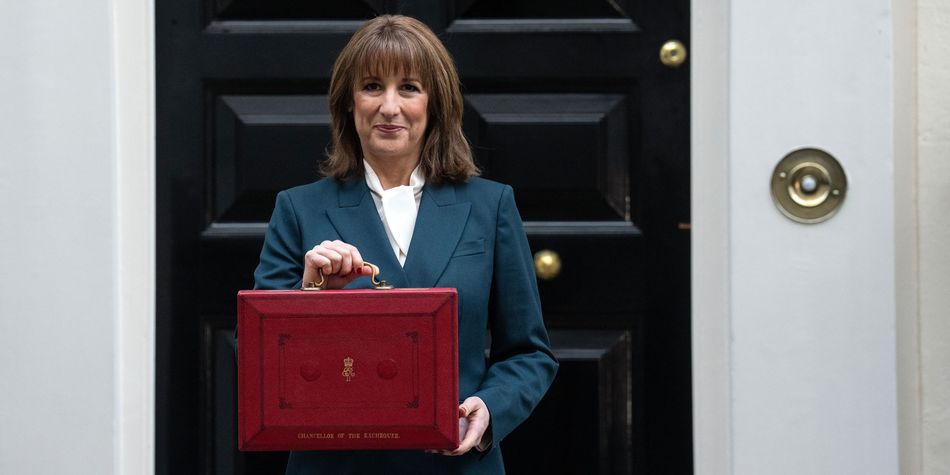
5 things we learned from the Spring Statement 2026

Matthew is an award-winning journalist, specialising in savings, tax and insurance.

Rachel Reeves used her Spring Statement to highlight easing inflation and signs that the economy is on a steadier footing. But the wider global backdrop could yet shift the picture.
Conflict in the Middle East has already pushed up oil prices following strikes by the US and Israel on Iran last week. If tensions escalate, higher energy and fuel costs could follow, adding fresh pressure to inflation and household budgets.
Here, we take a closer look at what was included in the Chancellor's speech today (3 March), and how the announcements could affect your finances.
What is the Spring Statement?
Traditionally, the Spring Statement is simply an update on the state of the nation’s finances and is not intended to be a 'major fiscal event'. Any big personal finance reforms are usually saved for the Autumn Budget.
Following the pandemic in 2020, that approach shifted for a time, with the Spring Statement used to make more significant announcements, including tax reforms.
- Find out more: what changes were announced in the Autumn Budget 2025?
5 things we learned from the Spring Statement
While the Chancellor's speech didn't include any major shake-ups, there were a handful of important updates that she used as evidence that the government has the right economic plan for the country and has restored stability in an 'uncertain' world.
Here are five things we learned from today's event:
1. Inflation will fall to 2% by 2027
The Chancellor was keen to focus on some good news about inflation, which peaked at 11.1% in October 2022.
It's been gradually falling since then, and the Office for Budget Responsibility (OBR) projects the Consumer Price Index (CPI) figure will drop to 2.3% in 2026. It's expected to dip again to 2% to 'late 2026' and will stay at that target rate from 2027 onwards.
It's been a bumpy ride for inflation figures over the past year, and it rose to 3.4% in December 2025. However, the latest Office for National Statistics data shows it fell in January 2026 to a 10-month low of 3%.
- Find out more: what's happening to inflation?
2. Mixed news for growth forecast
The OBR, which is independent of the government and assesses the health of the UK's economy, has revised down the country's growth forecast for 2026 from 1.4% last autumn to 1% today.
The good news is that the economy is predicted to grow by 1.6% in 2027 and 2028, and then 1.5% in both 2029 and 2030.
So what does that mean for people's pockets? The Chancellor explains that per capita growth (average growth 'per person') will be 5.6% over the course of parliament and leave people around £1,500 better off.
3. Middle East conflict poses 'significant risk'
The OBR's report includes a word of warning about figures included in today's Spring Statement. Any forecasts or projections do not take into account any impact from potential energy price rises triggered by the conflict in the Middle East.
The report says: 'Conflict in the Middle East, which escalated as we were finalising this document, could have very significant impacts on the global and UK economies.'
It adds that any forecast mentioned today 'lies in the middle of a wide range of possible outcomes' and there are therefore 'significant risks' to predicting what could happen next.
Rising oil prices as a result of the conflict could mean energy and fuel costs increase, driving up inflation too.
- Find out more: travel advice for Cyprus, Dubai, Abu Dhabi, and Qatar
4. Will mortgage rates rise?
The Chancellor claimed that 'the interest rate cuts we have supported will save families over £1,300 a year on a typical new fixed-rate mortgage'.
However, homeowners could suffer if the Middle East conflict has a knock-on effect to mortgage rates.
The OBR's report says the average interest rate on mortgages is expected to rise from 4.1% this year to 4.5% on average each year from 2027 to 2030. But that outlook could be even gloomier if the Bank of England decides to push the base rate up again in an effort to get inflation back under control.
- Find out more: best mortgage rates and deals
5. Help for children and young people
The Chancellor was also keen to use her Spring Statement to remind people of policies she has introduced to support families and young people.
As well as increasing the legal minimum wage for over-21s and people aged 18 to 20, Reeves confirmed the government's commitment to scrapping the two-child benefit cap, fully funding 30 hours of free childcare, and rolling out free breakfast clubs.
- Find out more: tax-free childcare and help with childcare costs