James Rowe: This is one of my favourite podcasts I get to bring you every single year, as we name and shame the companies that we think can, and should, do better. Let's find out what those companies are on this podcast from Which?.
James Rowe: Yes, hello, I'm James Rowe and welcome to The Shoddies, our annual awards that highlight the companies that we've come across over the last 12 months that should really be doing better. Now, we do this every year, and it's actually really important for us to not only highlight the good in the world, as we do with Which? Best Buys, Which? Recommended Providers and all of our other great endorsements.
But we also think it's important to highlight when companies need to improve. I'm in the studio at the moment, as I usually am for the podcast every single week, but I'll be heading out to the office floor shortly to chat to a load of my colleagues who have been nominating these brands who have won a Shoddy this year. It's from car companies to airlines, high-street stores to telecoms giants.
But first, let's speak to Megan Thomas, a name you will have heard on the podcast before. She's a senior researcher here at Which?. She's been heading up the awards this year, and let's find out a little bit more about how the Shoddies all come together.
James Rowe: Megan, hello.
Megan Thomas: Hello.
James Rowe: Tell me a bit about the Shoddies. You've been in charge, looking after it all this year. How's it been for you?
Megan Thomas: It's been interesting. It's interesting to see what all the different teams at Which? think about the bad practice of the year that's been and what things stand out.
James Rowe: So give us a bit of an idea about how this all works. We've been doing the Shoddies for a few years at Which? now. We've written about it in the magazine, we've done a podcast about it for the past couple of years, but just for people who don't know, or to remind people from the past few years, how does it all come together?
Megan Thomas: Yeah, we run tests, surveys, we've got a team of investigative journalists that are working all through the year, normally to highlight what's good, but also to highlight what's bad and what companies need to do better. So with the Shoddies, we seek out nominations. If in your area of expertise, you think there's a company that's let consumers down for – it could be anything, it could be safety, customer service, pricing – we say, nominate them, and then we've got a panel of judges who will go through all the nominations and sort of highlight those that really stand out, and they'll, unfortunately for them, win a Shoddy.
James Rowe: Yeah, it's not an award you really want to get, because obviously at Which?, we're known for sort of highlighting the good of companies and Which? Best Buys, of course, but this is very different. And we'll be chatting to some of your colleagues about some of the award winners later in the podcast. But do you want to give out the first award?
Megan Thomas: It would be my honour.
James Rowe: Tell me the name of the award and the company who has, unfortunately for them, received this one.
Megan Thomas: So this is the award for Shady Supplement Sellers, and it goes to Etsy.
James Rowe: And Etsy is an online marketplace. Why did they get this one?
Megan Thomas: We've done a bit of research into supplements for sale on online marketplaces and we've found across the board some dodgy stuff – so claims that don't really add up, there's no evidence behind, really high doses that actually aren't that safe.
But we found something quite outrageous, the worst stand-alone example on Etsy, which was a dodgy listing that when we bought it, we got sent just a packet full of illegal medicines, including two loose, unlabelled pills that when we tested them turned out to be erectile dysfunction medication.
James Rowe: And that is not what you ordered, no?
Megan Thomas: It's not what we ordered. It's not what anyone should be ordering off Etsy. Completely illegal to sell without a prescription.
James Rowe: And you were the one who was actually doing this investigation to begin with. How surprised were you about this kind of thing that you were finding on sale on what is meant to be a second-hand kind of marketplace, or more of like a kind of hand-crafted product, isn't it?
Megan Thomas: Yeah, that's the sort of almost motto, is that it's hand-made gifts, stuff you can't get anywhere else. But I was surprised they did supplements at all, but when I opened this package in the office, I was just completely caught off guard by just these packets of supplements that say to be used under the supervision of a doctor and things like this, that's just completely illegal to sell.
James Rowe: So remarkable that you were able to buy them on there in the first place. Presumably, you spoke to Etsy or the seller. What did they say about this?
Megan Thomas: We spoke to Etsy and they took the listing down and they said medical drugs, medical devices, and any other items that claim to treat, prevent, mitigate, cure, or diagnose a disease or medical condition are prohibited on Etsy.
But when we checked back in, we saw that the seller that we'd originally bought from had set up a second shop and they just sort of linked straight to it. They were like, oh, well, this shop's closed, but go and buy from our other shop. So we had to chase Etsy up on that. That one now also taken down.
James Rowe: This just sounds like classic Which? investigations about online marketplaces. We talk about this a lot, don't we, where we do an investigation, it gets taken down, and then these products just pop up somewhere else instead. It sounds obvious, but people shouldn't be buying medication on online marketplaces. What's the advice for them instead?
Megan Thomas: I know it's awkward to get an appointment, but if you've got any symptoms, if there's a reason that you think you have a vitamin deficiency, then you should go and speak to your GP. First port of call shouldn't be an online marketplace, because who knows what they're actually selling.
James Rowe: Sound advice. Megan, thanks very much.
Megan Thomas: Thank you.
James Rowe: Well, let's now speak to our retail expert here at Which?, Ellie Simmonds. Ellie, hello.
Ellie Simmonds: Hello.
James Rowe: Okay, let's do your award then. What's it called and who is it going to?
Ellie Simmonds: So the award is called Loyalty Doesn't Pay, and it is going to Boots and Superdrug.
James Rowe: So this is about loyalty pricing, and I'm being very careful with my wording because this is about deals that could be misleading customers.
Ellie Simmonds: That's right. Deals that risk misleading loyalty members into thinking the savings are better than they are.
James Rowe: We're all becoming a bit more aware of loyalty cards and loyalty pricing, because these deals themselves are becoming a lot more prevalent, aren't they?
Ellie Simmonds: Yeah, they are becoming prevalent. They started in supermarkets mainly, and now they're becoming more prevalent across Boots and Superdrug, outdoor retailers, all sorts of places.
James Rowe: And for this award, we are specifically talking about Boots and Superdrug. What's happening? Give us an idea of what you did and why we've given this award to Boots and Superdrug.
Ellie Simmonds: Yeah, so we analysed more than 7,000 online loyalty deals on branded products at Boots and Superdrug. We looked at those deals between March and August last year, 2025, and we found hundreds of them that risked misleading loyalty members into thinking the savings were better than they are.
James Rowe: So you did this investigation, you've been analysing all of these prices. Give us an idea – have you got some examples from both Boots and Superdrug about what customers might have seen?
Ellie Simmonds: Yeah, so an example where it could be misleading is at Boots. We found a skin care product, it was the L'Oréal Paris Spot Fading Serum Cleanser, and it was £11.24 on loyalty promotion and £14.99 for everybody else. So sounds like a decent deal, saving a couple of quid there if you're a member.
However, before the promotion, it was in fact less than that. So it was £8.99 for everybody, regardless of whether or not they were a member. And immediately after the promotion, it was £7.49 for everyone. So that promotion actually risked making it look like there were savings where there wasn't.
James Rowe: What about Superdrug? I imagine you found some examples there as well.
Ellie Simmonds: Yeah, similarly, we found an Oral-B pink electric toothbrush there with a travel case. It was on a loyalty discount at £34.99 for people with a loyalty card there and £69.99 for everybody else, so a hefty discount there.
However, before the promotion, it was £34.99 for everyone, and after the promotion, it was £34.99 for everyone. So really no different for loyalty members during that promotion than before and after it.
James Rowe: So we have this view that some of these deals risk misleading loyalty members into thinking their savings are better than they are. Presumably, Boots and Superdrug have a bit of a different opinion to what we do?
Ellie Simmonds: So, in response, we put our findings to Boots and Superdrug, as you'd expect. In response, Boots said they were fully committed to making sure their promotions comply with all the relevant laws and guidance.
And Superdrug said that they offered regular promotions to all customers alongside member-only pricing, and that meant that members can access their competitive pricing more frequently and for longer periods through member-only offers and events.
James Rowe: Before you go, I appreciate this podcast might seem very doom and gloom, but a quick word on a bit of a Which? campaigns win on loyalty pricing.
Ellie Simmonds: Yeah, this is on Tesco Clubcard. So we have been campaigning for years to get teenagers, specifically 16 and 17-year-olds, to be able to access those lower Clubcard prices at Tesco. Up until now, they haven't been able to. They've only been available to over-18s.
And we just found out last week that Tesco is launching a new version of its Clubcard to enable 16 and 17-year-olds to get those lower prices. So fantastic news for all those teenagers who regularly go to Tesco to buy anything from a meal deal through to the family groceries.
James Rowe: Great stuff. Another Which? win and another win for consumers specifically. Ellie, thanks very much for your time.
Ellie Simmonds: Thank you.
James Rowe: So for our next award, I'm with principal researcher here at Which?, Yvette Fletcher. Yvette, hello.
Yvette Fletcher: Hi, how are you?
James Rowe: Very good, thanks. Nice to have you on the podcast for the very first time. Do you want to tell us what your award is called and who it's going for? It's a bit of a mouthful.
Yvette Fletcher: It is. The award is called the Pied Piper of Price Rises, and we are giving it to BT.
James Rowe: This is the UK's biggest broadband provider. Why has its price rises come to our attention?
Yvette Fletcher: So most recently, it came to our attention last year because it hiked its price hikes. BT had moved to a system of fixed price rises that were £3 per month, but last year, it increased them to £4 per month. And because it owns Plusnet and EE as well, the same thing happened for those companies too.
James Rowe: And it's a good thing, I think it's fair to say, that they are upfront about the pounds and pence of how much your contract might rise by, because previously it was based on a percentage, maybe to do with inflation and that kind of thing. So why is it such a bad thing that they've increased it by £4?
Yvette Fletcher: Because they're the first ones to put it up. So you're right, it used to be that several providers like BT used this what we call inflation-plus model, where they put your price up by inflation plus an additional percentage, usually just under 4%.
But after some campaigning by Which?, Ofcom indicated that it was going to ban that kind of more confusing price rise because you don't know what it's going to be. And BT was actually one of the first companies, before the ban came in, to say, okay, we're going to move to this new fixed type of price rise, and we'll tell you what your price rise will be upfront. And when it announced that, which was in spring 2024, it said, we'll put your price up by £3 per month each year.
James Rowe: But this isn't necessarily the first time we've cast an eye over BT's price rises, because there was something – you can tell me the details – something back in 2020 about above-inflation price rises as well.
Yvette Fletcher: Yeah. So BT, there's a history of them being a bit like this. In 2020, it used to be that providers were all the same, but in 2020, BT started this new thing which was these inflation-plus price rises. It was the first to do that, and then because BT did it, Plusnet and EE did it as well.
And then we saw several other big providers, such as Vodafone and Virgin Media, follow suit. So we just see this thing – BT is the UK's biggest provider, so it's just this funny situation where it comes up with this new system for putting up price rises, and then other big providers seem to do the same thing.
James Rowe: Hence the name of this award, because it seems like BT do it and then some of the other companies follow. BT, they dispute this though, don't they?
Yvette Fletcher: Yeah. So in the most recent example, BT moved to the £4 a month price rise, and then not long afterwards, it put up its price rises and then several other big broadband providers put up their price rises as well. And so part of what we're saying is that BT leads the industry when it comes to this.
But curiously, BT disputed that. I would have thought kind of saying that you lead the industry is usually a compliment, but they said that they don't lead the industry. They said that they make independent pricing decisions based on their own costs, investment needs, and the service provided to customers.
But they did agree that BT was the first major provider to increase to the £4 per month price rise, move to the £3 fixed price rise, and also introduce above-inflation price rises.
James Rowe: So we, for these reasons, and perhaps some others if people were to read our reviews of broadband providers, we don't recommend BT as a – or we don't give them a recommendation as a Which? Recommended Provider for broadband. There are better alternatives out there for customers?
Yvette Fletcher: Yeah. So we're not necessarily saying avoid all providers that have these mid-contract price rises in their terms. We have a look at prices when we review providers, and so Plusnet is one of our recommended providers because we find that its prices are reasonable despite having the mid-contract price rises factored in.
But if you want something more reliable, you want to go with a provider where you know they're not going to be putting up your price every year, Zen Internet has been a Which? Recommended Provider for years, and so that is a good one to look at.
James Rowe: Lovely stuff. Yvette, thanks very much for your time.
Yvette Fletcher: You're welcome.
James Rowe: Well, sticking with telecoms, we are now with Adam Snook, who is also a senior researcher here at Which?. Adam, hello.
Adam Snook: Hello.
James Rowe: Tell me about your award then. What's it called and who have you given it to?
Adam Snook: So the award is Mid-Contract Mayhem, and we've awarded it to O2 Mobile for increasing their price increase.
James Rowe: I'm just going to jump in because we've literally just been talking to Yvette about BT and about their price rises as well. Is it something similar with O2? What have they been doing this year?
Adam Snook: What's particularly bad this year is that they've applied it to all existing customers. So other networks have been doing similar things, but only to new or re-contracting customers, but this is applying to all O2 customers.
James Rowe: So talk to me about the numbers then, because I think we kind of are all aware that these providers, they do up their prices. It's usually around April, isn't it, that the prices might rise? What's so bad about what O2 have done this time?
Adam Snook: Okay, so they've increased their price increase from £1.80 a month to £2.50 a month, and this will apply to all existing customers, not just new or re-contracting.
James Rowe: Which sounds – it's less than a pound, it's a few pence, but that is what, is that a 40% hike in the rise?
Adam Snook: Yeah, it's nearly 40%. And this will happen every year as well, so it's not just a one-off increase. It's going to be every April people will be hit by this, and it might increase again in the future as well.
James Rowe: And we're calling this out because we don't like it, but also for O2's customers, we've been surveying customers this year as well, and they're far from impressed as well, aren't they?
Adam Snook: Yeah, we spoke to over 2,000 mobile customers of all networks, and 79% said that they thought it was unfair to put up prices beyond the original contract terms, and 90% said that they thought Ofcom should get involved and do something about this, because it's not fair to customers.
James Rowe: I presume O2 have been in touch, presumably they had something to say about this.
Adam Snook: Yeah, O2 said that, "We appreciate that price changes is never welcome, but we've been fully transparent with our customers, writing directly to them, providing the right to exit without penalty if they wish."
James Rowe: Which sounds fair to them. Is that – that sounds pretty fair?
Adam Snook: Yeah, it sounds generous, but it's something that they are required to do by Ofcom if they make a change to your contract terms that are possibly a disadvantage, so it's something that they have to do.
James Rowe: So it sounds like a goodwill gesture, but legally they were required to do that, right?
Adam Snook: Yeah, they had to do that as part of making this change to people's contracts while they're ongoing.
James Rowe: For consumers out there, if they are with O2 and they thought they could, find a better deal or find a better provider out there, presumably we've got our favoured alternatives, do we?
Adam Snook: Yeah, we've got ten endorsements across seven different networks, so there's lots of different options out there. We particularly said to people that if you're keen to stick with O2 as a network, you can switch to a provider like Giffgaff, which uses the exact same infrastructure, but you'll probably find a cheaper deal and get the same signal.
James Rowe: Lovely stuff. Adam, thanks very much for your time.
Adam Snook: Thank you.
James Rowe: Well, let's now chat to Lisa Webb from our legal team. Lisa, hello.
Lisa Webb: Hello, thanks for having me on.
James Rowe: Thanks for coming on, albeit from home. I think you're the only one who's going to join us remotely, sadly. Was it trains that didn't allow you to be here?
Lisa Webb: Engineering works, the bane of my life!
James Rowe: Always the case. Tell me about your award and who it's going to.
Lisa Webb: So I am giving the award for Resale Rip-offs. What we're talking about here is the secondary ticketing market, and I think it's one of those things that we have all heard horror stories about. All we heard last year was about those Oasis resale tickets.
We're talking specifically about Viagogo and StubHub, who we think are basically locking music lovers out of gigs, because resellers are able to snap up all of those tickets and then pass them on at eye-watering prices.
I mentioned those Oasis tickets. We saw tickets being listed for nearly £3,500 on StubHub and over £4,000 on Viagogo. They were never meant to cost that much, and yet they get marketed for that on those secondary sites.
We've also seen evidence of speculative listings, which is where sellers actually list tickets that they don't even have. That is definitely not allowed. So the fact that they're allowing these things on their platforms is a real concern for us.
James Rowe: It is a concern when it's not allowed to happen, but we're finding examples of these tickets that are on sale which simply, legally, should not be on there, right?
Lisa Webb: Absolutely. And it's something that we see all the time in the secondary ticketing market, and it's something that we've campaigned on quite hard as well. So after a lot of campaigning from Which?, a draft ticket-tout ban bill was actually included in the King's Speech this year.
That proposes to make – make it illegal, basically, to resell a ticket above its original cost. So what we really want here is a cap, which means that when a ticket is resold, it can only be resold for its actual value.
And that, in theory, will stop these touts from profiteering and locking people out of being able to attend the live concerts and gigs and sports events that they just really want to be able to go to.
James Rowe: And that draft bill is something we spoke to the MP Sharon Hodgson about on the podcast a few weeks ago, finding out what we think and when we think this legislation might come into force. Who knows when that'll be, but we'll keep campaigning for it, won't we, Lisa?
Lisa Webb: We absolutely will, and I think it's important to note that this is just a draft, it's not in play, it's not something that's actually happening right this second. But that doesn't mean that the likes of Viagogo and StubHub can carry on doing what they want to do.
Really, they ought to be doing the right thing now. They know how the public feel about it, they know how the government feel about it, so there's nothing really stopping them from taking that step and banning tickets from being sold on their platform for more than their value. And I think it's really important that these platforms actually step up and do the right thing before they're forced to.
James Rowe: Yeah, consumers should be allowed to buy tickets at the prices they were listed at originally and not have to pay, 10 times or, 100 times what the price is just because of ticket touts.
Lisa Webb: Yeah, I couldn't agree more. And the other thing is here, when we're not saying that you shouldn't be able to get back the money that you spent on fees or or things like that. For example, if you had to pay £1.50 admin fee, yeah, fine, you should be able to recover that.
But what you shouldn't be able to do is make a massive profit on something, because that's just encouraging people to do it at a commercial rate, and that is why tickets are so hard for people to get their hands on.
James Rowe: And tell me what Viagogo and StubHub have told us about this.
Lisa Webb: Well, Viagogo and StubHub think they're doing everything right, don't they? They're of the view that they're compliant with everything that they need to be compliant with.
They've said that speculative listings, which as I said are not allowed, they've said, well, they're definitely not allowed on their platforms and if they spot them, they take them down.
I think that's great that they do take them down, but the point is we were still able to find them. So I do think that more needs to be done by both StubHub and Viagogo to ensure that ticketing experiences for fans are fair.
James Rowe: And that's all we want. We just want total fairness for all consumers. In the meantime, while we kind of wait for any new legislation to make it fairer for us, what can consumers do?
Lisa Webb: There are definitely better alternatives out there. There are other resale apps, like Twickets. Twickets, for example, caps prices at face value. Some direct sellers like Ticketmaster also offer resale tickets. So there are ways to do that sort of official resale without having to go through one of these sites that allows touts to just absolutely fleece you.
So I would always recommend doing it that way. The other thing to note here is please don't go buying and selling your tickets on social media, because we've seen so many scams on social media platforms where people think they're getting an absolute bargain or think they're getting their hands on a last-minute ticket, they hand over cash and then they never see a ticket.
James Rowe: Sound advice. Lisa, thanks very much for your time.
Lisa Webb: Thanks for having me.
James Rowe: Well, I'm now here with our consumer rights editor, Lauren Deitz. Lauren, hello.
Lauren Deitz: Hello, thank you for having me.
James Rowe: Tell me about your award. What's it called and who's it going to?
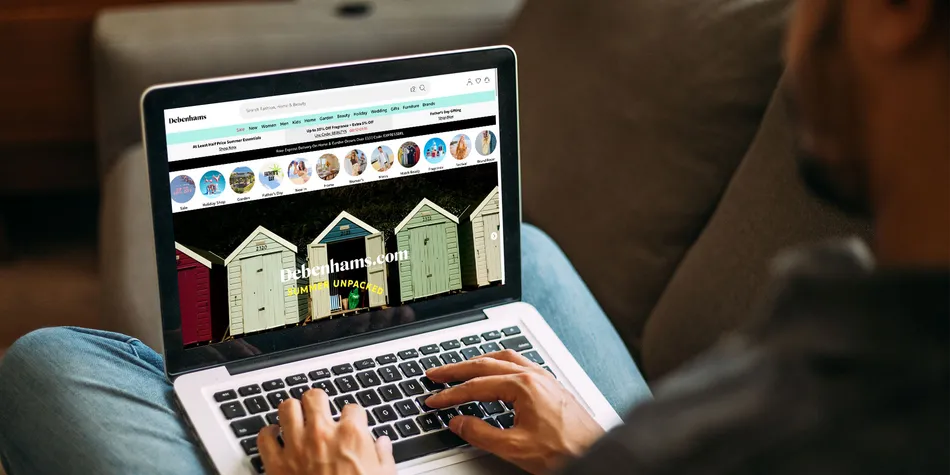
Lauren Deitz: This is the Sneaky Sign-ups award, and this year we are awarding this one to Debenhams.
James Rowe: Debenhams to many, they might think Debenhams don't exist because they haven't been on the high street for a few years. They do operate online still, don't they? What have they been doing that we don't necessarily like?
Lauren Deitz: Well, this year, if you purchased an item on the Debenhams website or maybe one of its other brands like PrettyLittleThing, or Boohoo, you may have found an additional add-on called a worry-free purchase. This worry-free purchase, we found to be a pre-ticked box that was added at the end of your transaction, and this pre-ticked box gave you additional benefits such as extended returns window and compensation for delivery delays. These pre-ticked boxes are actually something that businesses shouldn't be – shouldn't have on their – on their websites.
James Rowe: So with these pre-ticked boxes, even just trying to think back of when I've been ordering stuff online on any website or signed up to something, those tick boxes always annoy me because sometimes the wording is a bit confusing, you try and work out whether or not you should tick it or or not tick it. But for it to be pre-ticked, presumably are you paying extra for that as well, are you?
Lauren Deitz: You are indeed, and the problem with these pre-ticked boxes is that they are optional extras. So being pre-ticked is really not particularly fair on the consumer. It should be something that is raised to them early on in the process so they're very aware of what the options are and certainly not added on automatically at the end.
The worry-free purchase is not something that is still on the Debenhams website. After we contacted Debenhams about this worry-free purchase, it actually then changed the worry-free purchase to a Deliver Plus service, which is no longer a pre-ticked box, but it is still shown to customers in their basket at the end of the checkout process, and they are presented with a "continue with Deliver Plus" or "continue without Deliver Plus".
Now Deliver Plus still gives benefits to consumers for delivery delays and for missing orders, and offers, as Debenhams phrased it, peace of mind. But we still have concerns that you are already entitled to lots of these benefits under consumer law.
James Rowe: So it is a good thing to begin with though, isn't it? We should say that we flagged this with the original tick box and that it got changed. A nice little win for consumers there, because the Competition and Markets Authority say that these pre-ticked boxes shouldn't exist in the first place. Have we spoken to Debenhams? Have we had a word from them? What have they told us about all of this?
Lauren Deitz: Yes, we have spoken to Debenhams, and it has stated that its Deliver Plus service is optional for customers who would like additional peace of mind for their orders. It's also reminded customers that it's not a mandatory charge and they can add or remove it before completing their purchase. It's also stated that should they wish to cancel the service, they can do so within 24 hours of placing their order.
James Rowe: Lovely stuff. Thanks very much for your time, Lauren. Appreciate it.
Lauren Deitz: Thank you.
James Rowe: And I am now here with Trevor Baker, who is a senior researcher for our travel team. Trevor, how are you?
Trevor Baker: I'm very well, thank you.
James Rowe: Do you want to tell us about your award then? What's it called and which companies – it's more than just one for this one – who's it going to?
Trevor Baker: Okay, well this is the Baggage Claim Shoddy, and it's going to Ryanair, EasyJet and Wizz Air.
James Rowe: And by the nature of the name of this, this is to do with baggage allowances or costs for airlines. Should we go through them one by one? Should we start with EasyJet first? What have EasyJet done to deserve the award?
Trevor Baker: Okay, well what EasyJet have done is, until last year, they used to claim that to take a large – an ordinary cabin bag to put in the overhead locker would cost £5.99, or from £5.99. And we were always a bit sceptical about this. It seemed very cheap.
So we looked at hundreds of EasyJet prices, and we couldn't find any that were £5.99, literally zero. So we asked them about this. We challenged them to send us a link to any EasyJet flight anywhere in the world where you could get – take a cabin bag on board for £5.99. They didn't do that.
So then we – we made a complaint to the Advertising Standards Authority, the ASA, and the ASA agreed with us that this was misleading. So they told EasyJet to stop saying that the cabin bags cost £5.99, and EasyJet have since made changes and now it just says price varies.
The conclusion is, when you go to take an EasyJet flight, you still don't know how much your cabin bag is going to cost until you get to the point of the booking journey where you actually choose your bag, and then it will tell you.
James Rowe: So it is a bit of a win because they've changed the terminology, but still, it sounds like we could do with things changing a bit further so that consumers are – that it's more upfront for consumers, is that fair to say?
Trevor Baker: Yeah, exactly. What they should do is just tell us how much it costs to take a cabin bag before you actually book the flight.
That just seems like a kind of a bare minimum, really, that you should know how much the flight you're paying for is going to cost before you're kind of halfway through paying for it.
James Rowe: EasyJet is not the only one. We've also got Ryanair and Wizz Air. What have we seen these two doing?
Trevor Baker: So it's very similar, really, except with Ryanair we did – we also checked hundreds of their prices for their cabin bags, and we found two which were the price – the lowest price that they claimed, which I think was from £12.99. So yeah, of hundreds we looked at, we only found two that were from the lowest price they claimed.
So still not great, and it's the same thing as with EasyJet, really. We just want them to say in advance how much a cabin bag will cost, because at the moment they use what they call dynamic pricing. So the same as with your airfare, the price of your bag will change depending on where you're flying to, when you booked it, the dates of your flights, rather than just saying it costs a tenner to take a bag, or 20 quid, or whatever. We just want to know how much it is.
James Rowe: You just want it to be transparent and upfront, don't you? You kind of want to see a price and know that that is what it's going to cost you, rather than in this example – what did you say it was – two flights out of the 634 that you looked at were actually at that advertised price for the baggage.
Trevor Baker: Yeah, exactly. Two out of 634. And we think it's kind of misleading to say to people that it's from £12.99 when there's so few bags available at that price.
Ryanair said to us that our sample size was misleading, but people can – people can judge for themselves. Next time you get a Ryanair flight, check whether it's the cheapest available, because I would guess that it's unlikely to be for most people. Very occasionally probably it will be, but for most people you're going to be paying much more.
And Wizz Air was the most confusing one, because on their website it said that the prices went from €0 to, I can't remember what the top price – I think it was €60, which was very confusing. And when we asked them about it, they said that that was just a typo and it should have been €10, from €10, not from €0, but again we didn't find any flights where you could take a bag for €10. I think the cheapest was €15.
So again, it's the same thing. It's like you don't – when you take a Wizz Air flight, you don't know how much you're going to be paying for the bag until you get halfway through the booking process.
James Rowe: In the meantime though, I know it's not always possible, but we do have other airlines that we would recommend trying to fly with for short-haul flights that are a Which? Recommended Provider and offer a better service, and I guess the prices are more upfront and that kind of thing.
Trevor Baker: Exactly. What I like with Jet2, which is a Which? Recommended Provider airline, is that when you see the price initially on Skyscanner or Google Flights or whatever and you think, oh, that's a good price, what you pay is likely to be very similar.
Like maybe if you – if you add hold luggage it might cost more, but cabin luggage is included and they sit you next to your travel companions for free, usually. So you don't need to pay for either of those things. So the price is a lot more transparent than it is with Ryanair or EasyJet or Wizz Air.
James Rowe: So all in all, a much better packet for Jet2. And you can review all of our reviews of all of the other airlines that we've reviewed on our website. Trevor, thanks very much for your time.
Trevor Baker: Thank you.
James Rowe: Well, let's now chat to Which? tech editor, Lisa Barber. Lisa, hello.
Lisa Barber: Hello, James.
James Rowe: Do you want to tell us about your award? What's it called and who's it going to?
Lisa Barber: Okay, this is the Scammer's Dream award, and it's going to Meta, who owns Instagram, WhatsApp and Facebook.
James Rowe: This is the third year they've they've won a Shoddy. Does this kind of thing really annoy you when tech companies are being called out like this? You I guess you want to see tech companies not being called out, you want to see sort of good practice.
Lisa Barber: I would love to be able to stop commissioning content about scam ads that we see on social media, including platforms like Facebook that's owned by Meta. But we spot scam ads all the time on there, and we regularly warn people about them in our Scam Alerts newsletter. We tell the companies that they're on there, they say they've taken them down, and then yet more appear.
James Rowe: And that's what this award is all about. It's scam ads that are appearing on our feeds on Facebook, on on Instagram. What kind of things have we seen, why are we specifically calling them out on this occasion for a Shoddy this year?
Lisa Barber: We see these ads again and again and again – you see fake weight-loss patches, miracle salt, cryptocurrency scams, things like that, which for our experts are easy to spot and they should be really easy for platforms including Facebook to spot as well. It's not fair that they're being targeted at people.
James Rowe: And it's it's getting harder as well for normal people on the street to spot these scams, because they're becoming just harder to spot. They look more legitimate time and time again. Can you tell me about some some internal documents that a news agency got a hold of, because this kind of puts into perspective what Meta seems to gain from scammers using their platform for for these fake adverts?
Lisa Barber: Sure. Well, some leaked documents were given to Reuters news agency at the end of 2025, and Reuters estimated that Meta makes $7 billion in scam ads each year, $7 billion. At the time, Meta said the leaked docs present a selective view of its approach to scams.
I mean, that's a lot of money they're making there. From our perspective, Ofcom needs to clamp down on these fraudulent ads on social media platforms, including those owned by Meta, and the government needs to make sure it does so as soon as possible.
James Rowe: And also, speaking of Facebook, our Scam Alerts Facebook page, that has loads of Which? members in who try and stay up to date with these scams. What happened to that over the the past year or so? Something something pretty shocking happened to that, didn't it?
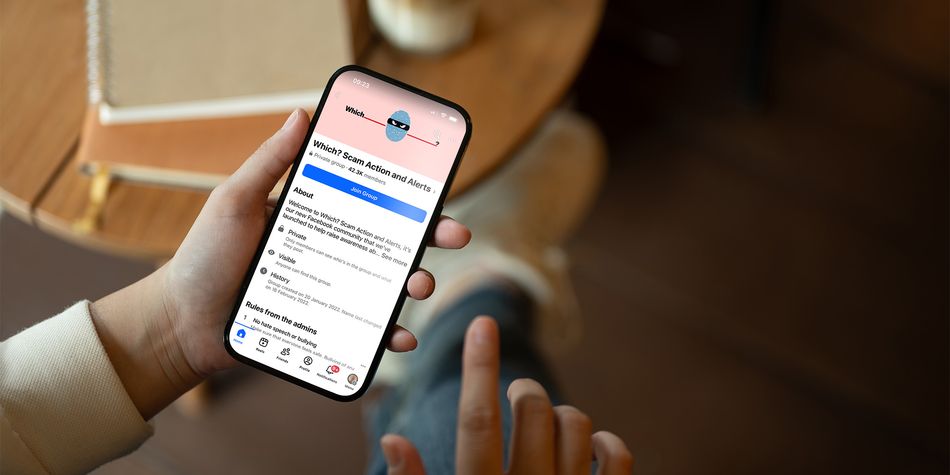
Lisa Barber: While scam ads stay up on Meta's platforms, we had our Which? Scam Action and Alerts Facebook group threatened with being shut down and then it was suspended for a few days – just doesn't seem fair. This is a group actively set up to warn people about scams.
James Rowe: So we would like to see Meta take more action on the scam ads themselves, never mind never mind the warnings that we're trying to put out there.
Lisa Barber: Oh yeah, they need to put their users first, protect people from scams, support those who are trying to get them stopped.
James Rowe: Lisa, thanks very much for your time. I appreciate it.
Lisa Barber: Thank you.
James Rowe: And finally, but by no means least, from our cars team, senior researcher Michael Passingham. How are you?
Michael Passingham: I'm good, thanks very much. It's nice to delve back into the memory banks for this one.
James Rowe: Yes, so let's dive into this one. So you've got the final award for us. What is it called first of all and who is it going to?
Michael Passingham: It's called Driven to Despair and it's for Stellantis, who owns lots of brands in the UK, including Citroën, Peugeot, Vauxhall and more.
James Rowe: So tell us a bit more then. Why have we given them this award for the Shoddies this year?
Michael Passingham: So back last summer, they issued a stop-drive recall on various cars, affected up to 120,000 people. The main car that was affected was the Citroën C3, but there were others as well.
The issue was around the safety of the airbags. There had been incidents in other countries where the airbags, even in minor collisions, had exploded and the airbag itself had caused injury and death.
And they took the unprecedented step of issuing a stop-drive recall in the UK, which means they are telling you not to drive your car, which unilaterally said that everyone who owns these cars cannot drive.
And there were a huge number of implications for the owners, and when we looked into it and when we spoke to owners, we found that the way that people were being treated was inconsistent, and frankly just very shoddy, which is why they're in these awards.
James Rowe: And this is different to other product recalls or even recalls for other cars, because manufacturers do this – I don't want to say often, but it is a common practice to recall cars. But this was different because it was specifically – what do you call it – a stop-drive recall.
Michael Passingham: Yeah, recalls in general are a sign of a healthy company that has good monitoring of the cars that are out there, and it shows that they care about safety. And in this case again, this was a really serious issue and it definitely needed to be dealt with, but it was how it was dealt with that we had an issue with.
Some of the stories that I had from people, for example a woman named Petra, she was completely without a car. She had disabled relatives and hospital appointments to get to. She had to spend all of her remaining funds on transport to and from those really important appointments, and had had very little and very poor communication from Stellantis about any kind of refunds or compensation, or even when the problem would be fixed because ultimately she was sat there among with thousands of others waiting for her airbag to be replaced, but there were no airbags and they were months waiting for those airbags to be delivered.
So for that entire period, people were told not to drive their cars, which has huge repercussions for people.
James Rowe: What would you say to people who might think, oh well, recalls happen, these kind of things are just part and parcel of owning a product, a car in this case, and you just have to sort of wait it out and wait and see when your car will be dealt with?
Michael Passingham: I think that Stellantis – and I will acknowledge they had a very difficult job here, it was a huge recall, nothing this big has ever happened in the UK as far as we're aware. My issue, and our issue and why we criticise them and call them out, was their lack of clarity and we felt deliberate lack of clarity on this issue.
Less so the repairs themselves, we understand that when you try and order 120,000 airbags all in one go, there might be some delays. They haven't really got Amazon Prime for airbags yet.
But when we ask and when we had heard from some owners about compensation schemes, courtesy cars, and other things that would help them get on with their daily lives, whenever we asked Stellantis to provide clarity on that so all owners could maybe feel reassured that they would be getting compensation or something else, they never answered our questions in a way that was clear or satisfactory as far as we were concerned. And that meant that the many people who were queueing on the phones, online, trying to get through to Stellantis to find out what was going to happen, had no real information. They were having to go on Facebook posts and forums. We were trying to gather information for people and Stellantis just refused to engage. And that we felt showed a poor attitude to the owners who they had inconvenienced with their poorly made airbags and their badly run recall.
James Rowe: So we don't think they managed the whole situation well enough. What have Stellantis said in response to that?
Michael Passingham: So whenever we contacted them about this issue, we always had pretty much the same response and it was they would discuss the individual needs of individuals on an individual basis. I'm paraphrasing here. But it never felt to me like they were taking the questions seriously and they were never willing to put themselves out there to say yes, we are offering a compensation scheme to those who are in a certain circumstance. And that to us just wasn't good enough.
James Rowe: So we last caught up with Stellantis on this in November and they had got through an admittedly quite impressive number at that point, it was over 100,000. So it was clear once they had the stock in place that things did move quickly, but it was that period where people were not able to drive their cars between that point and when they could get the repair, that was the real issue for us.
Michael Passingham: Michael, thanks for summarising all that. I appreciate it's a big topic and affected quite a lot of people. Michael, thanks very much.
James Rowe: You're very welcome.
James Rowe: So there we go then. Those are the winners of the Shoddies for 2026. No doubt you will have heard of most of, if not all of the brands and companies that have won an award this year.
If you're a member of Which?, you'll be able to read more about it in the magazine that will have landed on your doorstep today, maybe sometime this week. You can read more about it in there, or if not, you can read it on our website.
If you do want to be a member and if you're not a member already, don't forget as a podcast listener, you can get 50% off your first year's membership with Which? by going to which.co.uk/podcastoffer. You can just click the link in the show notes to sign up.
By reading it in the magazine or on the website, you can read loads more about the Shoddies, including all of the responses that the companies and the brands gave us when they found out they were going to win one of our Shoddy awards.
But for now, a big thanks to all of my colleagues who joined us to chat about the award winners this year. And make sure you tune in next time for the next podcast from Which?. I'll see you next time.
James Rowe: That brings to an end another podcast from Which?. There's loads more for you to read about everything we discussed today, just head to the episode description for more useful everyday advice.
There you'll also find an exclusive offer for podcast listeners like you to become a Which? member for 50% off the usual price, giving you access to our product reviews, our app, one-to-one personalised buying advice, and every issue of Which? magazine across the year. Plus, your membership helps us to make life simpler, fairer, and safer for everyone.
If you'd like to know when we release a new episode, then make sure you press subscribe wherever you're listening. That way, you can be one of the first to listen. And for any questions, comments, or anything in between, follow us on social media @WhichUK or email us podcast@which.co.uk. Goodbye.