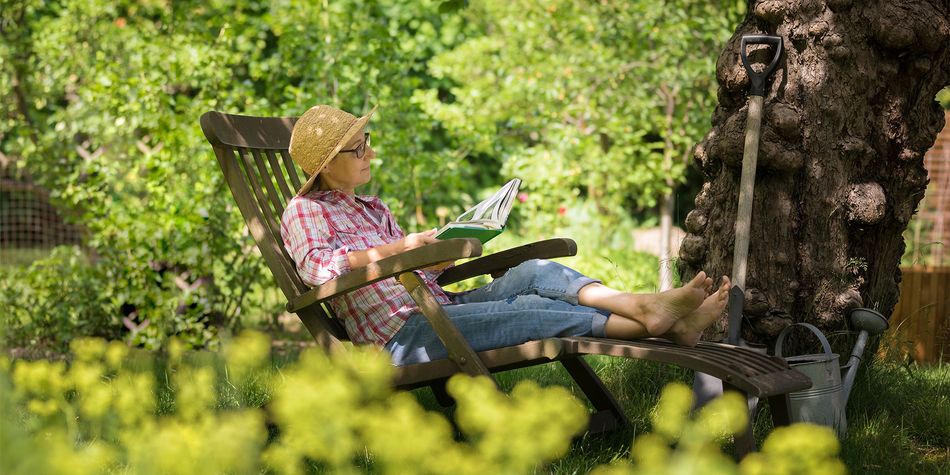
Retiree 1: Taking that decision and then saying, "Okay, that's it." That was a bit a weight off, it was okay, I can put that to bed now. I can move on. I've got other things I want to do. I was so used to getting to work for 8:30 that I thought, "I don't have to get up. I can stay in bed a bit longer if I wish."
Retiree 2: It wasn't a cliff–top moment because in that interim of becoming part–time, I'd taken other things on.
Retiree 3: I didn't really overthink, "Oh, I'm in retirement." I just thought, "Okay, this is a new stage. This is quite exciting. What am I going to do?" So I found it quite energising.
Jenny Ross: Gone are the days of being presented with a carriage clock and a happy retirement card by your employer when you reach your 65th birthday. Most jobs no longer have a compulsory retirement age. So when you stop working is entirely up to you. This will usually come down to whether you can afford to.
The earliest you can access money saved in a private pension is 55, rising to 57 in 2028. But under current rules, you won't get the state pension until you turn 66. And don't forget your retirement could last several decades, so you'll need to be confident your savings will last. Latest figures show that on average, a 65–year–old man can expect to live to nearly 84, while for women it's 86.
It's not just when you retire that you'll have to think about. You'll also need to decide how to turn your savings into an income. So what are your options? I'm Jenny Ross, editor of Which? Money. Welcome to this podcast from Which? Episode 4: How and where should you take your pension?
Life expectancy is rising, and in turn, people are working for longer. In 2025, the average age of exit from the workforce reached a high of 65.8 for men and 64.7 for women. That's according to the Department for Work and Pensions.
Retiree 4: I was 67, so I'd already been receiving my state pension for a while. And the reason I retired at that point was it was looking like I was going to become a grandmother – and I am, in fact, I'll be a grandmother very soon. So I wanted free time to be able to spend time with my family.
Retiree 2: I was 58, and the last few years had been working part–time, working for myself, but also I'd got caring responsibilities as well. And actually I couldn't fit all that in. So it became a question of, "Right, I am able to retire." It was something I was fortunate enough to be able to do and decided actually not work on the head so that I could continue with caring responsibilities and also fit my other life in around it. So it was a case of, "Right, that's what I'm going to do." And it was the right thing.
Retiree 3: I must have been just coming up to 70. I retired because my boss, unfortunately, who was a very famous man, Stephen Hawking, he passed away in 2018. So I obviously lost my job and it was a very sad time. And then I thought to myself, "Well, I want to do something for me after working for what, 50 years, I think I was working." So I went to university and did a degree.
Jenny Ross: As well as deciding on the best time to retire, you'll also have to make a plan for how to access your pot. That's assuming you have a defined contribution pension, the most common type of workplace pension. You may have heard of a defined benefit or final salary pension. This was the most common type until the 1980s, and they were a lot more generous back then. The vast majority of people nowadays have a defined contribution pension, so we'll keep our focus on those. Here's Tom Selby, director of public policy at AJ Bell.
Tom Selby: There is no age at which you absolutely have to access your pension. One of the great things about reforms that were introduced in 2015 that gave people freedom and choice is that there's no set age, there's no set retirement age at which people have to do something with their pension. I think that's actually a common misconception that I come across is this idea of a retirement age. So people think of the state pension age as their retirement age and actually, you can access your pension to supplement income whenever you like and you can access your pension at any point early or later in retirement, post that age of 55, in order to get the income that you need. So the great thing about those reforms is that they give you flexibility about how to access your own money, but you do need to consider how you're going to make that money last throughout your retirement.
Jenny Ross: Let's get into that important decision you'll have to make about how to access your pension. Research by the Financial Conduct Authority has found that three–quarters of people aged 45 and over don't have a clear plan for how to take money from their pension, or weren't even aware they had to make a choice.
Colleague 1: I sort of get it. I know that there's the new annuity route, there's the drawdown route, but I'm not really, if I'm entirely honest, I'm not really sure what I should do or which one I should go for and why. So I'm sort of leaving it till later to make those decisions.
Colleague 2: Yes, so I'm going to be doing a drawdown so I'm going to keep my money in the market, though I do need to think about what I'm going to be invested in, whether I should be taking on small bonds and things like it. And then I'm looking at doing it just gradually over time rather than doing a 25% lump sum. I'd like to use that tax–free cash over a period of time.
Jenny Ross: So what do your options look like? Earlier, Tom mentioned the pension reforms that were introduced in 2015. This was a huge change to the way that we can access our pension pots. It gave us a lot more flexibility. Before then, most people used the money in their pension pot to buy an annuity, which pays a guaranteed income for the rest of your life. You can still use some or all of your pot to buy an annuity, but now you have several other options.
Pension drawdown is one of them. This is where you leave your pot invested and withdraw money as you need. There are pros and cons to both options. For example, drawdown gives you flexibility to vary your income and the opportunity to benefit from investment growth. But there's also the risk of your investments underperforming and of you running out of money.
On the other hand, annuities give you certainty about your future income, but no flexibility to vary it. And once you've bought an annuity, you can't reverse the decision. You don't have to choose one over the other, though. For example, you could use some of your pot to buy an annuity and leave the rest in drawdown.
Whether you're buying an annuity or going into drawdown, or both, you can take 25% of your pot as a tax–free lump sum. Just bear in mind that there's a cash limit to the amount of tax–free money you can take overall, but many people won't have to worry about this as it's set at £268,275 across all your pensions.
If you wanted to, you could now just take your whole pot as cash. The first 25% of your pension will be tax–free, but you'll then pay tax on the rest in the same way as other income. Alternatively, you could take out smaller lump sums as you need them. 25% of each withdrawal will be tax–free and the rest will be taxed. The very uncatchy official name for this option is uncrystallised funds pension lump sums. It just means that you haven't crystallised your pension pot by turning it into an income.
Clearly, there's a lot to weigh up. But many retirees aren't seeking financial advice to help with this big decision. Of all the pensions accessed in the last financial year, less than a third were taken after receiving regulated advice. The costs involved are a major barrier to accessing financial advice for most people, which has created what's been dubbed the advice gap. In other words, the number of people actually getting advice is far lower than the number of people who need it.
But financial advice – in other words, recommendations tailored to your individual circumstances and goals – isn't the only option if you're looking for help when deciding how to take your retirement savings. Pension Wise is a free, government–backed guidance service for over 50s. Here's Charlotte Jackson, head of guidance services at the Money and Pensions Service, which runs Pension Wise.
Charlotte Jackson: We see thousands and thousands of people every month who are looking at accessing their pension and who need a little bit of help and support understanding what that might mean for them. So in a Pension Wise appointment, people have the opportunity either to talk with somebody face–to–face if they need, but mainly by phone about what it is they're looking at doing. So at what point are they looking at retiring, how much money have they got saved up, and what types of products are available across the pension industry or insurance industry firms that they might want to consider.
So what Pension Wise isn't is it's not regulated financial guidance. So Pension Wise will never say to somebody, "You should buy this product" or "We recommend you do this." Pension Wise is provided by us because we are an arms–length body, so what we provide is free and independent and impartial. We'll listen and I think that's a really big word. We spend a lot of our time listening to people, listening to try and understand what their life is and what their aspirations are so that we can then talk them through how those products that they might be able to investigate further could best meet those aspirations.
If you've got a plan, brilliant, the more you can tell us, the more specific our guidance can be. And then a bit about what's important. So actually, is it really important that you know where you stand with your money? Do you want a regular amount each month that you know exactly where you're at with it? Or can you afford to maybe mix and match a little bit and maybe say, "Well, actually I don't really need that money for these months because I'm doing X, Y, and Z." Again, if you've got a plan, the more you can bring to that conversation, the more specific and bespoke our help can be.
Jenny Ross: It's clear there is a lot to consider when it comes to retirement planning. Are you paying enough into your pension? Do you know when you can access the money? And have you thought about how you'll do this? Have you paid enough National Insurance to be eligible for the full state pension? Hopefully, this podcast series has helped you answer these questions. Here are some final tips from the retirees we've spoken to throughout this series.
Retiree 1: Make sure you've got savings, just in case you find that you haven't got enough in your pension to live on. Make sure you've got some savings to back it up if needed.
Retiree 3: Everyone, if they are in paid employment or however they get their private pensions, please, please do think about your future. You don't want to end up like me with my state pension only. So please think about it.
Retiree 2: I think regular saving if you can from an early age is vital. It gives you that mattress to fall on if something goes wrong.
Retiree 4: If you're not in the habit of really looking at your finances closely, a good independent financial adviser will ask you those questions. And I think being acutely aware of where you spend money, where you don't, where you can save, builds a picture of actually what you realistically might need. And then actually you think about what your day's going to look like, how do you want it to be? And maybe starting to think about that quite early. The Pension Wise appointment that you get free from the government was excellent because whilst they don't give financial advice, they do give you lots of really useful information and that was really valuable actually. It was great.
Jenny Ross: Need any more advice? It doesn't end here. Just head to which.co.uk/retirement for plenty more information on how you can get on track for the retirement you want. We also have a monthly retirement planning newsletter full of tips and analysis to help you take charge of your savings. Sign up at which.co.uk/retirementnewsletter